‹ All people
Referenced person
Nicholas Sparks
Stats
- Episodes featuring their films
- 0
- Movies in this archive
- 0
Rewatchables episodes featuring Nicholas Sparks’s films
No episode credits in the archive yet.
Mentioned in discussions
In the discussion (10)
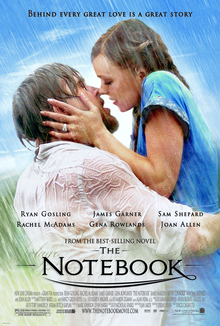
- Beyond Rachel McAdams, cases are made for Nick Cassavetes and Nicholas Sparks, the two Nicks, and accepted; Sparks has made an industry off this movie's success.
- Asked what would compel reading a Nicholas Sparks book, the answer is a lot of money, probably the only thing. — Andrew Gruttadaro
- Asked the same, the answer is that the gist comes through from the movies and there are enough Southern or beach authors already on the list. — Amanda Dobbins
- Nicholas Sparks recently got in trouble for bigoted remarks in an email and apologized; it comes through in this movie, which does not make his books necessary reading.
- To one host this is absolutely McAdams's Apex Mountain, more than Mean Girls, for her charm and infectious energy; but the standing rule from Bill is that Apex Mountain is not subjective, it is about the point in the career, so the hosts do the objective peak first and an emotional assessment after.
- The objective peak argued is Wedding Crashers, the big movie after Mean Girls and The Notebook; a wedding-crashers joke doubles as a Red Eye joke; she may not have capitalized on the moment but came back with an Oscar nomination for Spotlight and Morning Glory, a great 21st-century rom-com on Hulu.
- Asked for her objective apex, the answer is The Notebook, because the one-two punch of Mean Girls followed by The Notebook shows two sides of Rachel McAdams killing both roles. — Andrew Gruttadaro
- A third voice also goes with The Notebook, making it two of three for this film over the Wedding Crashers argument, conceding Wedding Crashers is undeniable movies-wise, because the real-life relationship made them celebrities and they were dating by the time Wedding Crashers came out in summer 2005; the MTV kiss recreation is floated as her apex moment.
- In the Tom Cruise or Julia Roberts sense of turning acting parts into celebrity, the moment is a soaring high for her and Gosling together; subjectively The Notebook is one host's personal McAdams apex, especially on rewatch, and she was that host's winner of the movie.
- She is so skinny in this movie, perhaps too skinny; the clothes are great and flattering, the kind of 40s things you would see in Brooklyn now, which should have gone under what aged best as part of the period-piece idea.
In the discussion (17)
- The obvious one is the chemistry between Gosling and McAdams, astonishing and all-time, and partly luck since the casting had to be right; it makes the hosts sad they are no longer together, and Gosling told GQ after the breakup that women yelled at him on the street for breaking up with her because of this movie.
- Movies like this raise the question of whether acting is real or whether magic moments are just captured on camera; the half-assed research spills early: the two did not like each other on set and fought a lot, a big blowout reportedly made things better, and he seemed to arrive ready to be a serious actor throwing fastballs that she threw right back.
- The Nick Cassavetes part is a weird movie for him to make and the best he has made; his credits include She's So Lovely, a much darker love triangle, John Q, Alpha Dog and The Other Woman with a Kate Upton performance called a historical moment.
- Gina Rollins (as transcribed) is his mom, as the son of Gina Rollins and John Cassavetes, and an anecdote has James Garner breaking up when the director called 'okay, mom, action'; he is the star of the DVD extras and the source of the trivia cited later, and he gets immense credit for casting McAdams and Gosling after a long search for her.
- Rachel McAdams in general: so good, looks amazing, an incredible performance; asked to choose between Allie and Regina George, one host picks Regina George as the historical, impactful one while loving this performance and her wavy hair.
- Asked which role is preferred, the performance caught this viewer a little off guard on rewatch; Regina George is the more iconic character but it is hard to say, and Allie might be liked more. — Andrew Gruttadaro
- Allie seems like a better hang and really fun, loves to swim, with so much of the opening montage spent jumping into water, though she is a little fungible, whereas Regina is strong in her convictions even when they are suspect.
- Incorporating Charleston is nominated because Charleston in 2019 is really having a moment. — Juliet Litman
- The counter puts Charleston under what aged worst: there is too much plantation stuff, everyone in a service role, nurse or household staff, is black, which is glaring and uncomfortable now, a bizarre choice especially at the retirement home, where the one white person is a male doctor.
- The movie is a period piece: set in the 40s, so the costumes and references never age, which works fifteen years later; there are almost no references beyond the war, Walt Whitman and the cotton trade.
- The structure is really good: whatever one thinks of the dementia plot or the writing in the notebook itself, which seems terrible with respect to Ali Hamilton, the pacing keeps you in young Noah and Ali's world so that you forget James Garner and Gina Rollins (as transcribed) until halfway, and by the time you learn who they are you are invested enough to buy a ridiculous device; one host could not even work out what the notebook was.
- Asked about the old-people side, the device is appreciated, but by the time it is revealed that they are them it loses its power. — Andrew Gruttadaro
- You realise it is her when she plays the piano and him much later; nobody remembers first finding out, possibly spoiled, yet it still makes one host cry at the end; producer Craig is cited as loving the old people, the framing gives gravitas to the younger story, and nobody can imagine reading the Nicholas Sparks novel, so it is an achievement.
- Asked what else has aged well, the offer is maybe James Marsden's inclusion. — Andrew Gruttadaro
- Marsden is a really good hit, not really famous when the movie came out, who went on to be a rom-com guy and now a guy who dies in sci-fi movies.
- It starts his career as the other guy, the passed-over guy, but the movie makes you root for Lon and feel bad for him, putting him with Dempsey in Sweet Home Alabama, Karen on The Office and just below Keanu in Something's Gotta Give, where Diane Keaton should have chosen Keanu Reeves.
- Deciding, the hosts first propose the old-people device, then remember the chemistry, and settle on giving it to the sex scene described at length earlier, so the chemistry wins in the form of that scene; other nominees were McAdams's performance, Charleston, the period setting, the old-people structure and Marsden's inclusion; a joke proposes a video bonus breaking down the choreography on a telestrator.