‹ All people

Referenced person

Rooney Mara

Also referred to as Rene Mara

Stats

Episodes featuring their films
0
Movies in this archive
0

Rewatchables episodes featuring Rooney Mara’s films

No episode credits in the archive yet.

No episodes found

Mentioned in discussions

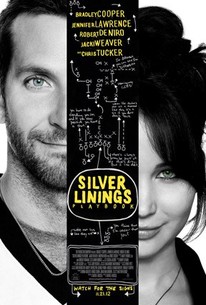
Silver Linings Playbook

Casting What-Ifs

Vaughn/Deschanel; Wahlberg; Hathaway; other reported Tiffany candidates

In the discussion (3)
Approx. transcript time · 01:28:37Read transcript
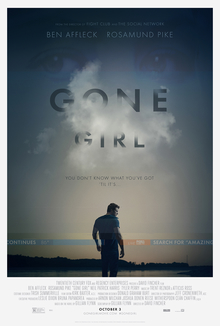
Gone Girl The Rewatchables
Gone Girl

Casting What-Ifs

Jon Hamm, slated for Nick until Mad Men's Matthew Weiner would not release him; Tom Cruise and George Clooney weighed for Nick; Reese Witherspoon, who held the rights to play Amy before Fincher talked her out of it; Charlize, Natalie Portman, Emily Blunt, Rooney Mara, Olivia Wilde and Julianne Hough considered for Amy; Emily Ratajkowski cast on Ben Affleck's recommendation

In the discussion (11)
Approx. transcript time · 01:06:51Read transcript
  • In the formal casting what-ifs, most having been covered already, the one new item is that Fincher cast Emily Ratajkowski on a recommendation from Ben Affleck, which the hosts find the funniest thing they have heard and worth a shout-out, joking about hiring her as a football writer to cover the NFC.
  • Jon Hamm was going to play Nick but Matthew Weiner would not let him out of his contract for the last season of Mad Men, the way The Office accommodated Ed Helms filming The Hangover at night; the part could have ignited Hamm's career as Don Draper in a bad marriage, though whether Hamm would have done the side dick is called the only question that matters.
  • The case against Hamm is that the role needs innate likability, and nobody ever simply liked Don Draper even if Hamm is loved in The Town and Baby Driver; the counter is that Nick is supposed to seem rationally likable yet somehow repellent, which Hamm could swing.
  • The relationship we have with Hamm is with Don Draper, while with Affleck it is with Affleck the public person; a Hamm version would still have been a good movie, because the film is about marriage, what women and men say they want, stardom and the media, bigger than Fincher's narcissism explanation; another voice thinks Hamm would have been good but loves that Affleck did this at the point of his completed comeback.
  • Tom Cruise as Nick Dunn is floated, with one voice calling the idea amazing, and rejected by the rest: he is too short and lacks Affleck's bulk and wide shoulders, you need to believe Nick can keep up with Amy, you need to see his belly exposed when he rolls over, and nobody can picture Cruise sitting down for Battlefield 3; Clooney fifteen years earlier is possible but a little too skinny.
  • Reese Witherspoon obtained the film rights intending to produce and play Amy, met Fincher and somehow gave the part up; the hosts cannot picture her riding Neil Patrick Harris covered in blood, finding her too earnest, open and likable to go dead-eyed the way Amy requires.
  • Other names reported for Amy: Charlize and Natalie Portman, both of whom would have been interesting though Charlize carries baggage as an actress, Emily Blunt, Rooney Mara whom Fincher had just worked with, Olivia Wilde, and strangest of all Dancing with the Stars' Julianne Hough, who got far down the road before her bid at a serious acting career stalled.
  • Fincher wanted an actress with a Faye Dunaway in Chinatown persona, someone who has experienced avenues of pain no one can articulate; he settled on Rosamund Pike because at 35 she could pass for 29 or 40, she was an only child like Amy, and after four or five of her movies he had never got a beat on her, an opacity he found interesting, when the natural move would have been Charlize.
  • Fincher has always had an eye for unproven, on-the-cusp talent, Pitt in Seven, Eisenberg and Rooney Mara in The Social Network, Mahershala Ali and Taraji Henson in Benjamin Button; the hosts expected Pike's career to go somewhere else after her Oscar nomination, and before this her notable role was Jack Reacher, an embarrassing part two years earlier.
  • Asked whether baggage with a real celebrity hurts a part like this, the answer is that for Amy you need to be totally confused about the person, the opposite of the Affleck character whom you must root for implicitly, so somebody you have never seen before makes it scarier. — Shea Serrano
  • Pike's biggest role until then was Jane Bennett in Pride and Prejudice, the book that turns up in the bookshop where they have sex.
In the discussion (7)
Approx. transcript time · 00:45:59Read transcript
Zodiac The Rewatchables
Zodiac

What’s Aged the Best?

The film's TV-like procedural breadth and its comfort with an ambiguous ending; Jake Gyllenhaal's transition into a serious actor beginning here; the obsessive period details and insert shots

In the discussion (8)
Approx. transcript time · 00:23:40Read transcript
  • For a film that feels timeless, the television quality and procedural feel is named first: it belongs with the 2007 films such as Michael Clayton and There Will Be Blood that are unnaturally comfortable with ambiguity, There Will Be Blood ending on 'I'm finished' with nothing finished, Michael Clayton with a Graduate-style slow dissipation of triumph in a vehicle, No Country for Old Men likewise, and this one ending basically on a coin toss, leaving the audience with the characters' own lack of satisfaction despite the coda; that handling of expectation has aged incredibly well.
  • Sociocultural reasons are offered for that mood: the run-up to the 2008 financial crisis, international quagmire, uncertainty about what it means to be an American and the second term of a complicated presidency, so the art of such times runs to downers, ambiguity and unhappy endings, and it is not unusual that a writer like Cormac McCarthy became a national figure then. — Sean Fennessey
  • The transition of Jake Gyllenhaal into a great American actor is said to start here. — Sean Fennessey
  • The Gyllenhaal thread continues: apart from Prince of Persia a couple of years later, basically every film he has taken since Zodiac is complicated and masochistic in some way, perhaps learned from being put through the Fincher machine; this is also the film where the myth of Fincher's endless takes is born, reportedly needing 80 tries at a scene of Paul and Graysmith talking in a bar.
  • Fincher is read as an expert at psychological warfare who needed every character wrung out, Graysmith in particular drained of all interest except his goal, and so made the actor do the same thing over and over; Graysmith has a teacher figure throughout, Avery or Toshi (as transcribed), whose affirmation he seeks, and they always tell him it doesn't matter or that he didn't get it.
  • One host does not like the Gyllenhaal performance much and finds it not exceptional in an otherwise exceptional film, too earnest and a much bigger swing than the subtle gradations of Ruffalo and Downey, with an Eagle Scout at one point and a maniac at another and an unconvincing transition; another calls the performance the wild card, like Groff in Mindhunter, and reads Fincher breaking a performer of habits as the character is broken of his previous existence as the kind of meta-level game Fincher would want to play.
  • Graysmith's arc is not a typical descent into madness: he is not a family man who loses everything, his son is the only person he can communicate with, and the Zodiac rather than Chloe Sevigny's character is the love of his life; the relationship is handled with care at first, since she finds the cartoonist at a gun range an interesting quirk but has boundaries, yet hers is the one character a host is not fond of, and it is called a Fincher problem, the woman as reality nagging the hero without ever stopping the story, like Rooney Mara in Social Network pointing things out and then getting out of the way so Facebook can start.
  • The details, specifically the insert shots, are another pick: a Vimeo compilation collects them, the magnifying glasses, frayed authentic 70s stationery with a different handwriting style on every page, Ampex tape recorders and local TV equipment, much of it added digitally when the real thing was unavailable; the obsessive detail is a big reason to rewatch, noticing a watch or a hat each time.
Displaying all 4 discussions