‹ All people

Film credit

Scott Glenn

Also referred to as Glenn

Stats

Episodes featuring their films
3
Movies in this archive
3

Rewatchables episodes featuring Scott Glenn’s films

Training Day

2001 film

Bill Simmons · Chris Ryan · Sean Fennessey · Shea Serrano

Aired May 31, 2018

Displaying all 3 episodes

Mentioned in discussions

Road House

Casting What-Ifs

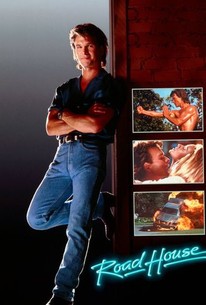
Swayze left Tango & Cash; Bening, Garner and Glenn alternatives; injury reportedly led Swayze to Ghost.

In the discussion (3)
Approx. transcript time · 01:16:15Read transcript
  • Swayze reportedly left the Kurt Russell part in Tango & Cash for Road House, a swap the group thinks benefited both films; Russell would have needed a different Dalton. — Chris Ryan
  • Annette Bening originally had Lynch's role; Lynch's claim that she was fired for poor chemistry with Swayze is explicitly doubted. James Garner was sought for Wesley, and Scott Glenn reportedly declined Jimmy, raising questions about his fighting ability. — Bill Simmons
  • Swayze's knee injury reportedly led him to decline Predator 2 and choose the less physically demanding Ghost; the hosts identify the proposed role as probably the lead. — Chris Ryan
Man on Fire The Rewatchables
Man on Fire

Half-Assed Internet Research

Rourke friction; missing teeth; weapons training; crew danger; deleted ending and romance

In the discussion (18)
Approx. transcript time · 00:16:00Read transcript
  • The novel and Scott Glenn film predate this version. — Bill Simmons
  • Brian Helgeland reportedly discovered the earlier film through video-store clerk Tarantino’s recommendation. — Bill Simmons
  • Denzel reportedly told Blackfilm that Scott's long passion for the material and desire to follow The Hunger with it persuaded him. — Bill Simmons
  • Rourke and Denzel reportedly did not get along. — Bill Simmons
  • Imagined Rourke resentment about the lead role is a joke, not sourced motivation. — Bill Simmons
  • Fanning's missing front teeth reportedly were nearly replaced with fakes before filmmakers chose the natural look, which the hosts favor. — Bill Simmons
  • Denzel reportedly trained with a weapons specialist for ten days. — Bill Simmons
  • Police reportedly warned the filmmakers about being targeted. — Bill Simmons
  • Crew members reportedly were robbed. — Bill Simmons
  • The kidnappers reportedly were modeled on the Arizmendi gang, with 300 million in ransom attributed to it by the podcast. — Bill Simmons
  • The deleted ending has Creasy detonate his own internal bomb at the Voice’s house. — Chris Ryan
  • Scott reportedly cut that revenge ending for tone, but the hosts question the explanation given earlier violence. — Bill Simmons
  • A deleted adult Lisa/Creasy sex scene is discussed. — Chris Ryan
  • Remaining dialogue is said to lack context after the scene’s removal. — Chris Ryan
  • The deleted romance is compared with Proof of Life. — Bill Simmons
  • The deleted romance would shift the film’s tone and is opposed. — Chris Ryan
  • Another connecting scene between Lisa and Creasy is desired. — Chris Ryan
  • A prior-bodyguard relationship and marital problems are speculative interpretations of Lisa’s dialogue. — Chris Ryan
Blow Out The Rewatchables
Blow Out

Recasting Couch

Keep Allen disputed; Sarandon, Winger, Close, Lange, Kidder and Fisher proposed

In the discussion (17)
Approx. transcript time · 00:11:26Read transcript
  • Redford or Hoffman are imagined in a 1970s version, but neither would supply Travolta’s particular lightness and finesse. — Wesley Morris
  • Travolta is imagined in Tom Hanks’s 1980s roles, Romancing the Stone, Beverly Hills Cop and Amadeus, praising his combined dancing and everyman abilities. — Wesley Morris
  • Purple Rain is jokingly floated and doubted, while Manhunter receives enthusiastic support as a hypothetical Travolta vehicle.
  • Gere is imagined in Urban Cowboy’s Scott Glenn role but not Travolta’s lead. — Wesley Morris
  • Travolta in No Way Out and Field of Dreams is imagined; Field of Dreams versus Bull Durham suitability is disputed, including whether he looks like a baseball player.
  • Travolta in Die Hard is enthusiastically supported; missing an action vehicle around 1986–1988 is considered a lost opportunity.
  • Travolta is imagined as Danny in Prince of the City.
  • Nancy Allen is the recasting target despite admiration for Dressed to Kill and Carrie; repeated casting of a romantic partner is compared to Sondra Locke, while Allen is said to improve in the second half. — Bill Simmons
  • Susan Sarandon, Debra Winger, a young Glenn Close and Jessica Lange are proposed for more star power. — Bill Simmons
  • Lange is initially considered the only proposed actor suited to the character’s ditziness; Allen’s apparent dullness is defended as manipulation plus genuine hospital sedation.
  • Allen is defended through her attentive eyes in the bar scene; the alternatives might project too much intelligence and professionalism, including Lange’s light rather than ditzy Tootsie performance. — Wesley Morris
  • Sarandon remains a possible alternative, but Allen’s Bronx background makes her believable as Philadelphian in a way Lange may not. — Chris Ryan
  • Margot Kidder and Carrie Fisher are proposed then rejected as different or too smart; Allen’s lightness is defended as exactly right, while the desire for a new actress persists.
  • Harrison Ford is proposed as capable of the lead but acknowledged to produce a different performance. — Wesley Morris
  • Roy Scheider could make it work as a more 1970s film; Redford is doubted as too beautiful and insufficiently East Coast, while Pacino and Gere remain conceivable. — Wesley Morris
  • Stallone is jokingly the worst case because he would rewrite the material.
  • The invited producer agrees Allen works better by the end despite disliking her early performance. — Bill Simmons
In the discussion (3)
Approx. transcript time · 01:03:44Read transcript
  • The who-won-the-movie take is saved for a phone call to Shea; a suggestion that maybe Ethan Hawke won is met with a no, followed by the garbled line 'Ethan Hawke's Denzel Washington won this week' (as transcribed), and a joke that Shea might come in with a Scott Glenn take.
  • On the call, the in-studio hosts say they saved who won the movie but already think they know the answer; the first question instead is whether this is the guest's favorite Denzel movie, and it is.
  • Shea is told this is Denzel's finest achievement and that he has written about it; no formal declaration or vote on who won is ever made, so Denzel is implied rather than declared.
Training Day

Apex Mountain

Antoine Fuqua; Denzel Washington (1 yes in room, 2 for Malcolm X; Shea splits acting vs cultural); Ethan Hawke (one yes, one switched to 2001, one for Before Sunset)

In the discussion (8)
Approx. transcript time · 00:48:41Read transcript
  • Ethan Hawke gets an initial no; the alternative apex offered is Before Sunset, the second one, which came after Training Day, with Before Midnight and Before Sunrise also liked, Reality Bites arguable as his movie-star apex, and Boyhood, where he is amazing but not on screen much.
  • Whether who you are married to counts prompts the ruling, deferred to the person who invented the show and the category, that it is only about performance, not life; still, the case for 2001 is made, a hot celebrity couple and a respected actor newly proven in action, and one host switches their pick to 01 while another stays with Before Sunset.
  • Hawke's turn in Fuqua's Brooklyn's Finest, basically playing Alonzo, gets a shout-out as an idea hatched at 2:30 in the morning after eight beers.
  • Antoine Fuqua is a yes: a good career, but how do you top directing Denzel at his peak performance, something to tell your grandkids; The Equalizer 2 is the most anticipated movie of the year for one host's father, Dr. Bill, who loves Denzel and The Equalizer and should have been on the episode, and of the four Denzel-Fuqua movies this is by far the best.
  • Eva Mendes and the other supporting people are not at their peaks here; Scott Glenn's apex is The Right Stuff, when in the 80s he looked like a potential top-tier actor.
  • Denzel gets a yes from one host; others answer Malcolm X, a movie about one man featuring three primary characters played by the same actor, a 19-year-old gangster, a 25-year-old militant and a 30-year-old spiritual leader; the Training Day case is that Denzel, already America's most beloved actor with a unanimous approval rating, lacked an Oscar and a Michael Jordan 1992 Finals moment and then played a part nobody else could in a movie that should not have worked; it is called neck and neck, a total coin flip.
  • Favorite recent Denzel: Flight is growing on one host, the two Travolta movies are liked and Unstoppable is called better with a fun Chris Pine; Denzel inhabits characters for better and worse, probably smoking for three months here and drinking through Flight, and he struggles only when he tries something smaller that recesses from essential Denzel-ness, as with Roman J. Israel.
  • On the phone, the acting apex is Malcolm X for a single performance, but the cultural apex, the Denzel moment, is Training Day for sure: everyone followed along waiting for the Oscar, Halle won the same year right before him, and his two-birds-with-one-stone comment played out perfectly.
In the discussion (13)
Approx. transcript time · 00:35:24Read transcript
  • The segment is announced as 'New category. The Joe Pantoliano Award' and named for Joe Pantoliano, which is why it is recorded under the existing Joey Pants that-guy family.
  • The award is for a then-that-guy who became a that guy or never did: Joe Pantoliano was Guido the Killer Pimp and the guy from the Cruisers movie for five years, then Running Scared, The Matrix and The Sopranos made him Joey Pants; the two nominees are Scott Glenn and Harris Ulan (as transcribed).
  • Harris Ulan (as transcribed) is a flat-out that guy: a hundred movies, almost always evil, usually the lieutenant or someone in the DA's or mayor's office, an amazing theater actor; the two performances burned in are the judge in Ghostbusters 2 and Mel Burstead (as transcribed) in Scarface, a role he has essentially played for 35 years, including a version of it here.
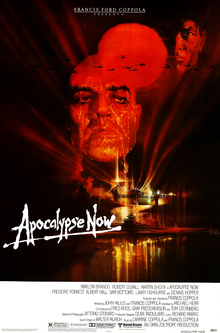
  • Scott Glenn's recognition of Hoyt as a strong safety from North Hollywood High is recited, and his one-shot character in the Apocalypse Now director's cut, painted and surrounded by Montagnard Indians at Brando's compound, is imagined coming back to the States to become an L.A. drug dealer who scouts high school defensive backs.
  • Why does Roger wear a black tank top tucked into jeans with a green bathrobe, drinking scotch at 10 in the morning, with a photographic memory for a player from 10 or 15 years earlier, before YouTube mixtapes, like the invention of Pro Football Focus; weird little flourishes like this elevate the movie.
  • Roger is understood as an ex-cop turned dealer, and there is a brand of cop really into local athletics who goes to high school games for no reason and asks about the quarterback, a provincial type who probably has a Letterman jacket from 1957.
  • The script had been banging around since the mid-90s and is based on the Rampart scandal, drawing on the Raphael Perez (as transcribed) case of cops stealing and selling drugs, with Alonzo modeled on Perez down to the beard and look.
  • Wesley Morris's 'there can only be one' market-correction game: Tommy Lee Jones market-corrected Scott Glenn; Glenn was the rival who sleeps with Debra Winger in Urban Cowboy, a weird film that has not aged well, while Jones was in The Executioner's Song with Rosanna Arquette, and they ran parallel through the 80s until The Fugitive and Under Siege made Jones a top-tier star and left Glenn to play Roger.
  • Glenn belongs to the early-80s generation of The Right Stuff, Silverado and Terms of Endearment whose careers were derailed by the mid-to-late-80s action boom; he took second-in-command roles in The Hunt for Red October, Silence of the Lambs as Jack Crawford, The Player, Backdraft and Absolute Power, grouped with Kline, Costner and Dennis Quaid.
  • Personal Best, Robert Towns's (as transcribed) directorial debut, is a weird film that has aged badly and incredibly well at once, with Glenn's character crazy and the two-athletes-falling-for-one-another premise interesting; it will never be on the show.
  • One voice thinks it has to go to Scott Glenn; another argues for Harris Ulan (as transcribed) because Glenn was already Scott Glenn, Alan Shepard in The Right Stuff, a known quantity 20 years earlier; Roger is called his best part, three great scenes, though the other would take Personal Best and The Right Stuff over it, and no single pick is settled.
  • Roger's football recall is riffed on: the game against Crenshaw, picking off two passes, going nickel in the third quarter, the safety blitz, all offered with scotch and a bathrobe.
  • Earlier, during the heat check, a nomination for Harris Ewan (as transcribed) was held for this new category.
In the discussion (7)
Approx. transcript time · 00:32:26Read transcript
  • Nominees are Snoop Dogg in a wheelchair, Eva Mendes in a rookie performance and Tom Berenger, with Smiley and Bone added as the other two heat check performances.
  • Tom Berenger looks exactly like this host's father, which is disorienting, so Berenger from Training Day to Inception is like watching that father in a movie; Berenger also plays a narcotics cop here, which the father is. — Sean Fennessey
  • Berenger was a massive star for about six years after The Big Chill and Platoon, shows up as the Marine recruiting Cruise in Born on the Fourth of July, and Someone to Watch Over Me, with Mimi Rogers, is slated for year seven of the show.
  • Scott Glenn is ruled out as a Dion Waiters candidate because he is coming up in a different category and one host is not allowed to talk about him yet, though when asked for a heat check a voice still answers Scott Glenn.
  • Snoop, by all accounts, should have been bad and Snoop in a wheelchair should have been one of the biggest movie disasters, but his crack-corner lines are recited admiringly as really good Snoop stuff; a nomination for Harris Ewan (as transcribed) is held for another new category.
  • Bone was played by Klee Shahid Sloan (as transcribed), an activist and documentary director who worked to reform gang culture from inside the Athens Park Bloods, part of how much Fuqua worked within L.A. gang culture to make the movie authentic.
  • One host gives it to Cliff Curtis for Smiley, now on Fear the Walking Dead and great in Danny Boyle's Sunshine: Smiley did not have to be so interesting, making you feel it will be okay with menace underneath and the tattoos; another concedes Smiley is great but gives it to Snoop Dogg because it was so unexpected.
Training Day

Most Rewatchable Scene

Diner scene (2-1 in studio) vs poker/table scene (Shea's pick makes it 2-2)

In the discussion (7)
Approx. transcript time · 00:17:33Read transcript
  • Four candidates are laid out: Denzel bullying Ethan Hawke into smoking pot that turns out to be PCP, an amazing mental chess match of challenging somebody's manhood; the nine-minute robbery of Scott Glenn, where the crew goes back to shoot him and take his money and the guy in the bulletproof vest really does get shot, which Jake refuses to join; the poker scene with the Latino gang at Smiley's house, which has no Denzel in it; and the final Denzel-versus-Hawke shootout in the house.
  • Their first meeting in the diner, the 'tell me a story' scene, is one host's favorite and makes it five candidates; the 'this is a newspaper' beat is recited.
  • Asked whether any character in a lifetime of watching movies resembles Alonzo, the answer is that he resembles older guys on a high school team: charismatic but terrifying, guys who could kick your ass but whom you might also die for, messing with you while trying to indoctrinate you, leaving a younger man completely confused; as a younger man this host thought that way about Dave Jacoby. — Chris Ryan
  • Another voice objects that Jacoby is not threatening and is told they did not know him back then; picks then split, with one host going diner scene alongside Sean and reciting the 'tell me a story' exchange, and another going poker scene for the Latino street gang's crude 'shit pushed in' question.
  • Revisiting it during the nitpicks, one host thinks the most rewatchable scene might be the one after the diner where Alonzo makes Jake take the drugs, with Alonzo pulling a gun on another motorist who just stays cool and stopping in the middle of intersections.
  • Asked for a favorite scene seventeen years later, the phoned-in answer is the table scene, the best scene in the movie even though it does not involve Denzel; another voice says that was their case too and that the boys picked the diner scene.
  • The diner scene is called good, but the poker scene is an incredible nine minutes that left one viewer tense, back knotted and stomach nervous, not knowing how Jake gets out; the escalation is laid out from gangsters taking your gun, to your ride leaving, to being asked a crude question, which is the end of the line.
The Silence of the Lambs

Half-Assed Internet Research

Hopkins mocked Foster's Southern accent in their first scene; James Gumm combines Ed Gein, Ted Bundy and Gary Hednick (as transcribed); Gene Siskel gave the film a negative review; Brooke Smith gained 25 pounds for Catherine Martin; Goodbye Horses replaced a Bob Seger song and Ted Levine insisted on the dance; Levine and Scott Glenn did extensive research; the story was inspired by Robert Keppel and Ted Bundy; William Goldman got Demme to cut a 12-minute Crawford-Clarice sequence

In the discussion (10)
Approx. transcript time · 00:33:36Read transcript
  • According to Jodie Foster, Hopkins improvised mocking her Southern accent during their first meeting, so her horrified reaction is genuine; the hosts love when good actors unsettle their scene partners, and the accent is called not great and one of several problems with her performance.
  • James Gumm ('Jame Gum' variously as transcribed) combines three real killers: Ed Gein, who skinned victims, Ted Bundy, who escaped and killed again, and Gary Hednick (as transcribed), who kept captives in a basement pit.
  • Gene Siskel gave the film a negative review, and one host calls Siskel the movie equivalent of the host's perpetual disagreements with Greenwald.
  • Brooke Smith, who played Catherine Martin, gained 25 pounds for her first major role, and the hosts wonder whether she deserved a supporting actress nomination.
  • The dance song Goodbye Horses by Q Lazarus was originally supposed to be a Bob Seger song, which one host is glad it was not; the hosts joke about how men their age would react if it came on in a bar.
  • Ted Levine insisted the dance scene be in the film, and the screenwriter did not know it would be until he saw it; it was improvised, Levine needed two drinks first, and he researched by visiting trans bars and talking to people.
  • Scott Glenn researched child murder cases and worked with the real-life model for Crawford, with tempestuous political arguments because Glenn opposed capital punishment; a host jokes that Glenn then murdered him.
  • The story was inspired by the relationship between University of Washington criminology professor and profiler Robert Keppel and Ted Bundy, which is how the Green River killer was caught.
  • The second host's research, from a Deadline oral history: after an LA screening, William Goldman told Demme to cut a filmed 12-minute sequence in which the attorney general chews out Crawford and Clarice, kicks her out of the academy and takes him off the case; Demme and the editor resisted, cut it anyway, and the film became a tight hour and 54 minutes.
  • Goldman is also credited with telling the Good Will Hunting writers to drop the second half where Will becomes a spy; the host found the Goldman story the most interesting, the Hackman material having been covered.
The Silence of the Lambs

Casting What-Ifs

Gene Hackman co-owned the rights and planned to direct and possibly play Jack Crawford before backing out; Sean Connery and Jeremy Irons turned down Lecter; Ed Harris turned down Crawford because he wanted Lecter; Michelle Pfeiffer, the first choice for Clarice, and Meg Ryan turned it down; Redford, Hoffman and Robert Duvall are mentioned as Lecter possibilities
In the discussion (7)
Approx. transcript time · 00:14:05Read transcript
  • The book rights were originally bought 50-50 by Mike Medavoy at Orion and Gene Hackman, who was going to direct and maybe star or just play Jack Crawford; one host says Hackman still should have played Crawford, though Scott Glenn is amazing.
  • Ted Talley (as transcribed) was hired to write what is called one of the great screenplays of the last 30 or 40 years; after the controversial Mississippi Burning, Hackman's daughter told him the film was too violent, he backed out, Orion paid him back his half and brought on Jonathan Demme, who began looking for a Lecter.
  • Sean Connery reportedly refused outright, calling the role grotesque, and Jeremy Irons would not do it either, possibly because he did not want to play two villains in a row after Reversal of Fortune; the hosts try Connery's voice on the fava beans line and conclude it would not work.
  • Ed Harris turned down Jack Crawford because he wanted Lecter, which is jokingly called a heat check and a little Dion Waiters of him.
  • Michelle Pfeiffer, first choice for Clarice, turned it down as too violent after working with Demme on Married to the Mob, and one host thinks that would have been really cool; Meg Ryan also passed at a time she was offered everything, which led to her casting in The Doors.
  • With Gene Hackman as Lecter the film could have gone badly wrong, the hosts say, and it would now be stuck on a minor cable channel at two in the morning.
  • Later, during research, the hosts are happy with Scott Glenn as Crawford over Tommy Lee Jones, cannot see Jones as Lecter, are glad Lecter was not Redford, Hoffman or Robert Duvall, and wonder whether Daniel Day Lewis was too early for it.
Displaying all 10 discussions

Films in the archive