‹ All people

Film credit

Jonathan Demme

Also referred to as Demme, Demi, Jonathan Demy, Ted Demme

Stats

Episodes featuring their films
4
Movies in this archive
4

Rewatchables episodes featuring Jonathan Demme’s films

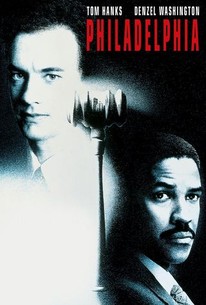
Philadelphia

1993 film

Bill Simmons · Chris Ryan · Wesley Morris

Aired January 23, 2024

Displaying all 4 episodes

Mentioned in discussions

About Last Night

Casting What-Ifs

Bill Murray and Nick Nolte; alternate director and Debbie contenders.

In the discussion (4)
Approx. transcript time · 01:24:27Read transcript
In the discussion (8)
Approx. transcript time · 01:41:14Read transcript
  • Jonathan Demme is accepted because he won Best Director for a superior film to Philadelphia.
  • Anthony Hopkins is accepted, with jokes about later cat TikToks and The Father.
  • Serial-killer movies are debated against Seven and Zodiac without a final resolution.
  • Q Lazzarus is accepted for “Goodbye Horses.”
  • Wearing another person’s face is accepted, while The Texas Chain Saw Massacre and Face/Off are discussed as rivals. — Chris Ryan
  • Chris Isaak is accepted as plausibly at his commercial/cultural peak around “Wicked Game” and this cameo. — Bill Simmons
  • Francis Bacon homages, ordering lamb chops rare, Ted Levine, night vision, the tuck dance, and the 1979 Dodge Tradesman Maxi Van are all proposed or accepted. — Bill Simmons
  • Poodles are proposed, then rejected in favor of Best in Show. — Chris Ryan
In the discussion (5)
Approx. transcript time · 01:34:05Read transcript
The Silence of the Lambs

Casting What-Ifs

Hackman and Connery for Lecter or Crawford; Pfeiffer and others for Clarice; Ed Harris for Crawford; several alleged Lecter auditions (some uncertain)

In the discussion (7)
Approx. transcript time · 01:30:20Read transcript
The Silence of the Lambs

What’s Aged the Worst?

The mishandled sequel/prequel franchise, opening typography, profiling pseudoscience, political appropriation of Lecter, Foster’s accent, and trans implications

In the discussion (7)
Approx. transcript time · 01:21:38Read transcript
  • The Hannibal novel’s Clarice–Lecter relationship repelled Jodie Foster; the later film rewrite and aging Hopkins prequel are treated as franchise mistakes. — Bill Simmons
  • The large opening-credit typography blocking faces is criticized as an early-1990s aesthetic problem. — Bill Simmons
  • Criminal profiling is described as much less reliable than the film assumes. — Chris Ryan
  • Donald Trump’s 2024 references to Hannibal Lecter are identified as a degrading later association. — Bill Simmons
  • Jodie Foster’s accent remains an explicit weakness. — Chris Ryan
  • Serial killers communicating through neat anagrams is judged dated, though the panel misses the puzzle theatricality.
  • The film’s failure to make Demme’s intended distinction between Gumb and trans identity clear enough is preserved as a serious contemporary criticism. — Bill Simmons
The Silence of the Lambs

What’s Aged the Best?

Jonathan Demme’s framing and editing, the poster and score, Easter eggs, antagonist construction, and compact runtime
In the discussion (8)
Approx. transcript time · 01:05:50Read transcript
  • Dr. Chilton works as a human institutional antagonist alongside the overt killers, like the obstructive authority figures in Jaws and Poltergeist.
  • Direct-to-camera framing, glass reflections, Howard Shore’s score, needle drops, and the poster remain formally distinctive. — Mallory Rubin
  • Whiteboards, notebooks, microfiche articles, bulletin boards, and dungeon details reward pausing and close viewing. — Mallory Rubin
  • Structural changes, especially removing the disciplinary-hearing sequence and repositioning the training drill, made the movie tighter. — Bill Simmons
  • Cannibal fascination is said to remain culturally potent.
  • The movie’s apparent ending followed by Lecter’s coda is praised. — Bill Simmons
  • The point-of-view close-ups, Lecter’s mask and stretcher, “quid pro quo,” clear-glass cell, and night-vision imagery remain iconic. — Bill Simmons
  • The film’s coveting clue and its disciplined sub-two-hour length are praised. — Bill Simmons
In the discussion (2)
Approx. transcript time · 01:11:38Read transcript
  • Jonathan Demme is proposed to bring Something Wild/Rachel Getting Married energy and direct-to-camera characters. — Bill Simmons
  • Seattle and California are considered but challenged on community-property grounds; Westchester with a New York commute is an alternative. — Amanda Dobbins
Philadelphia

Apex Mountain

Jonathan Demme; direct-to-camera dialogue; Springsteen in film; evil Robards

In the discussion (4)
Approx. transcript time · 00:54:46Read transcript
  • Most Rewatchable Scene: the opening Philadelphia montage and Springsteen song, with documentary-like camera interaction. Chris calls it a possible opening-credits Apex; Bill ranks the song among Springsteen’s best, and Wesley compares the montage to local Action News.
  • The opening direct-to-camera Hanks–Washington confrontation is recalled as a scene nominee. — Wesley Morris
  • Apex: Denzel rejected; Hanks’s adjacent early 1990s plateau is discussed with Forrest Gump preferred. Demme is affirmed after comparison with Silence of the Lambs; Banderas’s earlier Spanish/art-house career is preferred.
  • Apex affirms direct-to-camera dialogue, Springsteen’s use in film and evil Robards. Gay 1990s films and Philadelphia films are rejected; cartoon homophobia faces a Talented Mr. Ripley alternative, and the fictional Stallion Showcase prompts a joke rather than a clear award.
Philadelphia

Half-Assed Internet Research

Real cases; weight loss; role discomfort; Vawter; military ban; Demme’s friend

In the discussion (2)
Approx. transcript time · 00:28:38Read transcript
  • The film’s 26 million budget, 206.7 million gross and ninth-place 1993 ranking contradict Kramer’s prediction of commercial failure. — Bill Simmons
  • Research: the story draws on two attorneys’ discrimination cases; Hanks lost 30 pounds; Steenburgen’s personal dislike of the role became a line; Ron Vawter’s HIV status caused insurance difficulty; the party’s military costume references the service ban; a friend’s AIDS diagnosis motivated Demme. — Bill Simmons
Philadelphia

What’s Aged the Best?

Hanks/Banderas; speech; opera aftermath; family; period detail; jury; supporting cast

In the discussion (8)
Approx. transcript time · 01:07:47Read transcript
  • Chris chooses Andy’s promotion scene for Demme’s unsettling head-on framing and authentic wood-paneled club culture, compared with Trading Places’ banquet sequence. — Chris Ryan
  • Aged best: Hanks and Banderas’s authentic relationship scenes despite the thin Miguel role; Hanks’s Oscar speech inspiring In & Out. — Bill Simmons
  • Aged best: the awkward aftermath of the opera scene as Joe leaves rather than a sentimental fade. Wesley questions how much Andy’s solitude is actually shown, again connecting the perspective to Joe.
  • Joe’s hesitation on the stairs after leaving Andy is praised as an actorly moment; possible concern for his vulnerability is offered, while Wesley explicitly denies suggesting a sexual return. — Wesley Morris
  • Aged best: the family, the reuse of Demme actors such as Charles Napier, Philadelphia’s wealthy-club culture, period fear of lesions, and Andy briefly glimpsing his possible future in a dying patient. — Bill Simmons
  • Andy’s theater mustache and stubbled baseball-cap appearance prompt appreciation of Hanks’s looks and a teasing callback to Wesley’s earlier celebrity attractiveness opinion. — Wesley Morris
  • Aged best: jury deliberations reverse expectations about the apparent conservative juror, and the verdict reactions work. Robards’s villain and Joanne Woodward’s mother are praised. — Bill Simmons
  • Aged best: Springsteen’s award sweep is compared with Carly Simon’s Working Girl song; Robert Ridgely’s presence inevitably recalls his Boogie Nights character. — Bill Simmons
Philadelphia

Most Rewatchable Scene

Joe’s family conversation; Andy’s promotion; Dr. J cameo

In the discussion (15)
Approx. transcript time · 00:54:46Read transcript
  • Most Rewatchable Scene: the opening Philadelphia montage and Springsteen song, with documentary-like camera interaction. Chris calls it a possible opening-credits Apex; Bill ranks the song among Springsteen’s best, and Wesley compares the montage to local Action News.
  • The opening direct-to-camera Hanks–Washington confrontation is recalled as a scene nominee. — Wesley Morris
  • Andy’s brief call to his mother is praised for efficiently revealing illness, severity, openness and her suppressed grief. — Chris Ryan
  • The senior-associate promotion scene contrasts the old-boys celebration with scrutiny of Andy’s forehead lesion. — Bill Simmons
  • Andy asking Joe to represent him is praised for Joe’s fearful reaction and attention to touched objects, the firing flashback, and Andy’s devastated stillness after rejection. One host calls it his favorite. — Bill Simmons
  • The library discrimination scene, with Tracey Walter’s librarian and Joe joining Andy’s legal research, is nominated. — Bill Simmons
  • Dr.J’s cameo and the partners’ subsequent villainous strategy conversation are nominated; Robards’s full commitment is admired despite caricature.
  • Opening arguments and the courtroom material are praised, especially Steenburgen’s repeated fact formulation and Denzel’s speech. — Bill Simmons
  • The Maria Callas opera scene is nominated and initially awarded Great Shot Gordo for the overhead camera and red lighting. Wesley objects to red’s association with hell for a gay character; Bill reads passion for life instead.
  • Andy’s testimony about excellent lawyering and justice, the flashback to office jokes, and the attack on his sexual history build to the lesion reveal. — Bill Simmons
  • The lesion scene is considered manipulative but effective: Wesley weighs its audience and warning function, while Chris sees a strong courtroom tactic. Wheeler’s testimony is another nominee. — Wesley Morris
  • The hospital farewell, the oxygen-mask gesture, individual family goodbyes and Neil Young ending are praised as exceptionally sad final minutes. — Bill Simmons
  • Wesley chooses Joe’s private conversation with his wife about gay acquaintances. His confident tirade, apron, bottle and food feel lived-in, and learning his attractive aunt is lesbian punctures his certainty.
  • Chris chooses Andy’s promotion scene for Demme’s unsettling head-on framing and authentic wood-paneled club culture, compared with Trading Places’ banquet sequence. — Chris Ryan
  • Bill chooses Dr.J’s cameo, with Andy asking Joe to take the case as runner-up. — Bill Simmons
Displaying discussions 1 - 12 of 19 in total

Films in the archive