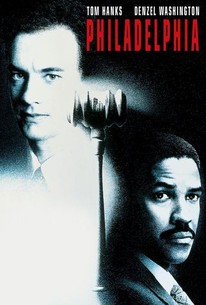
Heat check: Anna Deavere Smith is one choice and Joanne Woodward another, with Woodward’s screen time questioned. Robards is too prominent; Ed Rendell is floated.
Chris chooses Andy’s promotion scene for Demme’s unsettling head-on framing and authentic wood-paneled club culture, compared with Trading Places’ banquet sequence. — Chris Ryan
Aged best: Hanks and Banderas’s authentic relationship scenes despite the thin Miguel role; Hanks’s Oscar speech inspiring In & Out.
Aged best: the awkward aftermath of the opera scene as Joe leaves rather than a sentimental fade. Wesley questions how much Andy’s solitude is actually shown, again connecting the perspective to Joe.
Joe’s hesitation on the stairs after leaving Andy is praised as an actorly moment; possible concern for his vulnerability is offered, while Wesley explicitly denies suggesting a sexual return.
Aged best: the family, the reuse of Demme actors such as Charles Napier, Philadelphia’s wealthy-club culture, period fear of lesions, and Andy briefly glimpsing his possible future in a dying patient.
Andy’s theater mustache and stubbled baseball-cap appearance prompt appreciation of Hanks’s looks and a teasing callback to Wesley’s earlier celebrity attractiveness opinion.
Aged best: jury deliberations reverse expectations about the apparent conservative juror, and the verdict reactions work. Robards’s villain and Joanne Woodward’s mother are praised.
Aged best: Springsteen’s award sweep is compared with Carly Simon’s Working Girl song; Robert Ridgely’s presence inevitably recalls his Boogie Nights character.