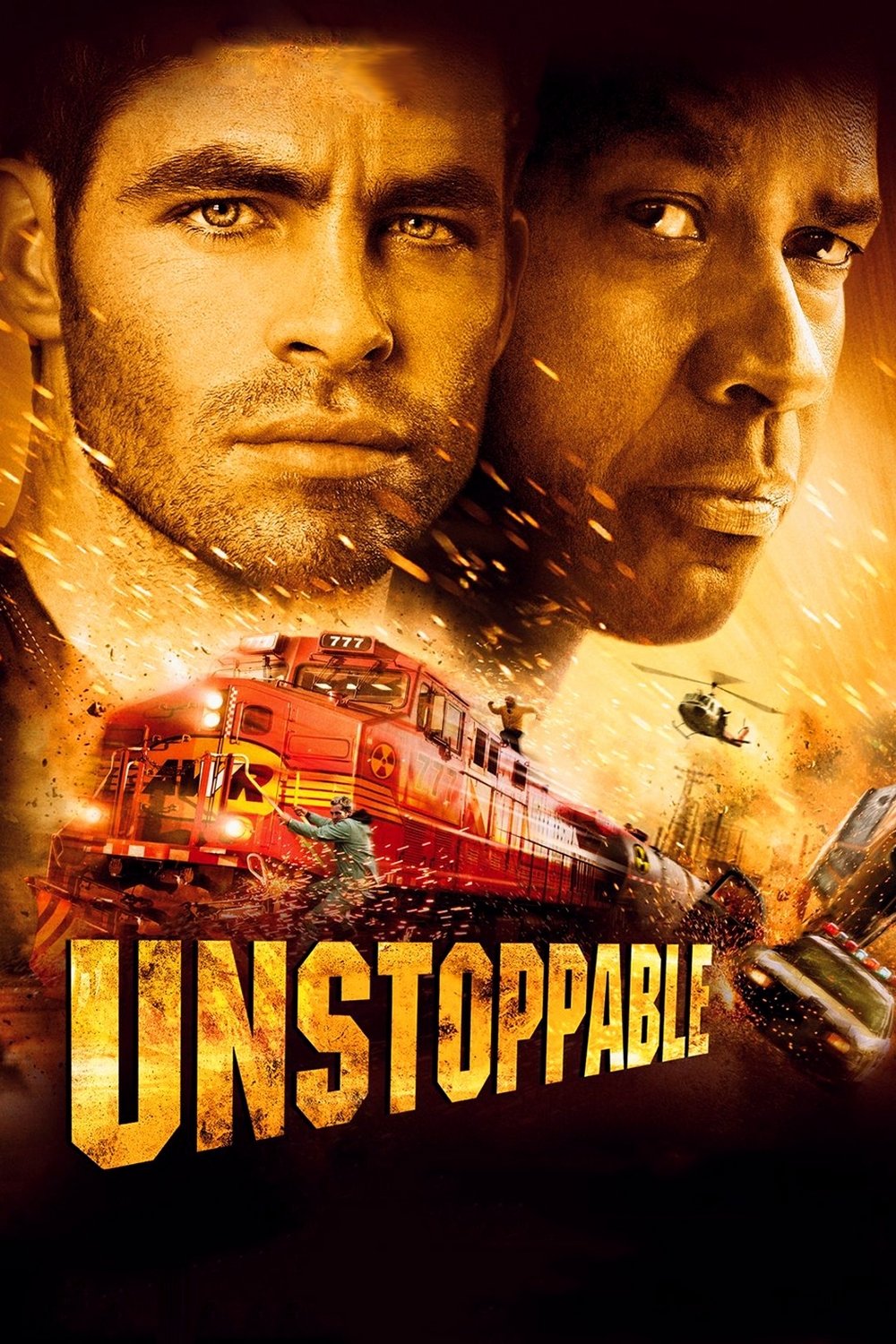
The film was inspired by a 2001 incident in which a runaway train traveled 66 miles through northwest Ohio; the real worker was never named and was less goofy than Dewey.
Two of the real cars held thousands of gallons of molten phenol; the train reached 51 miles an hour before stopping. — Bill Simmons
Chris Pine performed all of his own stunts; Denzel dislikes heights but went on top of the train on wires, and the empty train rocked more than usual. — Bill Simmons
Hooters is at its apex: the film comes at the height of Hooters openings and redeems it after Big Daddy's jokes with a heartwarming scene.
Chris Pine is proposed; Star Trek launched him, but this is his first chance to lead a big movie with a big director and star.
Pairing a newly established actor with an older star is a classic Hollywood move, and Pine has arguably not taken the next leap since; a participant would write him a great part given the chance.
Dewey losing the train is a first pick: he cannot catch it, falls, and is the kind of idiot a real person would be rather than a movie idiot. — Bill Simmons
Tony Scott gives fringe characters room, as with the surveillance guys in Enemy of the State, who almost steal that movie. — Bill Simmons
The train nearly hitting the horses is unreal; the audience knows the children are safe but the horse might not be, and the shot from inside the horse trailer amazes.
Made around 1990 the horse would have gone down; you do not kill a dog unless you are John Wick.
Planting a car in front of the train goes badly and it derails and explodes, the first sign it could take out a town. — Bill Simmons
Galvin's plan is never explained: the film cross-cuts between his boardroom and Rosario Dawson's people, and the audience watches the plan take shape without being told.
Information flows well: viewers see the broadcasts and everyone involved, while the men on the train keep being caught unaware.
Will falling while trying to couple the cars feels real with no CGI, making a participant nervous for Chris Pine; the foot injury looks like it hurts. — Bill Simmons
Denzel's line that Will is "different" when asked if he is okay is singled out as brutal.
The train heading into the big curve beside storage tanks is joked about as the worst city planning; a defense is promised for Picking Nits.
The curve sequence works because of the cross-cutting to everyone watching on TV: the engineers, Rosario Dawson's team, Denzel's daughters at Hooters, Pine's wife and son, and the bars, which makes it emotional.
Tilting trains are believable because nobody knows enough about trains, unlike buses taking a ramp at 55.
Will jumping out and back onto the train is chosen as the most rewatchable scene; it leads to Denzel standing on top of the train with his arms up. — Bill Simmons
Fast and Furious has desensitized viewers to jumping between moving vehicles; Dewey's run shows how hard it really is. — Bill Simmons
Runaway Train with Eric Roberts and Voight influenced Tony Scott; it is a cynical convict movie where the train is not a character, but Denzel atop the train echoes Voight's ending.
The helicopter attempt to stop the train with a man hanging out is picked; one shot holds two trains, three choppers and a fleet of emergency vehicles. — Chris Ryan
Favorite shot is the grain explosion while Pine works on the coupling, with the helicopter flying parallel through the cornstorm, likened to Days of Heaven and Apocalypse Now; the most rewatchable scene is Ned arriving at the end in his red truck and getting Chris Pine to the front. — Quentin Tarantino
Ethan Hawke gets an initial no; the alternative apex offered is Before Sunset, the second one, which came after Training Day, with Before Midnight and Before Sunrise also liked, Reality Bites arguable as his movie-star apex, and Boyhood, where he is amazing but not on screen much.
Whether who you are married to counts prompts the ruling, deferred to the person who invented the show and the category, that it is only about performance, not life; still, the case for 2001 is made, a hot celebrity couple and a respected actor newly proven in action, and one host switches their pick to 01 while another stays with Before Sunset.
Hawke's turn in Fuqua's Brooklyn's Finest, basically playing Alonzo, gets a shout-out as an idea hatched at 2:30 in the morning after eight beers.
Antoine Fuqua is a yes: a good career, but how do you top directing Denzel at his peak performance, something to tell your grandkids; The Equalizer 2 is the most anticipated movie of the year for one host's father, Dr. Bill, who loves Denzel and The Equalizer and should have been on the episode, and of the four Denzel-Fuqua movies this is by far the best.
Eva Mendes and the other supporting people are not at their peaks here; Scott Glenn's apex is The Right Stuff, when in the 80s he looked like a potential top-tier actor.
Denzel gets a yes from one host; others answer Malcolm X, a movie about one man featuring three primary characters played by the same actor, a 19-year-old gangster, a 25-year-old militant and a 30-year-old spiritual leader; the Training Day case is that Denzel, already America's most beloved actor with a unanimous approval rating, lacked an Oscar and a Michael Jordan 1992 Finals moment and then played a part nobody else could in a movie that should not have worked; it is called neck and neck, a total coin flip.
Favorite recent Denzel: Flight is growing on one host, the two Travolta movies are liked and Unstoppable is called better with a fun Chris Pine; Denzel inhabits characters for better and worse, probably smoking for three months here and drinking through Flight, and he struggles only when he tries something smaller that recesses from essential Denzel-ness, as with Roman J. Israel.
On the phone, the acting apex is Malcolm X for a single performance, but the cultural apex, the Denzel moment, is Training Day for sure: everyone followed along waiting for the Oscar, Halle won the same year right before him, and his two-birds-with-one-stone comment played out perfectly.