‹ All movies

Red getting his chain snatched by Deebo

Picking one scene is called difficult because the first hour is basically a rewatchable hour; Craig getting high is nominated first, since you wait the whole movie for him to finally take a puff, and Smokey's angel dust flashback is noted as funny but a little problematic.

Red getting his chain snatched by Deebo is nominated as the classic bully scene: when Deebo approaches, Smokey rips his own chain off and puts it in his back pocket, while Red only tucks his in and says so, which is not thorough at all; the Bernie Mac pastor scene and Bye Felicia are also nominated.

"You ain't got to lie, Craig"

Rather than read fifteen minutes of quotes, each host gives a favorite; the first is 'you ain't got to lie, Craig', said by Joy when she accuses Craig of infidelity, funnier on an adult rewatch because she has a man in bed with her while saying it, making her a hypocrite.

The film

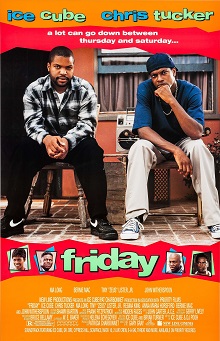
Friday (1995)

Directed by F. Gary Gray · Drama

91 minutes

Cast

Selected cast credits · Film reference

Ice Cube Craig Jones
Chris Tucker "Smokey"
Nia Long Debbie
Anna Maria Horsford Betty Jones
Regina King Dana Jones
John Witherspoon William "Willie" Jones
Bernie Mac Pastor Clever
Angela Means Felisha
Faizon Love "Big Worm"
Lawanda Page Jehovah's Witness
DJ Pooh "Red"
Tony Cox Mr. Parker
Kathleen Bradley Mrs. Parker
Reynaldo Rey Red's Father
Ronn Riser Stanley
Meagan Good Kid #2
F. Gary Gray Store Employee
James Bose Smith Chris "Lil Chris"
WC Drive-By Shooter
Michael Clarke Duncan Craps Player (uncredited)

Everything from the episode

In the order the hosts got to it. Open a row for the discussion.

17:21

Casting What-Ifs

DJ Pooh was the original Smokey until New Line balked; Tommy Davidson and Chris Rock were considered for Smokey; Tomm...

DJ Pooh was the original Smokey until New Line balked; Tommy Davidson and Chris Rock were considered for Smokey; Tommy Davidson was also to play Ezal; Angela Means's agents wanted her to pass on Felicia

In the discussion (5)
Approx. transcript time · 00:17:21Read transcript
  • The script was written with DJ Poo (as transcribed) as Smokey, but New Line would not sign off because he was not a big enough star, which one host calls a smart move; Chris Tucker, not yet established but on the rise, auditioned for Cube and the rest is history.
  • Pooh as Smokey would not have worked, but he killed it as Red, a lovely part, especially the way he jangles back to the car after asking about his beach cruiser.
  • Tommy Davidson and Chris Rock were also considered for Smokey; Rock is rejected as too New York, more famous than Tucker in 1995 but not computing in the role, and his doing Tucker's physical comedy would look like overacting, Tucker reading as a younger, more exuberant spirit where Rock can be hardened.
  • Tommy Davidson was also supposed to play the crackhead Ezal; Angela Means, who plays Felicia, has said her agents wanted her to pass because she was so pretty and should have played the pretty girl, which one host finds fair.
  • A hypothetical recast: Viola Davis as Mrs. Jones, the comedic but strict mother Anna Maria Horsford plays; Davis rarely gets comedic, motherly roles and is pushed into intense crying parts, so the hosts wonder what the role would have looked like with her in 1995 or in a reboot, though whether she was old enough twenty years ago is questioned.
19:21

Cameo Corner

F. Gary Gray mopping in the deli scene; Megan Good (as transcribed) in the opening and the ice cream truck scene with...

F. Gary Gray mopping in the deli scene; Megan Good (as transcribed) in the opening and the ice cream truck scene with Big Worm; Michael Clark Duncan (as transcribed) shooting dice in the Red knockout scene; Dub C as the drive-by shooter

In the discussion (4)
Approx. transcript time · 00:19:21Read transcript
  • A host coins a non-canonical category, Cameo Corner, for blink-and-miss appearances: director F. Gary Gray, who one host thinks bears an uncanny resemblance to Chance the Rapper and another does not, is mopping up in the deli scene.
  • Cube, Tucker and F. Gary Gray were all in their early-to-mid twenties, Tucker about 23 and Cube and Gray 24 or 25, so the film is the output of young creative people.
  • Megan Good (as transcribed) appears in two scenes, the opening and the ice cream truck scene with Big Worm; Michael Clark Duncan (as transcribed) is shooting dice on the sidewalk in the scene where Red gets knocked out, on screen for about a second, and reportedly wanted a speaking role; the others had never noticed him.
  • The drive-by shooter is identified as Dub C even though the scene is dark, on the strength of a host knowing rappers and later verifying it, teased as the Donnie flexing section; the music cue there, Pay Your Dues by Low Profile, is praised.
22:05

Most Rewatchable Scene

Red getting his chain snatched by Deebo

Red getting his chain snatched by Deebo

In the discussion (7)
Approx. transcript time · 00:22:05Read transcript
  • Picking one scene is called difficult because the first hour is basically a rewatchable hour; Craig getting high is nominated first, since you wait the whole movie for him to finally take a puff, and Smokey's angel dust flashback is noted as funny but a little problematic.
  • Red getting his chain snatched by Deebo is nominated as the classic bully scene: when Deebo approaches, Smokey rips his own chain off and puts it in his back pocket, while Red only tucks his in and says so, which is not thorough at all; the Bernie Mac pastor scene and Bye Felicia are also nominated.
  • The first hour is a procession of immaculate character bits that happen on the stoop over one day rather than discrete scenes, so a line like 'you ain't got to lie, Craig' is a memorable quote, a fifteen-second bit, not a rewatchable scene.
  • Craig getting high works because Cube underplays it: body language shifts, chuckling, offering to make Kool-Aid, weird non sequiturs rather than Smokey-style running in front of a car; it is a progression over fifteen minutes rather than a scene, and a vulnerable, goofy Cube is striking after years of scowling, with the Cypress Hill cue a little on the nose.
  • One vote goes to Red getting his chain snatched by Deebo because it has a lot of moving parts: Deebo, Red's cameo, and Cube and Smokey reacting to Deebo; another vote goes to the Craig scene, not for Craig but for Smokey's Michael Jackson-style dancing, possibly the start of Chris Tucker moonwalking in every appearance, which got him into a Michael Jackson video.
  • A second vote joins the Red pick in a garbled exchange that addresses Charity and pairs the name with 'Craig getting that', so which pick Charity proposed is unclear; the Craig-scene voter stands alone; the Red scene's moving parts are the core of the movie and set up its end game, and Deebo is loved.
  • Tiny Lister was known as a wrestler in the WWE and appeared in the Hulk Hogan movie No Holds Barred, so he was one of the more famous people in the film after Ice Cube; Deebo is indelible, Lister in interviews is just Deebo, though behind the scenes he is reportedly gentle and sweet and gets joked on, a huge man blind in one eye who lumbers through the movie creating havoc.
28:10

What’s Aged the Best?

Nia Long

Nia Long

In the discussion (3)
Approx. transcript time · 00:28:10Read transcript
  • Nominees: F. Gary Gray's career, which went on to Set It Off, The Negotiator, The Italian Job, Straight Out of Compton (as transcribed) and The Fate of the Furious with big box office; and the clothing, Craig's timeless flannel, khakis, chucks and clean t-shirt, since the nineties are big again.
  • Nia Long's athletic gear ages very well, an Ivy Park collection in 1995; Nia Long herself, and Regina King, are nominated, with the challenge to compare a 1995 picture of Long to a 2017 one and believe 22 years separate them; she lights up the screen the moment she appears, and Nia Long is agreed as the pick.
  • The film sets Debbie up with a slow-motion shot of her running while Craig and Smokey stare, and a worse movie would have left her stuck there for catcalling, but she gets her own moment against Deebo at one point.
29:51

What’s Aged the Worst?

The body-shaming blind-date scene (tentative pick); analog phones, beepers and star 69; Felicia asking to use the VCR...

The body-shaming blind-date scene (tentative pick); analog phones, beepers and star 69; Felicia asking to use the VCR to dub a tape; the Mexican-accent jokes in the angel dust flashback; how thin the bags of weed look

In the discussion (5)
Approx. transcript time · 00:29:51Read transcript
  • Obvious analog touches: phones, beepers, Craig's mom knowing who called because she hit star 69, which one host has to confirm the others understand; the giant boom box is judged to have aged pretty well; Felicia asking to use the VCR to dub a tape got a laugh on a rewatch.
  • The one mean-spirited scene is the worst thing: Debbie sets Smokey up with a friend who says she looks like Janet Jackson, and when she arrives heavier than expected Smokey pulls her hair out and insults her appearance to her face, which the film did not need.
  • The Mexican accents in the angel dust scene are called unnecessary, easy, low-hanging jokes that cut against a movie about complicating how people in the hood are depicted.
  • How thin the weed looks has aged badly: when Smokey sells to Hector and his friend in the car, the twenty-sacks look like thimbles or empty plastic bags.
  • The body-shaming scene is tentatively the worst-aged choice; the Janet Jackson, Freddie Jackson line is still funny to one host but gave pause in 2017, and the joke does not scan because the woman is not unattractive; the hosts then promise research, heat check, Apex Mountain and Who Won after the break.
34:26

Half-Assed Internet Research

Shot on F. Gary Gray's old block at 126 and Normandy (as transcribed), with the Red knockout in front of his childhoo...

Shot on F. Gary Gray's old block at 126 and Normandy (as transcribed), with the Red knockout in front of his childhood house; Gray directed Cube's It Was a Good Day video; a Crip neighborhood, so nothing red appears; clothes from the Slauson swap meet; cast paid about $5,000 each on a $3.5 million budget that grossed $27 million; Kathleen Bradley was the first Black Barker Beauty; Smokey's 1976 Ford Pinto was spotted on Western Avenue with the lockup sound added in post; Chris Tucker ran uninvited into the knockout shot; Anthony Johnson drew on relatives for Ezal; Craig's firing was based on Cube's UPS cousin

In the discussion (7)
Approx. transcript time · 00:34:26Read transcript
  • The movie was shot on director F. Gary Gray's old block, where he lived in junior high, 126 in Normandy (as transcribed), and the scene where Deebo knocks out Red is in front of the house Gray grew up in; asked whether Gray ever owed someone $200 or knew a Deebo, the answer is that he directed but did not write it, and it is mostly Cube.
  • Gray directed Cube's It Was a Good Day video and other Cube videos, which is how they connected; the neighborhood is a Crip neighborhood, so nothing red appears to avoid the ire of local gangs; nearly all the clothes were bought at the Slauson swap meet, where a host used to go.
  • According to John Witherspoon the cast all got paid around $5,000 each, some of it reportedly out of Cube's pocket; the budget is put at $3.5 million against $27 million grossed, with mostly unknown actors; the hosts wonder about residuals and feel Witherspoon should eat out on the film forever, which he pretty much does.
  • Kathleen Bradley, Miss Parker from across the street, was the first Black Barker Beauty on The Price Is Right and was spotted there by a casting director; Smokey drives a 1976 Ford Pinto, called the best character and the ugliest car ever in a movie; Gray saw it on Western Avenue and knew it was Smokey's car, and the lockup sound was added in post.
  • The best shot of the Pinto is the slow shot of Smokey parking in front of Craig's house after the store where the crackhead gets him to buy a 40, the one long look that shows how broken the car is and makes the broke character feel real; a host relates, having grown up driving a 1989 Nissan Pathfinder despite being born in 1987.
  • Chris Tucker was not originally in the 'you got knocked the fuck out' scene and just ran into the shot, all the more reason nobody else could have played the role; Anthony Johnson, who played Ezal, drew on a brother and sister who were on crack, which is dark but may have fed a more compelling performance.
  • From Wikipedia: Craig being fired on his day off was based on Cube's cousin, who worked for UPS; a host believes it, calling UPS and USPS evil organizations, which draws the joke about beef with the mail and a Stamps.com ad.
39:05

The Dion Waiters Award for Best Heat Check Performance

Deebo (Tiny Lister)

Deebo (Tiny Lister)

In the discussion (4)
Approx. transcript time · 00:39:05Read transcript
  • The field is wide: Tiny Lister as Deebo, John Witherspoon, Bernie Mac, Faison Love (as transcribed), Paula J. Park (as transcribed) as Joy, Regina King, Stanley, little Chris and Smokey's mom, who is only in a couple of scenes asking Smokey to buy cigarettes and talking on the phone; Craig and Smokey are excluded as principals.
  • One host would have said Joy for her iconic scene but after rewatching lands on John Witherspoon for the gun speech, that a gun does not make you a man and you fist fight, win or lose, and stay alive, which plays a little after-school but he goes for it; a John Witherspoon impression by Charity is teased.
  • Red is argued for as the most thankless role, getting beaten up and clowned the whole movie, played well, with the touching scene of him sobbing at his car and pulling off.
  • Witherspoon and DJ Pooh's Red are called great, but Deebo gets it: he has his own music, his name persists as a word for a bully, and he is so iconic that Tiny Lister throwing the detonator off the ship in The Dark Knight reads as Deebo moved to Gotham, arrested and folded into the Joker's plot.
41:55

Apex Mountain

John Witherspoon

John Witherspoon

In the discussion (4)
Approx. transcript time · 00:41:55Read transcript
  • Cube: no, but close; the film is a memento of the best of Cube, who went on to Three Kings, Barbershop and several Kevin Hart movies yet has made no better movie than Friday, so it might be his apex as an actor, though Three Kings has him in a supporting role and this is Cube's movie only in a constitutional sense since it plays as a Chris Tucker vehicle.
  • Barbershop is defended as low-key really good; Friday is not Cube's commercial or stardom peak but the peak of him balancing the realistic gangster figure and the softer comedy type, the crux and pivot point of every angle of his career, the one movie that holds all his multitudes.
  • Chris Tucker: the question is whether he is better here than in Rush Hour or The Fifth Element, with the caveat that calling anyone's apex their early twenties is cruel; Rush Hour 2 Tucker is judged better, leading the movie and hamming it up ten degrees higher, with the outtakes credits and the gefilte fish rant as peak, which is allowed.
  • John Witherspoon is proposed since the others stalled; he has been in a ton of movies, was the dad on The Wayans Brothers and granddad on The Boondocks, but this is still called peak Witherspoon (transcribed 'Pete Witherspoon'), with the bathroom scene, the food scene and the gun speech cited; one voice says it feels comfortable with that while reserving the right to reset later, and nobody objects.
44:52

Unintentional Comedy Award

No nominee

No nominee

In the discussion (1)
Approx. transcript time · 00:44:52Read transcript
  • Unintentional comedy is raised and set aside with nothing nominated, since the film is a comedy.
44:52

Probably Unanswerable Questions

Does Deebo come back and beat them up later? Why would someone steal that many boxes, and did Craig actually do it?

Does Deebo come back and beat them up later? Why would someone steal that many boxes, and did Craig actually do it?

In the discussion (2)
Approx. transcript time · 00:44:52Read transcript
  • Whether Deebo comes back to beat them up later is floated, then half-answered by the existence of sequels, which the asker did not watch.
  • Why anyone would steal enough boxes to get fired, and whether Craig is even guilty, is never addressed; the hosts love that the film refuses to answer, and it fits Craig being on the straight and narrow without being a square, a dude who would steal boxes for no reason.
46:09

Picking Nits

Chris Tucker's smoking looks fake while Craig's looks real; Cube's voiceover appears only twice; the pivot to the mes...

Chris Tucker's smoking looks fake while Craig's looks real; Cube's voiceover appears only twice; the pivot to the message and Witherspoon's speech is inelegant; the drive-by feels unnecessary to one host; Debbie's attraction to Craig is unearned; Felicia as the roving crackhead type; the credits spell the name Felisha; the $200 Big Worm plot is not urgent

In the discussion (11)
Approx. transcript time · 00:46:09Read transcript
  • Chris Tucker's smoking does not look right: he holds the smoke in his mouth, the telltale sign of a non-smoker, while Craig, the supposed non-smoker, actually inhales and exhales; it is noticeable when Craig takes the joint and leans back, but not off-putting, and a first viewing before ever smoking would not catch it.
  • Cube's voiceover appears at the beginning and once in the middle, when they go to rob the house next door and he says not to always get him into shit, then never returns; it feels like a detective-noir intrusion they forgot to cut.
  • The film flips around the hour mark into Witherspoon's speech after Chekhov's gun; F. Gary Gray is quoted wishing there were more of a transition to the message, which crashes in and is inelegantly executed, and a host agrees the film pivots into an after-school special when the gun and the drive-by arrive.
  • The events in the movie could stay the same; what makes it feel after-school is John Witherspoon's speech. — Justin Charity
  • The speech about not needing a gun and taking an ass-whipping is played; the fix proposed is an acted rather than spoken vehicle for Witherspoon, not a black-and-white flashback of a younger Witherspoon losing a fight, but a pensive beat as Cube confronts Deebo before dropping the gun and decking him, a scene instead of a speech.
  • One host did not mind the speech much, only because of loving Witherspoon giving it; the drive-by, with Uzis spraying and people jumping on cars, felt unnecessary to that host, while another counts it among favorites because it is so sharp and sudden in a laid-back stoner movie, even if poorly lit at night, a last-minute reminder that things are still real.
  • A final nitpick asks whether Debbie would be that attracted to Craig when he did little to earn it, with the joke that it was conveniently written into the script by Cube; a prior neighborhood relationship blossoming is believable.
  • Debbie falling for Craig over one day is not believable, so the ending feels unearned and abrupt even though it is only her saying she will call tomorrow, a reminder that a man, specifically Ice Cube, a first-time screenwriter, wrote it.
  • Felicia, and the Bye Felicia meme, prompt the observation that many nineties movies have a roving crackhead character, often a light-skinned woman, used for comic relief and pathos, begging for money with an uncomfortable sexualized undertone.
  • The real nit is the spelling: the credits spell the name Felisha, so everyone writing 'Bye Felicia' is spelling it wrong, and they should check IMDb, or do half-assed internet research.
  • Early on, before nits were officially open, the $200 owed to Big Worm was called neither urgent nor necessary as a plot device, answered that it brings amazing lines and confrontations and Faison Love (as transcribed) in hair curlers.
53:09

Is This Movie Better With…?

No

No

In the discussion (1)
Approx. transcript time · 00:53:09Read transcript
  • Danny Trejo (transcribed 'Danny Trail') is a late addition to the categories; he could have been Hector, and the obvious slot would be Deebo, but you cannot take out Tiny Lister and Trejo is not big enough, so the answer is no, with agreement.
53:36

The Neil McCauley “A Book about Metals” Award for Best Line from the Movie

"You ain't got to lie, Craig"; "I was just bullshitting"; "I got mind control over Deebo"; "And you know this, man"; ...

"You ain't got to lie, Craig"; "I was just bullshitting"; "I got mind control over Deebo"; "And you know this, man"; "Bye Felicia"

In the discussion (4)
Approx. transcript time · 00:53:36Read transcript
  • Rather than read fifteen minutes of quotes, each host gives a favorite; the first is 'you ain't got to lie, Craig', said by Joy when she accuses Craig of infidelity, funnier on an adult rewatch because she has a man in bed with her while saying it, making her a hypocrite.
  • Smokey's last line, when he is supposedly going to rehab for weed, is to face the audience and say he was just bullshitting, which bursts the after-school-special feel and brings everything together.
  • Another favorite bit is Smokey, after Deebo has punched Red and Red has sulked off, telling Craig he has mind control over Deebo: when Deebo talks he goes quiet, and when Deebo leaves he talks again; Smokey has so many that one host goes with 'and you know this, man', and lines like 'you ain't gotta lie, Craig' and 'Bye Felicia' live on in memes, with Tucker carrying bits into the Rush Hour movies.
  • Bernie Mac's pastor scene and the 20, 20, 20 call and response are flagged as amazing; with all of them best quotes, the award goes to all of them.
56:23

Who Won the Movie?

Chris Tucker

Chris Tucker

In the discussion (6)
Approx. transcript time · 00:56:23Read transcript
  • Chris Tucker is named immediately, the name coming twice in quick succession with 'come on, man' agreement that it is obvious; one host says it pains them that his career is not in the shape it should be.
  • Next Friday and Friday After Next starred Mike Epps, and a Last Friday has been hoped for for years; original cast members say Tucker is why it has not happened, his pay scale rose, and in his defense he probably does not want to play a weed-smoking delinquent at forty, though the character could be evolved.
  • A gritty reboot and 'Christopher Nolan's Friday' are joked about; the hosts watched Next Friday but not Friday After Next, and barely the animated series; Tucker has cryptically suggested interest in recent interviews now that his pay scale is down.
  • Rush Hour 4 is also in the works with Tucker on the fence and Jackie Chan as the Ice Cube trying to get him there; the hosts would take Rush Hour 4 over Last Friday a thousand percent, since Chan and Tucker could reprise older versions, while Friday is quintessentially youthful and would be weird with 45-year-olds on the porch.
  • Questions a sequel would raise, kids, still smoking, or flipping Smokey straight and Craig into the pothead, are floated, but what people want from sequels is an extension of the original, which would have to change too much to work, so leave Friday be; Rush Hour 4 should just avoid the mistakes of Lethal Weapon 4.
  • At the top of the show, with no spoilers on who won, Tucker is said to dominate everyone's attention as soon as he appears on screen.
Podcast choices
Speaker not identified
Chris Tucker

More from the conversation

The host introduces two Ringer colleagues, Justin Charity and Hannah Georges (as transcribed), notes that neither smokes weed but promises to get them high, and a cold open plays clips from the film with a run-down of the cast.
Approx. transcript time · 00:00:32Read transcript
Friday was written by Ice Cube with DJ Pooh and directed by F. Gary Gray, who also cameos, and came out in April 1995, a great year for music and three years after the L.A. riots; earlier South Central films like Boys in the Hood and Menace to Society were nihilistic, a little preachy, with a beloved child always dying and characters either hardcore gangbangers or total squares like Cuba in Boys in the Hood; Cube then, after his fourth album The Predator, was the grimacing, Jerry Curl (as transcribed) America's Most Wanted figure, and Friday is where that grimace falls away.
Approx. transcript time · 00:01:33Read transcript
Cube, whose acting debut was Boys in the Hood followed by Trespass and other poor films, was getting bad scripts and wrote his own: a comedic hood movie showing a more positive South Central, inspired by Car Wash, Uptown Saturday Night, In Living Color and House Party, a day-in-the-life buddy movie in the vein of Cheech and Chong; a host who dislikes stoner movies calls Friday the transcendental one, sitting where stoner movie and classic black film overlap, with Half Baked on the stoner side.
Approx. transcript time · 00:03:36Read transcript
From the Complex oral history, Cube is quoted that everybody saw his neighborhood as hell on earth while he knew it was crazy but they all had fun; the hosts note that Menace, Boys in the Hood and Colors showed Compton and South Central as scary places when normal people live there, and the opening credits establish a normal family in a neighborhood associated with gang violence.
Approx. transcript time · 00:04:27Read transcript
The first argument between Craig and his father, played by John Witherspoon, is about Craig wanting to eat all the cereal in the house when there is no milk.
Approx. transcript time · 00:05:00Read transcript
Craig eats cereal from a big orange mixing bowl while his father nags him for eating all the food, the kind of levity suddenly pumped into a genre that had been dire and about dying, selling drugs or prison; it is strange how remarkable it was in 1995 to have a movie about Black and Latino people in the hood who are just people.
Approx. transcript time · 00:05:20Read transcript
Regina King in the BuzzFeed oral history is quoted that you know those people and are those people, and that Boys in the Hood and Menace referenced only a small part of neighborhood life; small details like King sleeping upright to protect her hair signal attention; Friday is described as a utopian hood comedy with no shot of a police car, officer or white person despite a drive-by, people settling money fights themselves, though a gun is pulled in play in the first ten minutes, a Chekhov's gun.
Approx. transcript time · 00:06:08Read transcript
The plot is low stakes, an excuse for Smokey and Craig to sit on the porch and watch neighborhood characters pass; the $200 Smokey owes the dealer Big Worm is not introduced until 45 or 50 minutes in; the film pulls a trick, since the opening argument about Craig getting fired on his day off, a Thursday, for allegedly stealing boxes sets up a job-hunt movie before Smokey hijacks the premise into getting Craig high for the first time.
Approx. transcript time · 00:08:04Read transcript
Asked how far $200 went in 1995, the host addressed as Donnie does not remember, having been young; another host tells listeners Hannah is their editor, the Big Worm to their Smokey, who has said that playing with deadlines is like playing with emotions.
Approx. transcript time · 00:10:24Read transcript
Before Friday, Chris Tucker was a Def Comedy Jam comedian with a bit part in House Party 3; most of his scenes are beside Craig, the straight man, and the contrast works; O'Shea Jackson is guessed to be more like Craig than the NWA persona in real life, a masterful storyteller; Cube has said about 65 percent was scripted and the rest ad-libbed, trusting the cast and especially Tucker's unscriptable body.
Approx. transcript time · 00:10:40Read transcript
Smokey is the friend who always gets you into something, as Craig says; with anyone other than Tucker doing the heightened yappy comedy you would wonder why these two are friends, but their chemistry reads as two peaceful neighborhood guys who have sat in the same hand-me-down porch chairs for years, and Smokey's push to get Craig high comes from wanting to help a stressed friend, misguided but genuine.
Approx. transcript time · 00:12:53Read transcript
Two 1995 reviews are read: Gene Siskel called it a surprisingly dull comic yarn with colorful characters nothing ties together, knowing it was in trouble when an old lady spewed obscenities, the Jehovah's Witness gag the hosts found funny; Karen James (as transcribed) of the New York Times called the humor lame and Tucker's exaggerated expressions annoying, to which the hosts say Tucker metabolizes annoying as joyful; the reviews may show the characters felt foreign to critics more comfortable with O-Dog, and the joke is on them because Tucker became a megastar through the Rush Hour films.
Approx. transcript time · 00:14:48Read transcript
The Fifth Element is nominated as the best Chris Tucker and disputed; Tucker got so big he never appeared in another Friday movie, of which there are three.
Approx. transcript time · 00:16:46Read transcript
Anna Maria Horsford was on Amen, a show one host has not seen in years and which seems lost to time, with a thank-you to Jared for keeping it alive.
Approx. transcript time · 00:21:42Read transcript