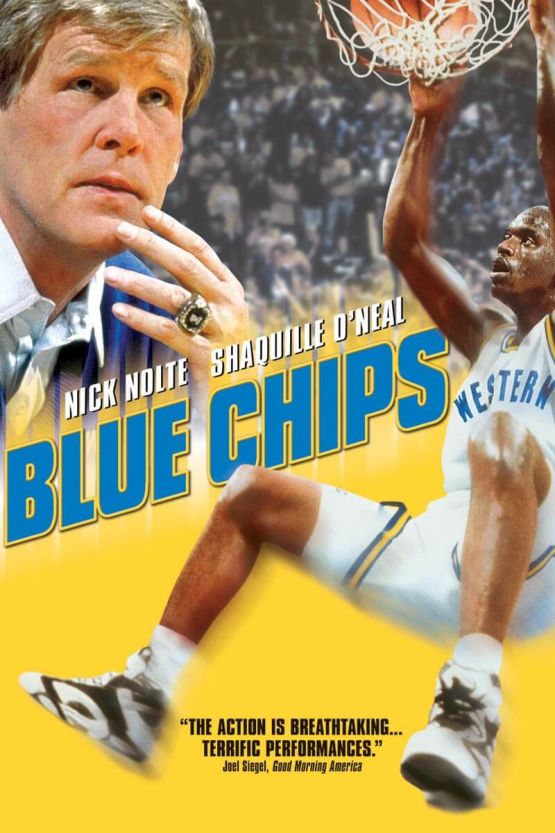
Friedkin’s basketball enthusiasm reportedly included considering a one-third Celtics purchase and consulting Cousy, explaining the latter’s appearance.
The production reportedly used real players, coaches and games before six thousand spectators, but authentic play alone does not solve basketball’s cinematic difficulty.
Anthony C. Hall is described as both actor and player; many real coaches and college stars supplied the basketball cast.
A claimed Kevin Garnett appearance cannot be located and his youth raises doubt; Geert Hammink is recognized.
Shelton reportedly developed the script in 1981, with studio delays before White Men Can’t Jump revived interest; Lansing brought in Friedkin while Shelton made Cobb.
Basketball was reportedly filmed at Frankfort High using full competitive games plus set plays; Knight repeatedly disrupted planned endings by coaching to win.
A $35 million budget and $26 million gross are reported; later home-video value and enduring cultural references are offered as qualifications.
Shaq’s reported worst-new-star Razzie nomination is rejected as unfair because his performance is good.
Friedkin’s reported claim that sports films cannot reproduce a real game’s unpredictable suspense is dismissed as sour grapes, with successful sports movies offered as the objection.
Shaq reportedly wore very thin soles to reduce height differences; framing him farther from Nolte and Mary McDonnell is discussed as another solution.
Shaq’s last college game is recalled as an Indiana loss to the team featuring Knight and the actor playing Ricky; Indiana’s subsequent Final Four loss to Duke is also recalled.
Butch’s Chicago gym is identified as Mount Carmel High School, and the crew including Shaq reportedly stayed at a Lafayette Howard Johnson’s for two weeks.