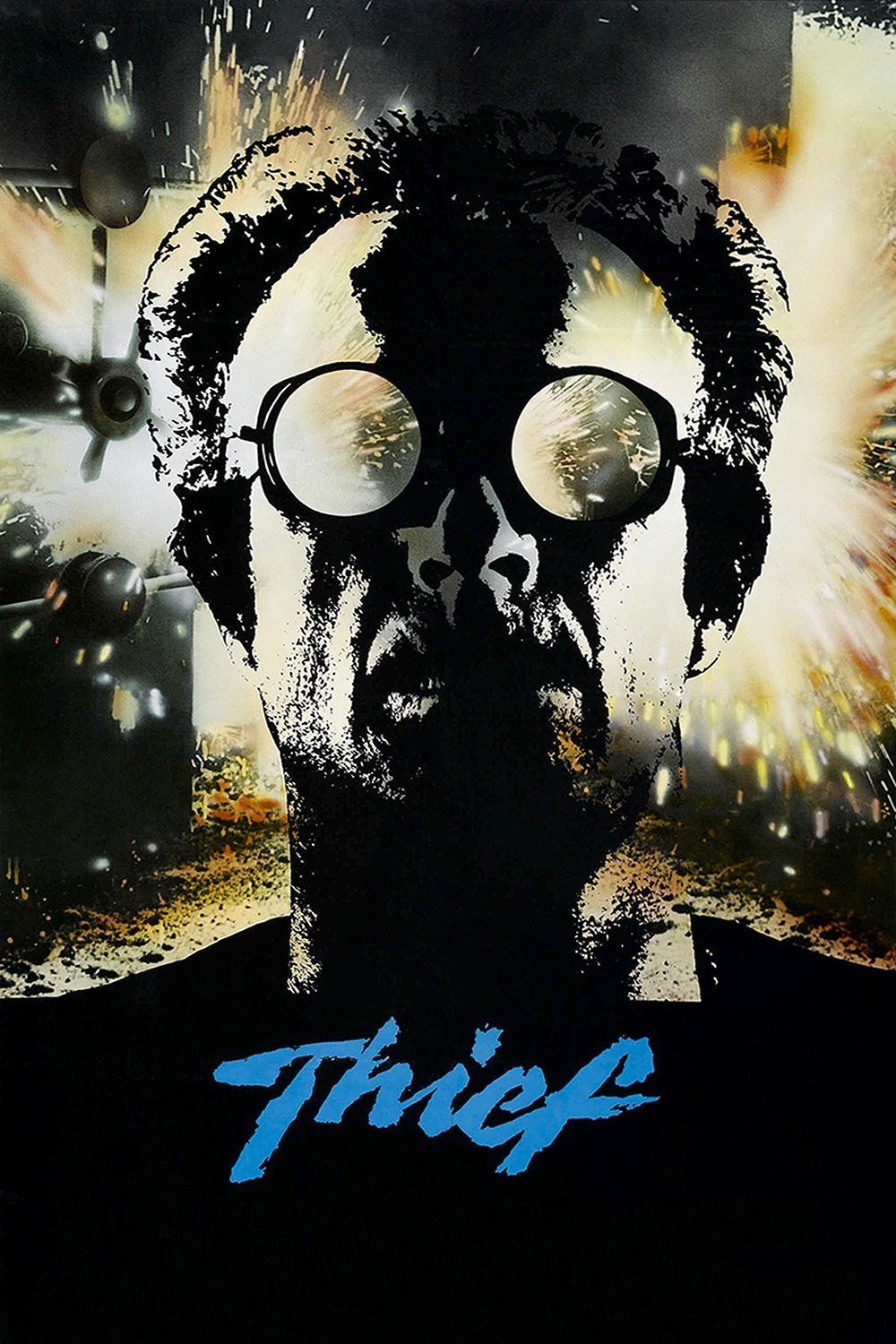
Prosky is not at Apex despite a hell of a debut; he became Prosky in the early 90s with Hoffa and Mrs. Doubtfire.
Chicago diners are a yes.
Illegal adoption is floated as an Apex ("cut out the middleman") without an explicit yes, prompting a Thief 2 joke about Frank's grown son. — Chris Ryan
Robert Prosky death scenes are a yes, one of the first times someone makes noise after being shot in the head. — Bill Simmons
Joliet Prison never got better than the Blues Brothers-Thief stretch; its Apex Mountain is somewhere in there. — Bill Simmons
For Chicago movies, candidates include The Blues Brothers, The Fugitive, Ferris Bueller, Home Alone (ruled suburban) and Hoop Dreams; the answer is Ferris Bueller.
Running Scared is raised; as its self-described number one fan he finds it tough, but Ferris Bueller uses Chicago the best. — Bill Simmons
Also named: The Untouchables, Widows, Candyman and Public Enemies; there haven't been enough good Chicago movies. — Bill Simmons
Real crooks and Gunsite training; Howard Johnson's booth; real burglary tools; water truck for wet streets; Green Mill's Capone booth; unused source book; Belushi's squibs; Tuesday Weld's Wikipedia
The actors hung out with real crooks, and Mann took Caan to the Gunsite firearms academy in Arizona, which is why his house raid looks realistic. — Bill Simmons
Per Alan Siegel's research, Mann took his future wife to that Howard Johnson's in 1971 and they talked all night in the booth used for the scene; they are still married 50 years later. — Bill Simmons
The burglary tools were real, and the actors were trained to use them. — Bill Simmons
A 60,000-gallon water truck kept the streets wet, a Mann staple he may have invented, though Scorsese did some of it in Taxi Driver. — Bill Simmons
Mann tells an anecdote about driving around looking at bridges and water before he was a filmmaker; the urban landscape colliding with nature, rain and neon are his signatures, as in Collateral. — Sean Fennessey
The Green Mill jazz club in Uptown was an Al Capone hangout, and the scene was shot in Capone's booth, where he could see the whole club. — Bill Simmons
The film is based on a book that was optioned, but Mann did not really use it. — Bill Simmons
Belushi begged to do his own death scene and absorbed dozens of squib shots. — Bill Simmons
Dialogue; Tangerine Dream; Frank's collage; "I want a boy" exchange; film debuts; 1980 Caan and John Belushi in Chicago; Belushi's sideburns; Tuesday Weld; Mann's nihilistic ending
The dialogue: Mamet-influenced; per a Belushi video interview, Mann insisted the characters never speak in contractions because they are so precise; it never dumbs down the Chicago underworld lingo for criminals or cops, including the beating speech. — Chris Ryan
Tangerine Dream, fresh off Sorcerer and before Risky Business; with Vangelis and Faltermeyer they were the cool music of the early 80s. — Bill Simmons
Frank's collage of children, a car and a house he doesn't have, his jailed mentor Willie Nelson and 12 skulls; jokes about a personal collage of Sean that is now an NFT, and Mann inventing Pinterest. — Bill Simmons
Caan saying "I want a boy" and Prosky answering "Done"; the second meeting in the bar is a favorite conversation ("Wham-Bam Magic Sam"). — Sean Fennessey
A participant saw it in a Boston theater in 1981 at 11 or 12 with his dad and was puzzled by Jim Belushi, who looked like John Belushi, then still alive. — Bill Simmons
John Belushi visited the set, and the cast and crew hung out free all night at his Blues Brothers bar in Chicago; 1980 Caan and Belushi together must have produced stories. — Bill Simmons
Belushi's sideburns were fantastic. — Bill Simmons
Tuesday Weld: Wesley approved the take that Jessica Lange market-corrected her; she is terrific and perfect here, an Oscar nominee famous from Dobie Gillis who hasn't acted in 20 years, and, with a weak Best Supporting Actress category that year, could probably have nailed that down.
These films shortchange wife and girlfriend roles, but this one gives her a big scene to come off the bench and score 22. — Chris Ryan
Mann on the final decision, from the Ringer piece: having something makes Frank vulnerable, so the nihilistic act of destroying it returns his power. — Chris Ryan
A joke about deleting the feed after the last Mann movie, with Heat as the 500th episode alongside Tom Sizemore.
First pick: Caan going to the plating company to demand his $185,000 within three hours; it is the first time Farina is seen, and the eight horrified 1981 office workers are a highlight. — Bill Simmons
A joke that Chris used to enter the office the same way, moving the chair to see what was on the desk.
Willie Nelson's big prison scene is complicated but fascinating, an intense staring contest with the faces a foot apart; Mann seems to have few friends but insanely intense connections with the ones he has.
The Nelson scene is not obviously working at first but pays off with "I don't want to die in here, Frank"; his line readings are sometimes odd, but his open, empathetic face makes it work.
Willie Nelson on Frank's postcard collage is briefly puzzling on a rewatch until you remember he is Frank's best friend. — Chris Ryan
Praski's (Prosky's) first scene: his first movie at 51, dressed like a grandfather in a golf shirt tucked into pressed slacks. — Bill Simmons
Mann auditioned dozens of New York actors for Leo; Bruckheimer advised that the right person had not walked in the room yet, and Prosky, a theater actor, was found, leading to a That Guy career. — Bill Simmons
Peak Prosky is this role: an avuncular, warm, familial sensibility with pure evil right under the surface. — Sean Fennessey
The Natural is raised as close but too evil; later roles such as Last Action Hero and Mrs. Doubtfire made him the favorite uncle. — Sean Fennessey
Caan lays out what he won't steal: just diamonds and cash, no coin collections. — Bill Simmons
The diner monologue is the reason for the episode after it was caught while flipping channels and texted to Chris; it is called the best moment of Caan's career, better than any Godfather moment, laying out the character's spine in four minutes. — Bill Simmons
It is called a favorite first date in movie history: Caan is two hours late, they scream at each other on the drive, and he tells a woman he just met about his prison fight with Morphus. — Bill Simmons
Caan called it the scene he was most proud of; it was filmed at a Howard Johnson's in Illinois that Mann had a connection to, and the wide shot is Heat DNA, though Heat never shows the two men together. — Bill Simmons
An amazing piece of filmmaking; the underrated part is the car speech before the diner, two people who have looked at each other for eight months cutting out the games. — Sean Fennessey
Caan cracking the love affair like a safe ("cut the mini moves and the bullshit and get on with this big romance") while being impatient with the woman he plans to marry is hilarious. — Sean Fennessey
One-last-job movies raise the question of why not ask her out after the job; the woman complicating the last job is a Mann recurring thing. — Chris Ryan
Mann's top restaurants are ranked: diner, Chinese restaurant, Musso and Frank-style steakhouse, a close-booth place like Dan Tana's, and hibachi for the glimmering blades. — Chris Ryan
The Chinese-restaurant waiter gives a borderline Dion Waiters performance and is nicknamed David. — Bill Simmons
The elevator-shaft scene is weirdly harrowing and shows Mann's precision; it is liked more than the safe crack, though the opening keyhole-camera drilling sequence is great. — Sean Fennessey
A first-time viewer at home was riveted by the talking but hid behind an iPad during the drilling; Fincher's Panic Room is imagined as a response to Thief. — Sean Fennessey
Prosky lays down the law in an incredible monologue ("I run you", whacking out the whole family, wimpy burgers), shot upside down from Frank's POV, ending with Belushi dropped in acid. — Bill Simmons
Belushi's death scene could have used another minute of setup. — Bill Simmons
The ending is fun to watch but has issues: it hinges on Attaglia getting a glass of milk, Mann's written ending reunited Frank with Jessie, and seeing the girlfriend again would have been more satisfying.
Burning the postcard reads as Frank giving up the idea that he could be happy or emotionally available. — Chris Ryan
Biggest nit here: he should have gone back in the house and stolen things, though sparing Leo's wife is a purposeful choice by a man with a samurai code.
Mann repeatedly sends the wife packing, as in a two-part season-one Miami Vice episode and Heat's walk-away with Amy Brenneman in the car, which is called weird given the question of whether Mann himself hasn't been married to the same woman for about 50 years.