‹ All movies

Diner scene

Bill Simmons: First pick: Caan going to the plating company to demand his $185,000 within three hours; it is the first time Farina is seen, and the eight horrified 1981 office workers are a highlight.

A joke that Chris used to enter the office the same way, moving the chair to see what was on the desk.

Frank's car

Chris Ryan: One of Frank's cars (an Oldsmobile throwback), or Prosky's yellow golf shirt tucked into khakis.

The film

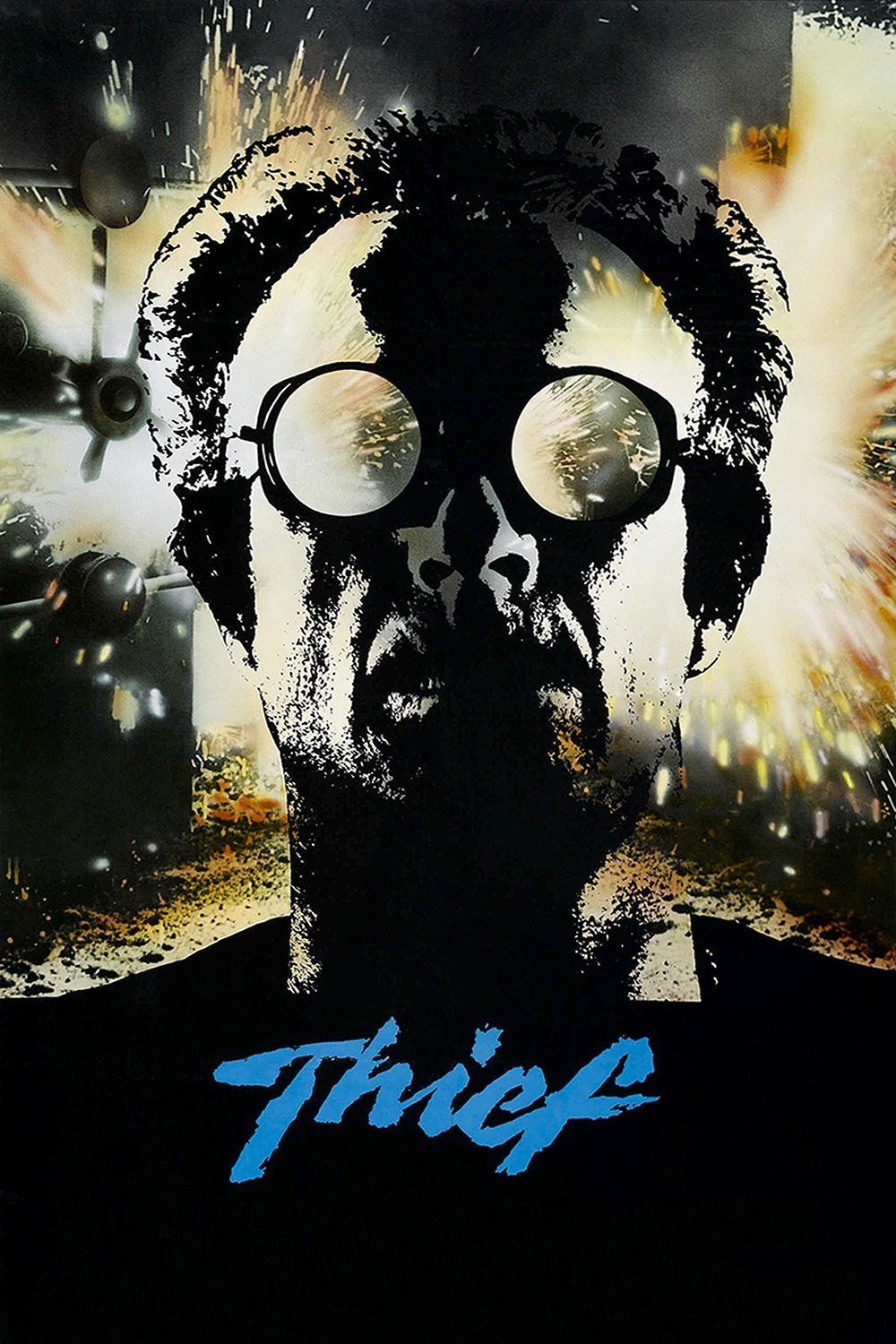
Thief (1981)

Directed by Michael Mann · Crime

123 minutes

Cast

Selected cast credits · Film reference

James Caan Frank
Tuesday Weld Jessie
Willie Nelson David "Okla" Bertinneau
Tom Signorelli Attaglia
William Petersen Katz & Jammer Bartender
John Santucci Sergeant Urizzi
John Kapelos Mechanic
Michael Paul Chan Chinese Waiter

Everything from the episode

In the order the hosts got to it. Open a row for the discussion.

26:22

Roger Ebert's review

In the discussion (3)
Approx. transcript time · 00:26:22Read transcript
  • Roger Ebert loved the film, and so did the French. — Bill Simmons
  • He gave it three and a half stars and called it one of the most intelligent thrillers he had ever seen. — Bill Simmons
  • The film is framed as Ebert catnip, with a lot of Chicago in it. — Bill Simmons
27:11

Most Rewatchable Scene

Diner scene

Diner scene

In the discussion (29)
Approx. transcript time · 00:27:11Read transcript
  • First pick: Caan going to the plating company to demand his $185,000 within three hours; it is the first time Farina is seen, and the eight horrified 1981 office workers are a highlight. — Bill Simmons
  • A joke that Chris used to enter the office the same way, moving the chair to see what was on the desk.
  • Willie Nelson's big prison scene is complicated but fascinating, an intense staring contest with the faces a foot apart; Mann seems to have few friends but insanely intense connections with the ones he has.
  • The Nelson scene is not obviously working at first but pays off with "I don't want to die in here, Frank"; his line readings are sometimes odd, but his open, empathetic face makes it work.
  • Willie Nelson on Frank's postcard collage is briefly puzzling on a rewatch until you remember he is Frank's best friend. — Chris Ryan
  • Praski's (Prosky's) first scene: his first movie at 51, dressed like a grandfather in a golf shirt tucked into pressed slacks. — Bill Simmons
  • Mann auditioned dozens of New York actors for Leo; Bruckheimer advised that the right person had not walked in the room yet, and Prosky, a theater actor, was found, leading to a That Guy career. — Bill Simmons
  • Peak Prosky is this role: an avuncular, warm, familial sensibility with pure evil right under the surface. — Sean Fennessey
  • The Natural is raised as close but too evil; later roles such as Last Action Hero and Mrs. Doubtfire made him the favorite uncle. — Sean Fennessey
  • Prosky originated Shelley Levene in Glengarry Glen Ross. — Sean Fennessey
  • Caan lays out what he won't steal: just diamonds and cash, no coin collections. — Bill Simmons
  • The diner monologue is the reason for the episode after it was caught while flipping channels and texted to Chris; it is called the best moment of Caan's career, better than any Godfather moment, laying out the character's spine in four minutes. — Bill Simmons
  • It is called a favorite first date in movie history: Caan is two hours late, they scream at each other on the drive, and he tells a woman he just met about his prison fight with Morphus. — Bill Simmons
  • Caan called it the scene he was most proud of; it was filmed at a Howard Johnson's in Illinois that Mann had a connection to, and the wide shot is Heat DNA, though Heat never shows the two men together. — Bill Simmons
  • An amazing piece of filmmaking; the underrated part is the car speech before the diner, two people who have looked at each other for eight months cutting out the games. — Sean Fennessey
  • Caan cracking the love affair like a safe ("cut the mini moves and the bullshit and get on with this big romance") while being impatient with the woman he plans to marry is hilarious. — Sean Fennessey
  • One-last-job movies raise the question of why not ask her out after the job; the woman complicating the last job is a Mann recurring thing. — Chris Ryan
  • Mann's top restaurants are ranked: diner, Chinese restaurant, Musso and Frank-style steakhouse, a close-booth place like Dan Tana's, and hibachi for the glimmering blades. — Chris Ryan
  • The Chinese-restaurant waiter gives a borderline Dion Waiters performance and is nicknamed David. — Bill Simmons
  • The elevator-shaft scene is weirdly harrowing and shows Mann's precision; it is liked more than the safe crack, though the opening keyhole-camera drilling sequence is great. — Sean Fennessey
  • A first-time viewer at home was riveted by the talking but hid behind an iPad during the drilling; Fincher's Panic Room is imagined as a response to Thief. — Sean Fennessey
  • Prosky lays down the law in an incredible monologue ("I run you", whacking out the whole family, wimpy burgers), shot upside down from Frank's POV, ending with Belushi dropped in acid. — Bill Simmons
  • Belushi's death scene could have used another minute of setup. — Bill Simmons
  • The ending is fun to watch but has issues: it hinges on Attaglia getting a glass of milk, Mann's written ending reunited Frank with Jessie, and seeing the girlfriend again would have been more satisfying.
  • Burning the postcard reads as Frank giving up the idea that he could be happy or emotionally available. — Chris Ryan
  • Biggest nit here: he should have gone back in the house and stolen things, though sparing Leo's wife is a purposeful choice by a man with a samurai code.
  • Mann repeatedly sends the wife packing, as in a two-part season-one Miami Vice episode and Heat's walk-away with Amy Brenneman in the car, which is called weird given the question of whether Mann himself hasn't been married to the same woman for about 50 years.
  • Final answer: the diner scene with Tuesday Weld, met with "Me too." — Sean Fennessey
  • One more honorable mention is deferred to What's Aged the Best. — Bill Simmons
47:10

What’s Aged the Best?

Dialogue; Tangerine Dream; Frank's collage; "I want a boy" exchange; film debuts; 1980 Caan and John Belushi in Chica...

Dialogue; Tangerine Dream; Frank's collage; "I want a boy" exchange; film debuts; 1980 Caan and John Belushi in Chicago; Belushi's sideburns; Tuesday Weld; Mann's nihilistic ending

In the discussion (12)
Approx. transcript time · 00:47:10Read transcript
  • The dialogue: Mamet-influenced; per a Belushi video interview, Mann insisted the characters never speak in contractions because they are so precise; it never dumbs down the Chicago underworld lingo for criminals or cops, including the beating speech. — Chris Ryan
  • Tangerine Dream, fresh off Sorcerer and before Risky Business; with Vangelis and Faltermeyer they were the cool music of the early 80s. — Bill Simmons
  • Frank's collage of children, a car and a house he doesn't have, his jailed mentor Willie Nelson and 12 skulls; jokes about a personal collage of Sean that is now an NFT, and Mann inventing Pinterest. — Bill Simmons
  • Caan saying "I want a boy" and Prosky answering "Done"; the second meeting in the bar is a favorite conversation ("Wham-Bam Magic Sam"). — Sean Fennessey
  • The film debuts of Jim Belushi, William Petersen, Dennis Farina, John Kapelos and Prosky; Farina was a Chicago policeman during filming, and Belushi was inspired casting. — Bill Simmons
  • A participant saw it in a Boston theater in 1981 at 11 or 12 with his dad and was puzzled by Jim Belushi, who looked like John Belushi, then still alive. — Bill Simmons
  • John Belushi visited the set, and the cast and crew hung out free all night at his Blues Brothers bar in Chicago; 1980 Caan and Belushi together must have produced stories. — Bill Simmons
  • Belushi's sideburns were fantastic. — Bill Simmons
  • Tuesday Weld: Wesley approved the take that Jessica Lange market-corrected her; she is terrific and perfect here, an Oscar nominee famous from Dobie Gillis who hasn't acted in 20 years, and, with a weak Best Supporting Actress category that year, could probably have nailed that down.
  • These films shortchange wife and girlfriend roles, but this one gives her a big scene to come off the bench and score 22. — Chris Ryan
  • Mann on the final decision, from the Ringer piece: having something makes Frank vulnerable, so the nihilistic act of destroying it returns his power. — Chris Ryan
  • A joke about deleting the feed after the last Mann movie, with Heat as the 500th episode alongside Tom Sizemore.
54:57

What’s Aged the Worst?

Razzie nomination for the score; Willie Nelson stunt casting; calls routed through bars

Razzie nomination for the score; Willie Nelson stunt casting; calls routed through bars

In the discussion (4)
Approx. transcript time · 00:54:57Read transcript
  • The film was nominated for a Razzie for worst musical score, which invalidates the Razzies. — Bill Simmons
  • Willie Nelson's stunt casting, not his performance: like casting Taylor Swift now; he had deliberately started acting in Electric Horseman and Honeysuckle Rose and pulled back as Farm Aid grew, and he is so indelibly himself that his appearance feels like a dream sequence. — Bill Simmons
  • Caan and Nelson were the two draws when nobody knew Michael Mann or Thief. — Bill Simmons
  • Aged worst but worth bringing back: routing all communication through a favorite bar instead of Slack and texts, with a bar name like Chrissy's Fifth Amendment. — Chris Ryan
59:55

Casting What-Ifs

Jeff Bridges; Gene Hackman; Roy Scheider

Jeff Bridges; Gene Hackman; Roy Scheider

In the discussion (4)
Approx. transcript time · 00:59:55Read transcript
  • Jeff Bridges was Mann's choice for Frank but the studio rejected him as too young and not experienced enough to be a hardened criminal; he is judged too sweet and not tough enough. — Bill Simmons
  • Gene Hackman and Roy Scheider were reportedly considered; Hackman is too close to past roles, while Scheider would have been an all-in choice. — Bill Simmons
  • Mann originally planned a Chicago blues score but switched to Tangerine Dream for more pulse, returning to blues and jazz in Collateral's Miles Davis scene. — Bill Simmons
  • The original title was Violent Streets, judged too on the nose.
1:01:25

The Joey Pants “That Guy” Award

Tom Signorelli

Tom Signorelli

In the discussion (3)
Approx. transcript time · 01:01:25Read transcript
  • Hard to award for a 40-year-old movie: Prosky and Dennis Farina were That Guys who became who they became. — Chris Ryan
  • A joke rename to a rookie-of-the-year award for this movie honors Prosky, Farina and Petersen breaking out and becoming staples for 30 years. — Chris Ryan
  • The only one who held That Guy status is Attaglia actor Tom Signorelli, always the eighth goon who never became famous.
1:02:04

The Ruffalo / Hanna / Rubinek / Partridge Overacting Award

James Caan

James Caan

In the discussion (2)
Approx. transcript time · 01:02:04Read transcript
  • Either Caan on the first date with Tuesday Weld ("I'm a thief") or everything he does in the adoption scene, which is so over the top. — Bill Simmons
  • It is loved and great, but he dials it up in both scenes, so it goes to him. — Bill Simmons
1:03:06

The Teddy KGB Award for the Actor in a Completely Different Movie

Willie Nelson

Willie Nelson

In the discussion (2)
Approx. transcript time · 01:03:06Read transcript
  • Willie Nelson, just because it's Willie Nelson; the objection that this criticizes Willie is waved off. — Bill Simmons
  • His lines are amazing, like "lie to no one" and his account of how Joliet used to handle certain prisoners.
1:03:48

The Dion Waiters Award for Best Heat Check Performance

John Santucci

John Santucci

In the discussion (4)
Approx. transcript time · 01:03:48Read transcript
  • Willie is offered; Prosky is in it too much to be eligible and Farina doesn't do enough. — Bill Simmons
  • Santucci as Urizzi is loved; Belushi was considered but doesn't dial it up enough. — Bill Simmons
  • Final: John Santucci, with agreement; he was a real-life consultant and it's nice that he has the store.
  • Tuesday Weld is in it too much to be eligible.
1:04:20

Recasting Couch

Jonathan Banks as the sergeant

Jonathan Banks as the sergeant

In the discussion (1)
Approx. transcript time · 01:04:20Read transcript
  • The sergeant was basically a jewel thief cast as a cop; Jonathan Banks, around the time of 48 Hours and before Beverly Hills Cop, would have been perfect as the one missing type, the 40-year character actor. — Bill Simmons
1:05:14

Half-Assed Internet Research

Real crooks and Gunsite training; Howard Johnson's booth; real burglary tools; water truck for wet streets; Green Mil...

Real crooks and Gunsite training; Howard Johnson's booth; real burglary tools; water truck for wet streets; Green Mill's Capone booth; unused source book; Belushi's squibs; Tuesday Weld's Wikipedia

In the discussion (9)
Approx. transcript time · 01:05:14Read transcript
  • The actors hung out with real crooks, and Mann took Caan to the Gunsite firearms academy in Arizona, which is why his house raid looks realistic. — Bill Simmons
  • Per Alan Siegel's research, Mann took his future wife to that Howard Johnson's in 1971 and they talked all night in the booth used for the scene; they are still married 50 years later. — Bill Simmons
  • The burglary tools were real, and the actors were trained to use them. — Bill Simmons
  • A 60,000-gallon water truck kept the streets wet, a Mann staple he may have invented, though Scorsese did some of it in Taxi Driver. — Bill Simmons
  • Mann tells an anecdote about driving around looking at bridges and water before he was a filmmaker; the urban landscape colliding with nature, rain and neon are his signatures, as in Collateral. — Sean Fennessey
  • The Green Mill jazz club in Uptown was an Al Capone hangout, and the scene was shot in Capone's booth, where he could see the whole club. — Bill Simmons
  • The film is based on a book that was optioned, but Mann did not really use it. — Bill Simmons
  • Belushi begged to do his own death scene and absorbed dozens of squib shots. — Bill Simmons
  • Tuesday Weld's Wikipedia page is recommended: between marriages she dated Al Pacino, David Steinberg, Mikhail Baryshnikov, Omar Sharif, Richard Gere and Ryan O'Neal, and Baryshnikov's previous girlfriend Jessica Lange was her best friend. — Bill Simmons
1:09:09

Apex Mountain

Chicago diners; Robert Prosky death scenes; Joliet Prison

Chicago diners; Robert Prosky death scenes; Joliet Prison

In the discussion (10)
Approx. transcript time · 01:09:09Read transcript
  • James Caan, Tuesday Weld (though really good) and Michael Mann are all no. — Bill Simmons
  • Prosky is not at Apex despite a hell of a debut; he became Prosky in the early 90s with Hoffa and Mrs. Doubtfire.
  • Chicago diners are a yes.
  • Illegal adoption is floated as an Apex ("cut out the middleman") without an explicit yes, prompting a Thief 2 joke about Frank's grown son. — Chris Ryan
  • Willie Nelson is no. — Bill Simmons
  • Robert Prosky death scenes are a yes, one of the first times someone makes noise after being shot in the head. — Bill Simmons
  • Joliet Prison never got better than the Blues Brothers-Thief stretch; its Apex Mountain is somewhere in there. — Bill Simmons
  • For Chicago movies, candidates include The Blues Brothers, The Fugitive, Ferris Bueller, Home Alone (ruled suburban) and Hoop Dreams; the answer is Ferris Bueller.
  • Running Scared is raised; as its self-described number one fan he finds it tough, but Ferris Bueller uses Chicago the best. — Bill Simmons
  • Also named: The Untouchables, Widows, Candyman and Public Enemies; there haven't been enough good Chicago movies. — Bill Simmons
1:12:58

Picking Nits

Confusing Frank-Jessie relationship; unclear ending detail; Leo's mall investment; easy baby stealing

Confusing Frank-Jessie relationship; unclear ending detail; Leo's mall investment; easy baby stealing

In the discussion (7)
Approx. transcript time · 01:12:58Read transcript
  • The Caan-Weld relationship is confusing; per the director's commentary, editing surgery made it seem like an eight-month back-and-forth, but the leap from yanking her out of a nightclub is still odd.
  • Her Bogota story is as crazy as his, and believable for the girlfriend of a cocaine dealer. — Bill Simmons
  • Something at the end is not made obvious enough, which Mann has acknowledged, and the final shootout is a dry run for Manhunter's. — Bill Simmons
  • Was Leo's shopping-mall deal that bad? Malls took off in the 80s and it's a perfect way to launder money. — Chris Ryan
  • You get far less than face value for stolen goods ($800,000 from a $4 million robbery), and $800,000 in the bank invites an audit, so trust Prosky; alternate Thief 2 with Weird Science filmed in their mall. — Sean Fennessey
  • Is baby stealing this easy, and how do stolen babies get Social Security cards? Hospital delivery rooms are monitored like banks. — Bill Simmons
  • Asked if he was a stolen baby, the reply is "I wouldn't know." — Chris Ryan
1:16:18

Sequel, Prequel, Limited Series, or All-Black Remake

Modern-technology streaming version; eight-episode season about one job

Modern-technology streaming version; eight-episode season about one job

In the discussion (2)
Approx. transcript time · 01:16:18Read transcript
  • One answer is a flat no. — Bill Simmons
  • A 2021 streaming version would explore modern thief technology such as burners and encrypted texts, likely as an eight-episode season about one job. — Bill Simmons
1:16:42

Probably Unanswerable Questions

What happened to Frank; Thief as the first Heat; Frank or Neil McCauley; Caan never in another Mann movie

What happened to Frank; Thief as the first Heat; Frank or Neil McCauley; Caan never in another Mann movie

In the discussion (5)
Approx. transcript time · 01:16:42Read transcript
  • What happened to Frank? Siegel's piece reports a debate: the director's pessimistic answer is nowhere, while the star believed someone with Frank's determination would get everything back; the ambiguous ending is part of the appeal. — Bill Simmons
  • Thief as the first Heat: per the Siegel piece, the star told Pacino "that was my movie"; it's all one movie for Mann, though Thief is about a man alone and Heat is a showdown.
  • For a $5.5 million downtown LA bank job, Neil McCauley over the combustible Frank, going through Voight's character. — Chris Ryan
  • It would have been great if Frank became the Voight-style fixer years later. — Chris Ryan
  • Caan never appeared in another Mann movie; in the Criterion disc interview he calls Mann an 18-hour-a-day workaholic, and two notoriously difficult people made one movie and were done.
1:20:15

What Piece of Memorabilia Would You Want From This Movie?

Frank's car; Prosky's yellow golf shirt; the thermal lance; the big bar booth

Frank's car; Prosky's yellow golf shirt; the thermal lance; the big bar booth

In the discussion (3)
Approx. transcript time · 01:20:15Read transcript
  • One of Frank's cars (an Oldsmobile throwback), or Prosky's yellow golf shirt tucked into khakis. — Chris Ryan
  • The 2,000-pound thermal lance, in case the garage needs burning down. — Sean Fennessey
  • The big booth from the bar, for the living room, with a whole story.
1:21:02

Who Won the Movie?

James Caan; Michael Mann

James Caan; Michael Mann

In the discussion (3)
Approx. transcript time · 01:21:02Read transcript
  • Caan is the obvious answer, but Prosky is called one of the great crime-movie villains; no explicit final pick is stated in this turn. — Bill Simmons
  • One pick is Michael Mann.
  • Another pick is Jimmy Caan, who can't be shaken from the "I am a straight arrow" car speech.
Podcast choices
Speaker not identified
Michael Mann
Speaker not identified
James Caan
1:21:21

Producer review

Enjoyed it

Enjoyed it

In the discussion (4)
Approx. transcript time · 01:21:21Read transcript
  • The producer, born long after the movie, had never seen it.
  • He enjoyed it, though it was a little slow at the beginning; his girlfriend did not want to watch it with him. — Chris Ryan
  • He liked seeing "Sonny" get his revenge and hated seeing "Sonny" die, calling that his connection to it, and says he loved it. — Chris Ryan
  • The hosts joke that he threw his girlfriend out and was two hours late because he was watching Thief. — Bill Simmons

More from the conversation

The episode marks the 40th anniversary of Michael Mann's first theatrical movie, Thief; The Jericho Mile came earlier as a TV movie and is called one of the ten best sports movies ever made.
Approx. transcript time · 00:02:03Read transcript
The logline of an ace safecracker wanting one last big heist for the mob before going straight is joked to be pure heroin for Chris Ryan.
Approx. transcript time · 00:02:31Read transcript
The discussion can start with Mann's first real movie or James Caan's last great movie; the story is joked to mirror how Bill recruited Chris and Sean, echoing "I own the paper on your life."
Approx. transcript time · 00:02:51Read transcript
Thief is a first feature already sketching the themes, visuals and music of Heat, Collateral and Miami Vice, like Picasso scribbling on a napkin that is itself an amazing movie.
Approx. transcript time · 00:03:35Read transcript
Michael Mann ingredients: a great lead, inspired casting, important music, obsessive job detail, visuals helped by better TVs and the Criterion release, a criminal we root for, diners, bars, pay phones, wet streets and the blues.
Approx. transcript time · 00:04:11Read transcript
More ingredients: a man living by a code corrupted by an outside force, and lots of procedure about how someone is good at their job.
Approx. transcript time · 00:04:58Read transcript
Heat shares Thief's DNA without ripping it off; Mann's films are variations on one movie about the pursuit of excellence and forces pulling someone from it, unlike Paul Thomas Anderson's new visual language each time.
Approx. transcript time · 00:05:51Read transcript
1981 is recalled as a great year of films that wouldn't be made now, including Eyewitness, Blow Out, Taps, Escape from New York, Body Heat, Eye of the Needle and Atlantic City; Chariots of Fire won Best Picture and Warren Beatty won director for Reds.
Approx. transcript time · 00:06:57Read transcript
1981 is framed as the last gasp of New Hollywood after Heaven's Gate; Mann, about 35, worked with Jerry Bruckheimer and claimed the power to realize a singular vision.
Approx. transcript time · 00:08:21Read transcript
Thief is paired with Blade Runner as neo-noir that opened a new chapter, with Tangerine Dream paralleling Vangelis; Thief is more straightforward than Blade Runner.
Approx. transcript time · 00:09:06Read transcript
Mann put in reps writing TV, an uncredited Straight Time rewrite and The Jericho Mile before breaking through, when young directors were rare, unlike today's streaming era.
Approx. transcript time · 00:10:22Read transcript
Thief nods to Bogart and French New Wave films yet works purely as a Chicago crime movie: he cracks a safe, gets a girl, blows up a house.
Approx. transcript time · 00:11:55Read transcript
The actors trained on real safes with 200-pound drills; Mann told Robert Rodriguez he wanted the story drawn from Folsom, Joliet and men he met on The Jericho Mile, and prison as a purifying experience recurs through his films, including Heat's crew.
Approx. transcript time · 00:12:55Read transcript
James Caan's 1971-81 run starts with Brian's Song, called the most famous TV movie ever, which won him an Emmy and made his and Billy Dee Williams's careers.
Approx. transcript time · 00:15:00Read transcript
Caan's 70s include The Godfather, The Gambler, Freebie and the Bean, Funny Lady, Rollerball and Chapter Two; Thief is the last time he held it together before the 80s.
Approx. transcript time · 00:15:30Read transcript
Caan isn't a what-if athlete; he gave a lot in the 70s, worked with Pakula and Altman, and is like the meanest uncle at Thanksgiving.
Approx. transcript time · 00:15:55Read transcript
Alan Siegel's Ringer piece on Thief went up the day of taping; in it Caan says to go to Magic Mountain if you want to be entertained.
Approx. transcript time · 00:17:03Read transcript
Caan is a one-of-one, the most testosterone-heavy leading man of the era, yet vulnerable; the adoption-agency "I was state raised" moment and his screaming-then-tears move are singled out.
Approx. transcript time · 00:17:21Read transcript
Per the research, the actor playing the doctor who tells Caan that Willie Nelson's character died got genuinely scared by his stare.
Approx. transcript time · 00:18:53Read transcript
Scott Caan speaks carefully about his father, like describing a retired boxer.
Approx. transcript time · 00:19:37Read transcript
Frank is unique among Mann protagonists; later ones like Neil and Vincent strip out the crying and the wish to adopt.
Approx. transcript time · 00:20:18Read transcript
Wahlberg probably wanted to be James Caan but is only 50 percent there, though he remade The Gambler and has Caan-like breakdowns in Boogie Nights.
Approx. transcript time · 00:21:01Read transcript
A modern Caan would make weird movies, maybe with Tarantino, instead of franchises; the research shows him angry that everyone wanted sequels.
Approx. transcript time · 00:21:41Read transcript
A 1991 New York Times piece describes Caan's turbulent late 70s and early 80s and roles he turned down, including Kramer vs. Kramer, Apocalypse Now, Superman, M*A*S*H and One Flew Over the Cuckoo's Nest; he walked off The Holcroft Covenant and was replaced by Michael Caine.
Approx. transcript time · 00:22:16Read transcript
Later Caan made many turkeys with flare-ups like Misery and Elf; Hide in Plain Sight, which he directed, and Gardens of Stone are underrated.
Approx. transcript time · 00:23:29Read transcript
Caan studied at the Neighborhood Playhouse with Sanford Meisner yet grew up in Sunnyside; his big shoulders look like football pads, best seen in Rollerball.
Approx. transcript time · 00:23:55Read transcript
Four James Caan quotes are read, including that marriages are like tornadoes and his least favorite phrase is "I don't care," followed by a joke about a cancelled James Caan podcast.
Approx. transcript time · 00:25:16Read transcript
Thief was shut out at the Oscars and made $11.5 million on a $5.5 million budget.
Approx. transcript time · 00:26:22Read transcript
For the people out there, Thief is on HBO Max and HBO on demand.
Approx. transcript time · 01:22:23Read transcript
Asked whether this is the fifth Michael Mann movie covered; Manhunter, Blackhat, Public Enemies, Ali, The Keep and The Jericho Mile remain, with Public Enemies not rewatchable but better than a lot of movies.
Approx. transcript time · 01:22:23Read transcript
The Jericho Mile is now on Blu-ray after years of being impossible to find and is called one of the four greatest TV movies ever.
Approx. transcript time · 01:22:57Read transcript

Mentions across The Rewatchables

Recorded movie reference

Miami Vice

The Rewatchables · aired February 7, 2018

Thief is listed in the sourced research for this episode. The precise discussion has not been linked yet.

Recorded movie reference

The Firm

The Rewatchables · aired December 11, 2018

Thief is listed in the sourced research for this episode. The precise discussion has not been linked yet.