
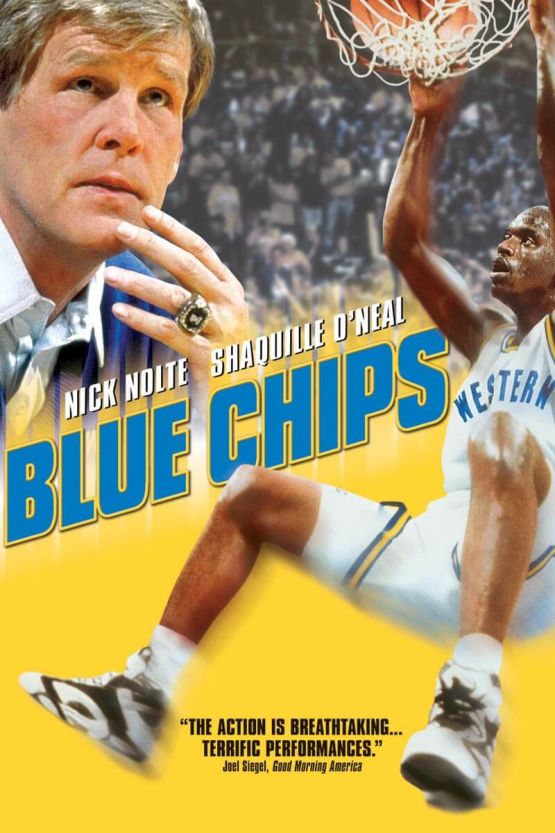

Picking Nits
College calendar; recruiting timeline; reporter surveillance; fictional schools; late-night ending
In the discussion (17)
Approx. transcript time · 00:17:00Read transcript
- The deserted walkable neighborhood beside a giant arena raises doubts about its Los Angeles geography; UCLA and USC associations conflict.
- Indiana’s authentic uniforms and Knight’s participation seem surprising in such a bleak portrait when other teams are fictional.
- Bird casually shooting and retrieving rebounds after multiple back surgeries is doubted.
- Algiers is described as ordinary West Bank New Orleans, not the remote swamp journey implied by the recruiting trip.
- The coaches barely remember a game they won last year, unlike Mind the Game’s detailed recollections of individual plays.
- A two-title coach facing dismissal after limited losing is questioned, with multiple disappointing Tony-era seasons offered as a qualification.
- Western U apparently has no conference tournament; the treatment of an NIT season as successful also feels wrong for this program.
- Neon’s tutoring, SAT results and immediate class attendance have an unclear and seemingly compressed calendar, despite a defense that he could already pass the exam.
- The recruiting calendar is unclear: elite players would mostly be committed already, and Butch’s high school is still playing after Western’s season ends; AAU is offered as a possible explanation.
- The Dolphins nickname feels wrong for a Los Angeles school never shown near the beach, though a coastal-location defense is offered and Pepperdine’s Waves are recalled.
- Jacksonville University and the College of Mount St. Vincent are supplied as real examples using a dolphin mascot, tempering the naming complaint.
- Ed O’Neill’s reporter having photographs of every recruiting violation and sophisticated surveillance-like technology seems implausible for a local reporter in 1994.
- A local reporter devoted to exposing the beloved program would face intense hostility; a national reporter might make more sense, though the character is understood as a major Los Angeles journalist.
- Freddie calling under-the-table recruitment his personal hell seems melodramatic, followed by an imagined failed Oklahoma State coaching tenure.
- Indiana and Bobby Knight appear with real identities while other schools and the NCAA are fictionalized; universal real names would improve the film. Knight’s influence is only speculated as an explanation.
- The ending’s children are playing outside late at night and fail to recognize supposedly famous Pete; a stranger interrupting their game would be unwelcome.
- The late-night ending sparks jokes about social problems and how a disruptive stranger might be received today.