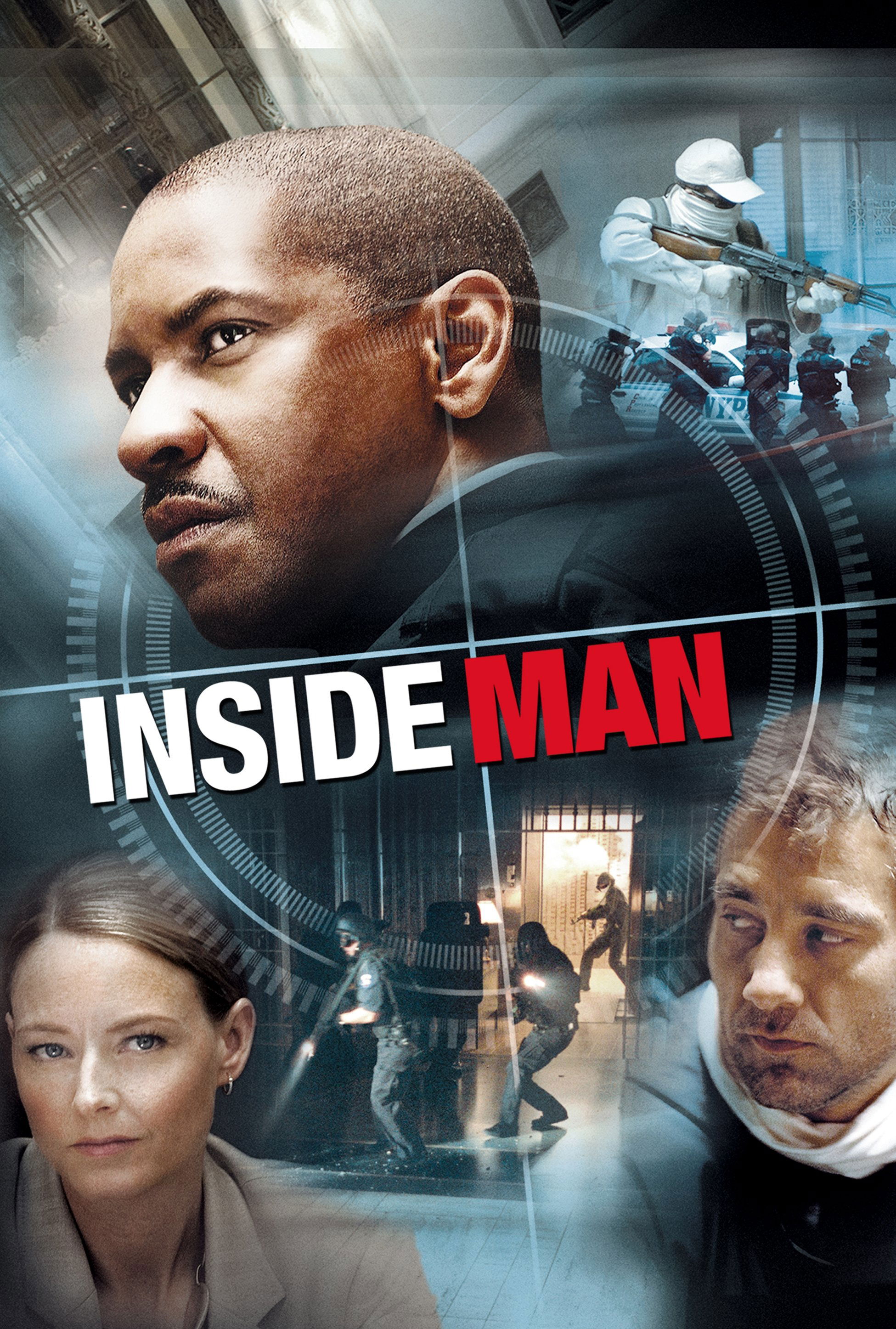
Clive Owen: yes; 2006 with Children of Men and Inside Man was his apex, among the best two-film years ever.
Jodie Foster in the 21st century: yes, though Flight Plan was a big hit.
Juicy Fruit gets a yes as its best use in a movie, after wondering whether Chuck Yeager chewed it in The Right Stuff.
Gangst is genocide, the in-film video game, also gets a yes.
For fixers, Winston Wolf is apex over Michael Clayton, and Foster's character, who proves ineffective, ranks third.
Bruce Willis's girlfriend in Pulp Fiction is the apex of worst movie girlfriends, with a promise to rip that stretch apart in an in-person Pulp Fiction episode after the pandemic.
On whether it is apex for post-Heat heist movies, the answer is only that it is "in the carousel," mocked as a non-answer. — Chris Ryan
Candidates weighed include Den of Thieves, The Dark Knight, Logan Lucky, Hell or High Water, Widows, Baby Driver, The Town and Fast Five.
The final ranking puts The Town first, Fast Five second and Inside Man third, with Den of Thieves fourth.
The bank-robbery setup comes first: meticulous crime setups are a favorite, with the crew entering in painter jackets with fluorescent strips.
Asked what disguise they would use for a heist, the picks are plumbers and a cable repairman installing the jails network, while another wants only to be the driver.
The driver pitch prompts jokes about a risky U-turn bit and a terrifying wheelman, plus disappointment that the movie has no second switch van.
Watching the people in line invites imagining your own move as a hostage: get straight down with hands visible, or offer to help the robbers.
One of Clive Owen's best scenes is his anger when the Gold Digger ringtone goes off, followed by the strip-to-your-underwear order; it is tense because the character's limits are still unknown, and shuffling the hostages is disorienting.
The first Foster-Plummer scene shows two strong actors, with Foster coming in off the bench, and the conversation is staged on the Brooklyn Promenade for scenery.
The video-game scene is offered as a controversial pick: some found it hacky social commentary, but the speaker enjoyed Owen vibing with the boy, and their son asked if the game was real.
Spike, pushing 50, is seen reacting to a generational gap in hip-hop culture, both criticizing it and trying to understand it; it plays a little old-guy. — Sean Fennessey
Spike also added the imagined raid scene for action; the video game likewise slows the film but gives Owen a quieter moment, and the boy relates more to Owen than to Denzel.
The boy's 50 Cent line is a little clumsy, but Spike committing to it and building the game from scratch is appreciated.
The first Clive-Denzel phone call, with the pina colada and Amber-and-Tiffany back-and-forth, is praised as hard to pull off on a phone.
Other beats listed are the first Owen-Foster meeting, and the hostage-release reveal that everyone is "actually hostage," a voila moment.
The last Plummer-Foster scene, with "I sold my soul" and her Bin Laden's nephew joke, is named the speaker's pick for most rewatchable, a chess match and the exclamation point of the film.
As a cap, the Foster-Denzel courthouse exchange with the Baron Rothschild blood-in-the-streets line is added, along with the interrogations, which the speaker read were improvised but was unsure count as scenes. — Sean Fennessey
A dark-horse pick is the sequence where the police try to identify the Albanian recording: the most New York sequence, with the body-bags line and the woman with the bag of parking tickets.
Bourne's survival and recovery, Paris geography, Marie staying with him, killing Clive Owen's character, and the unrealized chance to make that assassin a recurring rival
Bourne surviving unconscious in the sea after two back wounds is the first major nitpick. — Chris Ryan
His rapid recovery and ability to work on the fishing boat and fight assassins are also questioned. — Chris Ryan
Liman admitted that the Paris car chase uses streets that do not connect logically. — Chris Ryan
The geographic mistake is compared with illogical Boston routes in Blown Away. — Chris Ryan
Marie not fleeing a dangerous stranger at the first opportunity is questioned. — Bill Simmons
Marie is quickly shown on a wanted poster and is aiding and abetting an assassin, making it harder to untangle herself as she falls for him. — Bill Simmons
The panel asks whether killing Clive Owen's assassin wasted a possible recurring adversary for the franchise. — Bill Simmons
The alternatives are for the assassin to fake his death, get away wounded, or team up with Bourne to take the whole thing down. — Bill Simmons
The Carlos the Jackal antagonist from the Ludlum book is offered as a model for an equally powerful recurring assassin. — Bill Simmons
Karl Urban is described as effectively replacing Clive Owen's assassin function in the next film. — Bill Simmons
The opening fishing-boat rescue throws the audience directly into the mystery, with bullets and a bank-account projector removed from Bourne's body. — Bill Simmons
Bourne opening the Swiss security-deposit box works because its passports, money, and weapon reveal a past he cannot remember. — Bill Simmons
The embassy escape is separated as its own scene because Bourne's training emerges through purposeful movement and improvised problem solving. — Chris Ryan
Matt Damon reportedly performed the embassy wall climb himself without a stunt double. — Chris Ryan
The diner scene communicates Bourne's skills through the exits, license plates, left-handed waitress, dangerous customer, and possible gun location.
Marie and Bourne develop a connection without a conventional exchange of personal backstory. — Chris Ryan
The apartment attack has a strong jump scare when Castel enters through the window. — Chris Ryan
The Paris car chase uses the small car, narrow streets, breaking glass, and a motorcycle jump to hit classic chase beats. — Chris Ryan
The field confrontation with Clive Owen is one participant's favorite because the waist-high camera and sparse dialogue create intimacy and tension. — Chris Ryan
The bloody dog never missing breakfast tells Bourne something is wrong, so he orders everyone into the basement.
The scene carries an emotional beat before the action when Bourne orders the family into the basement. — Bill Simmons
Instead of a long final-boss fight, Bourne outmaneuvers and quickly defeats the other assassin with a farmhouse shotgun. — Chris Ryan
Clive Owen's brief dying exchange reveals the cost of the assassins' conditioning.
Bourne's confrontation with Conklin is praised for declaring Jason Bourne dead and threatening an immediate response if pursued.
The stairwell escape ends with Bourne shooting downward while falling on another body, a heightened moment the panel still enjoys. — Chris Ryan
The farmhouse sequence is the final stated choice because it is offbeat, practical, and central to Bourne and Marie's relationship. — Chris Ryan