
Stats
- Episodes featuring their films
- 3
- Movies in this archive
- 3
Rewatchables episodes featuring George Roy Hill’s films
Butch Cassidy and the Sundance Kid
1969 film
Bill Simmons · Aaron Sorkin · Sean Fennessey
Aired September 2, 2019
Mentioned in discussions
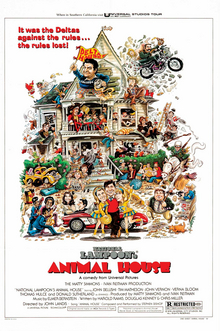

Recasting Couch
Ivan Reitman as alternate director
In the discussion (2)
- John Schlesinger, Alan J. Pakula, Mike Nichols, George Roy Hill, and Bob Raffleson are reported as directors approached — Chris Ryan
- Ivan Reitman is selected to direct the alternate version

Half-Assed Internet Research
Period streets and cars; an accidental drink spill; the diner set; Redford’s broken thumb and lateness; the adapted score; Julia Phillips’s producing milestone.
In the discussion (11)
- George Roy Hill reportedly copied the sparse extras of 1930s gangster films, creating empty-looking streets. — Bill Simmons
- Many cars were authentic period vehicles sourced by producer Tony Bill.
- Snyder pouring the rejected drink onto Billie’s hand was an accident retained in the film. — Bill Simmons
- The diner set later appeared in Back to the Future. — Bill Simmons
- Redford worked around a broken thumb from a skiing accident. — Bill Simmons
- Robert Shaw recalled people recognizing Newman more than Redford; the hosts question whether he was teasing Redford. — Bill Simmons
- The adapted-score Oscar recognized Marvin Hamlisch’s arrangement of Scott Joplin music, a category whose rules later changed. — Sean Fennessey
- The discussion contrasts a proposed 1930s Chicago blues soundtrack with Hill’s preference for older ragtime music. — Sean Fennessey
- Julia Phillips became the first woman to win Best Picture as a producer. — Chris Ryan
- Julia Phillips recalled that the producers had not negotiated their credit lettering, leaving their names looking less prominent. — Chris Ryan
- Phillips reported that Newman confronted Redford about arriving late, after which Redford reduced his lateness. — Bill Simmons
Half-Assed Internet Research
Robert Shaw’s post-production pub crawl, Sean Connery rivalry, source-book dispute, awards record, and profitability
In the discussion (5)
- George Roy Hill and Robert Shaw reportedly celebrated filming with a week-long Irish pub crawl ending with Shaw playing ping-pong in his underwear.
- Shaw reportedly regarded Sean Connery as a professional rival. — Bill Simmons
- The screenplay was associated with The Big Con; its author sued and the production settled while denying plagiarism. — Bill Simmons
- The film won seven of ten Oscar nominations. — Sean Fennessey
- The film’s budget and enormous box-office return are reported. — Bill Simmons

Just One Oscar
David S. Ward’s screenplay
In the discussion (3)
- George Roy Hill is proposed before the group notes he already won. — Bill Simmons
- Marvin Hamlisch is proposed for the score.
- David S. Ward is selected for a script said to have changed very little during filming.

In the discussion (3)
- Paul Newman receives the first winner vote.
- Robert Redford receives two winner votes because he walks out of the movie “smelling like gold.”
- George Roy Hill is proposed as an alternative for directing both this film and Butch Cassidy and the Sundance Kid. — Bill Simmons
Podcast choices
- Speaker not identified
- Paul Newman
- Speaker not identified
- Robert Redford
- Speaker not identified
- Robert Redford
In the discussion (6)
- Paul Newman is rejected for Apex Mountain, which is placed earlier in his career. — Bill Simmons
- Redford is selected for reaching first-call status through The Way We Were and The Sting.
- George Roy Hill is selected after winning Best Director and following Butch Cassidy with The Sting.
- Scott Joplin’s ragtime revival is proposed.
- Schlitz is proposed for its 1930s dominance and possible 1970s revival. — Bill Simmons
- The Sting is debated as Apex Mountain for con movies because of its success and influence.

In the discussion (4)
- Richard Linklater is the first proposed winner, while Ethan Hawke is the initial alternative. — Bill Simmons
- The case for Linklater is that Hawke already had Reality Bites while this film creates the trilogy central to Linklater's identity.
- The Hawke-Linklater collaboration is compared with De Niro-Scorsese and Paul Newman-George Roy Hill partnerships. — Sean Fennessey
- The trilogy's crowd-pleasing, formally inventive scope supports the final Linklater choice. — Sean Fennessey
Podcast choices
In the discussion (2)
- All the Right Moves keeps the pairing in the same filming city. Butch Cassidy and The Sting are also accepted; Shoresy episodes extend the hockey milieu. — Bill Simmons
- The World According to Garp offers a George Roy Hill pairing. — Bill Simmons
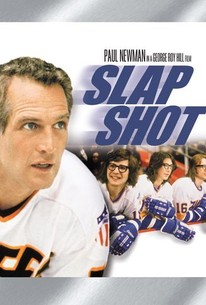

Apex Mountain
Hockey movies.
In the discussion (7)
- Newman is rejected in favor of the Butch Cassidy, Sting and Towering Inferno period.
- Ontkean gets an initial yes, challenged by Twin Peaks' greater visibility. — Bill Simmons
- Hockey fighting receives enthusiastic support for the era, contrasted with more dangerous modern technique. — Bill Simmons
- George Roy Hill is rejected. Sports movies receive a qualified case for 1977, challenged by the late-1980 s prestige wave.
- The Hanson brothers lose movie brothers to the Corleones; Crouse loses to The Verdict or House of Games; Martin loses to Cool Hand Luke. — Bill Simmons
- Hockey movies is an unequivocal yes. Minor-league sports raises Bull Durham as a competing answer. — Bill Simmons
- The Baja Gold 1970 Pontiac GTO and films inspiring a desire to bartend in a remote dive are additional nominations, the latter compared with Goodfellas.
In the discussion (3)
- Paul Newman is a yes: after this movie, at the end of the decade, he is at the absolute peak of his powers and could do whatever he wanted; agreed.
- Catherine Ross is not thought to be at her peak here, and certainly not Redford; George Roy Hill is offered as a hedged yes, with his next twenty years of films admired, Funny Farm and The World According to Garp among them, plus his Goldman reunion on The Great Waldo Pepper, an underseen movie.
- Earlier, Redford's Apex Mountain is placed at All the President's Men in 1976, with Ordinary People a close second.
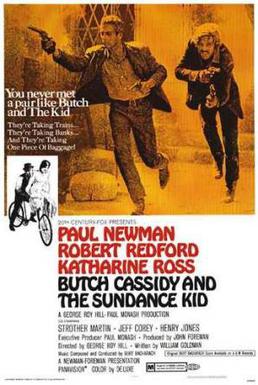
Half-Assed Internet Research
Body count of 30; a 1979 prequel with Tom Berenger and William Catt; Catherine Ross clashed with George Roy Hill and later married Conrad Hall; Montezuma's revenge in Mexico except for the stars; Redford did his own train-top stunt; Bob Dylan was asked to sing Raindrops; Redford hated the bicycle interlude; the film motivated David Fincher; Newman and Hill fought over the Bledsoe scene
In the discussion (8)
- Guessing the body count: the five Bolivian payroll robbers are counted, the army at the end is debated since the frame freezes and only gunfire is heard, and the shootout before it may be covering fire; the answer is 30, more than expected.
- A 1979 prequel, Butch and Sundance: The Early Days, starred Tom Berenger as Butch and William Catt (as transcribed) of Greatest American Hero as Sundance; Goldman produced but did not write it, and people did not like it.
- Catherine Ross did not get along with George Roy Hill, saying any day away from him was a good one; she was scolded and banned from the set for a day for operating a camera, which Conrad Hall had allowed, and Hall and Ross married shortly after; she liked the silent bicycle sequence most because the second unit, not Hill, shot it.
- The Bolivia scenes were shot in Mexico, where everyone got Montezuma's revenge except Redford, Newman and Ross, who drank only soda and beer; Newman called it the most fun he ever had making a film, and he and Redford became legitimately close, which shows on screen in this and The Sting.
- Redford wanted to do his own stunts and ran along the tops of the train cars himself despite Newman objecting that he did not want to lose a co-star.
- The filmmakers tried to get Bob Dylan to sing Raindrops Keep Falling on My Head and he declined; one participant sees the attempt as reaching across the century divide to feel contemporary, and 1969 was a nice year to get Dylan; Scorsese's Rolling Thunder documentary is called inspiring in an aside.
- Redford was honest that he thought the bicycle musical interlude killed the movie the first time he saw it and that the whole sequence was terrible, and the sequence was scotched; one host can picture an early screening feeling that way and beseeching Hill to cut it; now it is classic, perhaps the most iconic scene for broad audiences while fans pick the waterfall, the song was the year's biggest hit and the most parodied, and BJ Thomas's people thought it ruined his career.
- The film motivated David Fincher to become a director and the guest to become a screenwriter, so without it The Social Network does not happen; the only major Newman and Hill conflict was the Bledsoe scene, which Newman wanted at the end of the chase as the catalyst for Bolivia, and they argued about it daily on set.

What’s Aged the Best?
The widescreen cinematography
In the discussion (8)
- Young Redford is a first nomination: Downhill Racer and The Candidate are loved, Downhill Racer came out a week after this film, which studios would never allow today, and Hollywood has spent fifty years trying to manufacture another Young Redford, with Brad Pitt in Thelma and Louise the example that worked; the mysterious handsome guy whom women want and men want to hang out with is the hardest thing to find in an actor.
- Finding another Redford is harder still because the kinds of movies where he would be discovered are rarely made now, more likely on Netflix than in the seventh installment of a superhero franchise; Redford did appear in a Marvel movie as the Secretary of Defense and turned up in Endgame for about a minute after rumors that The Old Man and the Gun would be his last film, so he is not ashamed of a paycheck.
- Redford's first three big film roles were written by Neil Simon, William Goldman and James Salter, writers who understood his quiet pullback; Goldman wrote four more Redford movies afterward, and then Redford turned on him with a revisionist history of All the President's Men that was debunked on the internet.
- In All the President's Men, the stretch where Dustin Hoffman grabs his copy and he finally confronts him is unbelievable Redford; he also produced it, and that film is named his Apex Mountain, with Ordinary People a close second, since in 1976 he was probably the biggest star in the world with the juice to fund his own movie.
- Widescreen: the film had a crappy run on square TVs through the 70s, 80s and 90s because it is shot super wide, and the super posse sequence is gorgeous on the right TV and transfer where the 1982 broadcast version was cutting and panning; Conrad Hall shooting and Edith Head doing the look are perhaps the best cinematographer and costume designer of their generation on one movie, with George Roy Hill again.
- The Butch, Etta and Sundance dynamic could have gone wrong in many ways but the chemistry works even though Butch and Etta are not dating, in the bicycle scene and her line about what would have happened if she had met him first; it is believable.
- The scene where Etta is first met is held for what has aged worst; the love story is between Butch and Sundance, and Etta, though a key figure, recognizes that, which is why it never turns into a weird fight over her, since they are loyal to each other over anyone else.
- Old-school dynamite hooked up to a safe, something movies no longer show, and the dialogue, where not a word would be changed, are also nominated; the final pick is the widescreen, having lived through thirty years of watching it another way, with agreement plus love for Redford and the Swingle Singers.


