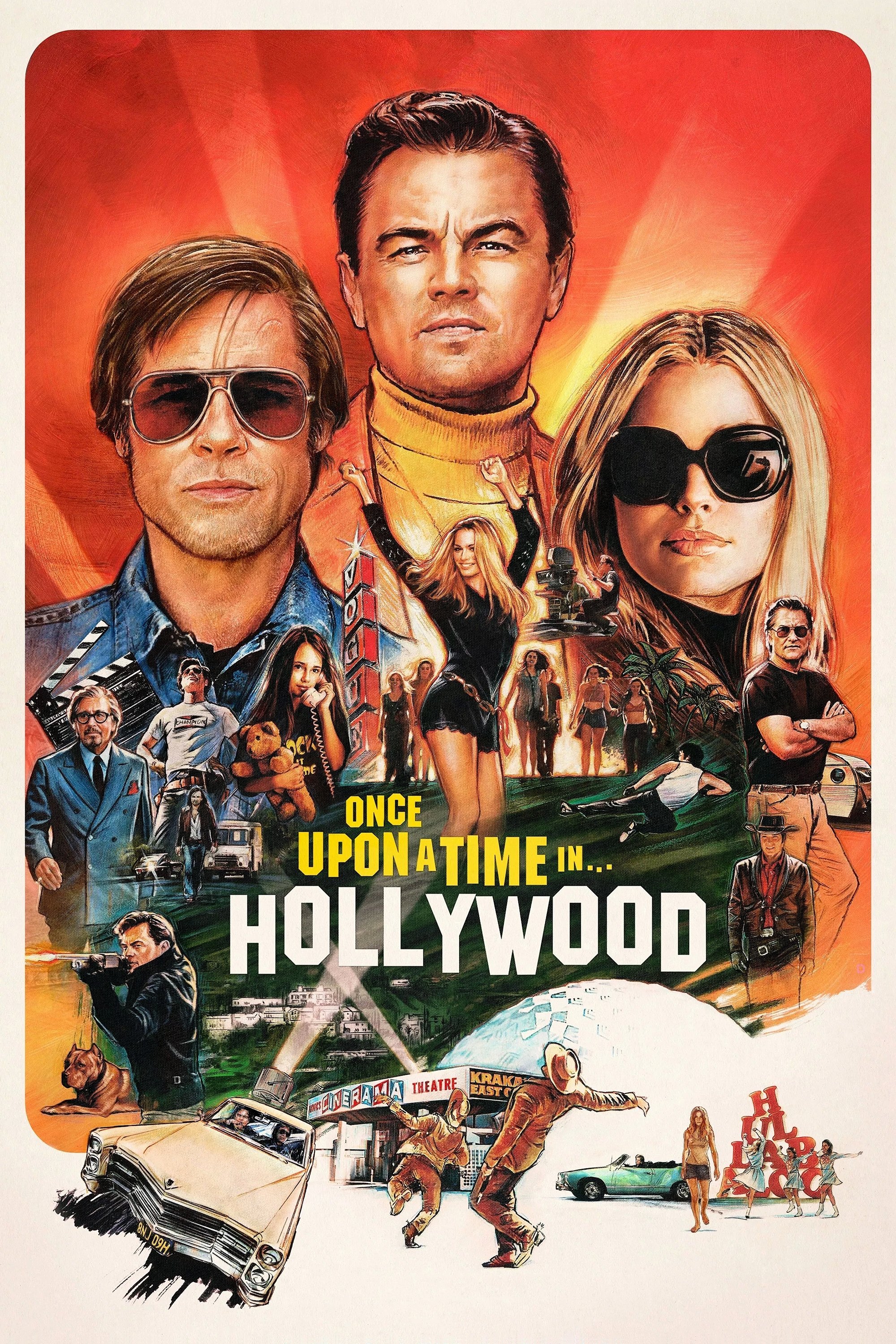
Period streets and cars; an accidental drink spill; the diner set; Redford’s broken thumb and lateness; the adapted score; Julia Phillips’s producing milestone.
The overacting award is renamed for Vincent Hanna ("Give me all you got") after earlier names including Mark Ruffalo and Linda Partridge. — Bill Simmons
Nominees: the actor playing Bruce Lee for dialing it up, or the Manson family woman after her face is smashed. — Bill Simmons
A counterpoint says her flamethrower scene did not read as overacting. — Chris Ryan
Her real overacting is said to be in the car rant; it is then suggested to give it to her anyway. — Sean Fennessey
DiCaprio's trailer scene is ruled out; Zoe's character screaming at Pitt is called a little hard, with shades of Robert Shaw in Jaws.
The award is now also named for Robert Shaw's Quint in Jaws, with a Quint impression; nobody really overacts in this movie, though Pantoliano never modulates his performance and dials it up in a good way, as in his line about everybody telling him to go fuck himself.
Spielberg, Shaw, Scheider, Dreyfuss, Williams and the shark are nominated; Dreyfuss is mentioned with an immediate probably-not qualification. — Bill Simmons
The first Spielberg choice credits a career-launching, industry-changing and exceptionally entertaining movie while acknowledging luck. — Chris Ryan
Spielberg’s repeated practical and artistic decisions rescued a production another director might have lost: the unseen shark, effective small score, replacement actors and repeated script rewrites all worked. — Sean Fennessey
The final response agrees with Spielberg but makes a substantial case for Quint as an irreplaceable supporting character. — Bill Simmons
Coogler is compared with the young director, whose early television experience is cited as years of preparation.
Scheider’s Jaws breakthrough is defended as his career peak: a recognizable supporting star becomes a lead in the biggest movie. The case for All That Jazz cites an Oscar nomination, a signature late role and carrying the whole film; this prompts a distinction between career power and best performance. — Bill Simmons
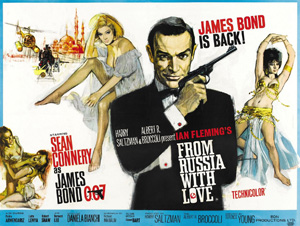
Shaw’s peak is disputed. A Man for All Seasons is called his best; From Russia with Love receives praise followed by a more reserved response. The Sting is praised repeatedly, while another response prefers Shaw in Jaws and points to Quint’s city-hands scene. — Chris Ryan
Close Encounters leads the Dreyfuss choices. The unclear title transcribed as Mr. Hothotapus is loved but explicitly rejected as the answer. The Goodbye Girl is considered because of Oscar success while dismissed as a poor romantic comedy that nobody would revisit. His What About Bob performance receives praise. — Bill Simmons
The debate explicitly distinguishes career power from best performance when defining Apex.
All That Jazz is the preferred Scheider answer; the direct response explicitly identifies Chris as having long favored that film. — Chris Ryan
Spielberg reportedly paid for the additional floating-head scare himself, filming a model in a pool clouded with powdered milk. — Bill Simmons
Spielberg reportedly tried to leave Jaws for Lucky Lady but was blocked. The discussion names its director as Stanley Donnan in the transcript and its cast as Liza Minnelli, Burt Reynolds and Gene Hackman, calls it a hit that has become obscure, and says Lucas recruited its British crew for Star Wars. — Sean Fennessey
Shallow ocean depth allowed recovery of the mechanical shark, which required continuous maintenance. — Chris Ryan
Spielberg reportedly regretted not using a tank, while the speakers defend the real ocean as essential to the movie. — Bill Simmons
Unwanted boats, soaked equipment and a sinking vessel contributed to a shoot expanding far beyond its schedule. — Bill Simmons
A reported anticipated crew prank prompted Spielberg to leave before the final shot. — Bill Simmons
The Making of Jaws is strongly recommended for its extensive interviews and production history. — Sean Fennessey
Visions of Light is cited for Michael Chapman’s account of rejecting fixed tripod shots because tilting boat horizons would make audiences sick, leading to fluid handheld work. The speaker is uncertain whether Chapman was Jaws’s camera operator and connects him with later Raging Bull cinematography. — Chris Ryan
Shaw’s drinking and antagonism toward Dreyfuss are described through production accounts and documentary recollections. — Bill Simmons
A reported escalating cash dare to jump from the mast ended when Spielberg intervened to protect the actor needed for filming. — Bill Simmons
The mechanical shark was reportedly named Bruce after Spielberg’s lawyer. — Bill Simmons
The tracking-and-zoom shot is admired as iconic, with concern that repeating it now would feel clichéd.
Mythbusters reportedly found that shooting the tank would not cause the film’s explosion.
A writer whose surname is uncertain in the transcript, heard as Gabbler or Gables, is credited with interpreting Dreyfuss as science, Quint as spiritualism and Brody as the common man. The speakers find the spiritualism label amusing and call the interpretation overthinking while enjoying the idea that the common man succeeds. — Bill Simmons
The Taylors reportedly used a smaller diver and cage to make real shark footage look proportionally larger. — Bill Simmons
Footage of an empty cage attack reportedly led to Hooper surviving; the shark’s accidental snag also entered the rewritten scene. — Sean Fennessey
Mrs. Kintner’s performer reportedly struck the actor for real across seventeen takes because a fake slap was difficult. — Bill Simmons
Benchley reportedly objected to the tank climax and was removed from the set; he also appears as a reporter. — Bill Simmons
A proposed Quint introduction mocking Moby Dick was abandoned when Peck reportedly withheld permission because he disliked his performance. — Bill Simmons
The extra head scare reportedly weakened the later shark scare, prompting a single-major-scare lesson; the speakers question whether that holds in the trailer-heavy present. — Bill Simmons
The reshoot reportedly cost Spielberg three thousand dollars; a tarp helped cover the milk-clouded pool. — Bill Simmons
The filming schedule went from 52 days to 155 days. — Bill Simmons
Shaw reportedly kept fleeing back to Canada because staying in the United States too long would mean paying taxes. — Bill Simmons
The opening attack and the diving discovery of a head are honorable mentions. — Bill Simmons
The beach attack, son mimicking his father, Indianapolis speech, Quint’s death and final shark confrontation are nominated. — Bill Simmons
The wine visit is an additional favorite for the exhausted chief and the three-way domestic dynamic. — Chris Ryan
The town meeting and first Quint appearance are nominated, with praise for the mayor’s scenes. — Sean Fennessey
Chris Ryan chooses everything on the boat after sunset, including the Indianapolis speech. — Chris Ryan
The Indianapolis speech authorship remains unresolved: playwright William Sackler [observed name] is credited with its premise, while Milius, Shaw and on-set rewriter Gottlieb are also discussed. — Sean Fennessey
A reported failed intoxicated take was followed by an electrifying next-day performance. — Bill Simmons
Shaw reportedly entered the casting discussion because the producers admired his work in The Sting. — Sean Fennessey
The final stretch from Quint’s death through the shark’s defeat is a favorite, while the father-son scene remains a personal one-scene choice. — Bill Simmons