‹ All people

Referenced person

Conrad Hall

Stats

Episodes featuring their films
0
Movies in this archive
0

Rewatchables episodes featuring Conrad Hall’s films

No episode credits in the archive yet.

No episodes found

Mentioned in discussions

Marathon Man

The Great Shot Gordo Award for Most Cinematic Shot

The soccer ball rolling to Doc outside the opera

In the discussion (5)
Approx. transcript time · 00:53:02Read transcript
  • Szell opening the deposit box is nominated. — Bill Simmons
  • The wide waterworks confrontation is nominated. — Bill Simmons
  • The red steps and fountain around Doc’s murder are nominated. — Chris Ryan
  • The camera moving through a window to reveal Doc’s Paris balcony and the Eiffel Tower is nominated. — Chris Ryan
  • The soccer ball rolling to Doc outside the opera is selected for its unexplained menace. — Chris Ryan
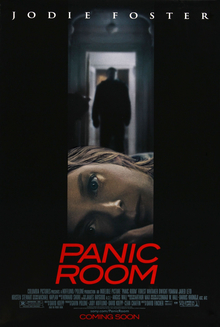
Panic Room

Half-Assed Internet Research

Production facts cover Stewart’s growth, repeated takes, the set, camera work, cinematography, home-video release, and a Runaways connection

In the discussion (6)
Approx. transcript time · 01:19:38Read transcript
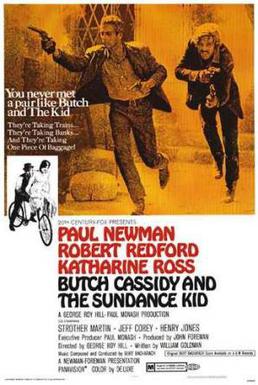
Butch Cassidy and the Sundance Kid

Half-Assed Internet Research

Body count of 30; a 1979 prequel with Tom Berenger and William Catt; Catherine Ross clashed with George Roy Hill and later married Conrad Hall; Montezuma's revenge in Mexico except for the stars; Redford did his own train-top stunt; Bob Dylan was asked to sing Raindrops; Redford hated the bicycle interlude; the film motivated David Fincher; Newman and Hill fought over the Bledsoe scene

In the discussion (8)
Approx. transcript time · 01:04:43Read transcript
  • Guessing the body count: the five Bolivian payroll robbers are counted, the army at the end is debated since the frame freezes and only gunfire is heard, and the shootout before it may be covering fire; the answer is 30, more than expected.
  • A 1979 prequel, Butch and Sundance: The Early Days, starred Tom Berenger as Butch and William Catt (as transcribed) of Greatest American Hero as Sundance; Goldman produced but did not write it, and people did not like it.
  • Catherine Ross did not get along with George Roy Hill, saying any day away from him was a good one; she was scolded and banned from the set for a day for operating a camera, which Conrad Hall had allowed, and Hall and Ross married shortly after; she liked the silent bicycle sequence most because the second unit, not Hill, shot it.
  • The Bolivia scenes were shot in Mexico, where everyone got Montezuma's revenge except Redford, Newman and Ross, who drank only soda and beer; Newman called it the most fun he ever had making a film, and he and Redford became legitimately close, which shows on screen in this and The Sting.
  • Redford wanted to do his own stunts and ran along the tops of the train cars himself despite Newman objecting that he did not want to lose a co-star.
  • The filmmakers tried to get Bob Dylan to sing Raindrops Keep Falling on My Head and he declined; one participant sees the attempt as reaching across the century divide to feel contemporary, and 1969 was a nice year to get Dylan; Scorsese's Rolling Thunder documentary is called inspiring in an aside.
  • Redford was honest that he thought the bicycle musical interlude killed the movie the first time he saw it and that the whole sequence was terrible, and the sequence was scotched; one host can picture an early screening feeling that way and beseeching Hill to cut it; now it is classic, perhaps the most iconic scene for broad audiences while fans pick the waterfall, the song was the year's biggest hit and the most parodied, and BJ Thomas's people thought it ruined his career.
  • The film motivated David Fincher to become a director and the guest to become a screenwriter, so without it The Social Network does not happen; the only major Newman and Hill conflict was the Bledsoe scene, which Newman wanted at the end of the chase as the catalyst for Bolivia, and they argued about it daily on set.
In the discussion (8)
Approx. transcript time · 00:48:52Read transcript
  • Young Redford is a first nomination: Downhill Racer and The Candidate are loved, Downhill Racer came out a week after this film, which studios would never allow today, and Hollywood has spent fifty years trying to manufacture another Young Redford, with Brad Pitt in Thelma and Louise the example that worked; the mysterious handsome guy whom women want and men want to hang out with is the hardest thing to find in an actor.
  • Finding another Redford is harder still because the kinds of movies where he would be discovered are rarely made now, more likely on Netflix than in the seventh installment of a superhero franchise; Redford did appear in a Marvel movie as the Secretary of Defense and turned up in Endgame for about a minute after rumors that The Old Man and the Gun would be his last film, so he is not ashamed of a paycheck.
  • Redford's first three big film roles were written by Neil Simon, William Goldman and James Salter, writers who understood his quiet pullback; Goldman wrote four more Redford movies afterward, and then Redford turned on him with a revisionist history of All the President's Men that was debunked on the internet.
  • In All the President's Men, the stretch where Dustin Hoffman grabs his copy and he finally confronts him is unbelievable Redford; he also produced it, and that film is named his Apex Mountain, with Ordinary People a close second, since in 1976 he was probably the biggest star in the world with the juice to fund his own movie.
  • Widescreen: the film had a crappy run on square TVs through the 70s, 80s and 90s because it is shot super wide, and the super posse sequence is gorgeous on the right TV and transfer where the 1982 broadcast version was cutting and panning; Conrad Hall shooting and Edith Head doing the look are perhaps the best cinematographer and costume designer of their generation on one movie, with George Roy Hill again.
  • The Butch, Etta and Sundance dynamic could have gone wrong in many ways but the chemistry works even though Butch and Etta are not dating, in the bicycle scene and her line about what would have happened if she had met him first; it is believable.
  • The scene where Etta is first met is held for what has aged worst; the love story is between Butch and Sundance, and Etta, though a key figure, recognizes that, which is why it never turns into a weird fight over her, since they are loyal to each other over anyone else.
  • Old-school dynamite hooked up to a safe, something movies no longer show, and the dialogue, where not a word would be changed, are also nominated; the final pick is the widescreen, having lived through thirty years of watching it another way, with agreement plus love for Redford and the Swingle Singers.
Displaying all 5 discussions