‹ All people

Referenced person

Bob Dylan

Stats

Episodes featuring their films
0
Movies in this archive
0

Rewatchables episodes featuring Bob Dylan’s films

No episode credits in the archive yet.

No episodes found

Mentioned in discussions

High Fidelity The Rewatchables
High Fidelity

Casting What-Ifs

Jack Black, David Arquette, Liz Phair, alternate fantasy musicians, deleted performers, and an uncleared Lennon song

In the discussion (6)
Approx. transcript time · 01:30:10Read transcript
  • Jack Black initially passing on Barry is reported. — Bill Simmons
  • David Arquette was reportedly offered Dick, a choice judged much worse. — Bill Simmons
  • Liz Phair was reportedly considered for Marie DeSalle, which is treated as a very different version.
  • Bob Dylan and Billy Corgan are considered as fantasy replacements for Springsteen.
  • The Ramis and Beverly DeAngelo deleted scenes are recalled. — Bill Simmons
  • An uncleared John Lennon song is identified as Cusack’s desired choice for Rob’s proposal. — Bill Simmons

High Fidelity The Rewatchables
In the discussion (4)
Approx. transcript time · 01:05:54Read transcript
  • Stevie Wonder’s closing song is nominated.
  • Bob Dylan after the funeral is nominated. — Rob Mahoney
  • The Beta Band’s “Dry the Rain” is selected, with an objection that the scene skips directly to the hook on CD.
  • Katrina and the Waves is selected as a pure needle drop. — Joanna Robinson
Manchester by the Sea

The Slow Ride / Kid Cudi – Pursuit of Happiness Award for Best Needle Drop

Stentorian’s garage song; Bob Dylan’s “Lily, Rosemary and the Jack of Hearts.”

In the discussion (3)
Approx. transcript time · 00:58:25Read transcript
  • Stentorian’s first garage song is nominated even while the band is mocked.
  • For Rock Bottom Month, the award is jokingly reframed as whether adding “Pursuit of Happiness” would improve or worsen the movie. — Chris Ryan
  • “Lily, Rosemary and the Jack of Hearts” is also called a very good needle drop.
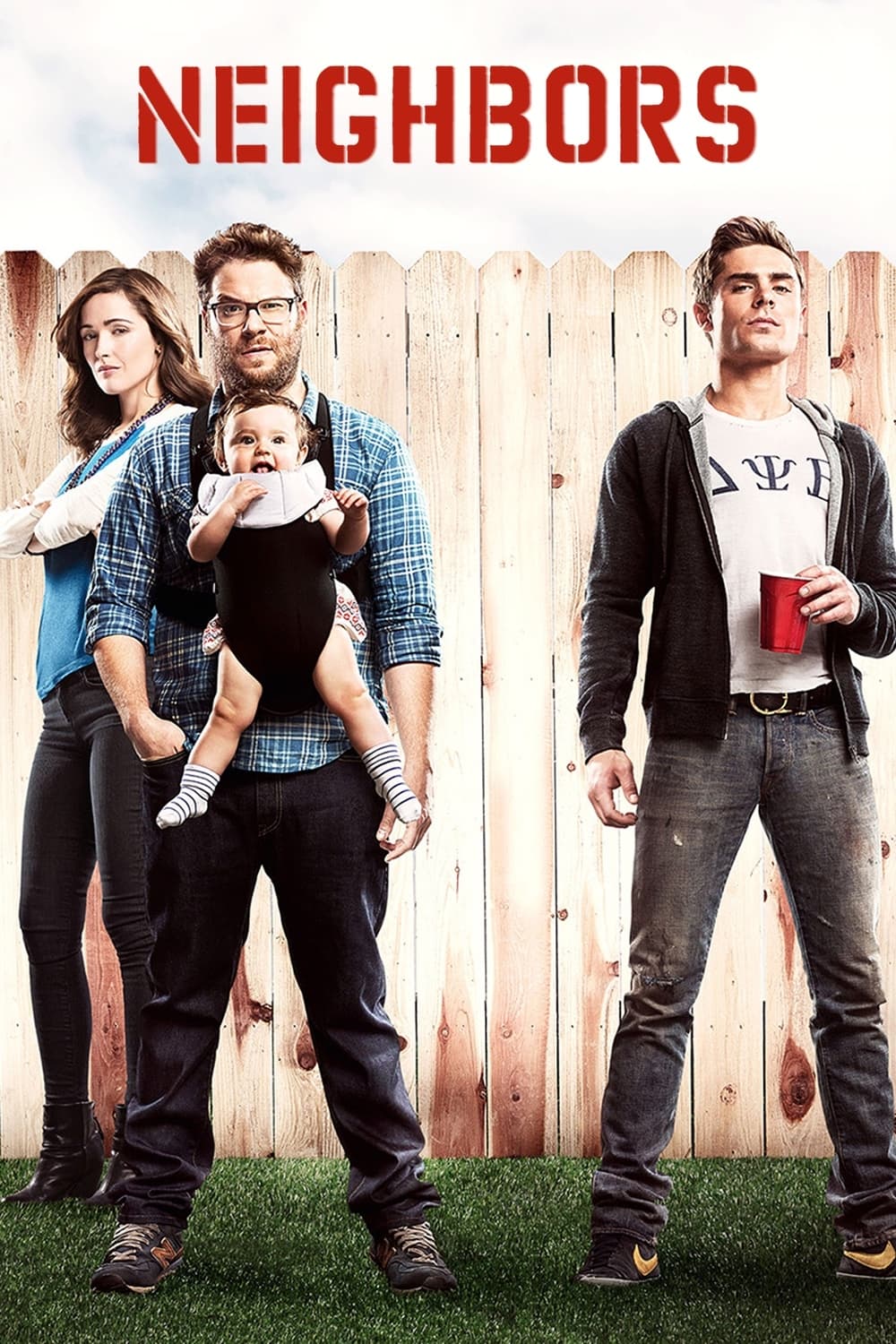
Neighbors The Rewatchables
Neighbors

What’s Aged the Best?

Rogen and Byrne's chemistry; Christopher Mintz-Plasse stunt casting; Dave Franco's intentional boners; Bonertown line; airbag gag; soundtrack; Rose Byrne's natural accent

In the discussion (14)
Approx. transcript time · 00:38:13Read transcript
  • The couple's chemistry is really good and could have gone wrong in the wrong hands; trained actors are often the best people for movies like this. — Bill Simmons
  • Bridesmaids had already shown what Rose Byrne could do, and research for that episode found people surprised she could do comedy. — Bill Simmons
  • Byrne is floated as the most versatile actor of her generation: serious dramas, superhero movies, broad comedies and TV, always good. — Bill Simmons
  • She is called underrated with the most versatility; Nicole Kidman in the Hawaii comedy seemed to be trying, while Byrne could have made only comedies. — Bill Simmons
  • The stunt casting of Mintz-Plasse works: heavier, grown out and older-looking, a deliberate break from the McLovin spell. — Bill Simmons
  • Dave Franco's intentional boners, about three in the movie, are hilarious; a son first saw the movie during the pandemic and was angry he had not been shown it sooner. — Bill Simmons
  • The opening 'taking it to Bonertown' exchange kills, and the airbag gimmick is hilarious. — Bill Simmons
  • The soundtrack is essential, as with The Hangover, and the frat-party music choices were really good. — Bill Simmons
  • The music captures the 2008-2015 pop moment of Missy Elliott, Flo Rida and Kesha that played at any gathering of more than 20 people. — Sean Fennessey
  • Craig weighs in with a Flo Rida comment, prompting a joke about whether Flo Rida beats Bob Dylan. — Bill Simmons
  • Rose Byrne's accent: let people speak in their natural accent. — Chris Ryan
  • Agreement follows: an Australian is just an Australian, and she is funnier in this movie because she did not have to worry about her accent. — Chris Ryan
  • The accent sets up jokes such as her thinking the Kudrow character is called Dean, and one reference is enough to account for it; strained American accents may inhibit improv. — Bill Simmons
  • Seth Rogen and Rose Byrne are named as the aged-best pick. — Bill Simmons
In the discussion (12)
Approx. transcript time · 00:47:59Read transcript
  • The soundtrack remains central, including the Clash, Bob Dylan music from Pat Garrett and Billy the Kid, and Vince Goraldi's Peanuts music. — Andy Greenwald
  • The soundtrack creates nostalgia for an Upper West Side New York that the participant did not literally experience. — Andy Greenwald
  • Luke and Owen Wilson's separate performances are praised as unusually strong and precisely suited to their different energies. — Andy Greenwald
  • Luke Wilson's mournful stillness is contrasted with Owen Wilson's manic external energy. — Chris Ryan
  • The Eli Cash New York Times Magazine cover is singled out as a visual detail that has aged well. — Chris Ryan
  • Henry and Etheline's relationship remains sweet, recognizable, and naturally evolving. — Andy Greenwald
  • Touchstone and producer Barry Mendel's choice to fund and trust Anderson is praised because the resulting film retained its detailed vision. — Andy Greenwald
  • The recreated book covers and the way they fill the frame exemplify production choices that became iconic. — Andy Greenwald
  • The physical comedy still works alongside the film's more cerebral humor. — Andy Greenwald
  • Henry's sudden fall at the archaeological site is chosen as the film's purest physical laugh. — Andy Greenwald
  • One concluding answer is the soundtrack. — Chris Ryan
  • The other concluding answer is Barry Mendel and the broader decision to invest in Wes Anderson. — Chris Ryan
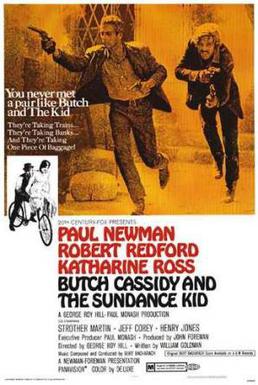
Butch Cassidy and the Sundance Kid

Half-Assed Internet Research

Body count of 30; a 1979 prequel with Tom Berenger and William Catt; Catherine Ross clashed with George Roy Hill and later married Conrad Hall; Montezuma's revenge in Mexico except for the stars; Redford did his own train-top stunt; Bob Dylan was asked to sing Raindrops; Redford hated the bicycle interlude; the film motivated David Fincher; Newman and Hill fought over the Bledsoe scene

In the discussion (8)
Approx. transcript time · 01:04:43Read transcript
  • Guessing the body count: the five Bolivian payroll robbers are counted, the army at the end is debated since the frame freezes and only gunfire is heard, and the shootout before it may be covering fire; the answer is 30, more than expected.
  • A 1979 prequel, Butch and Sundance: The Early Days, starred Tom Berenger as Butch and William Catt (as transcribed) of Greatest American Hero as Sundance; Goldman produced but did not write it, and people did not like it.
  • Catherine Ross did not get along with George Roy Hill, saying any day away from him was a good one; she was scolded and banned from the set for a day for operating a camera, which Conrad Hall had allowed, and Hall and Ross married shortly after; she liked the silent bicycle sequence most because the second unit, not Hill, shot it.
  • The Bolivia scenes were shot in Mexico, where everyone got Montezuma's revenge except Redford, Newman and Ross, who drank only soda and beer; Newman called it the most fun he ever had making a film, and he and Redford became legitimately close, which shows on screen in this and The Sting.
  • Redford wanted to do his own stunts and ran along the tops of the train cars himself despite Newman objecting that he did not want to lose a co-star.
  • The filmmakers tried to get Bob Dylan to sing Raindrops Keep Falling on My Head and he declined; one participant sees the attempt as reaching across the century divide to feel contemporary, and 1969 was a nice year to get Dylan; Scorsese's Rolling Thunder documentary is called inspiring in an aside.
  • Redford was honest that he thought the bicycle musical interlude killed the movie the first time he saw it and that the whole sequence was terrible, and the sequence was scotched; one host can picture an early screening feeling that way and beseeching Hill to cut it; now it is classic, perhaps the most iconic scene for broad audiences while fans pick the waterfall, the song was the year's biggest hit and the most parodied, and BJ Thomas's people thought it ruined his career.
  • The film motivated David Fincher to become a director and the guest to become a screenwriter, so without it The Social Network does not happen; the only major Newman and Hill conflict was the Bledsoe scene, which Newman wanted at the end of the chase as the catalyst for Bolivia, and they argued about it daily on set.
Dazed and Confused

Most Rewatchable Scene

Wooderson's slow-motion entrance to the Emporium pool hall to Bob Dylan's Hurricane

In the discussion (9)
Approx. transcript time · 00:28:25Read transcript
  • The whole movie is a rewatchable scene and is hard to separate into candidates, since it is never clear what time it is until daylight arrives at the very end; the five picks are scenes you could identify from a single picture, knowing the music and exactly what happens.
  • Wooderson going to the pool hall in slow motion to Bob Dylan's Hurricane is a great four minutes, a great 70s hang, the entire movie cracked into one thing, and may already be the answer.
  • The mailbox-smashing drive, with Don Dawson laughing in the front seat and the angry hillbilly pulling a 9mm on them, recalls a host's own college Halloween runs smashing pumpkins in a rich part of Worcester; people were idiotic in the 70s and 80s.
  • The paint dumped on O'Banion is a sting operation in which the ninth-grade girls get a little retribution; it is one of Affleck's most committed performances, he gets in his car and is never seen again, and together with Mallrats it suggested he would play a dipshit in every movie before Batman and Armageddon.
  • Adam Goldberg's character getting beaten up is enjoyed as a very realistic fight: he put thought into it and out-thought himself, and the other guy just gets him; Cole Hauser's character shoves people back to let it go on until Pink comes in with McConaughey and stops it.
  • The ending is probably the best two minutes of the movie: four people who would not have been together eight hours earlier end up in one car listening to Slow Ride as the road rolls toward nowhere over an imaginary hill, after the wind-down of everyone going home, Wiley Wiggins's character caught by his mom, Sabrina getting a kiss from Anthony Rapp's character, and Pink admitting to Don that football is not for him.
  • The entrance to the Emporium is settled on as the pick.
  • Asked first which song would soundtrack a slow-motion walk into a high school bar or party, picks Can I Live by Black Rob. — Sean Fennessey
  • The other answer is Cash Rules Everything Around Me by Wu Tang, so both picks are hip-hop songs from kids of the 90s, obsessed with rap, though rock options like Whole Lotta Rosie and Houses of the Holy are floated; a middle school class spent two years reciting Wu Tang skits; one host's own pick would have been L.A. Woman by The Doors, which plays in the room, and a Doors Rewatchables is dangled to one host, who is accused of begging for it and told to name the day and time.
The Big Lebowski

Most Rewatchable Scene

“Over the Line” (strongest preference); the first Big Lebowski visit and quieter moments

In the discussion (11)
Approx. transcript time · 00:23:05Read transcript
  • The opening home invasion, rug violation, Bob Dylan credits, and slow-motion bowling are nominated as one immediate entry into the movie’s dream state. — Chris Ryan
  • Walter threatening Smokey over the line and the Jesus introduction are nominated. — Chris Ryan
  • The bowling-alley “Chinaman” nomenclature argument and the following Brandt/Big Lebowski introduction are nominated as a connected sequence.
  • The first confrontation between the Dude and the Big Lebowski is praised for balancing loud moral fury against the Dude’s calm confusion.
  • “Over the Line” becomes one participant’s clear choice for its escalation from league rules to an armed threat.
  • The dude’s bathtub is cited as a favored quiet image, though not enough happens to make it a full scene choice.
  • Knox Harrington’s German giggling and the fake apartment bar are nominated. — Sean Fennessey
  • The Dude and the private detective’s brother-Seamus conversation is nominated for its Raymond Chandler syntax. — Sean Fennessey
  • The panel ultimately treats the entire movie as a continuous flow that resists extracting one winner.
  • The Dude’s conversation with the Stranger and the toe discussion in the diner are additional scene nominations. — Chris Ryan
  • Treehorn’s supposedly important note becoming an obscene doodle is recalled as an especially funny scene; folding it into his pocket makes the gag even better.
Displaying all 8 discussions