‹ All people

Film credit

Katharine Ross

Also referred to as Catherine Ross, Ross

Stats

Episodes featuring their films
1
Movies in this archive
1

Episodes featuring Katharine Ross’s films

The Rewatchables

Displaying 1 episode

Mentioned in discussions

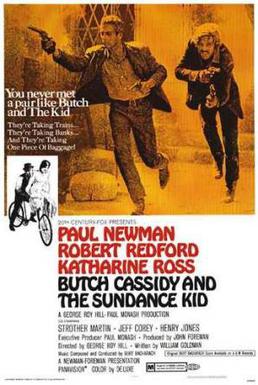
Butch Cassidy and the Sundance Kid

Picking Nits

Etta's endgame is unexplored; act two is a long, slow chase; there is no love scene with Catherine Ross

In the discussion (4)
Approx. transcript time · 01:13:03Read transcript
  • The only nitpick for one host is not understanding Etta's endgame, whether she loved Sundance and was the third wheel or had a thing for Butch; it feels slightly unexplored and perhaps ages poorly, though in 1969 it needed no explanation why a woman would follow powerful men around.
  • Act two feels weird and long, basically one chase with very little dialogue and almost nothing else happening, which Goldman wrote about; older movies are paced differently so younger audiences struggle, and a rewatch the night before was surprisingly slow despite how important the events are; the other host had the same note.
  • The retort is to go to hell: he could take the two of them into an editing room, put the reels up and tell them to knock themselves out and take three minutes. — Aaron Sorkin
  • Made today, the studio would want a rattlesnake fight for juice, a superpower for Butch or a spaceship; the mock rape notwithstanding, there is no love scene with Catherine Ross, which a studio would have a problem with.
In the discussion (3)
Approx. transcript time · 01:11:08Read transcript
Butch Cassidy and the Sundance Kid

Half-Assed Internet Research

Body count of 30; a 1979 prequel with Tom Berenger and William Catt; Catherine Ross clashed with George Roy Hill and later married Conrad Hall; Montezuma's revenge in Mexico except for the stars; Redford did his own train-top stunt; Bob Dylan was asked to sing Raindrops; Redford hated the bicycle interlude; the film motivated David Fincher; Newman and Hill fought over the Bledsoe scene

In the discussion (8)
Approx. transcript time · 01:04:43Read transcript
  • Guessing the body count: the five Bolivian payroll robbers are counted, the army at the end is debated since the frame freezes and only gunfire is heard, and the shootout before it may be covering fire; the answer is 30, more than expected.
  • A 1979 prequel, Butch and Sundance: The Early Days, starred Tom Berenger as Butch and William Catt (as transcribed) of Greatest American Hero as Sundance; Goldman produced but did not write it, and people did not like it.
  • Catherine Ross did not get along with George Roy Hill, saying any day away from him was a good one; she was scolded and banned from the set for a day for operating a camera, which Conrad Hall had allowed, and Hall and Ross married shortly after; she liked the silent bicycle sequence most because the second unit, not Hill, shot it.
  • The Bolivia scenes were shot in Mexico, where everyone got Montezuma's revenge except Redford, Newman and Ross, who drank only soda and beer; Newman called it the most fun he ever had making a film, and he and Redford became legitimately close, which shows on screen in this and The Sting.
  • Redford wanted to do his own stunts and ran along the tops of the train cars himself despite Newman objecting that he did not want to lose a co-star.
  • The filmmakers tried to get Bob Dylan to sing Raindrops Keep Falling on My Head and he declined; one participant sees the attempt as reaching across the century divide to feel contemporary, and 1969 was a nice year to get Dylan; Scorsese's Rolling Thunder documentary is called inspiring in an aside.
  • Redford was honest that he thought the bicycle musical interlude killed the movie the first time he saw it and that the whole sequence was terrible, and the sequence was scotched; one host can picture an early screening feeling that way and beseeching Hill to cut it; now it is classic, perhaps the most iconic scene for broad audiences while fans pick the waterfall, the song was the year's biggest hit and the most parodied, and BJ Thomas's people thought it ruined his career.
  • The film motivated David Fincher to become a director and the guest to become a screenwriter, so without it The Social Network does not happen; the only major Newman and Hill conflict was the Bledsoe scene, which Newman wanted at the end of the chase as the catalyst for Bolivia, and they argued about it daily on set.
Butch Cassidy and the Sundance Kid

Casting What-Ifs

Steve McQueen as Sundance, out over billing; Jack Lemmon and Warren Beatty turned Sundance down; Zanuck's split-prints billing idea; Redford a near-unknown; Natalie Wood considered for Etta


In the discussion (8)
Approx. transcript time · 00:38:27Read transcript
  • Redford was not the original Sundance: Jack Lemmon was offered the part, at Goldman's suggestion, and turned it down feeling he had played too many aspects of the character; Warren Beatty turned it down as too similar to Bonnie and Clyde; Steve McQueen was in, and the title was to become The Sundance Kid and Butch Cassidy because McQueen considered himself the bigger star than Newman.
  • The fight over whether McQueen or Newman would be billed first drove McQueen off the movie; asked whether this is true, one participant confirms that kind of nonsense happens all the time, over billing and over parts not taken.
  • Fox president Daryl Zanuck (as transcribed) made the unusual suggestion that half the prints bill Newman first and half McQueen, McQueen refused and left, and they got Redford, a handsome theater actor nobody knew, known if at all for urbane Neil Simon comedy like Barefoot in the Park; he has maybe a hundred words in the movie, becomes a giant star in four expressions, gives a great performance, and played men of few words for the rest of his career, even as Bob Woodward.
  • The long sepia close-up when Redford is first met, held while someone else talks, is one of the all-time close-ups and became a Redford signature, a good editing-room decision; Goldman wrote that Newman's people, not Newman himself, were upset by all the Redford close-ups and worried Redford would steal the movie.
  • Natalie Wood was considered for Etta.
  • Catherine Ross was in The Graduate, the biggest movie of the year before, then in this, the biggest movie of its year, and was in pole position as the good-looking actress of choice, but did not want that power, toned it back, did some stage work and the moment left; Anne Bancroft was only three or four years older than her in The Graduate.
  • Goldman was unsure whether the real Etta was a schoolteacher or a prostitute and, from how pretty and cleanly dressed she was in photos, chose to believe schoolteacher, though the historical record is fuzzy; it would have been unusual for a woman of about 24 to be unmarried.
  • Ally McGraw (as transcribed) of Love Story was the market correction, though Ross, the better actress, could have corrected her back and instead gave up, with Mia Farrow and Ellen Burstyn the other big actresses; research suggests Ross was difficult and disliked making movies; she met Sam Elliott, a card player with a very small role here, did not date him, and married him fifteen years later.
Displaying all 4 discussions

Films in the archive