
‹ All people

Film credit

Mia Farrow

Stats

Episodes featuring their films
0
Movies in this archive
1

Episodes featuring Mia Farrow’s films

No episode credits in the archive yet.

No episodes found

Mentioned in discussions

American Gigolo

Casting What-Ifs

Travolta; Reeve; disputed Chevy Chase; Christie; Farrow; uncertain Streep and Lange

In the discussion (10)
Approx. transcript time · 00:36:50Read transcript
  • Travolta was announced in 1978 and photographed in Armani, then withdrew shortly before filming; the official explanation involved his mother’s death and father’s illness. — Bill Simmons
  • Schrader’s alternative explanations invoke Scientology, discomfort with gay themes and a final-cut demand; the discussion explicitly calls these unverified speculation and notes his tendency to provoke. — Bill Simmons
  • Gere reportedly became the fourth choice two weeks before filming; his earlier Looking for Mr. Goodbar role had put him on the map before this breakthrough. — Bill Simmons
  • Travolta’s sexual charisma could work, but Gere is preferred for attractiveness and a convincing unknown past; ambiguity about the character’s sexuality is discussed as part of both actors’ potential appeal. — Mallory Rubin
  • Christopher Reeve reportedly declined a million dollars; Diller wanted him but Schrader opposed his all-American quality and undermined the choice. Suitability remains disputed, largely negative.
  • The internet claim that Chevy Chase declined is disbelieved, and a serious Chase performance is rejected despite Schrader’s later unconventional Harrelson casting in The Walker. — Sean Fennessey
  • Julie Christie was initially cast opposite Travolta and is strongly preferred by one voice, though another refuses to choose between her and Hutton. — Bill Simmons
  • Mia Farrow reportedly gave the best audition but overpowered Travolta; Sue Mengers arranged a Hutton test that suited him, and Schrader avoided another risky change after replacing the lead with Gere. — Bill Simmons
  • Farrow is defended as an underrated actor who could have played an unusually sexy role outside her familiar Allen-film image. — Bill Simmons
  • Reports that Streep and Lange declined remain unconfirmed or ambiguous about whether a firm offer existed; both are considered appealing alternatives. — Bill Simmons
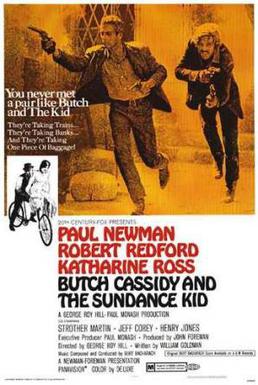
Butch Cassidy and the Sundance Kid

Casting What-Ifs

Steve McQueen as Sundance, out over billing; Jack Lemmon and Warren Beatty turned Sundance down; Zanuck's split-prints billing idea; Redford a near-unknown; Natalie Wood considered for Etta

In the discussion (8)
Approx. transcript time · 00:38:27Read transcript
  • Redford was not the original Sundance: Jack Lemmon was offered the part, at Goldman's suggestion, and turned it down feeling he had played too many aspects of the character; Warren Beatty turned it down as too similar to Bonnie and Clyde; Steve McQueen was in, and the title was to become The Sundance Kid and Butch Cassidy because McQueen considered himself the bigger star than Newman.
  • The fight over whether McQueen or Newman would be billed first drove McQueen off the movie; asked whether this is true, one participant confirms that kind of nonsense happens all the time, over billing and over parts not taken.
  • Fox president Daryl Zanuck (as transcribed) made the unusual suggestion that half the prints bill Newman first and half McQueen, McQueen refused and left, and they got Redford, a handsome theater actor nobody knew, known if at all for urbane Neil Simon comedy like Barefoot in the Park; he has maybe a hundred words in the movie, becomes a giant star in four expressions, gives a great performance, and played men of few words for the rest of his career, even as Bob Woodward.
  • The long sepia close-up when Redford is first met, held while someone else talks, is one of the all-time close-ups and became a Redford signature, a good editing-room decision; Goldman wrote that Newman's people, not Newman himself, were upset by all the Redford close-ups and worried Redford would steal the movie.
  • Natalie Wood was considered for Etta.
  • Catherine Ross was in The Graduate, the biggest movie of the year before, then in this, the biggest movie of its year, and was in pole position as the good-looking actress of choice, but did not want that power, toned it back, did some stage work and the moment left; Anne Bancroft was only three or four years older than her in The Graduate.
  • Goldman was unsure whether the real Etta was a schoolteacher or a prostitute and, from how pretty and cleanly dressed she was in photos, chose to believe schoolteacher, though the historical record is fuzzy; it would have been unusual for a woman of about 24 to be unmarried.
  • Ally McGraw (as transcribed) of Love Story was the market correction, though Ross, the better actress, could have corrected her back and instead gave up, with Mia Farrow and Ellen Burstyn the other big actresses; research suggests Ross was difficult and disliked making movies; she met Sam Elliott, a card player with a very small role here, did not date him, and married him fifteen years later.
The Godfather

Casting What-Ifs

Lancaster, Brando, Scott, Beatty, Nicholson, O’Neal, Redford, Hoffman, Sheen, Caan, De Niro, and Stallone figure in casting history.

In the discussion (14)
Approx. transcript time · 01:08:24Read transcript
Displaying all 3 discussions

Films in the archive

