
Film credit
Jack Nicholson
Also referred to as Dale Nicholson, Nicholson
Stats
- Episodes featuring their films
- 6
- Movies in this archive
- 6
Rewatchables episodes featuring Jack Nicholson’s films
Mentioned in discussions


Half-Assed Internet Research
Albert Brooks phoned James L. Brooks at 3 a.m. after seeing a CNN reporter sweat, creating the sweating scene; Nicholson went unpaid at his own request; the sweating scene took 24 takes; Switching Channels (1988) flopped as a competitor; Brooks and Hurt ambushed Holly Hunter with an ad-libbed cab-ride alternate ending that was spoiled by a crew member
In the discussion (4)
- Albert Brooks was watching CNN when a reporter he had never seen before or since began sweating badly; he phoned James L. Brooks at three in the morning to say Aaron had to start sweating, which became the sweating scene, with the makeup lady's 'Jesus' a highlight; Jack Nicholson was not paid for his role at his own request.
- James Brooks made them do 24 takes of that scene, which he does not usually do, because he thought it was the key part of the movie and wanted it perfect; Switching Channels, made in 1988 with Kathleen Turner and Burt Reynolds, was almost a competitor, a critical and box-office failure that started a Kathleen Turner slide.
- The alternate ending is on YouTube; Brooks told Premiere he was open to who Jane ends up with, and during the cab scene he and William Hurt planned to surprise Holly Hunter by having Hurt jump in and ad-lib for two minutes, trusting she would not break character, but a crew member gave it away by saying 'Bill' just before the roll; Hurt and Hunter later felt the movie should have ended that way, while Brooks himself felt it was not right.
- Flagged earlier as stepping on internet research: the Holly Hunter character is based on a woman Brooks met in 1984 at the conventions who was dating two men who worked in TV at the same time; he never said who, and the hosts imagine a Deep Throat reveal after they die.

In the discussion (6)
- Asked to define the award, the guest says it is who does the most with the least, and does not require the person to be a lunatic. — Chuck Klosterman
- Lunatics are nonetheless often the winners because of the hosts' taste; the nominees are Jack Nicholson, Joan Cusack, Lois Childs (as transcribed) and the TV music composer guys; the minority pick is Cusack, one host going with her as memorable for how little she is on screen and for the Juergen Klinsmann slide under the filing cabinet.
- One of the composer guys is Mark Shaman (as transcribed), among the most successful composers in Hollywood, who wrote all the songs in Mary Poppins Returns; the 'Big finish!' clip is played, and the scene is called the most sitcom-y of all time, proof the director made sitcoms.
- Jack Nicholson is proposed as maybe the greatest Hitchcock performer in American movies, one who can take over films he is not the star of, as in Reds, A Few Good Men, Terms of Endearment and the Joker, and this is probably his smallest part ever, just reading the news and one office visit; one host makes him his vote for the award; it is a lost art Denzel Washington does not practice, though Cruise did it in Tropic Thunder, and Denzel should play Jessup if NBC stages A Few Good Men.
- Nicholson's whole career has been like that, back to the small memorable role in the Fonda film; a second participant votes for him, making Nicholson the majority choice; sheer charisma carrying four weird scenes in a movie you are not important in is a category only Brando shares; De Niro in The Untouchables does not count because he is the bad guy; Nicholson's best scene is slinking away around the desk during the layoffs with no dialogue, something George Clooney could not do with the same impact, though Damon does it in Interstellar.
- Late in the segment William Hurt's dad is raised as a Dion Waiters candidate, pretty good for being in Tucson; the host had him coming up later as a 'that guy'.

In the discussion (14)
- Burt Lancaster and Laurence Olivier were considered for Vito Corleone. — Bill Simmons
- Marlon Brando’s contested casting and screen test are recounted. — Sean Fennessey
- George C. Scott is discussed as a possible Vito. — Sean Fennessey
- Mia Farrow auditioned for Kay. — Bill Simmons
- Warren Beatty was considered for Michael and around directing. — Bill Simmons
- Jack Nicholson was considered for Michael. — Bill Simmons
- Ryan O’Neal was Robert Evans’s preferred Michael. — Bill Simmons
- Robert Redford was considered for Michael. — Bill Simmons
- Dustin Hoffman auditioned. — Bill Simmons
- Martin Sheen auditioned. — Bill Simmons
- James Caan tested for Michael and Tom before moving to Sonny. — Bill Simmons
- Carmine Caridi was originally slated for Sonny. — Bill Simmons
- Robert De Niro left the Paulie role for The Gang That Couldn’t Shoot Straight. — Bill Simmons
- Sylvester Stallone unsuccessfully auditioned for Paulie and Carlo. — Bill Simmons

In the discussion (3)
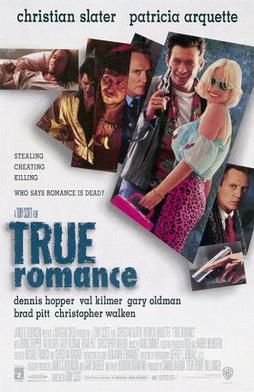
- The choices: Christian Slater, Patricia Arquette, Tony Scott, Quentin Tarantino, Sonny Chiba, Floyd or Saul Rubinek; Sonny Chiba is the Johnny Chan of the movie, a big winner who did not really do anything; since it was not a hit, it has to be Tarantino, who was minted and became someone to watch for the next twenty years, giving him sustainability after Reservoir Dogs.
- Slater is underrated on this pod: by this film he was Christian Slater in every movie, the Jack Nicholson impersonation that had been exciting in Heathers was now held against him; he is a good actor and believable in the part even though a case can be made the movie is about a schizophrenic, wish fulfillment in his head, a dream woman, a classic bag-of-money scenario, note-perfect gangsters and everyone liking a loser from a comic book store.
- Tarantino wins it because it proved Reservoir Dogs was not just a weird indie fluke, established a narrative, led to Pulp Fiction and is belatedly great, the most personal of his films with Clarence as his proxy; Tony Scott was another's runner-up, since the movie needed him and the Gandolfini scene in the wrong hands would go badly, and Tarantino directing it in 1993 would have shot it closer to the ear-cutting scene in Reservoir Dogs; he was famously not on set, and started Pulp Fiction about three months after this came out.
Podcast choices
- Speaker not identified
- Quentin Tarantino
Probably Unanswerable Questions
Why not name Vince Vaughn's character Trent and make it a Swingers sequel? Is it acceptable for an actor to play a character with his own name? Should TV characters cross over into other shows?
In the discussion (3)
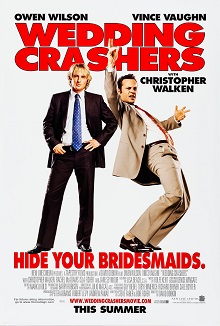
- Why not just name Vince's character Trent and make it a sequel to Swingers, since they never acknowledge they are borrowing the IP.
- On actors playing characters with their own name, like Jack Nicholson playing a Jack, one host is all in and another finds it vexing, either the actor not wanting to think of another name or everyone deciding Jack fits, noting Chinatown moved to Jake.
- On extending a character into another vehicle, one host is fine with it and recalls Coolidge from The White Shadow becoming the janitor on St. Elsewhere, made by Gwyneth Paltrow's dad, and an episode where the actor who played Salami appears as a different character; the later version is Richard Belzer's Munch moving from Homicide to Law & Order; Boghossian (as transcribed) being the same guy in Billions and Succession would have shattered it.


What’s Aged the Best?
The friendship and the interpersonal relationships; Damon's performance; the two Elliot Smith songs; Casey Affleck's I Hate LA shirt; the Boston accents other than Robin Williams's; the 'how about them apples' scene; the ending; Robin Williams's and Ben Affleck's clothes; the dialogue
In the discussion (8)
- The friendship, since this is really a buddies movie about the bonds of friends; Damon is great and it is hard to believe he did not win the Oscar over Jack Nicholson in As Good As It Gets, a two-person category that year with Duvall for The Apostle, Peter Fonda and Dustin Hoffman for Wag the Dog; As Good As It Gets won Best Actor and Best Actress for Helen Hunt while Titanic won Best Picture, and everybody was fine with it when Jim Brooks was still one of the ten most important writer-directors.
- The two Elliot Smith songs, Between the Bars and Miss Misery, one still not available on iTunes; his life went into a tailspin after the famous Academy Awards performance in the white suit where he seemed delicate and out of place, and the anecdote that he told anyone trash-talking Celine Dion to shut their mouth because she chilled him out before he went on.
- Casey Affleck's I Hate LA shirt in the baseball scene, which one host owned as a kid and whose son is a year from growing into; the Boston accents are spectacular except Robin Williams, and Cole Hauser's is a little iffy in spots but he seems and looks like he is from Boston and carries the fuck-you attitude of the character.
- The how-about-them-apples scene has aged incredibly, with the great ending and the callback you always forget is coming; Robin Williams's cardigans and things that don't match make him look like a widower who shops at Goodwill but still has some authority, and Affleck's clothes seem a little more expensive than they were, trying to look classier.
- The interpersonal relationships between Damon and Affleck and Damon and Williams could be put in a movie from 1940 or 2018 and would still play.
- The friendships are the easiest answer, mainly because of everything that happened afterward, so they are always connected forever; a case could be made for the how-about-them-apples scene, which people still say today and laugh at every time. — Shea Serrano
- The apples line was apparently taken from Chinatown, the line Jack Nicholson has in that movie, so maybe Robert Towne wrote Good Will Hunting; I Swallowed a Bug, which Casey Affleck ad-libbed, was taken from Apocalypse Now; the dialogue has aged best because every line was on the tip of the tongue on rewatch, 60 lines recited while watching, which is unique and a testament to them sticking to their guns about their script.
- You can understand why people suspected a Goldman rewrite because the movie is so obviously the sum of their love of movies: the playground fight is Mean Streets watched a thousand times, with Ordinary People and early Scorsese elsewhere; that Damon and Affleck stayed friends adds to it, this being their proxy movie.

In the discussion (1)
- Ebert gave the film three and a half stars and wrote about Eddie Murphy's Torchy's scene (transcribed as 'torture scene') that sometimes an actor becomes a star in a single scene, as Jack Nicholson did in Easy Rider and Faye Dunaway did looking out at Warren Beatty in Bonnie and Clyde; the hosts add that the theater felt it in the moment and that the movie itself knows it.

Half-Assed Internet Research
Nolan avoided a Joker origin story and changed the chemical scarring to knife wounds; Michael Caine doubted the film and that Ledger could top Nicholson, then forgot his lines on first working with him; IMAX camera problems left out-of-focus shots in the bank robbery
In the discussion (8)
- Little wild happened before or after filming apart from the tragic air of Ledger's passing; Nolan purposely avoided giving the Joker an origin story and changed his canonical chemical scarring to knife wounds to keep his origins unclear.
- Michael Caine did not think the movie would work or that Ledger could top Jack Nicholson's Joker, but was blown away and so frightened on first working with Ledger that he forgot his lines; the hosts call him dead wrong about Ledger.
- Caine's role is worth exploring: he has become the Professor Emeritus of every Nolan movie, the man who comes in and says something pithy, and here he keeps telling Batman why he is doing what he does, as if he thinks he is Batman; a Lethal Weapon 2 South African villain impression breaks out along the way.
- Alfred mythology as the hosts recall it: a British soldier with combat medical training, which is why he can fix Bruce's broken ribs, who somehow got into manservanting after a colonial expedition and buoyed Bruce after his parents' death; yet he tells a Burmese bandit story Bruce, a 40-year-old man ten years into fighting villains, has never heard.
- The bandit story is an extended metaphor for a Joker with no methodology who just wants to watch the world burn, an iconic line, but also movie poppycock, screenwriter push-ups, like letting Michael Caine get a couple of minutes isolated on the wing; he got to cry in Dark Knight Rises.
- The hosts question how Alfred's Dark Knight sermon, that Batman must eat shit as the outcast and sin eater, squares with his Dark Knight Rises wish to see Bruce at a cafe in Venice; it is jarring, though five or six years have passed, Wayne keeps coming home bruised and concussed, and Alfred has his own arc toward believing Batman should stop.
- Does Morgan Freeman need to be in these movies, could Alfred not also be good at gadgets, and how many characters could be removed with the movie still effective.
- An early tidbit: there were problems with the IMAX cameras on the bank robbery and a couple of out-of-focus shots.
What’s Aged the Best?
Heath Ledger's performance as the Joker
In the discussion (8)
- Nominees: Ledger's performance, the action sequences, the Breaking Bad fall and turn of Harvey Dent, unusual in a superhero movie, and the death of Rachel Dawes, whose he-went-to-the-wrong-building reveal is emotionally affecting and is placed second.
- Rachel Dawes was Katie Holmes's part in the first film; the story is that she was busy making a Queen Latifah movie, which is read as a publicist's version of being replaced; Maggie Gyllenhaal reportedly did not understand Batman and just wanted to work with Nolan, and though she is a little divisive she gives the movie a gravitas it would not otherwise have.
- Gyllenhaal seems like a real person in a movie without many, and credibly reads as someone who has known Bruce for a very long time, which he needs since nobody else in his life says 'my friend Bruce'; the love triangle is an underrated nuance, with both men making major life decisions on whether she will be with them.
- On the rescue: the Joker lies about the locations, so Batman heads for Rachel, in part because he wants to keep being the Batman rather than hand over to the golden boy, and ends up with Dent; just before, she had answered his if-I-stop-being-Batman question, then chose Harvey.
- Asked directly, the answer is Ledger: a YouTube mashup of his scenes is the most interesting stuff; where Sean Penn in Mystic River went from wow to the 'is that my daughter in there' meme, Ledger in clown makeup doing mannered work does not age a day, helped by how controlled his Brokeback Mountain performance had been, everything twenty miles beneath the surface.
- Because he arrived already trusted as a great actor, the over-the-top choices are accepted, the tonguing of his scars, the crooked, bent-over posture, the head turned left, as an interpretation differentiated from the comics, the cartoons and Jack Nicholson, a Joker very on the ground and messed up.
- Ledger died in January 2008 and the film came out that July, so first viewings carried the knowledge that this was the last time the character would be seen; rewatching ten years later you are simply in the moment with him, and he is the reason to rewatch; compared with the Joker of Suicide Squad, Ledger's has a complete lack of vanity that is crucial.
- The interrogation room is the first time he is seen in bright light: makeup cracking away from his eyes, slouched on the floor, poking at the cop, Gordon and Batman, looking weak and deranged, genuinely frightening where Nicholson in Tim Burton's movie, also liked, is cartoonish.
Casting What-Ifs
Jeremy Sisto read opposite Kate Winslet in her screen test; Matthew McConaughey was in contention for Jack; Stephen Dorff was passed over for Jack; Chris O'Donnell was mentioned for Jack; Rob Lowe was in the mix for Cal
In the discussion (6)
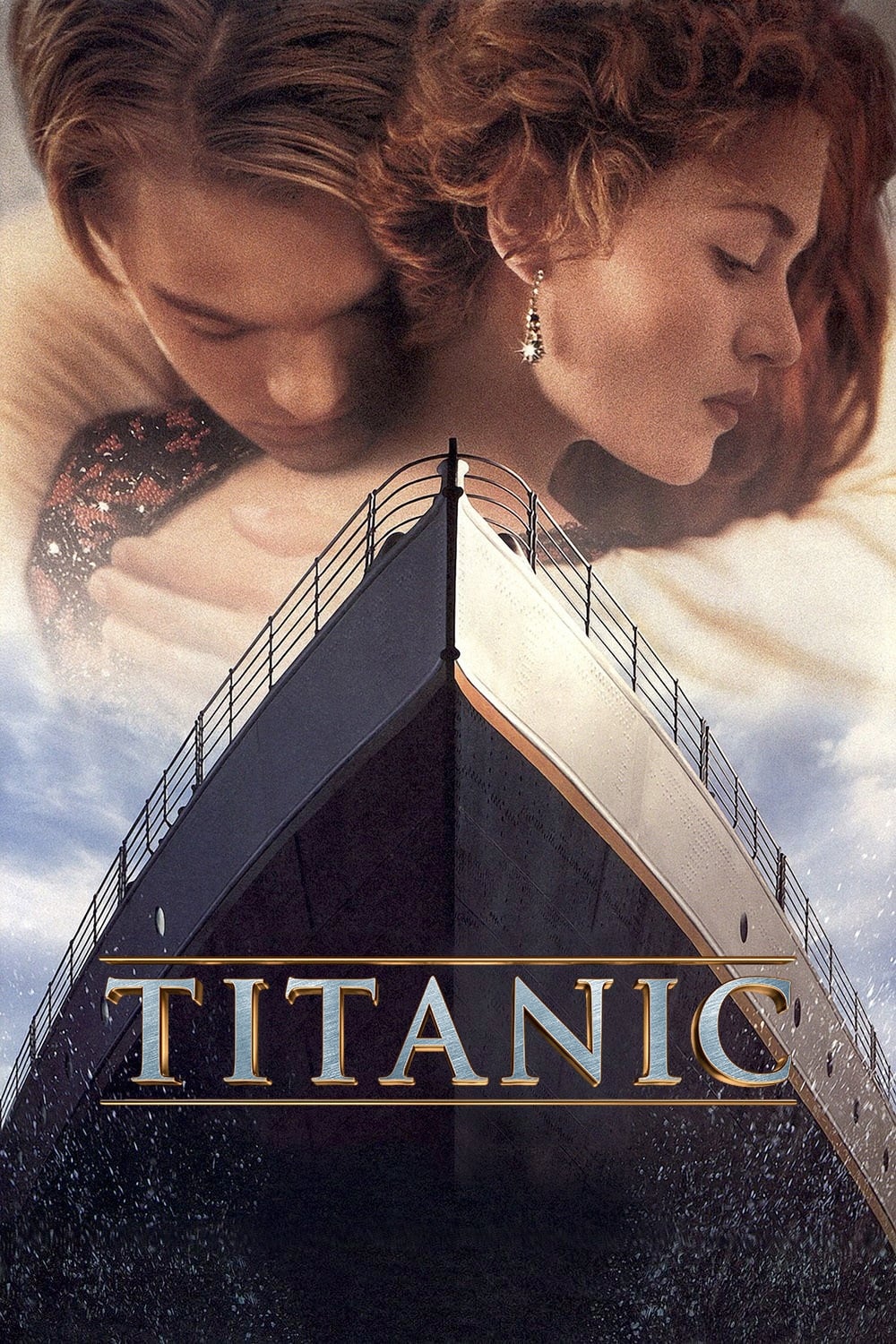
- Kate Winslet had to do a screen test, watchable online, opposite Jeremy Sisto, Elton from Clueless, who auditioned but probably was not in contention; the major name in contention for Jack Dawson was Matthew McConaughey.
- Stephen Dorff is the verified one: a New York Daily News piece headlined 'actor is thankful he didn't get Titanic role' has the Blade co-star saying he wanted a career like Johnny Depp, Sean Penn and Jack Nicholson and an Oscar, which Titanic would have made impossible, and that Leo will always be the guy on the boat.
- One host disagrees that Leo is the guy on the boat, since he has been in so many hits and everyone has a favorite Leo, whereas Matt Damon and Ben Affleck are more locked into their 90s work; Sofia Coppola is said to have made Somewhere with Dorff because he never blew up, and Titanic will be in the first line of DiCaprio's obituary, and of Billy Zane's.
- Billy Zane has not done much anyone has heard of since, though he has been in three times as many films as Kate Winslet.
- Chris O'Donnell, named on Wikipedia for Jack, would have been a great and adorable Jack given his Batman movies and a season-two television arc, but could not have taken the film past a billion dollars; Leo is singular and the chemistry is enduring, though he seems strikingly innocent and little in it.
- Rob Lowe was in the mix for Cal and is a great asshole, as in St. Elmo's Fire; pre-West Wing he might not have pulled viewers out of the film, though one host says he would have a little, and the leads mostly had blank or clean reputations at the time, which the hosts think mattered.
In the discussion (4)
- The choice is Leo, followed by agreement on Leo winning the movie. — Chris Ryan
- Mark Wahlberg is described as overwhelming on early viewings before the preference shifts to DiCaprio. — Chris Ryan
- Matt Damon is praised for his creep performance and as the structural counterpart. — Chris Ryan
- Nicholson is said to lose the movie because of excess. — Bill Simmons
Podcast choices
- Speaker not identified
- Leonardo DiCaprio
- Speaker not identified
- Leonardo DiCaprio

In the discussion (5)
- Scorsese’s repeated “Gimme Shelter” use is nominated through jokes about placing the song over other films. — Chris Ryan
- Costello’s dildo is nominated. — Bill Simmons
- The flip phones are nominated as funny in retrospect. — Bill Simmons
- Sullivan’s impotence material and Baldwin’s “mine’s working overtime” line are nominated. — Bill Simmons
- Nicholson’s three-second run is selected as the funniest moment. — Bill Simmons
Films in the archive
A Few Good Men
1992


Batman
1989
Chinatown
1974


Terms of Endearment
1983

The Departed
2006

The Shining
1980