‹ All movies

Kaffee as Jimmy Butler

Chris Ryan: Kaffee is compared with Jimmy Butler: disruptive and distracted away from the main work, but decisive under pressure.

Chris Ryan: The case’s supposed historic importance is questioned as disproportionate to its scale; that argument is explicitly distinguished from endorsing Santiago’s death.

Honor does not require a patch

Honor does not require a patch on one’s arm is the stated lesson, followed by a playful Rewatchables variation on the military code.

The film

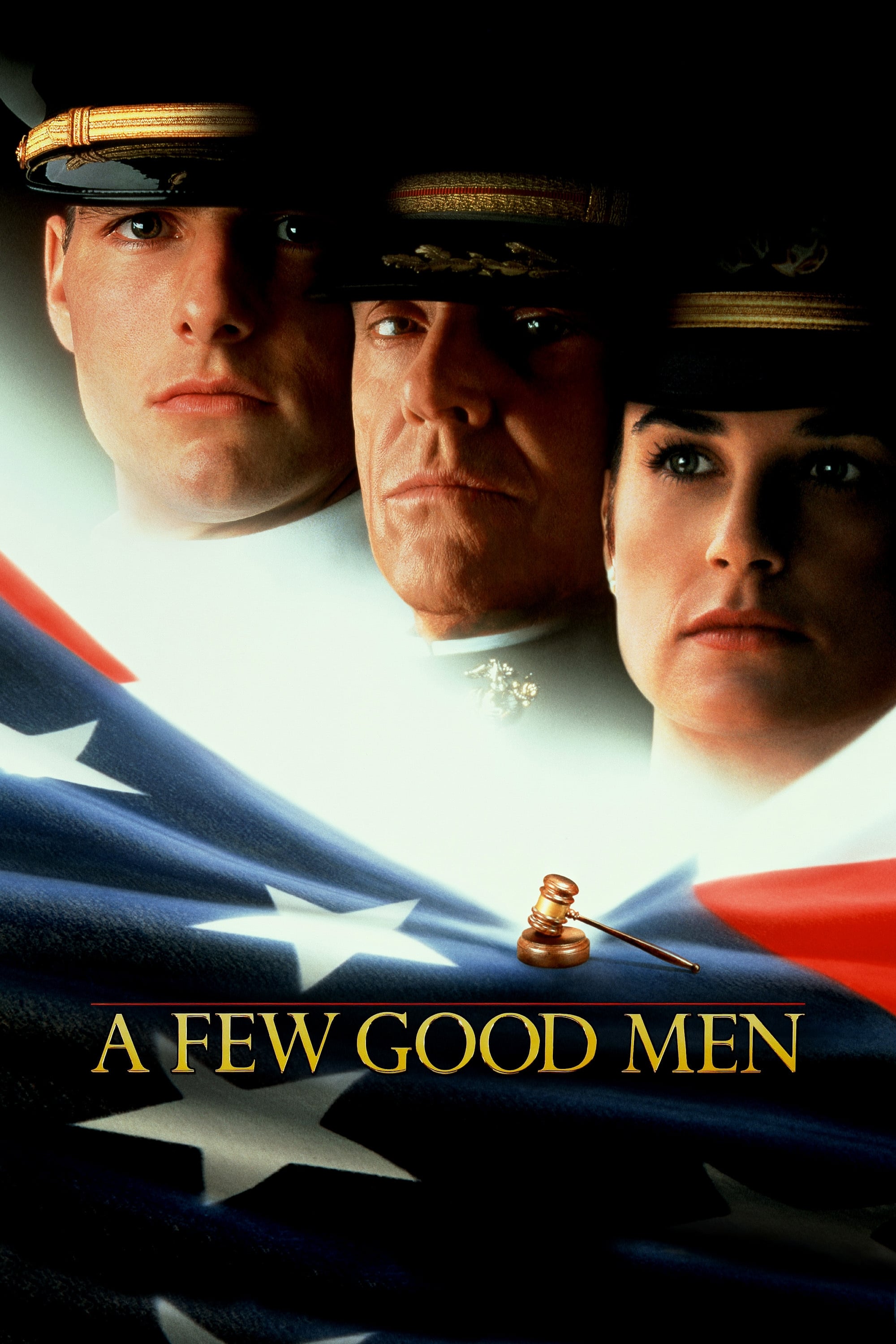
A Few Good Men (1992)

Directed by Rob Reiner · Drama

138 minutes

Cast

Selected cast credits · Film reference

Tom Cruise Daniel Kaffee
Jack Nicholson Nathan Jessep
Demi Moore JoAnne Galloway
Kevin Bacon Jack Ross
Kevin Pollak Sam Weinberg
James Marshall Louden Downey
J.T. Walsh Matthew Markinson
Kiefer Sutherland Jonathan Kendrick
Christopher Guest Dr. Stone
J.A. Preston Judge Randolph
Matt Craven Dave Spradling
Wolfgang Bodison Harold Dawson
Xander Berkeley Whitaker
Noah Wyle Jeffrey Barnes
Cuba Gooding Jr. Carl Hammaker
Lawrence Lowe Bailiff
Josh Malina Orderly
Oscar Jordan Steward
Aaron Sorkin Man in bar
Al Wexo Guard2
Jan Munroe Jury foreman
Matthew Saks David
Harry Caesar Luther
Michael DeLorenzo William Santiago
Arthur Senzy Robert McGuire
Cameron Thor Lawrence
David Bowe Gibbs
Gene Whittington Mr. Dawson
Maud Winchester Aunt Ginny

Everything from the episode

In the order the hosts got to it. Open a row for the discussion.

12:16

Recasting Couch

Angela Bassett as Jo; Smith and Pitt as defendants; Downey or Damon as Kaffee

Angela Bassett as Jo; Smith and Pitt as defendants; Downey or Damon as Kaffee

In the discussion (4)
Approx. transcript time · 00:12:16Read transcript
13:21

Picking Nits

Softball; case preparation; testimony; confession; diet; public discussions; Markinson; continuity

Softball; case preparation; testimony; confession; diet; public discussions; Markinson; continuity

In the discussion (22)
Approx. transcript time · 00:13:21Read transcript
  • Kaffee’s rapid progression through college, law school and the Navy toward private practice and a major national-security case seems unusually accelerated. — Chris Ryan
  • Kaffee’s coherent drunken monologue, drunk driving and almost immediate recovery seem unlike genuine intoxication. — Chris Ryan
  • Jo’s ignorance of Markinson’s suicide is questioned because she assigned people to watch his hotel room; Kendrick is named in error before being corrected to Markinson. — Bill Simmons
  • After a lengthy intervening conversation, Jo has barely walked away in the rain when Kaffee drives after her. — Bill Simmons
  • Cruise’s near-whisper during the interrogation seems too quiet for the jury to hear.
  • Jo’s ability to interrupt as co-counsel whenever she wants is questioned. — Bill Simmons
  • Extensive practice for a recreational adult softball team is questioned. — Bill Simmons
  • The defense’s slow use of Santiago’s unpacked belongings is criticized, then defended as a later recognition of how to combine that fact with phone records.
  • Weinberg’s usefulness is questioned through poor witness preparation, late arrival with the airmen and hostility to the defendants; Kaffee and Jo are criticized for begging him to remain.
  • Putting the inarticulate Downey on the stand before Dawson seems reckless; Dawson’s missing corrective testimony may simply have been cut from the film.
  • Ross apparently waiting to arrest Kendrick after Jessup’s confession is questioned. — Bill Simmons
  • A participant claims that the depicted conduct-unbecoming offense is not an actual crime; this is presented as the podcast’s legal nitpick, not independently verified law. — Bill Simmons
  • Jessup’s willingness to confess is considered implausible for a powerful man who could use lawyers, though avoiding the confrontation would remove the film’s climax.
  • Kaffee ignoring repeated sustained objections is criticized.
  • Kaffee’s diet of Yoo-hoo, Cocoa Puffs, bar popcorn, alcohol and a discarded partly eaten doughnut prompts concern about how he functions.
  • Ordering an unspecified beer is criticized as an unrealistic movie convention.
  • Calling oregano a condiment rather than a seasoning or garnish is challenged.
  • Jo’s method of eating steamed crab with the picking knife is strongly criticized.
  • Cruise missing four of eight extremely close Nerf-basketball shots is considered astonishing.
  • Keeping the white hat on after being warned the uniforms attract gunfire seems unwise.
  • Discussing sensitive case details loudly in public spaces and Jo standing with her back to batting practice are questioned.
  • Kaffee takes implausibly long to notice the large, upright Markinson in his back seat, though Cruise’s startled reaction is admired.
16:31

The Dion Waiters Award for Best Heat Check Performance

Kiefer Sutherland; Nicholson ineligible

Kiefer Sutherland; Nicholson ineligible

In the discussion (2)
Approx. transcript time · 00:16:31Read transcript
  • Nicholson is explicitly ruled ineligible because he has too much screen time.
  • With Nicholson ineligible, Kendrick is the proposed choice, albeit with unease about the character. — Bill Simmons
18:46

Half-Assed Internet Research

Nicholson’s speech; Sorkin and Goldman; casting; awards; salaries; filming; baseball; real-life claims

Nicholson’s speech; Sorkin and Goldman; casting; awards; salaries; filming; baseball; real-life claims

In the discussion (20)
Approx. transcript time · 00:18:46Read transcript
  • Reiner reportedly planned stand-ins for reaction shots, but Nicholson insisted on fully delivering the climactic speech repeatedly and explained that he loved acting. — Bill Simmons
  • Bacon and Sutherland reportedly regarded Nicholson’s work that day as a demonstration of movie stardom and professional commitment. — Bill Simmons
  • Sorkin’s Navy-lawyer sister’s hazing case reportedly inspired the play, which he began on cocktail napkins while bartending at Broadway’s Palace Theatre. — Bill Simmons
  • William Goldman’s rewrite contribution is clarified: instead of a documentary smoking gun, the flight-log issue provides no proof, forcing Kaffee to elicit a confession. — Bill Simmons
  • The film reportedly received picture, supporting-actor, editing and sound nominations but none for Sorkin or Reiner, and won no Oscars. — Bill Simmons
  • The film is described as Reiner’s only $100-million box-office release. — Bill Simmons
  • The reported budget is $40 million against $243 million earned, with an 84 percent Rotten Tomatoes score mentioned. — Bill Simmons
  • Cruise’s Nicholson impression reportedly was unscripted and elicited genuine laughter; that production anecdote is questioned but defended through Moore’s reaction.
  • A making-of featurette praises the other actors extensively but reportedly gives Moore only Reiner’s acknowledgment that she auditioned and won the part. — Sean Fennessey
  • Moore reportedly reduced her asking price from $3 million to $2 million after The Butcher’s Wife, Mortal Thoughts and Nothing but Trouble disappointed. — Bill Simmons
  • Wolfgang Bodison reportedly moved from Reiner’s location scout to playing Dawson without prior acting experience; his ability to hold his own opposite Cruise is admired.
  • Cruise reportedly received $12.5 million and Nicholson $5 million for ten shooting days. — Bill Simmons
  • Nicholson reportedly disliked the release-date move that put the film against Hoffa; filming at Camp Pendleton was not permitted. — Bill Simmons
  • Nicholson and Walsh reportedly became close while making this film and Hoffa, and Nicholson later dedicated his third Oscar to Walsh’s memory. — Bill Simmons
  • Bacon is said to have played a Jack in six films: Frost/Nixon, My Dog Skip, Apollo 13, A Few Good Men, Quicksilver and Friday the 13th. — Bill Simmons
  • Pollak reportedly described a screening of both Godfather films at a home screening hosted by Cruise, separated by an Italian meal. — Bill Simmons
  • The first televised baseball game is identified as a Braves–Padres extra-inning game featuring a David Justice tying homer before San Diego won 11–10; Atlanta later lost the 1991 World Series. — Bill Simmons
  • The second game is identified as Minnesota–Baltimore, with Rick Aguilera surrendering the save and Randy Milligan’s winning double ending a Twins streak; Minnesota later won the World Series. — Bill Simmons
  • A New York Times account reportedly exposed lawyers advertising themselves as Kaffee’s inspiration, with one removing the claim when questioned. — Chris Ryan
  • An executive reportedly demanded a Kaffee–Galloway sex scene and questioned her being a woman without one; Sorkin objected that women have other purposes. — Bill Simmons
25:23

Roger Ebert's review

In the discussion (1)
Approx. transcript time · 00:25:23Read transcript
  • Ebert gave 2.5 stars, criticizing the screenplay for spelling out its intentions and denying viewers the chance to work things out; the group strongly disagrees. — Bill Simmons
28:05

Most Rewatchable Scene

Cruise versus Nicholson; Downey’s discharge reaction as a dissenting first choice

Cruise versus Nicholson; Downey’s discharge reaction as a dissenting first choice

In the discussion (20)
Approx. transcript time · 00:28:05Read transcript
  • Jessup’s first scene, reading Santiago’s transfer request and reacting to Markinson’s disapproval, is nominated.
  • Jessup’s humiliating reminder that he advanced faster than Markinson is singled out as brutal. — Bill Simmons
  • The outdoor lunch builds from sexual boasting to Jessup’s anger at questions about code reds, culminating in his challenge to investigate him.
  • Kendrick’s rare laughter at Jessup’s superior-officer joke is highlighted. — Bill Simmons
  • The lunch and Navy-whites confrontation receive a second-favorite ranking, though another response rejects that ranking. — Chris Ryan
  • Kaffee interrupting Ross’s basketball game is another second-favorite selection; Ross abandoning a pickup game is considered socially outrageous. — Bill Simmons
  • Dawson calling Kaffee a coward and withholding a salute is praised. — Bill Simmons
  • The opening statements are nominated for their courtroom appeal and Kaffee’s casual manner; Ross’s speech effectively forecasts the entire defense strategy. — Chris Ryan
  • Ross’s insistence on the undisputed facts and his ability to separate courtroom conflict from friendship make him unusually appealing as an opponent. — Chris Ryan
  • The mess-hall redirect and Ross’s impressed reaction are nominated, followed by mutual respect at happy hour. — Bill Simmons
  • The confrontation ending with Kaffee insulting Ross’s softball ability is nominated, especially Ross’s cutting claim that Kaffee was bullied into court by others and his late father’s memory. — Chris Ryan
  • Kendrick’s angry testimony is nominated. — Bill Simmons
  • Drunken Kaffee’s mock game-show monologue and galactically-stupid insult receive a second-favorite selection, despite the scene’s briefly threatening tone toward Jo. — Chris Ryan
  • The 21-minute Cruise–Nicholson confrontation is the primary choice and is compared with a prizefight that repeatedly shifts advantage.
  • Kaffee’s question about the contradictory orders is highlighted as the decisive turn in the interrogation.
  • Jessup’s climactic speech epitomizes a scene that makes a channel-surfer commit to finishing the movie. — Chris Ryan
  • Downey’s confusion about the dishonorable discharge is provocatively ranked above the interrogation by one participant. — Chris Ryan
  • The final interrogation is rated among the greatest Cruise scenes and among the most rewatchable scenes generally. — Sean Fennessey
  • Cruise is judged to outperform Nicholson in the confrontation, particularly the accusation that Jessup abandoned the defendants and falsified records; multiple responses agree. — Sean Fennessey
  • Jo’s first visit to Kaffee and the Yoo-hoo appearance are belatedly nominated after correcting an initial mix-up with Matt Craven’s plea-bargain scene.
30:32

Probably Unanswerable Questions

Lunch; Markinson; Kendrick; reaction faces; softball; logs; punishment; clerk; failed confession

Lunch; Markinson; Kendrick; reaction faces; softball; logs; punishment; clerk; failed confession

In the discussion (14)
Approx. transcript time · 00:30:32Read transcript
  • What the officers discussed during the rest of the lengthy lunch is questioned, with baseball, Cuba and Desert Storm floated as possibilities.
  • Markinson’s death is jokingly questioned as possibly staged, using his counterintelligence background and reluctance to testify as imaginative support.
  • Whether guilt about Santiago alone explains Markinson’s suicide is questioned, as is how he obtained a gun while guarded.
  • The failure to introduce Markinson’s note as evidence raises questions about whether Santiago’s family received it and how it could have been mailed from his guarded room.
  • Kendrick’s home state is imagined as Alabama or Mississippi, followed by joking speculation about his political affiliations and Auburn allegiance.
  • Ross’s response to Jessup’s confession beats Kaffee’s questioning look; the group explicitly declines to establish this as a new category.
  • Ross’s silent co-counsel and repeated pencil-playing appearances are questioned. — Bill Simmons
  • Kaffee is imagined assigning himself shortstop, with center field considered but infield practice supporting the shortstop theory.
  • Making a flight log disappear is considered plausible in the 1990s.
  • Jessup’s likely punishment remains uncertain, with prison, loss of rank and discharge discussed and one prediction that he would serve no time.
  • Whether Jessup ever carried out his graphic threat is questioned and linked to the proposed prequel.
  • Kaffee is imagined accumulating multiple drunk-driving offenses, with at least two suggested.
  • The defense’s failure to call Jessup’s clerk Tom is questioned because he seems to overhear every crucial conversation; blaming the doctor instead of the Marines is another briefly raised strategy.
  • If Jessup never confessed, Kaffee might face a court-martial or professional disillusionment; a separate dark hypothetical imagines Kendrick retaliating against him.
49:18

What’s Aged the Best?

Trial-ending structure; Dawson salute; Bacon; walk-and-talk; baseball relaxation; Impala; airmen; Guantanamo resonanc...

Trial-ending structure; Dawson salute; Bacon; walk-and-talk; baseball relaxation; Impala; airmen; Guantanamo resonance; early Cruise

In the discussion (12)
Approx. transcript time · 00:49:18Read transcript
  • Ending immediately after the trial avoids an unnecessary coda of congratulations, romance and supporting-character resolutions. — Chris Ryan
  • The Kaffee–Dawson relationship’s recovery culminates in the emotionally effective final salute, despite its corniness. — Bill Simmons
  • Bacon’s exceptional supporting work is praised as a career turn toward elevating another lead rather than competing with Cruise as a star. — Bill Simmons
  • Cruise and Cuba Gooding Jr. sharing the courtroom anticipates their Jerry Maguire partnership. — Bill Simmons
  • Kaffee and Ross’s hallway conversations exemplify the developing Sorkin walk-and-talk trademark. — Bill Simmons
  • Relaxing with baseball, a bat and a Hawaiian shirt without constant online distractions is admired. — Chris Ryan
  • Kaffee’s 1963 Chevrolet Impala is praised. — Bill Simmons
  • Airmen O’Malley and Rodriguez are cited as highly consequential characters without dialogue. — Bill Simmons
  • Sutherland reportedly struggled to drive the Humvee and hit Marines during takes, leading Noah Wyle to replace him as the driver; the story is received with incredulity. — Bill Simmons
  • Guantanamo Bay as a site of corrupt conduct is described as continuing to resonate, with the wording of aged-best itself questioned. — Bill Simmons
  • Early 1990s Cruise is warmly remembered despite later discomfort around aspects of his public persona. — Bill Simmons
  • Kaffee’s Nintendo atop the television is belatedly praised as authentic to 1992. — Sean Fennessey
54:39

The Big Kahuna Burger Award for Best Use of Food and Drink

Baltimore crabs; Yoo-hoo

Baltimore crabs; Yoo-hoo

In the discussion (1)
Approx. transcript time · 00:54:39Read transcript
  • The Baltimore crabs and Yoo-hoo are the choices. — Bill Simmons
54:39

The Den of Thieves Benihana Award for Scene-Stealing Location

Kaffee thinking at the monument

Kaffee thinking at the monument

In the discussion (1)
Approx. transcript time · 00:54:39Read transcript
  • Kaffee thinking at the monument is selected. — Bill Simmons
54:39

The Great Shot Gordo Award for Most Cinematic Shot

Washington monument wide shot; final courtroom pullback

Washington monument wide shot; final courtroom pullback

In the discussion (2)
Approx. transcript time · 00:54:39Read transcript
  • The wide Washington, D.C. monument shot doubles as the location and cinematography choice. — Bill Simmons
  • The final pullback leaving Kaffee alone in the courtroom beneath The End is praised as a timeless, beautiful movie ending. — Sean Fennessey
55:03

The Vincent Chase Award: Are We Sure This Character Is Actually Good at Their Job?

Dawson

Dawson

In the discussion (1)
Approx. transcript time · 00:55:03Read transcript
  • Dawson’s competence is questioned because of the fence-line shooting, the fatal code red and his failure to explain that Downey missed Kendrick’s order; Jo’s endorsement is offered in defense. — Bill Simmons
55:56

Unintentional Comedy Award

Drunken Cruise

Drunken Cruise

In the discussion (5)
Approx. transcript time · 00:55:56Read transcript
  • Drunken Cruise is the emphatic winner of the revived original category. — Bill Simmons
  • Cruise hitting softballs too hard is nominated, with imagined injuries to the extras. — Bill Simmons
  • Kendrick laughing at Jessup’s sexual joke and Ross abandoning the pickup game are additional nominees. — Bill Simmons
  • Jessup’s pointed address to Weinberg is interpreted as a suddenly antisemitic moment. — Bill Simmons
  • Christopher Guest’s unusually humorless internist performance is considered funny through the mismatch with his talents. — Sean Fennessey
56:58

Tom Sizemore Action Is the Juice Award for Best Toe-to-Toe Moment

Pollak rebuking Jo

Pollak rebuking Jo

In the discussion (1)
Approx. transcript time · 00:56:58Read transcript
  • Pollak’s rebuke of Jo and her subsequent defense of the Marines are the selected non-star showcase. — Bill Simmons
57:33

The Butch’s Girlfriend Award for the Weakest Link in the Film

Demi Moore, entertainingly miscast

Demi Moore, entertainingly miscast

In the discussion (3)
Approx. transcript time · 00:57:33Read transcript
  • Moore is considered miscast, but that mismatch is defended as entertaining; a straighter Julianne Moore performance might make the film less fun. — Bill Simmons
  • Jo exemplifies an emotional-support female lead whose main function is to affirm the male protagonist, compared with Jeanne Tripplehorn in The Firm.
  • Moore and Cruise are considered watchable together but lacking sexual chemistry; Moore’s difficulty with Sorkin’s dialogue is contrasted with Cruise’s command of it.
59:58

What’s Aged the Worst?

Arrest insult; Guest; Luther; Downey; letter; Yoo-hoo; clothing; Miscavige claim; real-life killing; unearned praise;...

Arrest insult; Guest; Luther; Downey; letter; Yoo-hoo; clothing; Miscavige claim; real-life killing; unearned praise; Cuba framing

In the discussion (13)
Approx. transcript time · 00:59:58Read transcript
  • Ross calling Jessup a profanity during the arrest is considered implausible. — Bill Simmons
  • Casting Christopher Guest as an entirely humorless doctor is questioned as a waste of his strengths, despite his friendship with Reiner.
  • Luther, the newsstand operator, is criticized as a contrived device for trading aphorisms and signaling Kaffee’s progressive attitudes. — Sean Fennessey
  • Concern that younger audiences would not understand the Clue reference is rejected by the others.
  • Downey’s inability to understand what he did wrong and his perjury are criticized. — Bill Simmons
  • Markinson closing his suicide letter with Always is considered an odd sign-off in the circumstances. — Bill Simmons
  • Kaffee failing to shake his Yoo-hoo and guzzling it immediately after softball are considered juvenile habits. — Bill Simmons
  • The early 1990s clothing and Kaffee’s shirts are criticized, although Jo’s high-waisted style has returned to fashion. — Bill Simmons
  • A reported claim that Cruise modeled Kaffee on David Miscavige is unwelcome information; the source is clarified as Miscavige’s alleged boast in Going Clear. — Bill Simmons
  • The later unsolved killing of David Cox, one of the Marines involved in the real incident inspiring the story, is recounted as a grim postscript. — Bill Simmons
  • The missed opportunity to show Cruise playing basketball with Bacon is lamented. — Chris Ryan
  • Repeated declarations of Kaffee’s greatness seem unearned by his early trial work, with his father comparison singled out. — Chris Ryan
  • The film’s framing of Cuba as a large immediate military threat feels dated. — Sean Fennessey
1:07:48

The Ron Burgundy Flute Award for the Best Time for a Pee Break

First eight minutes; crab dinner, disputed; oregano exchange

First eight minutes; crab dinner, disputed; oregano exchange

In the discussion (2)
Approx. transcript time · 01:07:48Read transcript
  • The first eight minutes are one suggested break; Jo and Kaffee’s crab dinner is another, although that choice is defended as an engaging scene.
  • The oregano-as-condiment exchange is a belated break choice.
1:08:32

Is There a Better Title for This Movie?

Code Red; original title still in contention

Code Red; original title still in contention

In the discussion (1)
Approx. transcript time · 01:08:32Read transcript
  • Code Red is the main alternative; Two Orders is rejected as revealing too much, and Nothing but the Truth is considered bland.
1:08:43

Is There a Porn Parody of This Movie?

Dishonorable Discharge; A Few More Good Men

Dishonorable Discharge; A Few More Good Men

In the discussion (1)
Approx. transcript time · 01:08:43Read transcript
  • Dishonorable Discharge and A Few More Good Men are proposed as parody titles. — Bill Simmons
1:09:06

The Neil McCauley “A Book about Metals” Award for Best Line from the Movie

You can’t handle the truth; Markinson is gone

You can’t handle the truth; Markinson is gone

In the discussion (2)
Approx. transcript time · 01:09:06Read transcript
  • You can’t handle the truth is the obvious choice; the courtroom-observation line, the hits continuing, the nobody-likes-her aside, the self-reproach and no-responsibilities lines are additional nominees. — Bill Simmons
  • The statement that Markinson is gone receives a personal favorite choice and agreement. — Bill Simmons
1:09:42

The Stephen A. Smith Hottest Take Award

Kaffee as Jimmy Butler; case importance overstated; provocative Santiago joke; Cruise deserved Oscar

Kaffee as Jimmy Butler; case importance overstated; provocative Santiago joke; Cruise deserved Oscar

In the discussion (4)
Approx. transcript time · 01:09:42Read transcript
  • Kaffee is compared with Jimmy Butler: disruptive and distracted away from the main work, but decisive under pressure. — Chris Ryan
  • The case’s supposed historic importance is questioned as disproportionate to its scale; that argument is explicitly distinguished from endorsing Santiago’s death. — Chris Ryan
  • A separate deliberately provocative joke asks whether Santiago’s death saved lives, using the film’s rhetoric about honor and informants. — Sean Fennessey
  • Cruise should have won both the confrontation and the best-actor Oscar, this becoming the first of three imagined awards he never received. — Sean Fennessey
1:11:36

Frat Boy Number One Award for Most Unexpected A-List Cameo

Christopher Guest

Christopher Guest

In the discussion (1)
Approx. transcript time · 01:11:36Read transcript
1:12:10

Casting What-Ifs

Hackman; Woods; Foster; Hamilton; Alexander; Bodison discovery

Hackman; Woods; Foster; Hamilton; Alexander; Bodison discovery

In the discussion (5)
Approx. transcript time · 01:12:10Read transcript
  • Hackman reportedly declined Jessup for Unforgiven, a decision endorsed because it won him the Oscar. — Bill Simmons
  • James Woods reportedly lost the offer when Nicholson accepted; Woods is considered a strong alternative performer. — Bill Simmons
  • Jodie Foster and Linda Hamilton competed for Jo; Hamilton is imagined as a tougher, more confrontational version. — Bill Simmons
  • Jason Alexander was initially cast as Weinberg but reportedly withdrew after Seinfeld’s second-season renewal. — Bill Simmons
  • Alexander is preferred over Pollak by one participant and rejected by two others; his Seinfeld association and squirmier screen persona are debated, with Larry David offered jokingly.
1:15:45

The Tom Cruise Award for Most Valiant Attempt to Emulate a Normal Human

Cruise at softball practice

Cruise at softball practice

In the discussion (1)
Approx. transcript time · 01:15:45Read transcript
  • Cruise wins his namesake award for Kaffee’s excessively intense recreational softball practice.
1:16:37

The Ruffalo / Hanna / Rubinek / Partridge Overacting Award

Drunken Cruise

Drunken Cruise

In the discussion (1)
Approx. transcript time · 01:16:37Read transcript
  • Drunken Cruise wins, with his miraculous next-morning sobriety also highlighted.
1:17:03

The Joey Pants “That Guy” Award

Opening interviewer remembered from 90210; judge; Xander Berkeley; Michael DeLorenzo

Opening interviewer remembered from 90210; judge; Xander Berkeley; Michael DeLorenzo

In the discussion (4)
Approx. transcript time · 01:17:03Read transcript
  • The judge is nominated while the actor’s Preston/Prescott surname is uncertain in the discussion. — Bill Simmons
  • The opening interviewer remembered as Beverly Hills 90210’s Garrett Slane is the stated winner, though the actor’s name is not recalled. — Bill Simmons
  • Xander Berkeley is added as Sam and Danny’s boss, with his Heat role invoked.
  • Santiago’s actor Michael DeLorenzo is discussed as a possible fit, though recognition from New York Undercover complicates the category.
1:23:09

Apex Mountain

Code reds; marching band; Pollak; Yoo-hoo; Reiner; cinematic softball; Bodison; lactic acidosis; two bedside books

Code reds; marching band; Pollak; Yoo-hoo; Reiner; cinematic softball; Bodison; lactic acidosis; two bedside books

In the discussion (8)
Approx. transcript time · 01:23:09Read transcript
  • Moore is rejected. — Chris Ryan
  • Nicholson is rejected, with Chinatown and One Flew Over the Cuckoo’s Nest preferred and the Broadcast News/Batman period considered for sheer stardom. — Bill Simmons
  • Code reds, the opening marching-band performance and Pollak receive affirmative nominations; Guantanamo Bay is rejected. — Bill Simmons
  • Sorkin and Walsh are rejected, with Blue Chips preferred for Walsh; Yoo-hoo receives a yes. — Chris Ryan
  • Bacon is rejected; Reiner receives a yes because of Seinfeld and Castle Rock’s success.
  • Cinematic softball practice and Bodison receive agreement. — Bill Simmons
  • Cruise is rejected in favor of Jerry Maguire. — Bill Simmons
  • Lactic acidosis and keeping only the Marine Corps code and King James Bible beside the bed are belated affirmative nominees. — Chris Ryan
1:25:31

Best Race Horse Name from This Movie

Code Red; Jessup; Markinson’s Gone; Rocco Columbo School for Women

Code Red; Jessup; Markinson’s Gone; Rocco Columbo School for Women

In the discussion (1)
Approx. transcript time · 01:25:31Read transcript
  • Code Red, Jessup, Markinson’s Gone and the Rocco Columbo School for Women are proposed names. — Chris Ryan
1:27:21

Mallory Rubin Award: Did This Movie Need a Better Sex Scene?

Yes; Kaffee and Aunt Ginny preferred

Yes; Kaffee and Aunt Ginny preferred

In the discussion (4)
Approx. transcript time · 01:27:21Read transcript
  • The film is judged to need a sex scene, with the case’s stress and Kaffee’s baseball fixation supplying the rationale.
  • A casual partner at Kaffee’s apartment could create an awkward discovery during case work.
  • Kaffee and Jo after the crab dinner are ranked second among the suggested possibilities.
  • Kaffee and Aunt Ginny are the preferred imagined pairing because their meeting suggests more chemistry; Geena Davis is proposed for Ginny.
1:39:24

Sequel, Prequel, Limited Series, or All-Black Remake

Young Jessup–Markinson prequel; predominantly Black recast; untouchable response unclear

Young Jessup–Markinson prequel; predominantly Black recast; untouchable response unclear

In the discussion (2)
Approx. transcript time · 01:39:24Read transcript
  • The transcript is ambiguous about whether the original is untouchable; a television prequel about young Markinson and Jessup rising through the Vietnam-era military is proposed.
  • A predominantly Black recast with a white Dawson and judge is proposed, with Michael B. Jordan imagined in the courtroom. — Sean Fennessey
1:40:24

Just One Oscar

Nicholson; Sorkin alternative

Nicholson; Sorkin alternative

In the discussion (1)
Approx. transcript time · 01:40:24Read transcript
  • Nicholson is the first choice, with Sorkin also suggested and Goldman’s contribution recalled.
1:40:42

Is This Movie Better With…?

Kathryn Hahn

Kathryn Hahn

In the discussion (1)
Approx. transcript time · 01:40:42Read transcript
  • Kathryn Hahn is the selected addition from the recurring candidate list.
1:48:45

Best Double Feature

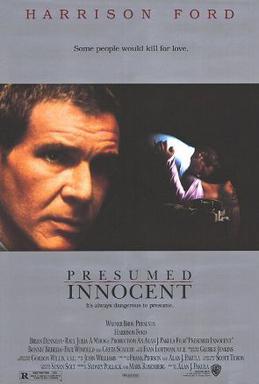
The American President; Paths of Glory; The Caine Mutiny; Top Gun; Presumed Innocent
In the discussion (3)
Approx. transcript time · 01:48:45Read transcript
1:50:57

The Andy and Red – Zihuatanejo Award for What Happens the Next Day?

Jo pursues Kaffee; baseball distraction; Sherby joke

Jo pursues Kaffee; baseball distraction; Sherby joke

In the discussion (1)
Approx. transcript time · 01:50:57Read transcript
  • The following weeks are imagined as Jo pursuing a celebratory dinner or romance while Kaffee stays focused on baseball; an alternative joke pairs him with Sherby. — Bill Simmons
1:51:44

What Piece of Memorabilia Would You Want From This Movie?

Ross’s tank top; Kaffee’s bat; varsity jacket; dress uniform

Ross’s tank top; Kaffee’s bat; varsity jacket; dress uniform

In the discussion (2)
Approx. transcript time · 01:51:44Read transcript
  • Ross’s Georgetown Supreme Court tank top, Kaffee’s bat and Cruise’s varsity jacket are the initial choices. — Chris Ryan
  • The car is considered but the bat preferred; Jessup’s dress uniform is imagined as a prop for private speech reenactments. — Bill Simmons
1:52:39

The Coach Finstock Award for Best Life Lesson

Honor does not require a patch

Honor does not require a patch

In the discussion (1)
Approx. transcript time · 01:52:39Read transcript
  • Honor does not require a patch on one’s arm is the stated lesson, followed by a playful Rewatchables variation on the military code.
1:52:56

Who Won the Movie?

Tom Cruise

Tom Cruise

In the discussion (1)
Approx. transcript time · 01:52:56Read transcript
  • Cruise is the explicit winner, with repeated agreement and a unanimous-panel framing; Aunt Ginny and Sherby are joking alternatives.
Podcast choices
Speaker not identified
Tom Cruise
Speaker not identified
Tom Cruise
Speaker not identified
Tom Cruise

More from the conversation

The introduction identifies a July 27 live recording at the El Rey Theatre in Los Angeles, revisiting the film six years after its first episode to use the expanded category format and celebrate the approaching 300th movie.
Approx. transcript time · 00:01:14Read transcript
The original August 10,2017 episode with Simmons, Ryan and Dobbins was the first non-sports Rewatchables; its short runtime and limited categories are recalled.
Approx. transcript time · 00:03:21Read transcript
The show’s roots in a December 2015 Heat anniversary discussion are recalled, including uncertainty about audience interest and later enthusiastic listener responses.
Approx. transcript time · 00:03:59Read transcript
A Few Good Men’s claim to being the most famous courtroom movie is challenged with 12 AngryMen, although it receives personal favorite status.
Approx. transcript time · 00:05:00Read transcript
Dobbins’s description of the film as a verbal action movie is extended to The Social Network, Good Will Hunting, Glengarry Glen Ross and courtroom films generally; Heat combines verbal and physical action.
Approx. transcript time · 00:05:49Read transcript
The film survives basic-cable editing with little lost beyond profanity and slurs, and its distribution history spans home-video formats and streaming.
Approx. transcript time · 00:06:52Read transcript
The film still feels fast and undated, particularly its mesmerizing final half hour.
Approx. transcript time · 00:07:39Read transcript
Its legal puzzle is distinguished from a mystery: Jessup’s responsibility is evident early, and the suspense lies in exploiting his pride to prove it.
Approx. transcript time · 00:08:10Read transcript
Washington, D.C. is praised as an evocative movie setting.
Approx. transcript time · 00:09:42Read transcript
Cruise’s performance is distinguished as movie-star magnetism rather than necessarily his best acting; Born on the Fourth of July, Magnolia and Jerry Maguire supply alternatives.
Approx. transcript time · 00:10:24Read transcript
The performance’s exaggerated sarcasm, softball prowess and manic confidence epitomize Cruise’s appeal, with Jerry Maguire viewed as more recognizably human.
Approx. transcript time · 00:10:56Read transcript
Cruise’s later films, including Jerry Maguire, Eyes Wide Shut, Magnolia and Vanilla Sky, are seen as modulating that earlier maximalism.
Approx. transcript time · 00:11:42Read transcript
Kaffee’s combination of arrogance, magnetism and insecurity is surrounded by supporting characters who prepare his eventual success.
Approx. transcript time · 00:12:16Read transcript
Cruise’s characters in Top Gun, Cocktail, Rain Man, Days of Thunder and this film share youthful swagger and the need to overcome it, often opposite an older father figure.
Approx. transcript time · 00:13:53Read transcript
Kaffee’s supposedly exceptional legal ability is contrasted with his plea-bargaining record; the trial’s duration is uncertain.
Approx. transcript time · 00:14:37Read transcript
The absence of a romantic subplot for Kaffee is noted, with baseball taking priority over possible interest from Jo.
Approx. transcript time · 00:15:30Read transcript
Nicholson’s pairing with Cruise felt like a major event in 1992; advance coverage promised a climactic scene while reserving his limited appearances for maximum impact.
Approx. transcript time · 00:15:43Read transcript
Nicholson’s late 1980 s and early 1990s career is reconsidered through Broadcast News, Ironweed, Batman, The Two Jakes and Man Trouble; the claim that he needed this success is disputed.
Approx. transcript time · 00:16:58Read transcript
Wolf divides the group between outright rejection and enjoyment of Nicholson and James Spader as werewolves.
Approx. transcript time · 00:17:37Read transcript
Nicholson’s ten Oscar nominations by this film and twelve overall prompt a joking comparison with Amy Adams pursuing his record.
Approx. transcript time · 00:17:54Read transcript
The cast’s depth includes Cruise, Nicholson, Moore, Bacon, Pollak, Walsh, Sutherland, Gooding, Wyle and Guest; the idea that this introduced evil Sutherland is corrected with earlier villain roles.
Approx. transcript time · 00:20:01Read transcript
The 1989 stage play is recommended as an interesting comparison with the film’s differently realized scenes.
Approx. transcript time · 00:20:17Read transcript
Sorkin’s early screenwriting run moves from this debut through Malice and The American President; affection for Malice and The Newsroom prompts a discussion of longtime fandom.
Approx. transcript time · 00:22:05Read transcript
Reiner’s strong run includes The Princess Bride, When Harry Met Sally and Misery, alongside Castle Rock’s Seinfeld success.
Approx. transcript time · 00:23:09Read transcript
Reiner’s direction is praised for successful storytelling and strong scripts despite lacking a recognizable visual signature; his rapport with actors and entertainment background are offered as strengths.
Approx. transcript time · 00:23:35Read transcript
Unforgiven’s best-picture win and Gene Hackman’s supporting-actor victory over Nicholson are accepted, with Hackman’s restraint contrasted with Nicholson’s maximalism.
Approx. transcript time · 00:24:21Read transcript
Nicholson’s prior Terms of Endearment award and later As Good as It Gets win complicate retrospective Oscar preferences, with skepticism about applying consistent logic to the Academy.
Approx. transcript time · 00:24:56Read transcript
A permanent second-favorite-scene category is jokingly suggested during the rankings.
Approx. transcript time · 00:32:06Read transcript
Bacon’s fourth-billed supporting strength prompts a basketball-team analogy and teasing about the Celtics and 76 ers.
Approx. transcript time · 00:35:09Read transcript
Nicholson’s Jessup is contrasted with his usual rebels and anarchists, although Jessup’s contempt for legal limits remains a form of rebellion.
Approx. transcript time · 00:46:15Read transcript
The courtroom-month discussion turns Kendrick’s statement about Santiago’s lack of honor into a mock sports-hot-take segment.
Approx. transcript time · 00:51:07Read transcript
An audience suggestion of a Clue episode receives a joking rejection.
Approx. transcript time · 01:01:20Read transcript
Cruise’s screen sports are cataloged: basketball in Cocktail, football in Oblivion and War of the Worlds, All the Right Moves, Top Gun volleyball and sequel football, The Firm gymnastics, pool in The Color of Money and Far and Away boxing; the War of the Worlds throwing motion is criticized.
Approx. transcript time · 01:05:43Read transcript
The abundance of quotable dialogue supported an older basketball free-agency column built around fifty lines from the film.
Approx. transcript time · 01:09:25Read transcript
A hypothetical Godfather double-feature dinner with Cruise prompts joking enthusiasm and speculation about whether he listens to the podcast.
Approx. transcript time · 01:22:04Read transcript
Mallory Rubin joins the live panel for the namesake sex-scene award and remains for the closing categories.
Approx. transcript time · 01:25:59Read transcript
Harrison Ford’s unusually explicit Presumed Innocent scene prompts comparisons with the more restrained intimacy in Witness.
Approx. transcript time · 01:50:01Read transcript
Cruise’s modern interviews and shorter dialogue-heavy roles prompt an explicitly speculative, joking theory about stunt-related injury; the discussion offers no medical evidence or diagnosis.
Approx. transcript time · 01:53:25Read transcript
Cruise being older than Nicholson was during this film makes his Dead Reckoning stunt work seem even more remarkable.
Approx. transcript time · 01:55:24Read transcript
The closing recalls the 2020 Sundance live episode and subsequent illness, then celebrates resuming live events after the pandemic interruption.
Approx. transcript time · 01:56:02Read transcript
The live-event organizer and video team are thanked; the outro gives a full producer credit and promises the 300th episode.
Approx. transcript time · 01:56:30Read transcript

Mentions across The Rewatchables

Recorded movie reference

The Firm

The Rewatchables · aired December 11, 2018

A Few Good Men is listed in the sourced research for this episode. The precise discussion has not been linked yet.

Recorded movie reference

Michael Clayton

The Rewatchables · aired March 29, 2018

A Few Good Men is listed in the sourced research for this episode. The precise discussion has not been linked yet.

Recorded movie reference

Mission: Impossible

The Rewatchables · aired July 26, 2018

A Few Good Men is listed in the sourced research for this episode. The precise discussion has not been linked yet.

Recorded movie reference

Point Break

The Rewatchables · aired August 24, 2017

A Few Good Men is listed in the sourced research for this episode. The precise discussion has not been linked yet.

Recorded movie reference

Friday the 13th

The Rewatchables · aired October 13, 2026

A Few Good Men is listed in the sourced research for this episode. The precise discussion has not been linked yet.

Recorded movie reference

All the Right Moves

The Rewatchables · aired November 3, 2026

A Few Good Men is listed in the sourced research for this episode. The precise discussion has not been linked yet.

Recorded movie reference

Air Force One

The Rewatchables · aired November 10, 2026

A Few Good Men is listed in the sourced research for this episode. The precise discussion has not been linked yet.

Mentions across The Big Picture