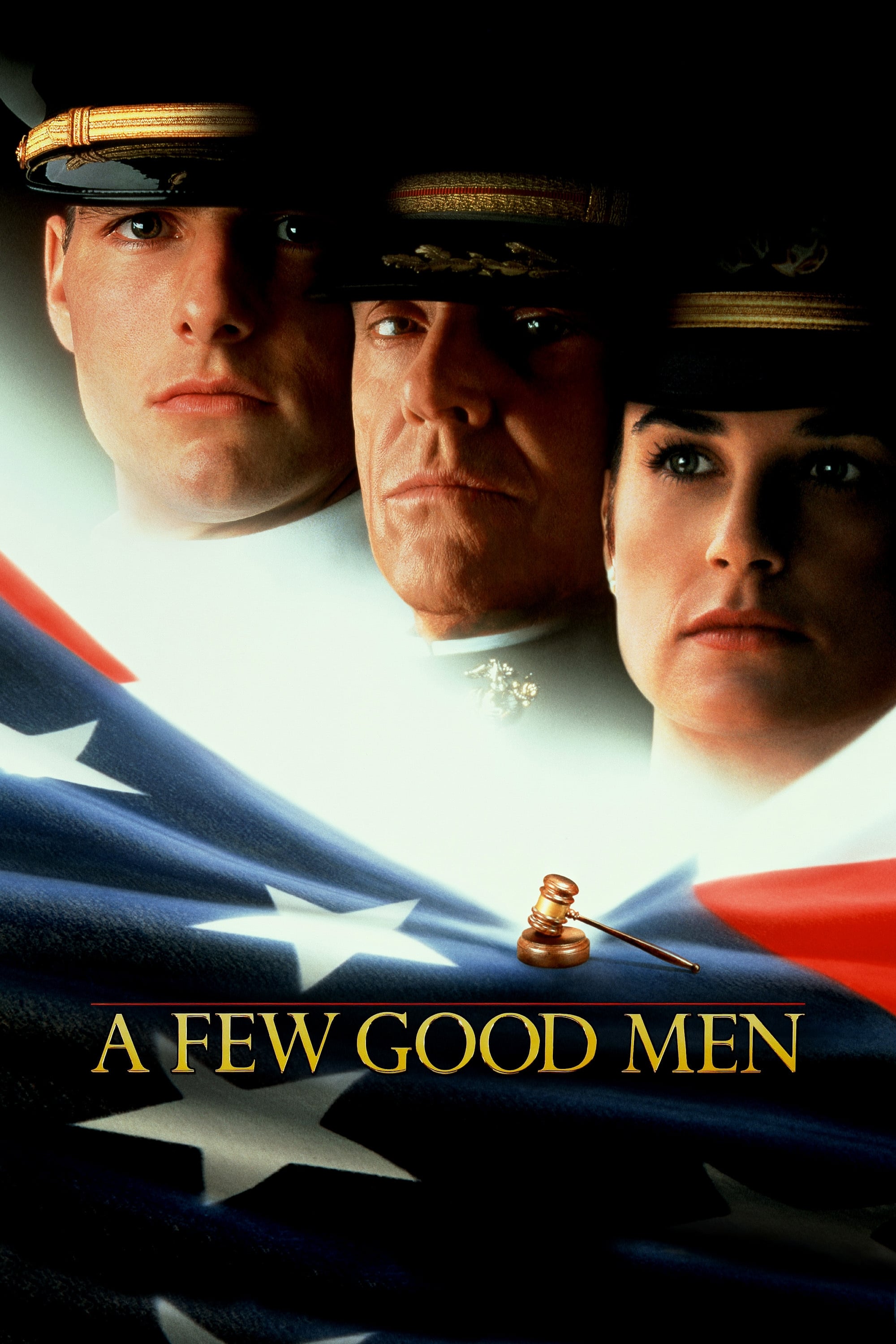
Ending immediately after the trial avoids an unnecessary coda of congratulations, romance and supporting-character resolutions. — Chris Ryan
The Kaffee–Dawson relationship’s recovery culminates in the emotionally effective final salute, despite its corniness. — Bill Simmons
Bacon’s exceptional supporting work is praised as a career turn toward elevating another lead rather than competing with Cruise as a star. — Bill Simmons
Kaffee and Ross’s hallway conversations exemplify the developing Sorkin walk-and-talk trademark. — Bill Simmons
Relaxing with baseball, a bat and a Hawaiian shirt without constant online distractions is admired. — Chris Ryan
Kaffee’s 1963 Chevrolet Impala is praised. — Bill Simmons
Airmen O’Malley and Rodriguez are cited as highly consequential characters without dialogue. — Bill Simmons
Sutherland reportedly struggled to drive the Humvee and hit Marines during takes, leading Noah Wyle to replace him as the driver; the story is received with incredulity. — Bill Simmons
Guantanamo Bay as a site of corrupt conduct is described as continuing to resonate, with the wording of aged-best itself questioned. — Bill Simmons
Early 1990s Cruise is warmly remembered despite later discomfort around aspects of his public persona. — Bill Simmons
Kaffee’s Nintendo atop the television is belatedly praised as authentic to 1992. — Sean Fennessey
Guest plays it straight, explaining acidosis for five minutes when you expect a Christopher Guest bit, which is baffling; the guess is that someone called in sick and Reiner asked his best friend to come in for one day.
Later roles add baggage: you expect Cuba Gooding Jr. to turn into Rod Didwell (as transcribed) and Noah Wiley into a sensitive young ER doctor, while James Marshall from Gladiator and Twin Peaks is not even a 'that guy' anymore to anyone under 30.
Kiefer Sutherland clipped Marines while driving a Jeep; Ebert gave it two and a half stars; Nicholson did 40 to 50 takes of the code red scene; it cost $30 million and made $230 million; Jason Alexander was meant to play Sam Weinberg; Sorkin wrote it on bar napkins and bought an early Macintosh with his roommates; Dawson's actor was Reiner's assistant; Sorkin cameos as a lawyer at the bar
Kiefer Sutherland drove the military Jeep so badly that he clipped a couple of Marines and scenes had to be redone, though he drives in only one scene, perhaps rewritten so Noah Wiley drove.
Ebert's two-and-a-half-star review, which said the film telegraphed the ending, is noted and rejected.
Nicholson did 40 to 50 takes of the 'you can't handle the truth' code red scene and kept performing during everyone else's coverage, telling the crew he loves to act, which becomes a joke about loving to podcast.
Unlike productions full of casting stories and disasters, nothing went wrong here: it cost 30 million, made 230 million, Nicholson cost a lot, everyone calls it their best experience, and Reiner's directing is joked down to pointing the camera at the movie stars.
Jason Alexander was supposed to play Sam Weinberg until season 2 of Seinfeld was picked up; Plan B was Kevin Pollard (as transcribed).
Sorkin wrote it on bar napkins at a bar off Broadway, he and his roommates chipped in to buy an early Macintosh to write the script, and Dawson was Reiner's assistant.
Sorkin was a bartender and appears in the film as the lawyer at the bar; the hosts like writers and directors showing up in their own movies, citing Oliver Stone as a football announcer and Scorsese playing the creepiest guy, though Sorkin has ten seconds too much dialogue, out of focus but clearly audible.
Nominees: the ending, the 'galactically stupid' tirade when a drunk Cruise loses it on Demi Moore, the mess hall cross-examination that Bacon later praises as a great redirect, Cruise's Nicholson impersonation, Harold's 'ten hut' with Cruise, the 'why the two orders' brainstorm in the Jessup cross, and Jack Ross's face at Jessup's code red admission.
Like a decanted wine, the subtler moments should age best, which rules out Cruise doing Nicholson, since people their age have spent their lives watching others imitate Nicholson.
'Why the two orders' always gets one panelist, and another answers 'me too'.
Picks the mess hall cross-examination: rewatched it last night, it is subtle and lands every time, and the way Cruise grabs the notebook back from Kevin Bacon is peak Cruise swagger. — Amanda Dobbins
The scene has an early Noah Wiley (as transcribed), later important on ER, and shows the cleverness of the script solving problems without being showy or straining plausibility.
Another pick is Harold and Cruise's character finding common ground at the end, which still gives chills on the 557th viewing: 'Harold, you don't have to have a badge to have honor' and the 'Ten Hut'; Harold is never seen again.
The actor playing Harold appeared in a couple of nineties action movies and is believed to have been Rob Reiner's assistant before being thrown into the film.
The ending leaves the film dying for a coda: it is unclear how much trouble Jessup is in, unlike the court-martial that follows the submarine battle in Crimson Tide, and the two Marines are still dishonorably discharged.
A small flaw: after the code red admission Bacon's character later says he has to go arrest Kendrick, prompting the question of why he waited a week.