
Film credit
Paul Newman
Also referred to as Newman
Stats
- Episodes featuring their films
- 5
- Movies in this archive
- 5
Rewatchables episodes featuring Paul Newman’s films
Butch Cassidy and the Sundance Kid
1969 film
Bill Simmons · Aaron Sorkin · Sean Fennessey
Aired September 2, 2019
Mentioned in discussions
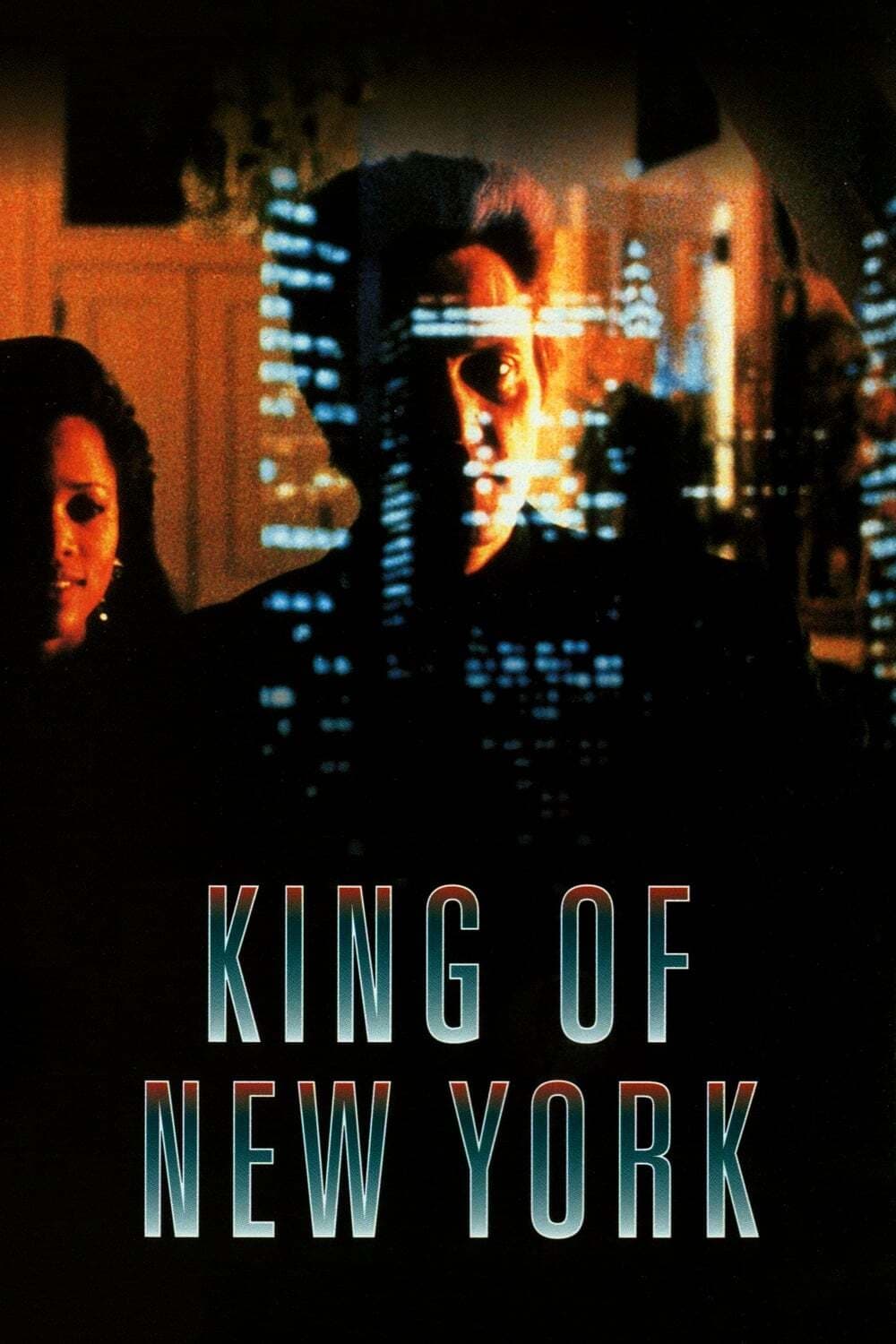

Probably Unanswerable Questions
Was Omar inspired by Frank White?; Did the subway muggers come back?; Why does it take filmmakers so long to tap obvious stars?
In the discussion (8)
- Was Omar from The Wire inspired by Frank White? Avon Barksdale is suggested instead, or Frank split into several characters; the film may be missing an Omar-type gunfighter Frank keeps on ice.
- Did Walken's subway muggers come back for a job? Yes, Harold Perrineau is seen later at the Plaza and in the Schoolly D scene.
- Why does it take filmmakers so long to tap people who are obviously stars, as with Grantland and Ringer writers? The answer is the actors spent a decade building toward the right role, and most directors know only already-known actors.
- While casting Reservoir Dogs, the speaker recalls casting director Ronnie Eskell (as heard) telling him, 'Quentin, if this directing thing doesn't work, I will give you half my business.' — Quentin Tarantino
- Game recognizes game: Ferrara and the NYPD Blue team (Bocchco and Milch) recognized Caruso was ready; Tim Robbins recounted being promised The Player despite funding pressure.
- On Jackie Brown, Paul Newman, Gene Hackman, Robert Forster and John Saxon were the four Max Cherry ideas; Forster got the role after an Alligator rewatch and a chance restaurant meeting, before bigger names could ask.
- Pam Greer was baked into that project; Travolta was first considered for the Eric Stoltz role while Michael Madsen was expected as Vincent, then became the backup when that fell through.
- For the last movie, casting Brad Pitt needed availability, a deal, and Rick cast first so his double Cliff would be realistic.

In the discussion (3)
- The category is framed as a sport that cannot end in a tie, with no shootouts on the show; one voice first says Redford, anticipating the other will say Goldman, is surprised that a screenwriter is allowed, and concedes of course it is Bill.
- Goldman wins hands down: he made a ton of money, it set up his career, he became the dean of screenwriters and completely rebottled the buddy movie; $400,000 for a screenplay in 1969 is likened to $100 million now, and he wrote only three drafts over eight years, prompting jokes about how screenwriters count drafts and the finality of typing on a 1969 typewriter.
- The pick was surprisingly easy with no argument; one host had been going back and forth between Newman and Redford before realizing Goldman won.
Podcast choices
- Speaker not identified
- William Goldman
- Speaker not identified
- William Goldman
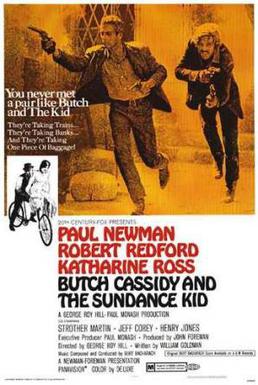
Probably Unanswerable Questions
Who would play Butch and Sundance if the film were made from scratch today?
In the discussion (3)
- The one question is who plays these two if the movie never existed and they start from scratch in 2019, though going decade by decade would be more fun; Matt and Ben are not a bad idea, but perhaps a 2009 idea since they are older now, unless aging fits a story about the times changing under their feet.
- Butch should be older, as Newman was 13 or 14 years older than Redford, so Damon as Butch and Affleck as Sundance would draw them in; Clooney and Pitt are floated, with Pitt able to play either part, though both are mid-50s; one participant wants men who have had a whole life of robbing trains before being chased to South America.
- Pitt has done Jesse James; Tom Cruise is floated; Denzel and his son would need to be closer in age, with his son recalled as a USC receiver who did a stint with the Rams; Gosling and Leo are paired, Leo more a Sundance but Butch next to Gosling; both parts need someone truly famous; one participant would give anything to have written it; Ethan Hawke is named a great Butch, a chatterbox who talks his way out of anything, and Ryan Reynolds too.

In the discussion (3)
- Paul Newman is a yes: after this movie, at the end of the decade, he is at the absolute peak of his powers and could do whatever he wanted; agreed.
- Catherine Ross is not thought to be at her peak here, and certainly not Redford; George Roy Hill is offered as a hedged yes, with his next twenty years of films admired, Funny Farm and The World According to Garp among them, plus his Goldman reunion on The Great Waldo Pepper, an underseen movie.
- Earlier, Redford's Apex Mountain is placed at All the President's Men in 1976, with Ordinary People a close second.
Half-Assed Internet Research
Body count of 30; a 1979 prequel with Tom Berenger and William Catt; Catherine Ross clashed with George Roy Hill and later married Conrad Hall; Montezuma's revenge in Mexico except for the stars; Redford did his own train-top stunt; Bob Dylan was asked to sing Raindrops; Redford hated the bicycle interlude; the film motivated David Fincher; Newman and Hill fought over the Bledsoe scene
In the discussion (8)
- Guessing the body count: the five Bolivian payroll robbers are counted, the army at the end is debated since the frame freezes and only gunfire is heard, and the shootout before it may be covering fire; the answer is 30, more than expected.
- A 1979 prequel, Butch and Sundance: The Early Days, starred Tom Berenger as Butch and William Catt (as transcribed) of Greatest American Hero as Sundance; Goldman produced but did not write it, and people did not like it.
- Catherine Ross did not get along with George Roy Hill, saying any day away from him was a good one; she was scolded and banned from the set for a day for operating a camera, which Conrad Hall had allowed, and Hall and Ross married shortly after; she liked the silent bicycle sequence most because the second unit, not Hill, shot it.
- The Bolivia scenes were shot in Mexico, where everyone got Montezuma's revenge except Redford, Newman and Ross, who drank only soda and beer; Newman called it the most fun he ever had making a film, and he and Redford became legitimately close, which shows on screen in this and The Sting.
- Redford wanted to do his own stunts and ran along the tops of the train cars himself despite Newman objecting that he did not want to lose a co-star.
- The filmmakers tried to get Bob Dylan to sing Raindrops Keep Falling on My Head and he declined; one participant sees the attempt as reaching across the century divide to feel contemporary, and 1969 was a nice year to get Dylan; Scorsese's Rolling Thunder documentary is called inspiring in an aside.
- Redford was honest that he thought the bicycle musical interlude killed the movie the first time he saw it and that the whole sequence was terrible, and the sequence was scotched; one host can picture an early screening feeling that way and beseeching Hill to cut it; now it is classic, perhaps the most iconic scene for broad audiences while fans pick the waterfall, the song was the year's biggest hit and the most parodied, and BJ Thomas's people thought it ruined his career.
- The film motivated David Fincher to become a director and the guest to become a screenwriter, so without it The Social Network does not happen; the only major Newman and Hill conflict was the Bledsoe scene, which Newman wanted at the end of the chase as the catalyst for Bolivia, and they argued about it daily on set.
Casting What-Ifs
Steve McQueen as Sundance, out over billing; Jack Lemmon and Warren Beatty turned Sundance down; Zanuck's split-prints billing idea; Redford a near-unknown; Natalie Wood considered for Etta
In the discussion (8)
- Redford was not the original Sundance: Jack Lemmon was offered the part, at Goldman's suggestion, and turned it down feeling he had played too many aspects of the character; Warren Beatty turned it down as too similar to Bonnie and Clyde; Steve McQueen was in, and the title was to become The Sundance Kid and Butch Cassidy because McQueen considered himself the bigger star than Newman.
- The fight over whether McQueen or Newman would be billed first drove McQueen off the movie; asked whether this is true, one participant confirms that kind of nonsense happens all the time, over billing and over parts not taken.
- Fox president Daryl Zanuck (as transcribed) made the unusual suggestion that half the prints bill Newman first and half McQueen, McQueen refused and left, and they got Redford, a handsome theater actor nobody knew, known if at all for urbane Neil Simon comedy like Barefoot in the Park; he has maybe a hundred words in the movie, becomes a giant star in four expressions, gives a great performance, and played men of few words for the rest of his career, even as Bob Woodward.
- The long sepia close-up when Redford is first met, held while someone else talks, is one of the all-time close-ups and became a Redford signature, a good editing-room decision; Goldman wrote that Newman's people, not Newman himself, were upset by all the Redford close-ups and worried Redford would steal the movie.
- Natalie Wood was considered for Etta.
- Catherine Ross was in The Graduate, the biggest movie of the year before, then in this, the biggest movie of its year, and was in pole position as the good-looking actress of choice, but did not want that power, toned it back, did some stage work and the moment left; Anne Bancroft was only three or four years older than her in The Graduate.
- Goldman was unsure whether the real Etta was a schoolteacher or a prostitute and, from how pretty and cleanly dressed she was in photos, chose to believe schoolteacher, though the historical record is fuzzy; it would have been unusual for a woman of about 24 to be unmarried.
- Ally McGraw (as transcribed) of Love Story was the market correction, though Ross, the better actress, could have corrected her back and instead gave up, with Mia Farrow and Ellen Burstyn the other big actresses; research suggests Ross was difficult and disliked making movies; she met Sam Elliott, a card player with a very small role here, did not date him, and married him fifteen years later.

Most Rewatchable Scene
The waterfall jump
In the discussion (8)
- The category is set up as the scene you stay for when you catch the movie while flipping channels; one host has five and invites additions, and one participant asks to guess them first.
- The guesses: the first-act fight with the huge guy in the gang that ends with one kick, which is on the list, and the third-act attempt to rob the Bolivian bank while getting the Spanish right, which was not on the list but gets added.
- The first Redford scene: with no history with the actor, the close-ups and the different 1870s-style color make you wonder what is going on, the film carefully establishes in two minutes that nobody should mess with him though he is not physically huge, and it ends with him firing six bullets around the man without killing him, instant mythology, while Newman knows what is coming and is already flying out of the way.
- Butch kicking the giant leader in the balls is on the list; Goldman wrote that people objected because a John Wayne hero would not do that, and studio people asked why Sundance was not helping, joking dryly about bets instead; the answer is that Sundance knows exactly what is going to happen and is not worried about Butch at all.
- The train robbery that introduces the super posse is on the list, though the first train robbery where they blow the car up could be argued; the Woodcock clip is played, the poor man nearly murdered out of loyalty to E.H. Harriman, and the actor is identified as George Firth (as transcribed); the second robbery with the horse posse is called a great seven minutes, with Goldman's book explaining how it was shot.
- Further nominees: the Bolivian bank scene, the ending, the payroll-up-the-hill scene in Bolivia with the colorful character actor right before he is shot, its sister scene where it comes out that Butch has never shot anyone, the waterfall, and the meeting with Bledsoe where they try to enlist, which one host holds back for another category.
- It comes down to the train robbery and super posse scene versus the waterfall; the waterfall is called one of the most rewatchable scenes of all time and the clip is played, with the angry, embarrassed 'I can't swim' named a favorite line reading, Newman's reaction praised, and the jump and the men coming in called everything you want from an action scene.
- Earlier, Goldman is described as holding on to the secret that Sundance could not swim for as long as he could, unable to wait to write the cliff scene; the run to the edge and what they shout as they jump have been ripped off in fifty other movies, Lethal Weapon included.

In the discussion (13)
- Kurt Russell first, with the reminder that the question is the highest point of his career, not the favorite: one case is The Thing in 1982, after Escape from New York and with Silkwood, Swing Shift and Big Trouble in Little China coming; a no is cast because Escape from New York was only later a cult hit, raising whether apex is judged at the time or on reflection.
- Reading about Tombstone makes it sound like Russell was able to finance the movie coming off Backdraft, a relatively big hit he starred in, likened to LeBron in the 2018 Finals; a controversial case is made for Tango and Cash, when after the well-liked Tequila Sunrise with Michelle Pfeiffer a hit with Stallone, an absolutely ridiculous movie only those two could pull off, left him looking like an A plus list star.
- Tango and Cash was not a huge hit, costing $55 million and making $66 million, though $55 million in 1988 is like $160 million today, and it is not that good; the counter is that it opened up Backdraft and his ability to finance Tombstone; the actual answer may be that there was no apex at all, a range of rolling hills, which is what is cool about his career.
- Russell was nominated for Best Supporting Actor for Silkwood, which is why his Apex Mountain is around The Thing in 1982 or 1983, when Escape from New York was becoming a cult movie. — Sean Fennessey
- Whether Russell was ever Oscar-nominated is disputed, Miracle floated and rejected, until the Silkwood nomination is recalled; the host who forgot it concedes, a 180 the others tease.
- Russell could have had a different career as a serious dramatic actor rather than leaning into the masculine hero; he and Harrison Ford are cut from the same cloth, smart throwbacks to Paul Newman charisma, but Ford got two franchises while Russell alternates three good films and three bad; he is also just a good-looking dude, at his most handsome here, a man who should be on a poster.
- Val Kilmer: a no, with Top Gun imagined as his apex, since coming out of it people saw him neck and neck with the star, though another calls that the star's movie and goes Heat, where as De Niro's wingman in the biggest mid-90s movie he is the next wave; his pre-Batman run is traced through True Romance, Tombstone, The Real McCoy, Thunderheart and The Doors.
- 1987 right after Top Gun is floated, when Willow was hopefully going to be his Han Solo and did not work out; one host's personal apex for him is The Doors, where he was out of control, and a Doors rewatchable is wanted, though JFK would have to come first among the Oliver Stone movies.
- Jason Priestley is a thousand-percent yes: 90210 was never bigger, he is in a movie with Kurt Russell and Val Kilmer and has a couple of heat-check scenes, the steepest mountain of all time, very high with a precipitous drop on either side; a caution that a later show (transcribed 'Natuna') was big for three and a half years does not change the view that this literally was his Apex Mountain and his first dabbling in movies.
- Dana Delaney's apex has to be China Beach, which was probably already gone by this point, so she is not a yes; nobody else is proposed except George Cosmatos as ghost director, already covered, with the joke of a Ringer video secretly directed by someone else.
- The late Bill Paxton: this is not a Mount Rushmore Paxton performance next to Aliens, Near Dark, One False Move, Weird Science, True Lies and Twister, though it may be his sweetest spot while figuring out how to be Bill Paxton; in Aliens Sigourney Weaver is the hero but Paxton and Biehn would in any other world have been the stars, and One False Move is incredible though arguably Billy Bob's movie too.
- Twister was Hollywood's first concerted effort to make Paxton a major star, marketed with Helen Hunt and Philip Seymour Hoffman as people who were going to be stars rather than actual stars; the shift from needing a movie star to needing a tornado, meteor or alien invasion is traced to Speed, where Keanu was the guy and Sandra Bullock turned out to be one of the biggest stars of the next twenty years.
- Paxton is one of the all-time great number two or three guys: here he sets picks and makes a couple of corner threes, telling Wyatt he is the one, spits a lot, works the scorer's-table handshakes at the start, and gets the 'hey' when Doc responds to Wyatt's description of his new wife with 'pure as the driven snow'.
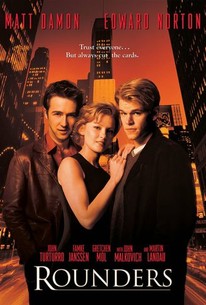

What’s Aged the Worst?
Gretchen Maul's (as transcribed) wet-blanket girlfriend Joe and her performance; the judges' instant hand-reading scene; Mike McD not hooking up with Famke Janssen's character
In the discussion (11)
- Gretchen Mala (as transcribed) plays the stereotypical wet-blanket girlfriend, a staple of 80s and 90s sports movies for undermining the hero: a girlfriend or wife who does not believe in what he is doing.
- A Mount Rushmore of wet-blanket girlfriends: Adrian Balboa in Rocky IV, who quits on Rocky and shows up belatedly in Russia, leaving one host still in go-fuck-yourself-Adrian mode; Myra Fleener in Hoosiers, the number one, subject of an old ESPN magazine column, with no idea why Gene Hackman liked her.
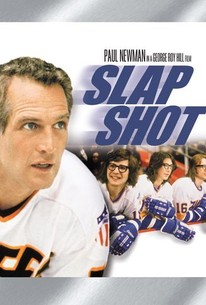
- A theory: many men do not know how to write female characters, so they pour their own relationship anxieties into a figure who is holding the hero back, which is why so many movies have a woman you cannot place; the last Rushmore member is Ned Braden's wife in Slapshot (as transcribed), a tough hang who even throws it at Paul Newman.
- The defense from Koppelman and Levine, given in a back-and-forth with one host: Damon's girlfriend was originally in only three scenes, and a law-school best friend named Atkinson, a counterpoint to Worm, was in the script until the studio made them merge Joe and Atkinson and boost Joe, leaving her inessential and simply in Worm's way.
- Not a great performance either, though she rallied in the 2000s; she is flat-out bad and unlikable here, around the time of the Vanity Fair cover anointing her the next ingenue when she had made little more than Donnie Brasco, and hers is the only stretch where the movie loses its rhythm.
- The judges' card scene, which both like, has aged worst: Mike McD standing for eight to fourteen seconds and reading everyone's hand is not believable, even if Koppelman and Levine claim to have seen it happen; the clip is played; such reads take hours of study.
- The judges' game is not Texas Hold'em, perhaps a seven-card stud variant with many cards showing, which makes the reads more plausible, and the judges' cards are never shown, so he might have missed some; it sets him up as a savant, a reach one host is fine with.
- Martin Lando's (as transcribed) character is described as a cross between a law professor, Confucius, the fairy godmother and Red Arbeck (as transcribed); not a great character but essential, and the bar scene where he pours gin and tells the yeshiva story is loved; movies like this need an old guy, as Charlie Pierce was for Grantland.
- Mike McD not hooking up with Famke Jansen (as transcribed) is called the biggest flaw of the movie and maybe of a host's life, raised with Koppelman and Levine multiple times: his girlfriend has moved out, he is home alone watching an old World Series of Poker, she comes over about Worm's tab and makes a hard pass, and he says now is not the time, which is called inexplicable and indefensible.
- Her character is the manic poker dream girl, after the manic pixie dream girl of Penny Lane and the Zooey Deschanel movies: beautiful, a Bond girl three years earlier, works at the Chesterfield and recounts World Series hands; the case against is that he loves Joe, is trying to go straight, and Petra represents the old version of him.
- On rewatch the hosts think the two should simply have gotten together; Koppelman and Levine admit it is their biggest mistake, prompting a joke about adding a scene for the 25th anniversary; for one host it is the what's aged the worst, and the explanation offered does not convince him.
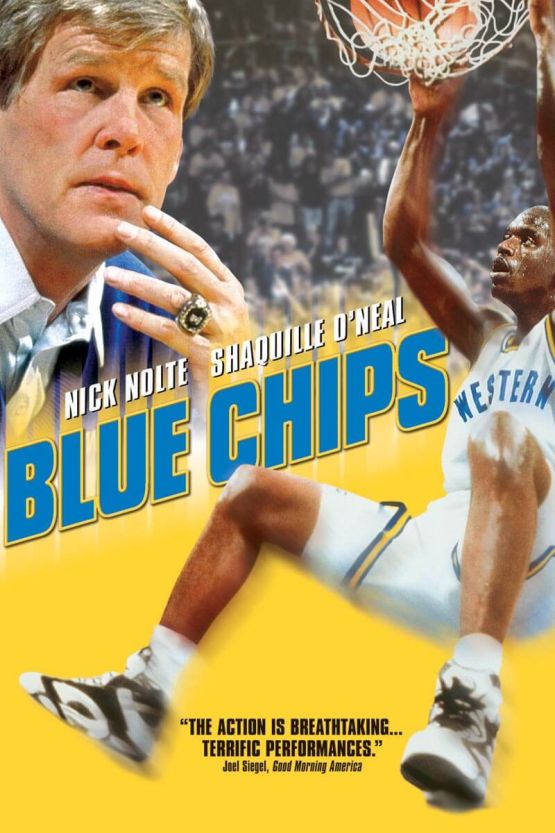
Recasting Couch
Paul Newman, Al Pacino, Jack Nicholson, and Gene Hackman are considered as alternate Pete Bells.
In the discussion (2)
- A more charismatic actor in the Paul Newman mold is proposed as a way to change the character, though Newman is considered too old for the part at that time. — Chris Ryan
- Al Pacino is preferred over Nolte. Jack Nicholson is considered in the correct age range, but the speaker is unsure how he would play despite his basketball knowledge and jokes that nobody would take his money. Gene Hackman is then offered positively, while also making the Hoosiers borrowing more obvious.
Films in the archive
Butch Cassidy and the Sundance Kid
1969



Slap Shot
1977

The Color of Money
1986

The Sting
1973

The Verdict
1982