
‹ All movies
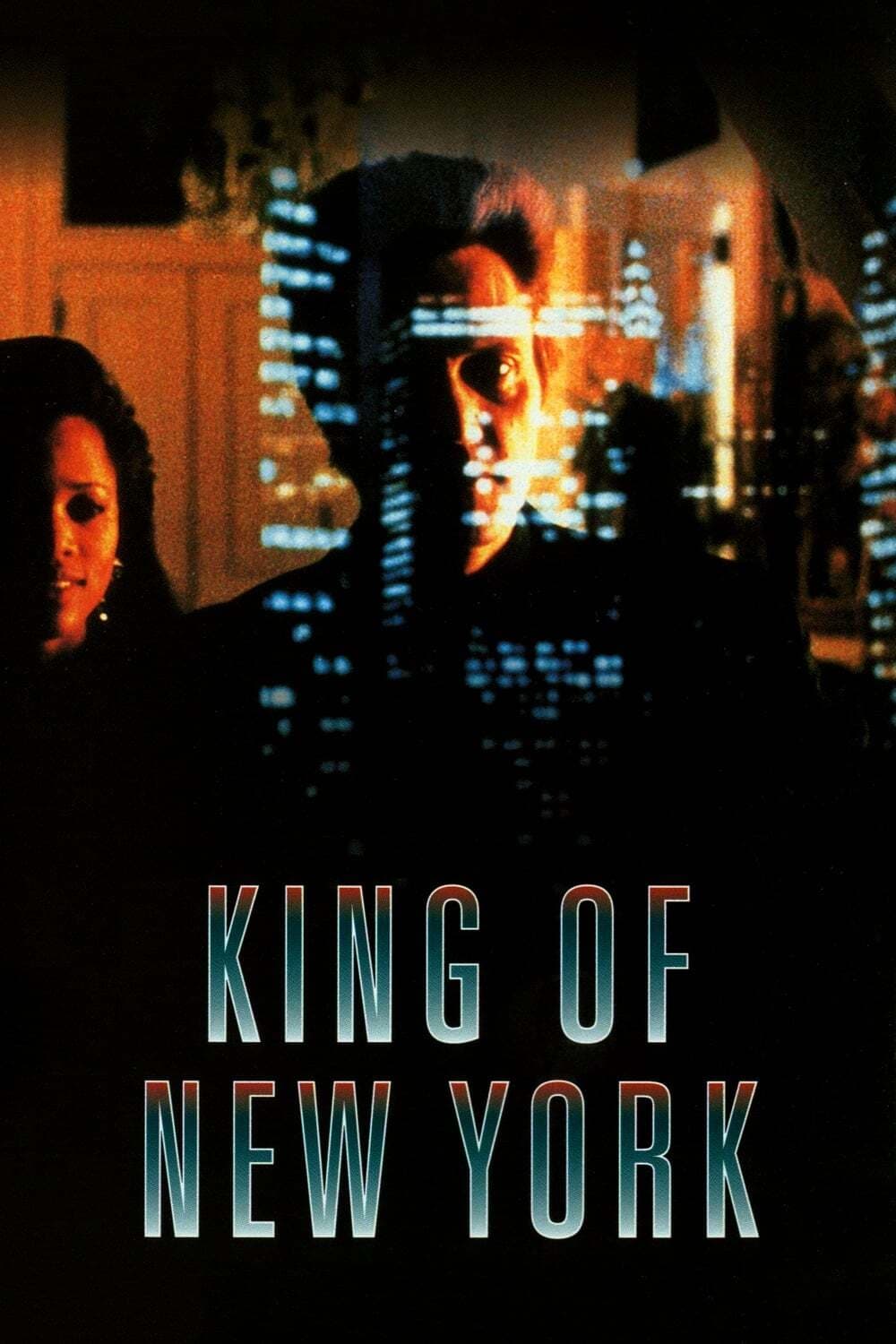
King of New York poster

King of New York

103 minutes

Cast

Selected cast credits · Film reference

Christopher Walken Frank White
David Caruso Detective Dennis Gilley
Laurence Fishburne James "Jimmy Jump" Colt
Victor Argo Lieutenant Roy Bishop
Wesley Snipes Detective Tommy Flanigan
Janet Julian Jennifer
Paul Calderón Joey Dalesio
Steve Buscemi "Test Tube"
Joey Chin Larry Wong
Carrie Nygren Melanie
Ernest Abuba "King Tito" Salvador
Frank Gio Arty Clay
Harold Perrineau Subway Mugger
James Lorinz Detective Tip Connolly
Jay Julien Abraham Cott
Freddie Jackson Himself
Pete Hamill Himself
Ariane Koizumi Herself

King of New York | The Rewatchables

Explore episodeClose episode

Producer credits not yet identified.

Casting What-Ifs

Fishburne and Snipes's role swap; James Russo as Jimmy Jump; James Remar and Harvey Keitel as Frank White

In the discussion (7)
Approx. transcript time · 00:33:08Read transcript
  • As told on air, Fishburne was first cast as Flanagan, the Snipes part; Russo turned down Jimmy Jump; Fishburne switched roles, and Caruso, who had done a TV pilot with Snipes, begged the director to give Snipes Fishburne's old part.
  • Snipes's performance reads as Diet Coke Snipes until the end; his one Black cop among white cops is called a purposeful inversion of Walken's white boss with a Black gang.
  • The account given: Russo, a Ferrara regular since China Girl, was written Jimmy Jump and Caruso the cop to exploit their rivalry from that film, but Russo turned it down rather than let Caruso spit in his face.
  • Russo is said to have later admitted on Django that turning down the part was idiotic; Fishburne licks the spit and wins that scene.
  • Casting what-ifs is said to be done already, but more stories are being saved.
  • Per the account given, four years earlier Ferrara planned the film with James Remar as Frank White after The Cotton Club; later at Live it was to be Harvey Keitel, who backed out to do Bad Lieutenant instead, and then the part went to Walken.
  • It has to be Walken, with a distancing quality Keitel lacks; it is called the best Walken part of all time, and the whole-movie contest is a three-way dogfight among The Deer Hunter, King of New York and The Funeral.

Roger Ebert's review

In the discussion (2)
Approx. transcript time · 01:00:11Read transcript
  • Ebert gave the film two out of four stars, complimenting Walken's polished and somehow sinister ease.
  • Ebert's review, as read, says Ferrara's effects are too good and his command of mood too sure for him to keep bluffing through half-written movies like this one.

Most Rewatchable Scene

"Am I Black Enough for You" party sequence into the raid

In the discussion (18)
Approx. transcript time · 01:04:31Read transcript
  • The phone booth execution at the very beginning is included; the walkthrough starts when Frank leaves his cell and the credits begin.
  • The Benny character walking through the brothel and being executed in the phone booth is a separate set piece that announces the film's style.
  • Fishburne's first scene with Buscemi's Test Tube is loved, from the dab of cocaine to 'you ever get the feeling you was being watched', 'You play ball, Tito?', the suitcase of Tampax and 'Room service, motherfuckers!'.
  • The actor playing Leonard was Sam Jackson's stand-in for years.
  • Walken's reunion with Fishburne's crew, with 'My feelings are dead', 'I feel no remorse' and a dance somewhere between Fred Astaire and Elvis, is iconic.
  • Walken playing blackjack with Artie White (as heard) and shooting him is a rewatchable scene; the second round of shots after he is dead tops even Artie White pissing on Calderon's shoes.
  • The fried chicken arrest scene ('Fuck you very much') is one of Fishburne's three big arias, with his Tito opening and his reunion with Frank; it was filmed in a grim Brooklyn slum neighborhood and is said to be a favorite of the director's.
  • 'I'll slap the black off you' and 'Fuck you very much' were first heard in this movie by one participant, while another had heard the phrases growing up in New York.
  • The wedding scene and the speech are a huge one, maybe the most Chimino-esque sequence.
  • Caruso's bar monologue about having to kill Frank White ('My job is to protect the people of this city') is listed; delivering it in front of the bartender may be a tactical mistake because the bartender in a cop bar is always an old cop.
  • Also listed: the big nightclub shootout with Schoolly D, Fishburne killing Snipes in the rain, and the tail end in the cab.
  • The Plaza Hotel dinner with the columnists, the lawyer and the beautiful people evokes a New York that maybe never existed, a little Bonfire of the Vanities; Pete Hamill was a participant's grandparents' favorite columnist.
  • Walken going to see Victor Argo and the line about the country spending a hundred billion a year getting high is added; quotable lines are held for later.
  • The car chase is called the best action scene, though sloppy: Ferrara is likened to Sam Fuller, all about the moment, and it is obvious the black-haired driver is not Walken.
  • The 'Am I Black Enough for You' party sequence running into the raid on the compound is proposed as unlike any scene set to a song or use of color seen before.
  • A second voice had that scene as well, and a third, enamored with Jimmy Jump's introduction, joins 'you guys' because the song is fantastic and it takes you into their world.
  • Few movies of the time used hip-hop correctly other than Do the Right Thing; Schoolly D is called the godfather of gangster rap from Philly, influencing NWA, and Abel connecting with him shows taste.
  • Walken killing Caruso at the police funeral is recalled as a missed scene and one of the great shotgun deaths; one voice doubts anyone could get away at a guarded police funeral, while another would not change a frame.

What’s Aged the Best?

The limo as an action-movie car; the young New York cast; the Snipes-Caruso buddy-cop movie inside it; The Wire-like structure; Caruso's wedding performance; Walken and the subway muggers; Larry Wong's MSG containers and Nosferatu hang; the hip-hop gangster milieu; 1990 New York

In the discussion (12)
Approx. transcript time · 01:17:15Read transcript
  • The limo is used as an action-movie car, with Fishburne blasting two guns out of the sunroof and Theresa Randle popping out too; the opening limo is compared to Dracula's driverless coach; Night Shift and Big are mentioned for limo scenes.
  • The young cast of Fishburne, Buscemi, Caruso, Snipes, Esposito and Paul Calderon; Esposito had to wait 20 more years for his famous moment.
  • The Snipes-Caruso buddy-cop movie buried inside is wanted as a prequel, in the Running Scared world.
  • The whole structure is basically The Wire: you watch Frank like Barksdale, know every crew member's function, meet the less flashy cops, and root for the bad guys.
  • A think piece found in research argued the film paved the way for The Shield and The Wire; it was the first of its kind.
  • As in The Shield, the cops' badness is real; Caruso breaks the law intending to kill Frank, which is why you root for Frank White.
  • Caruso's wedding performance is named a second time, with the toast quoted, including 'The test came back negative' and Roy Bishop's Afro Sheen.
  • Walken dealing with muggers on the subway is a vestige of 70s and 80s New York movies, with a super-young Harold Perrineau.
  • Larry Wong keeping cocaine in giant MSG containers is a great idea, and his hanging upside down is read as a callback to Nosferatu, with Walken channeling it like a bat.
  • The hip-hop gangster aspect and the Black and Puerto Rican foot-soldier gang introduced something new to gangster films and set off a dozen similar movies after New Jack City.
  • 1990 New York as a locale and its actors of that moment; it is high-low New York, the Plaza and under the bridge, combining exploitation roots with a beautiful cinematic sense.
  • Catching all these guys at a cool moment of their careers is another favorite.

What’s Aged the Worst?

Janet Julian as the lawyer girl; Victor Argo as Bishop

In the discussion (6)
Approx. transcript time · 01:24:22Read transcript
  • Janet Julian as the lawyer girl is the one person who does not belong in the cast, though she wins one participant over a little by the Freddie Jackson party.
  • Little is known about Julian's other work and it is unclear how she won the part; Ariane, the girl from Year of the Dragon in the opening, is wanted for that role.
  • Karen Lingorny in Saturday Night Fever (as heard) is called the all-time watershed of 'why are you in this movie'.
  • Victor Argo is bad as Bishop and gets nowhere with a part with a lot to work with; a participant who knew him agrees the part deserved more than fine and thinks Argo did not believe the movie was that good.
  • Argo is said to be the only actor who has worked multiple times with Abel, Scorsese and Woody Allen, and Harvey Keitel's best friend.
  • There was not much for this category; complaints on release were overstated.
In the discussion (5)
Approx. transcript time · 01:28:31Read transcript
  • Stepping on Recasting Couch early: Bishop is a part for an older, 2001-style Harvey Keitel; Russo is wished for if he had not played Jimmy Jump, but the role should be older; Ricardo Montobahn, a Tony Lobionco or a Cliff Gordon (as heard) are floated.
  • For Janet Julian's part, 1990 Sharon Stone is floated and seen as workable but not New York enough.
  • Annabelle Seora (as heard) is floated; Julian does not work, but the idea of an out-of-place girl does.
  • Kelly Lynch is suggested, tying to the Chimino connection as the lawyer in Desperate Hours; a second voice says 'That's perfect. That's who it should be.'
  • Kelly Lynch is a little California, and a New England type unused to rough New York might be better, but she is still called a good suggestion.

Apex Mountain

Christopher Walken in 1990; Laurence Fishburne; the Plaza Hotel; movie limos; Schoolly D on screen

In the discussion (10)
Approx. transcript time · 01:31:36Read transcript
  • King of New York may win the best-Walken-role contest because he gets to be funny, scary and weird here, unlike The Deer Hunter, and plays a vampire without making it metaphysical.
  • Apex Mountain is 1990 Walken, setting up Batman Returns about 18 months later and filmmakers writing scenes for him.
  • Fishburne is named: the excitement over him after this movie was never matched; another voice can go with that while citing The Matrix.
  • Boyz n the Hood is raised as an alternative peak; the Fishburne case says he could have become the greatest actor of his generation after this, building on Apocalypse Now and every film before it.
  • Searching for Bobby Fisher is joked about as an Apex.
  • The Plaza Hotel is named, compared with its Home Alone appearance; it has to be Apex Mountain.
  • Movie limos are added: 'Let's put it in there.'
  • Schoolly D is an Apex on screen, no question, though maybe not in his career.
  • Freddie Jackson is offered, with uncertainty about where he was in his career.
  • Pre-gentrification Brooklyn is just thrown out.
In the discussion (4)
Approx. transcript time · 01:37:24Read transcript
  • Caruso is ruled ineligible as the third lead with too many scenes.
  • One participant goes off the map with Theresa Randle, questioned as maybe too famous or more of a That Guy.
  • Paul Calderon is moved from Joey Pants to the Dion Waiters Award ('I would go for Calderon').
  • The Randle case: unclear job and motivation, owns every scene, seems dangerous, barely any lines, and described as a bodyguard.
In the discussion (7)
Approx. transcript time · 01:37:48Read transcript
  • Whether That Guy can mean someone before they became that guy is debated; Caruso is too much of a lead.
  • Paul Calderon is first named as the Joey Pants answer because most people do not know who he is, then moved to the Dion Waiters Award.
  • Buscemi is suggested and rejected because he became Steve Buscemi.
  • A candidate list: Carrie Nygren, who does not speak and is amazing as Melanie; Roger Guenveur Smith; Leonard L. Thomas with a great line delivery; and Joey Chin, whose Nosferatu spiel is a favorite.
  • Buscemi was a That Guy when the movie was made (Parting Glances, Billy Bathgate, Heart of Midnight, Miller's Crossing, Barton Fink), suggesting an at-the-time variation of the award.
  • Another voice prefers the award for people whose names you do not know: Victor Argo is a That Guy to a movie fan who is not a cinephile, and Paul Calderon is 'definitely a that guy', seen in Pulp Fiction without knowing his name.
  • The Arty Clay actor is called the perfect That Guy too, one of the hoods at the beginning of Once Upon a Time in America; the bride's father from Sorcerer and The Brink's Job and James Lorinz from Street Trash are further That Guys.

Half-Assed Internet Research

Walken's message to Biggie; New York Film Festival booing; cut to avoid an X; free Plaza Hotel shoot; Snipes living in his car; Sing Sing opening

In the discussion (8)
Approx. transcript time · 01:44:10Read transcript
  • The research says the real Walken called Biggie's hotel room in the mid-90s and left a message as the real King of New York; possibly apocryphal.
  • The research says Lawrence Fishburne and Nicholas St. John were booed off the stage at the second New York Film Festival showing.
  • The research says the first cut ran almost two hours and was edited to 106 minutes to avoid an X rating.
  • The director is quoted as saying Donald Trump let them film at the Plaza free on condition that Walken pose for a photograph with Ivana Trump.
  • The director claims Snipes was living in his car during production, which seems conceivable from his credits.
  • The research says the opening was shot partly at Sing Sing, the first time the prison was used in a movie.
  • A guess of 90 is offered for how many times 'fuck' is said. — Sean Fennessey
  • It is noted that Abel directed a porn film under a pseudonym.

Picking Nits

Walken punching Snipes; one-sided Chinatown shootout; funeral assassination; Snipes calling out Jimmy; Joey's sellout

In the discussion (6)
Approx. transcript time · 01:47:03Read transcript
  • Walken punching Snipes repeatedly at his first arrest would realistically have given the cops their excuse to shoot Frank.
  • The Chinatown shootout is little one-sided, a 10-to-zero win, though loved as a callback to Scarface.
  • Caruso being assassinated at a police funeral is still not fully believed, though enjoyed.
  • Snipes wandering into a dark open area calling out Jimmy is questioned; adrenaline after the car chase is offered as the explanation.
  • Why Joey, Paul Calderon's character, set up Frank's crew is questioned; one theory is he knew Frank was doomed and the cops were his only buyer.
  • Frank's plan seemed to work like a charm, compared to the unstoppable train 777 in Unstoppable, until the cops went rogue; whether cops can be trusted not to go rogue may be unanswerable.

The Neil McCauley “A Book about Metals” Award for Best Line from the Movie

"I'm going downtown, find me a girl, and get my knob polished"; "Who wanted to see you in a cage, man?"; "You don't sell drugs, my brother. You shoot people."; "The test came back negative"; "I thought about you every time I jerked off"

In the discussion (6)
Approx. transcript time · 01:51:30Read transcript
  • The opener is Jimmy at the Plaza: 'I'm going downtown, find me a girl, and get my knob polished.'
  • Every Fishburne line gets said back to the screen, like Smokey in Friday; 'get my knob polished' feels like a Fishburne ad lib, though Nick St. John could have written it.
  • 'Hey Jimmy, why didn't you visit me?' / 'Who wanted to see you in a cage, man?' is a great line and a genuine explanation that defuses the reunion's tension.
  • Jimmy before the raid: 'I want to know who I'm selling drugs to' / 'You don't sell drugs, my brother. You shoot people.' / 'Yo, I'm unemployed. Ain't nobody left.'
  • Caruso's 'The test came back negative' aside in the toast and his bar speech; Caruso communicates arrogance better than any actor.
  • Frank's line during his first arrest, 'I thought about you every time I jerked off', is a favorite; 'slap the black off you' is also thrown out.
In the discussion (4)
Approx. transcript time · 01:55:52Read transcript
  • The first reaction is 'Maybe', and one participant would watch every episode of extended Frank White tales.
  • A 2020 version is questioned because today's crime is not like this.
  • The answer is yes: the movie is too short and its third act thin; a 10-episode version could lengthen Frank's reign and show more of the hospital, the cops and his organization, like The Wire.
  • 1990 New York had a dying Italian mafia, gentrifying boroughs, rising hip-hop and Trump figures; it needs to be cocaine and keep a connection to Scarface.

Probably Unanswerable Questions

Was Omar inspired by Frank White?; Did the subway muggers come back?; Why does it take filmmakers so long to tap obvious stars?

In the discussion (8)
Approx. transcript time · 01:57:50Read transcript
  • Was Omar from The Wire inspired by Frank White? Avon Barksdale is suggested instead, or Frank split into several characters; the film may be missing an Omar-type gunfighter Frank keeps on ice.
  • Did Walken's subway muggers come back for a job? Yes, Harold Perrineau is seen later at the Plaza and in the Schoolly D scene.
  • Why does it take filmmakers so long to tap people who are obviously stars, as with Grantland and Ringer writers? The answer is the actors spent a decade building toward the right role, and most directors know only already-known actors.
  • While casting Reservoir Dogs, the speaker recalls casting director Ronnie Eskell (as heard) telling him, 'Quentin, if this directing thing doesn't work, I will give you half my business.' — Quentin Tarantino
  • Game recognizes game: Ferrara and the NYPD Blue team (Bocchco and Milch) recognized Caruso was ready; Tim Robbins recounted being promised The Player despite funding pressure.
  • On Jackie Brown, Paul Newman, Gene Hackman, Robert Forster and John Saxon were the four Max Cherry ideas; Forster got the role after an Alligator rewatch and a chance restaurant meeting, before bigger names could ask.
  • Pam Greer was baked into that project; Travolta was first considered for the Eric Stoltz role while Michael Madsen was expected as Vincent, then became the backup when that fell through.
  • For the last movie, casting Brad Pitt needed availability, a deal, and Rick cast first so his double Cliff would be realistic.

More from the conversation

A Ringer network plug points to The Big Picture's coverage of this week's Oscar nominations; one of today's guests did well, though the episode was taped last month.
Approx. transcript time · 00:00:27Read transcript
The episode is introduced as the third part of the Tarantino trilogy, followed by a trailer cold open; Sean Fennessey (ASR 'Fettyses') and Quinn (ASR) Tarantino are introduced, and this is called the trilogy entry felt most strongly about.
Approx. transcript time · 00:00:55Read transcript
When the film came out the speaker was in Los Angeles getting ready to make Reservoir Dogs after selling True Romance, with the company behind King of New York financing it.
Approx. transcript time · 00:02:12Read transcript
The speaker had followed Able Farrar (ASR, Abel Ferrara) since Ms. 45; young filmmakers of the time saw the 80s as Hollywood's most repressive decade and looked to Hong Kong, and King of New York and La Femme Nikita pointed the way for the 90s.
Approx. transcript time · 00:03:25Read transcript
The film is called an absolute cinematic masterpiece that is disreputable and must be fought for; unlike the art-house Bad Lieutenant it sits in the exploitation world, a big violent crime film aimed at Black audiences and a downmarket stepchild of Goodfellas.
Approx. transcript time · 00:05:34Read transcript
It is called a visceral but moral Robin Hood movie about what is wrong with the system, in which the cops ruin Frank's plan.
Approx. transcript time · 00:06:57Read transcript
Heathers is recalled as a late-80s shift movie; people were said to walk out of the New York Film Festival showing, an audience dismissed as never buying a ticket anyway.
Approx. transcript time · 00:07:34Read transcript
Black audiences found the film on video and cable; New Jack City arrived weeks later as the theatrical hit and is called the Diet Coke version of King of New York, like Hunger Games to Battle Royale.
Approx. transcript time · 00:08:35Read transcript
Limited distribution made the film hard to see; in Boston it played only at the Nickelodeon near Boston University.
Approx. transcript time · 00:10:02Read transcript
As told on air, a Universal shingle run by Jim Jacks and Casey Silver brought independent filmmakers to the studio (Darkman, Dazed and Confused, Hard Target, Mallrats) and nearly made King of New York before passing over story problems.
Approx. transcript time · 00:10:20Read transcript
The cast is a collection of exciting young New York actors right before their breakouts: Buscemi before Reservoir Dogs, Snipes before New Jack City, Caruso before TV stardom.
Approx. transcript time · 00:12:52Read transcript
As told on air, Paul Calderon nearly beat Sam Jackson for Jules in Pulp Fiction; Harvey Weinstein pushed for Jackson, and Jackson won a second audition.
Approx. transcript time · 00:13:52Read transcript
Paul Calderon is said to have nearly stolen the second half of Sidney Lumet's Q&A in a coveted role.
Approx. transcript time · 00:16:05Read transcript
1990 is a comeback tour for Walken: King of New York, The Comfort of Strangers and his first SNL hosting appearance.
Approx. transcript time · 00:16:36Read transcript
Walken's career is traced from The Deer Hunter and The Dead Zone through a respectable leading-man run after his Oscar to superstar character actor and independent leading man; independent films are his heart and soul.
Approx. transcript time · 00:17:26Read transcript
Asked whether Walken was in mind for the monologues, the answer is not for True Romance, but the gold watch speech was written for him as a three-page monologue with a promise not to cut a word.
Approx. transcript time · 00:19:48Read transcript
Walken's weird line readings stick, such as 'I must have been away too long, because my feelings are dead'; he is meaner and more malevolent here than in later avuncular roles.
Approx. transcript time · 00:21:00Read transcript
Fishburne's run followed (Boyz n the Hood, Deep Cover, What's Love Got to Do with It, Searching for Bobby Fischer); one view is that this is Larry Fishburne's movie, with a performance compared to a young Brando.
Approx. transcript time · 00:22:29Read transcript
Jimmy Jump is called the first hip-hop gangster in movie history, a character Fishburne invented, dressed like Run DMC.
Approx. transcript time · 00:23:41Read transcript
As told on air, Jules and Vincent were first written for Fishburne and Michael Madsen; Fishburne's representatives told him to pass on a supporting role to John Travolta, and he did Bad Company instead.
Approx. transcript time · 00:25:12Read transcript
As told on air, the Die Hard 3 role was written for Fishburne, but during his salary negotiation the producers saw Sam Jackson in Pulp Fiction at Cannes and gave him the part; The Matrix later made up for it.
Approx. transcript time · 00:27:47Read transcript
A side joke: Searching for Bobby Fischer was once pitched for The Rewatchables without support.
Approx. transcript time · 00:31:31Read transcript
Snipes's run from King of New York through Passenger 57 is listed; The Waterdance is joked about as unwatchable.
Approx. transcript time · 00:32:23Read transcript
Casting Fishburne led to filling Frank's army with more Black actors; white critics attacked a white guy running a Black gang, while Black audiences made it their movie.
Approx. transcript time · 00:39:08Read transcript
Biggie calling himself the Black Frank White sent younger fans looking for the film, called one of the greatest belated marketing pushes of all time.
Approx. transcript time · 00:40:02Read transcript
Caruso's pre-fame career is traced from An Officer and a Gentleman and Thief of Hearts to Hill Street Blues and Mad Dog and Glory; NYPD Blue made him famous.
Approx. transcript time · 00:40:46Read transcript
Caruso's red hair and intense mannerisms did not appeal until King of New York; his first NYPD Blue season was unassailable, and leaving it is compared to Fred Lynn leaving the Red Sox.
Approx. transcript time · 00:42:11Read transcript
A participant from a long line of Irish cops calls Caruso's wedding toast the most Irish-cop moment in movie history.
Approx. transcript time · 00:45:00Read transcript
Ferrara quotes are read: his films explore the conflict between good and evil, and he made Scarface look like Mary Poppins.
Approx. transcript time · 00:45:59Read transcript
The exploitation-era ritual of following directors after a surprise (Cronenberg, Argento, Joe Dante, Stuart Gordon) is described; most never topped their breakthrough.
Approx. transcript time · 00:46:49Read transcript
Ferrara was followed from Ms. 45 through Fear City, Miami Vice, Crime Story, The Gladiator and China Girl; King of New York was billed as his magnum opus and its opening 20 minutes were worth the six-year wait.
Approx. transcript time · 00:49:07Read transcript
Ferrara is called closer to Leone than Scorsese in his set-piece character introductions, and also connected to Friedkin's New York films and Cimino's Year of the Dragon.
Approx. transcript time · 00:52:31Read transcript
Following a director was a pre-internet habit; consensus now forms online, while the 70s and 80s meant rolling the dice; horror fans read Fangoria's letters section and a younger participant found early internet forums.
Approx. transcript time · 00:54:48Read transcript
Following a director for life is compared to Baumbach after Kicking and Screaming and to Mike Flanagan, whose work was watched on Chris Ryan's recommendation.
Approx. transcript time · 00:58:06Read transcript
A Ferrara quote is read: everyone in the movie dies except a 75-year-old lawyer, so there is no King of New York 2; Pete Hamill is noted to still be alive.
Approx. transcript time · 00:59:12Read transcript
Watching the film felt like being Salieri at the opera knowing the audience did not appreciate it, a feeling that returned on the Cannes jury for Oldboy.
Approx. transcript time · 01:00:42Read transcript
The Reservoir Dogs ear-cutting dominated reviews with surgeon-general-style warnings.
Approx. transcript time · 01:01:39Read transcript
A budget of 5.3 million is stated against a 4 million guess, with money said to come from Berlusconi per Jay Julian (ASR); the video release gave the film new life.
Approx. transcript time · 01:02:52Read transcript
As told on air, a Live executive could greenlight films up to about 5 million, and Live made Reservoir Dogs, King of New York, Bob Roberts and Bad Lieutenant.
Approx. transcript time · 01:03:31Read transcript
Show promo: this was the 100th episode of The Rewatchables; next week's episode redoes Heat with Chris Ryan as the reheat using current categories.
Approx. transcript time · 01:41:09Read transcript
Proof of Life is recommended as Caruso dipping back into his King of New York mode.
Approx. transcript time · 01:55:07Read transcript
Closing: a return is promised for a trifecta of Fast Break, Bad News Bears and Breaking Training, called Bill Simmons's dream.
Approx. transcript time · 02:08:47Read transcript
Sign-off thanks Sean and Quentin, followed by host-read State Farm and Pepsi thanks and a preview of next week's reheat.
Approx. transcript time · 02:09:37Read transcript