‹ All people

Referenced person

John Wayne

Stats

Episodes featuring their films
0
Movies in this archive
0

Rewatchables episodes featuring John Wayne’s films

No episode credits in the archive yet.

No episodes found

Mentioned in discussions

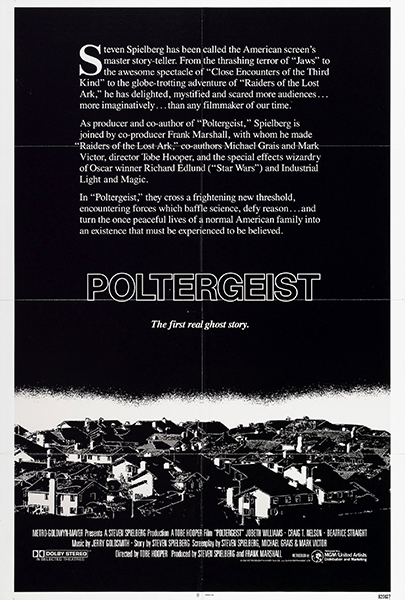
Poltergeist

Probably Unanswerable Questions

Clowns; goo; stepmother; Carol Anne; viral footage; trauma; neighborhood; Williams’s career

In the discussion (8)
Approx. transcript time · 00:08:14Read transcript
  • When did clowns become frightening rather than friendly entertainment? John Wayne Gacy is suggested as a turning point. — Bill Simmons
  • Why is the other side covered in goo, as in Ghostbusters? — Bill Simmons
  • Is the mother the oldest daughter’s stepmother? Ages and dialogue suggest the possibility without settling it. — Bill Simmons
  • Was Carol Anne targeted because she was the first baby born in the house? — Bill Simmons
  • How many online views would real footage of the spirits descending the stairs receive? — Bill Simmons
  • Are all the kids damaged for life after these events? — Bill Simmons
  • Would the entire neighborhood leave after the house collapses, and would the developer’s company close? — Bill Simmons
  • Should Williams have become a bigger star? Her strong work is weighed against a crowded field of contemporary actresses. — Bill Simmons
City Slickers

Half-Assed Internet Research

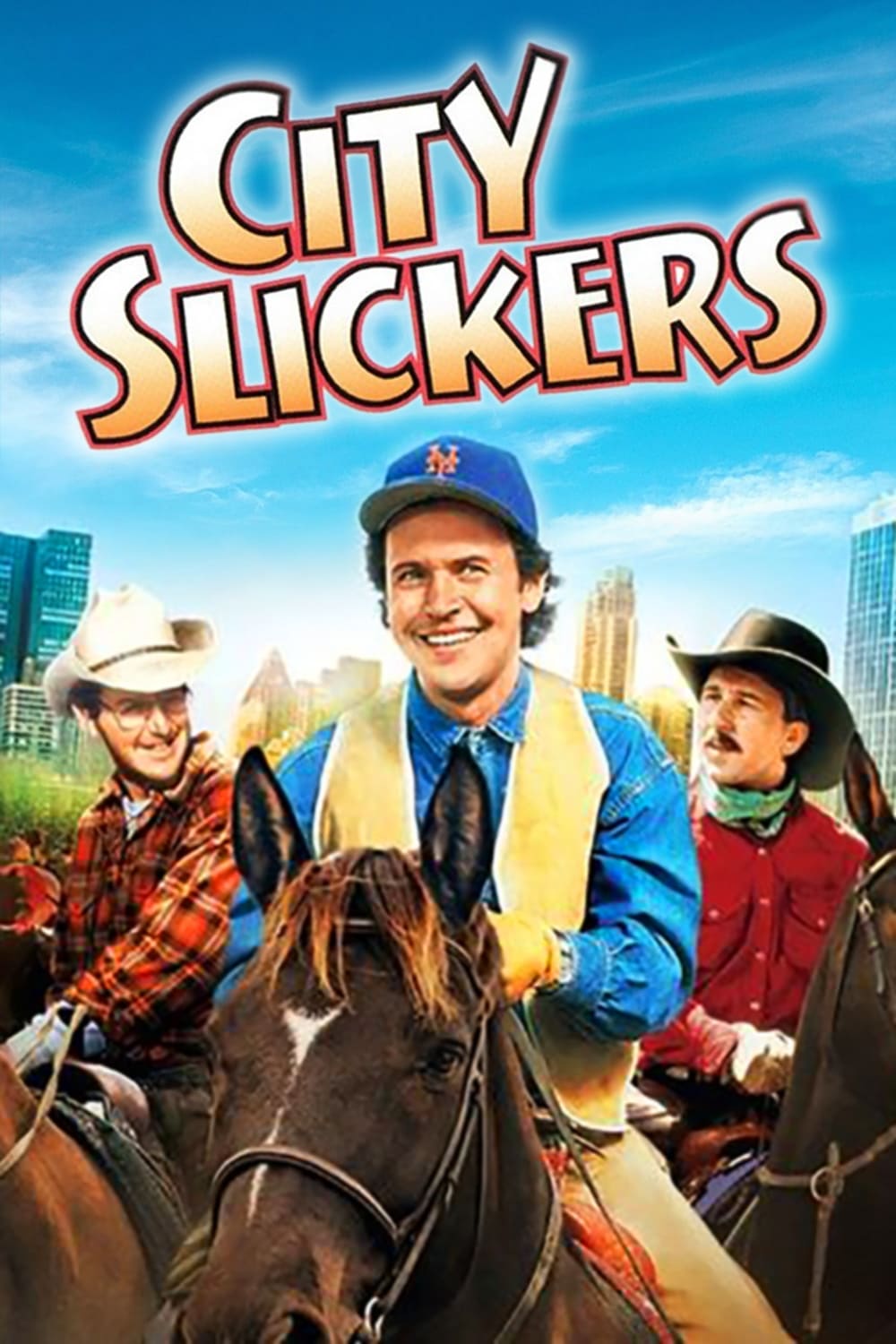
Fantasy-vacation TV origin; plot borrowed from The Cowboys; Jake Gyllenhaal's debut; the true best-day story; 10 or 11 Normans; river-crossing trouble; Lindsay Crystal as Mitch's daughter

In the discussion (5)
Approx. transcript time · 01:02:11Read transcript
  • Crystal got the idea from a TV show about middle-aged men on life-changing fantasy vacations, borrowed the plot from John Wayne's The Cowboys, and hired Lowell and Babaloo.
  • Ten-year-old Jake made his film debut as Crystal's son, and a Crystal quote about him always performing and singing South Pacific is read and questioned. — Chris Ryan
  • Kirby's horse allergy is repeated, defended as half-assed internet research. — Chris Ryan
  • Crystal's best-day story really happened, 10 or 11 cows played Norman, and Norman's birth scene was shot in three states.
  • The river crossing was the toughest to shoot because the cows kept mounting each other, and Mitch's daughter was Crystal's real daughter Lindsay, called the best casting ever.
In the discussion (3)
Approx. transcript time · 02:11:20Read transcript
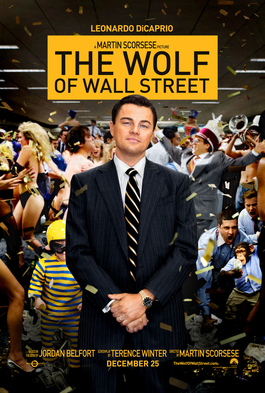
  • Three different answers come back at once, Leo, McConaughey and Scorsese; the Scorsese case is that the director is the author of the whole project and that this was a reminder he was not done yet, which gets mocked as auteur theory delivered like John Wayne.
  • Hugo, the film before this, is probably the host's least favorite Scorsese, him trying something different late in life, whereas this is him being who he is and firing the shotgun at the biggest caliber, every move in his book purposefully overdone to show people pushing limits without realizing it; McConaughey and Leo are nonetheless called incredible.
  • A closing joke asks whether the Malaysian financier won the movie, with a shout-out to Red Granite; the firm answer is that they did not.
Podcast choices
Speaker not identified
Leonardo DiCaprio
Speaker not identified
Matthew McConaughey
Speaker not identified
Martin Scorsese
In the discussion (8)
Approx. transcript time · 00:44:06Read transcript
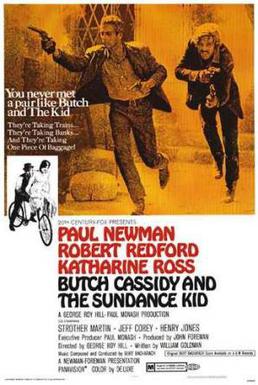
  • The category is set up as the scene you stay for when you catch the movie while flipping channels; one host has five and invites additions, and one participant asks to guess them first.
  • The guesses: the first-act fight with the huge guy in the gang that ends with one kick, which is on the list, and the third-act attempt to rob the Bolivian bank while getting the Spanish right, which was not on the list but gets added.
  • The first Redford scene: with no history with the actor, the close-ups and the different 1870s-style color make you wonder what is going on, the film carefully establishes in two minutes that nobody should mess with him though he is not physically huge, and it ends with him firing six bullets around the man without killing him, instant mythology, while Newman knows what is coming and is already flying out of the way.
  • Butch kicking the giant leader in the balls is on the list; Goldman wrote that people objected because a John Wayne hero would not do that, and studio people asked why Sundance was not helping, joking dryly about bets instead; the answer is that Sundance knows exactly what is going to happen and is not worried about Butch at all.
  • The train robbery that introduces the super posse is on the list, though the first train robbery where they blow the car up could be argued; the Woodcock clip is played, the poor man nearly murdered out of loyalty to E.H. Harriman, and the actor is identified as George Firth (as transcribed); the second robbery with the horse posse is called a great seven minutes, with Goldman's book explaining how it was shot.
  • Further nominees: the Bolivian bank scene, the ending, the payroll-up-the-hill scene in Bolivia with the colorful character actor right before he is shot, its sister scene where it comes out that Butch has never shot anyone, the waterfall, and the meeting with Bledsoe where they try to enlist, which one host holds back for another category.
  • It comes down to the train robbery and super posse scene versus the waterfall; the waterfall is called one of the most rewatchable scenes of all time and the clip is played, with the angry, embarrassed 'I can't swim' named a favorite line reading, Newman's reaction praised, and the jump and the men coming in called everything you want from an action scene.
  • Earlier, Goldman is described as holding on to the secret that Sundance could not swim for as long as he could, unable to wait to write the cliff scene; the run to the edge and what they shout as they jump have been ripped off in fifty other movies, Lethal Weapon included.
Inglourious Basterds

Most Rewatchable Scene

The opening dairy farm sequence with Hans Landa

In the discussion (23)
Approx. transcript time · 00:28:23Read transcript
  • This is called one of the hardest picks the show has had: the movie is essentially five 20-to-30-minute scenes and holds three of a host's favorite scenes of the century. The nominees read out are the La Louisiane tavern with Fassbender, Kruger and Hellstrom; Landa at the dairy farm, the opening 20 minutes; Hickox meeting Fennec (as transcribed) and Churchill; Shoshana's strudel lunch with Goebbels and Landa, specifically her stifled cry when Landa leaves; and the Cat People scene of her putting on the makeup and the dress. Little Aldo is on the list, though his speech could be.
  • The introduction of the Bear Jew has to be on the list: Aldo's conversation with the German soldier, the bat knocking in the tunnel, the needle drop as Donnie Donowitz emerges, and the high laughter at the Boston accent, which is Eli Roth doing a Ted Williams impression; the hosts chant the Teddy ballgame and Lansdowne Street lines.
  • Other nominees: the forehead-carving reveal in that sequence, the Bear Jew's first kill, the Stiglitz killing-spree montage with its heavy metal riff and Samuel L. Jackson voiceover, the Hans flip at the end with Aldo's bluffing and pursuit of vengeance and the 'just a chewing out' moment, the theater carnage, and the Gorlami scene introducing the three Italian compatriots to Landa with their Godfather hands, which lets the audience laugh after the weighty historical material.
  • The tavern scene is a host's favorite part along with the opening 20 minutes: essentially Tarantino making a Hitchcock movie, like Rope, one of the great bar scenes, with two thirds of it spent on the heads-up card game; a joke asks whether people in the 40s were smarter, and the answer is that it is a Tarantino invention in which every character is clever.
  • Hellstrom's King Kong theory is Tarantino's own, shared with Terry Gross on Fresh Air; the tension builds when the unseen Hellstrom stands up with his boot of beer, and the scene is a comedy of manners about how long they have to stay, a literal card game in which each side ups the ante until pistols are pointed at testicles, capped by the hand gesture for the scotches.
  • Fassbender's performance is called crazy: a man born in Germany, raised speaking German, moved to Ireland and learned English, playing an Englishman who learned German and affects an invented Pitzpaloo-esque (as transcribed) accent; he tried out for Landa five times and was heartbroken before being given Hickox, and this was the moment a host asked who that movie star was, after Hunger had made him look like the next Daniel Day Lewis (transcribed 'Dale and Dale Lewis'), with this suggesting the next James Bond.
  • Hickox talks like Trevor Howard and looks like Sean Connery, the smartest and most dashing man in the room but also a pretentious film critic who appreciates a good scotch; alcohol is deployed throughout the scene, from the boot of beer and the soldiers' schnapps for Maximilian's birth to the champagne and the scotch that gives the Englishman away.
  • The 'speaking the kings' line is a line a screenwriter waits his whole life for; Fassbender's affectation and manner change the second he does the hand, knowing it is over, and Hellstrom knows too, which is the point of the line that neither of them is getting out of the bar.
  • August Diehl as Dieter Hellstrom, called the most evil Nazi name ever heard, gives a hell of a performance going nose to nose with Fassbender; Bridget von Hammerschmark's (as transcribed) overconfidence in insisting they stay, when the soldiers knew before going downstairs that a meeting in a basement was insane, raises the question of whether the scene wants the audience to doubt her loyalty.
  • The answer offered is that the scene hammers home that these people had jobs before the war, a film critic and an actress rather than trained soldiers, so she might simply pick a bar whose bartender she knows; her operating-table line that it was either a trap or a terrible coincidence but not both reflects what probably happened thousands of times in the war.
  • The ticking-clock tension of the tavern is Hitchcockian, but it may not beat the opening 20 minutes: the lights go down, the Morricone music and the odd title fonts start, and the film opens like a spaghetti Western, building and building as someone comes up the road, with Lea Seydoux there, before a 20-minute conversation between the dairy farmer and Hans Landa that announces Waltz as an actor nobody had seen before.
  • The opening shot is almost exactly the opening shot of Unforgiven and the setup of The Good, the Bad and the Ugly, both huge movies for Tarantino; the Morricone score is from The Big Gun Down and the opening signature (transcribed as 'Fira Lys') is Beethoven, the great Germanic composer arriving in a small village just like Landa. The sequence then becomes a Sherlock Holmes movie bookended by Westerns, with Shoshana running toward the horizon echoing The Searchers and John Wayne in the doorframe, even though Tarantino hates John Ford.
  • The doorframe says that Jews in Europe in the early 40s were always outsiders on the run, and frames a movie poster for what unfolds as she runs toward her cinema in Operation Kino; it is impossible to overrate what it meant that the film really speaks the languages of the time and place, with an actor who could act in French, German, English and Italian.
  • Landa asking to switch to English so the family under the floorboards would not understand was his plan all along; Waltz can be taken for granted now because he repeats the trick, but the modulation when he asks 'You're sheltering enemies of the state, are you not?' and drops the gregarious affectation reveals the heavy of the movie, the big bad rather than Hitler, in one of the most memorable introductions of an actor and a character.
  • The scene is simultaneously compelling and horrifying: the gregarious guest asking for a glass of milk and lighting his pipe, then the instant pivot into an incarnation of horror; the pan down to the Dreyfus family hiding below and back up to their eyes, people the audience just met whose stakes are instantly understood; then 'Au revoir Shoshana' and the 'boop' with the gun, suggesting that for Landa the pursuit is as gratifying as the catch and that her escape only entices him more.
  • Landa changes across the movie's three or four years: in 1941 he is a cookie full of arsenic, sweet outside and evil inside, proud of the Jew Hunter nickname, but by his talk with Aldo he claims to be an honorable man who does not control nicknames. One reading is that he is just saying what seals the deal rather than showing a change of conscience; another is that he has to stay elusive to keep an advantage, overpowering with Lepedit (as transcribed) and negotiating with Aldo while still in charge, which also shows the bureaucratic and clerical tyranny of the Germans, with the carrot that they would not harass the family anymore.
  • The Mike Myers scene is loved as a work of imagination: Rod Taylor coming out of retirement to play Winston Churchill, Myers as a military attache, the scotch in the globe, Fassbender talking about Pabst, Selznick and Louis B. Mayer, and the 'Down with Hitler. All the way down' toast; the last 10 years of Myers' career are called strange, but a star who no longer needs to make Austin Powers 4 can simply spend two days in a Tarantino movie and be part of it forever.
  • In the strudel lunch, 'wait for the cream' is good advice even though Hans is a monster, and the cigarette put out in the cream is called the biggest on-the-nose metaphor in the movie, the cookie with arsenic again.
  • Asked by name whether he likes strudel, the host cannot recall ever eating it, assumes it is pretty good, and is not really into a flaky pastry. — Chris Ryan
  • Melanie Laurent's eyes pop at her first bite of strudel, read as a character who has not had dessert in 10 years because of the life she was forced into; the counter is that she and Marcel could get strudel or the 1940s French Milk Duds at the cinema, but the moment reads as someone who never gets taken to nice lunches while being terrified, with pleasure and pain mixed together.
  • The quick moment when Hans orders her a glass of milk, as if to say he knows who she is, is one of the most tense in the film and sincerely scary; Laurent and Kruger are revelations up there with Waltz, Kruger previously known mainly as the beauty from Troi (as transcribed), and the earlier part of the sequence is strong too, with Goebbels and Shoshana talking through the French translator while Zoller tries to ingratiate both Goebbels and a woman who wants him dead, a schoolyard romance that is complex yet easy to understand.
  • The final call is a toss-up between the opening dairy farm sequence and the tavern, but the Hans introduction comes to mind first, so the dairy farm is the pick; the others agree, calling it one of the most searing scenes they have seen, with a last glaze of syrup for 'Teddy fucking ball game'.
  • Earlier, not wanting to jump ahead to most rewatchable scene, a host notes you could basically say the whole movie.
Displaying all 5 discussions