‹ All people

Referenced person

Ted Williams

Also referred to as Teddy Williams, Teddy Ballgame

Stats

Episodes featuring their films
0
Movies in this archive
0

Rewatchables episodes featuring Ted Williams’s films

No episode credits in the archive yet.

No episodes found

Mentioned in discussions

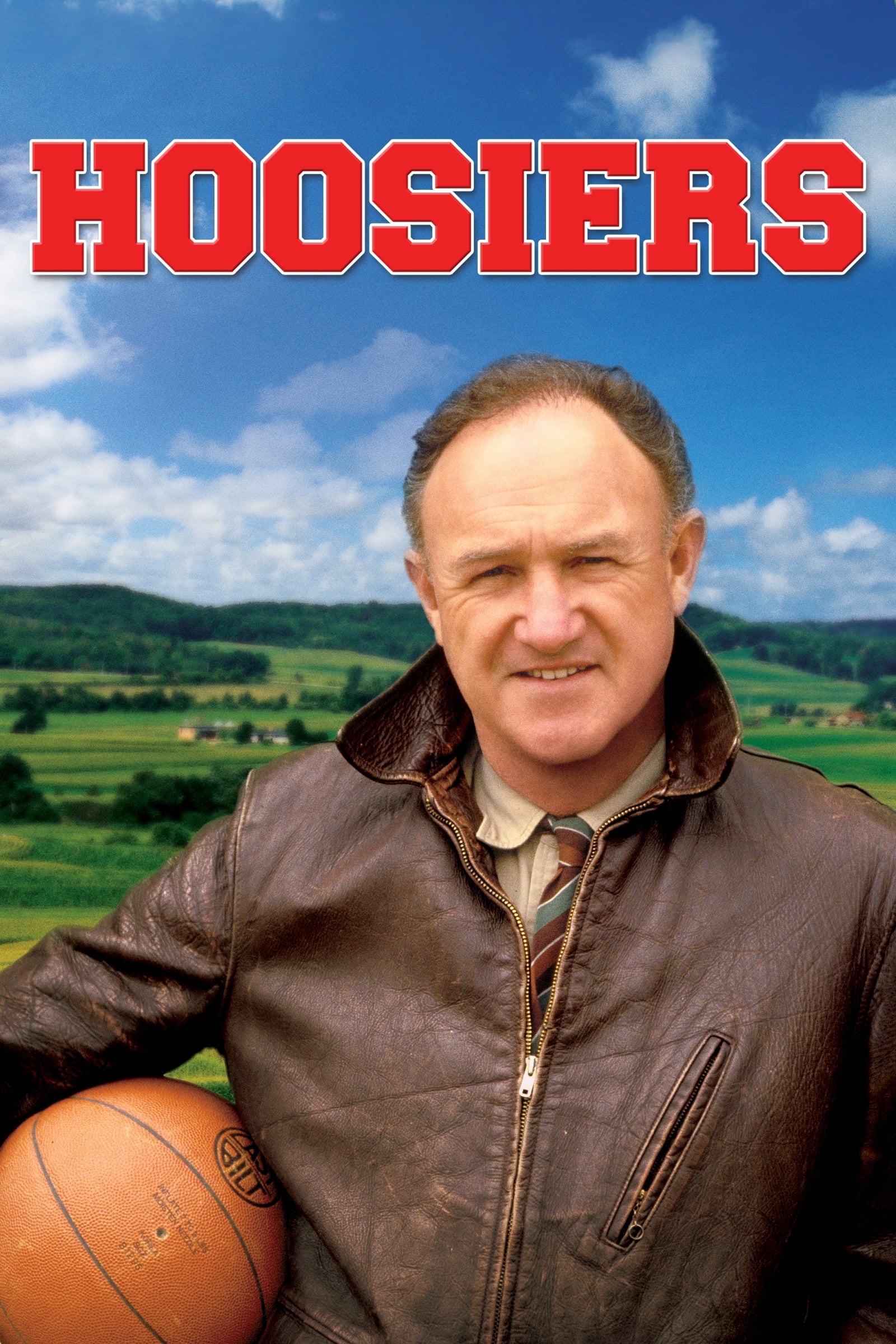
Hoosiers The Rewatchables
Hoosiers

Most Rewatchable Scene

Ollie's free throws in the Linton game; Coach Dale asking Shooter to join the staff

In the discussion (18)
Approx. transcript time · 00:25:42Read transcript
  • Candidate: Norman Dale kicking George out of practice, with the 'two kinds of dumb' threat played as a clip and the 'what kind of team do I have here' reaction. — Bill Simmons
  • Candidate: the coach visiting Jimmy with 'I don't care if you play or not'; Jimmy makes his first 12, misses one and finishes 13 for 14, and whether the miss counts is debated. — Bill Simmons
  • Candidate: the town meeting on firing Coach Dale leading into Jimmy joining and the winning montage; Myra's line about not wanting Jimmy to coach at 50 is called one of the meanest in a sports movie. — Bill Simmons
  • Three of Jimmy's four lines come at the meeting ('I play, coach stays; he goes, I go'); only Ivan Drago did more with less; the sequence is called one of the best nine-minute sequences in any sports movie. — Bill Simmons
  • Candidate: the picket fence game, Hopper's greatest scene: Hackman is ejected, Hopper freezes, his son pulls him in, and the delivery of the instructions shows the fog parting. — Bill Simmons
  • The defensive instruction does not seem to match what happens, but the play works and ends with 'You did good, pop'. — Bill Simmons
  • Teams run versions of the picket fence today, compared to Warriors sets for Steph Curry and a 'hammer'; a fifth-grade team ran a double-screen play because of the movie, called 'Ted' after Ted Williams. — Bill Simmons
  • Candidate: the Turhoun game fight, with Hackman's 'that's a gutless way to win' line praised as perfectly delivered. — Bill Simmons
  • Candidate: the Linton game; Strap should have played more, and Ollie's dribble off the foot seemed staged and his air ball was implausibly short. — Bill Simmons
  • Having the worst player hit two free throws to reach the state finals is called one of the most brilliant moves in any sports movie, and the second shot is praised for how it was filmed. — Bill Simmons
  • Ollie probably goes one for two at best in real life, and an opposing player with adult chest hair bumping him evokes Teen Wolf. — Ryen Russillo
  • Candidate: the 'way past big speech time' pregame speech with Merle, Flatch, Buddy and the Reverend's David and Goliath, which had a second life with the Jumbotron slow clap. — Bill Simmons
  • Hopper arguing a call off a bender and Coach Dale's 'you stay in the game' to Flatch is called an underrated chill moment. — Ryen Russillo
  • Candidates: the basket-measuring scene and the last few minutes of the title game, including Jimmy being carried off and the South Bend players' reactions. — Bill Simmons
  • One pick is the Ollie scene in the Linton game, for how it is shot. — Bill Simmons
  • Hackman going to Hopper's shack is liked, with a question of when a man on that kind of bender had time to scout teams. — Ryen Russillo
  • The other pick is when the coach seriously tells Hopper to be on the staff, praised for its writing and for having someone's back. — Ryen Russillo
  • Hopper's 'wing dinger' line about the suit and his awkward walk in a suit at the first game are praised. — Bill Simmons
Inglourious Basterds

What’s Aged the Worst?

Eli Roth's feel for baseball; Fassbender being in only two scenes; the Cat People needle drop; the slow motion when Frederick shoots Shoshana

In the discussion (6)
Approx. transcript time · 00:54:13Read transcript
  • Eli Roth's feel for the game of baseball: not a bad swing, but he seems to have learned the baseball vocabulary phonetically with no grasp of who Teddy Williams was or where Lansdowne Street is, and he reads as a New Yorker rather than a Boston guy.
  • The clear winner or loser for one host is Fassbender being in only two scenes; he is such a dynamo that it feels misremembered, but he does not appear until the 50th minute and is in it for about 17 minutes, every second electric, and it is ballsy and disciplined of Tarantino to kill him off so soon after introducing him, though a host would watch 97 hours of him getting whiskey out of a globe and wishes the two would work together again, since Fassbender could use it.
  • Regardless of Donnie Donowitz's origins, Ted Williams in 1941 hit .406 with a .553 on-base and .737 slugging, an OPS of 1.287 (transcribed as 1287), in what is thought to be his last season before enlisting; Mike Trout can eat shit.
  • Asked by name for more, the host has little, is not interested in whether Quentin could have made the movie, and finds nothing that makes him want it to stop, but the Cat People scene is too anachronistic, with David Bowie's voice distracting in an otherwise consistent tone, even if the operatic, expressionistic German style it reaches for is understood. — Sean Fennessey
  • Bowie may connect to Pabst and the artistic flourishing of 1920s Germany before the Reich, with Bowie's 1970s Berlin period as an extension of that bohemian Germany, though that is admitted to be far-fetched; more likely Tarantino just thought it would be cool, which has to be accepted with every Tarantino choice, like the title spelling he said he would never explain, an homage to the 70s movie and a Basquiat-esque flourish.
  • The switch to slow motion when Frederick shoots Shoshana is one of the only pieces of filmmaking in the movie a host dislikes, cheesy and weird and a nod to a different kind of movie, among the literal dozens of homages in the film.
Inglourious Basterds

Most Rewatchable Scene

The opening dairy farm sequence with Hans Landa

In the discussion (23)
Approx. transcript time · 00:28:23Read transcript
  • This is called one of the hardest picks the show has had: the movie is essentially five 20-to-30-minute scenes and holds three of a host's favorite scenes of the century. The nominees read out are the La Louisiane tavern with Fassbender, Kruger and Hellstrom; Landa at the dairy farm, the opening 20 minutes; Hickox meeting Fennec (as transcribed) and Churchill; Shoshana's strudel lunch with Goebbels and Landa, specifically her stifled cry when Landa leaves; and the Cat People scene of her putting on the makeup and the dress. Little Aldo is on the list, though his speech could be.
  • The introduction of the Bear Jew has to be on the list: Aldo's conversation with the German soldier, the bat knocking in the tunnel, the needle drop as Donnie Donowitz emerges, and the high laughter at the Boston accent, which is Eli Roth doing a Ted Williams impression; the hosts chant the Teddy ballgame and Lansdowne Street lines.
  • Other nominees: the forehead-carving reveal in that sequence, the Bear Jew's first kill, the Stiglitz killing-spree montage with its heavy metal riff and Samuel L. Jackson voiceover, the Hans flip at the end with Aldo's bluffing and pursuit of vengeance and the 'just a chewing out' moment, the theater carnage, and the Gorlami scene introducing the three Italian compatriots to Landa with their Godfather hands, which lets the audience laugh after the weighty historical material.
  • The tavern scene is a host's favorite part along with the opening 20 minutes: essentially Tarantino making a Hitchcock movie, like Rope, one of the great bar scenes, with two thirds of it spent on the heads-up card game; a joke asks whether people in the 40s were smarter, and the answer is that it is a Tarantino invention in which every character is clever.
  • Hellstrom's King Kong theory is Tarantino's own, shared with Terry Gross on Fresh Air; the tension builds when the unseen Hellstrom stands up with his boot of beer, and the scene is a comedy of manners about how long they have to stay, a literal card game in which each side ups the ante until pistols are pointed at testicles, capped by the hand gesture for the scotches.
  • Fassbender's performance is called crazy: a man born in Germany, raised speaking German, moved to Ireland and learned English, playing an Englishman who learned German and affects an invented Pitzpaloo-esque (as transcribed) accent; he tried out for Landa five times and was heartbroken before being given Hickox, and this was the moment a host asked who that movie star was, after Hunger had made him look like the next Daniel Day Lewis (transcribed 'Dale and Dale Lewis'), with this suggesting the next James Bond.
  • Hickox talks like Trevor Howard and looks like Sean Connery, the smartest and most dashing man in the room but also a pretentious film critic who appreciates a good scotch; alcohol is deployed throughout the scene, from the boot of beer and the soldiers' schnapps for Maximilian's birth to the champagne and the scotch that gives the Englishman away.
  • The 'speaking the kings' line is a line a screenwriter waits his whole life for; Fassbender's affectation and manner change the second he does the hand, knowing it is over, and Hellstrom knows too, which is the point of the line that neither of them is getting out of the bar.
  • August Diehl as Dieter Hellstrom, called the most evil Nazi name ever heard, gives a hell of a performance going nose to nose with Fassbender; Bridget von Hammerschmark's (as transcribed) overconfidence in insisting they stay, when the soldiers knew before going downstairs that a meeting in a basement was insane, raises the question of whether the scene wants the audience to doubt her loyalty.
  • The answer offered is that the scene hammers home that these people had jobs before the war, a film critic and an actress rather than trained soldiers, so she might simply pick a bar whose bartender she knows; her operating-table line that it was either a trap or a terrible coincidence but not both reflects what probably happened thousands of times in the war.
  • The ticking-clock tension of the tavern is Hitchcockian, but it may not beat the opening 20 minutes: the lights go down, the Morricone music and the odd title fonts start, and the film opens like a spaghetti Western, building and building as someone comes up the road, with Lea Seydoux there, before a 20-minute conversation between the dairy farmer and Hans Landa that announces Waltz as an actor nobody had seen before.
  • The opening shot is almost exactly the opening shot of Unforgiven and the setup of The Good, the Bad and the Ugly, both huge movies for Tarantino; the Morricone score is from The Big Gun Down and the opening signature (transcribed as 'Fira Lys') is Beethoven, the great Germanic composer arriving in a small village just like Landa. The sequence then becomes a Sherlock Holmes movie bookended by Westerns, with Shoshana running toward the horizon echoing The Searchers and John Wayne in the doorframe, even though Tarantino hates John Ford.
  • The doorframe says that Jews in Europe in the early 40s were always outsiders on the run, and frames a movie poster for what unfolds as she runs toward her cinema in Operation Kino; it is impossible to overrate what it meant that the film really speaks the languages of the time and place, with an actor who could act in French, German, English and Italian.
  • Landa asking to switch to English so the family under the floorboards would not understand was his plan all along; Waltz can be taken for granted now because he repeats the trick, but the modulation when he asks 'You're sheltering enemies of the state, are you not?' and drops the gregarious affectation reveals the heavy of the movie, the big bad rather than Hitler, in one of the most memorable introductions of an actor and a character.
  • The scene is simultaneously compelling and horrifying: the gregarious guest asking for a glass of milk and lighting his pipe, then the instant pivot into an incarnation of horror; the pan down to the Dreyfus family hiding below and back up to their eyes, people the audience just met whose stakes are instantly understood; then 'Au revoir Shoshana' and the 'boop' with the gun, suggesting that for Landa the pursuit is as gratifying as the catch and that her escape only entices him more.
  • Landa changes across the movie's three or four years: in 1941 he is a cookie full of arsenic, sweet outside and evil inside, proud of the Jew Hunter nickname, but by his talk with Aldo he claims to be an honorable man who does not control nicknames. One reading is that he is just saying what seals the deal rather than showing a change of conscience; another is that he has to stay elusive to keep an advantage, overpowering with Lepedit (as transcribed) and negotiating with Aldo while still in charge, which also shows the bureaucratic and clerical tyranny of the Germans, with the carrot that they would not harass the family anymore.
  • The Mike Myers scene is loved as a work of imagination: Rod Taylor coming out of retirement to play Winston Churchill, Myers as a military attache, the scotch in the globe, Fassbender talking about Pabst, Selznick and Louis B. Mayer, and the 'Down with Hitler. All the way down' toast; the last 10 years of Myers' career are called strange, but a star who no longer needs to make Austin Powers 4 can simply spend two days in a Tarantino movie and be part of it forever.
  • In the strudel lunch, 'wait for the cream' is good advice even though Hans is a monster, and the cigarette put out in the cream is called the biggest on-the-nose metaphor in the movie, the cookie with arsenic again.
  • Asked by name whether he likes strudel, the host cannot recall ever eating it, assumes it is pretty good, and is not really into a flaky pastry. — Chris Ryan
  • Melanie Laurent's eyes pop at her first bite of strudel, read as a character who has not had dessert in 10 years because of the life she was forced into; the counter is that she and Marcel could get strudel or the 1940s French Milk Duds at the cinema, but the moment reads as someone who never gets taken to nice lunches while being terrified, with pleasure and pain mixed together.
  • The quick moment when Hans orders her a glass of milk, as if to say he knows who she is, is one of the most tense in the film and sincerely scary; Laurent and Kruger are revelations up there with Waltz, Kruger previously known mainly as the beauty from Troi (as transcribed), and the earlier part of the sequence is strong too, with Goebbels and Shoshana talking through the French translator while Zoller tries to ingratiate both Goebbels and a woman who wants him dead, a schoolyard romance that is complex yet easy to understand.
  • The final call is a toss-up between the opening dairy farm sequence and the tavern, but the Hans introduction comes to mind first, so the dairy farm is the pick; the others agree, calling it one of the most searing scenes they have seen, with a last glaze of syrup for 'Teddy fucking ball game'.
  • Earlier, not wanting to jump ahead to most rewatchable scene, a host notes you could basically say the whole movie.
The Natural

Half-Assed Internet Research

Darren McGavin went uncredited over billing; Randy Newman's theme; the clock homer was inspired by Bama Roel of the Braves; a six-minute-longer director's cut; the 'little boy in you' quote was Ray Campanella's; filmed at Buffalo's War Memorial Stadium; the Parkside Candy Store is real; 3,000 extras at $3.35 an hour plus cardboard cutouts; no one has hit the cover off a ball; the Savoy Special bat is at Cooperstown; Hobbs modeled on Ted Williams; the 1939 Pirates went 68-85; Bret Hart's catchphrase; the halo shot was real; Bobby the Batboy was found at a produce stand; Levinson voiced the radio announcer; the $20,000 bribe is $366,000 today

In the discussion (10)
Approx. transcript time · 01:05:10Read transcript
  • Darren McGavin was cast late and would have received lesser billing than the other stars, so he chose to go uncredited; the hosts call it idiotic pride over practicality, since his IMDB is Love Boat, Fantasy Island and Rockford Files.
  • Randy Newman wrote the theme, the I Love L.A. guy whose song lives on at Laker games; Hobbs breaking the scoreboard clock was inspired by Bama Roel (as transcribed) of the Boston Braves showering Dixie Walker with glass at Ebbets Field on May 30, 1946, and the Wrigley clock was not introduced until 1941.
  • A director's cut six minutes longer trims the Redford and Close opening and adds Bump Bailey and Gus scenes; one host would not have minded more Bump given his sudden death and the Memo factor; a tangent on Bump as a nickname lands on calling Jason Gallagher Bump.
  • Roy's line that a big leaguer needs a lot of little boy in him was a Ray Campanella (as transcribed) quote; the film was shot in Buffalo at War Memorial Stadium, built in 1937 and demolished in 1988, whose short right field limited wide shots, and TriStar spent $500,000 aging it; the hosts protest the demolition and note Buffalo was good enough for the film but not Antonio Brown.
  • The lemonade shop where Glenn Close takes Roy is the real Parkside Candy Store at 3208 Main Street in Buffalo, serving ice cream, homemade candy and sandwiches; this leads to a wife who judges places by their signs and an old-school milkshake spot near Pasadena.
  • About 3,000 extras were recruited at the $3.35 minimum wage and cardboard people in straw boater hats filled the rest of the stands; the Hall of Fame has no record of anyone hitting the cover off a ball; the Savoy Special was a 1930s beer brand, and the bat and the bloody uniform are at Cooperstown.
  • Whether Roy would really bleed through a 20-pound fire-retardant uniform is parked for a later category; Hobbs was loosely modeled on Ted Williams, lefty number nine, who wanted to be the greatest hitter who ever lived.
  • The real 1939 Pirates finished 68-85 and the Reds won the pennant at 97-57; Brett the Hitman Heart (as transcribed) took 'the best there is, the best there was, the best there ever will be' from this movie; the Glenn Close halo shot was timed to the setting sun, not CGI.
  • Bobby the Batboy was played by George Wilcoz (as transcribed), discovered at his parents' produce stand in Buffalo for his only movie, and he lingers two seconds too long after handing Roy the bat; Ruth Ann Steinhagen inspired Harriet; Barry Levinson did uncredited voice work as the Knights' radio play-by-play man.
  • The $20,000 bribe is about $366,000 in today's money; the hosts wonder what a stake in a 1939 team was worth to justify bribing everybody in sight, guessing the gambling money was worth nearly as much since there was no TV money.
The Natural

Most Rewatchable Scene

The walk-off home run; Hobbs showing up for the final game while Brimley shaves

In the discussion (10)
Approx. transcript time · 00:31:04Read transcript
  • Hobbs versus the Whammer is fantastic; Joe Don Baker is the best Hollywood Babe Ruth, with the size, nose, gut and swagger, compared favorably to John Goodman; the scene dates to 1923, Ruth's 14-WAR MVP season, and both hosts prefer the Whammer as a cover rather than naming Babe Ruth, partly because a lefty would have been needed.
  • The foul tip taking out Duval (as transcribed), or rather the poor old catcher, with nobody wearing masks is noted, and Duval backing up twenty paces, to the Whammer's protest about how he will call it from there, is a classic moment.
  • Hobbs' first batting practice, with the Wonderboy clip played, is wonderful for three reasons: the sheer spectacle like Josh Hamilton in a home run derby, Brimley guzzling the filthy water he had complained about, and the 'I've been here every day' line that shows Roy is kind of a dick, entitled and owed something; Redford's swing was modeled on Ted Williams per the Roger Angel New Yorker piece (as transcribed), and he and Costner both looked like ballplayers.
  • Roy storming out of the meeting, deflowering Iris and immediately falling for the bad-luck niece after Pop's warning, then slumping, shows poor judgment with women and no understanding of birth control, which is excused as 1923.
  • Third on one list is Hobbs' first at bat, tearing the cover off the ball as the rain comes at the perfect time; the 'is this team alive' exchange between Red and Pop captures the rhythms of a baseball season when a team gets hot; Roy's batting-practice pitch and Max Mercy sprinting from his seat raise whether he could still pitch with the bullet in his side, answered with pain tolerance and no Toradol.
  • Other nominees: the lady in white scene with Glenn Close standing up, Hobbs' homer breaking the Wrigley Field clock, which did not exist until two years later, Brimley crossing Hobbs out of the lineup, Roy's last at bat, and the lightning bolt splitting the tree to forge Wonderboy, with the glowing stump called good special effects for 1984.
  • The 'losing is a disease' speech, comparing losing to syphilis and the bubonic plague, is hilarious, and the newspaper headline montages are praised for propelling the pace like Twitter or push notifications, though that is ruled to belong in what's aged the best.
  • One pick is the walk-off homer, the greatest chill scene of any sports movie, except perhaps Rocky getting up in the 14th round of Rocky 1; everything leading up to it, breaking Wonder Boy and 'pick me a winner, Bobby' with the Savoy special, is iconic.
  • The other pick, after 35 years of watching, is Hobbs showing up for the final game while Brimley shaves, with the 'suit up' clip played twice; a dad who calls whenever it is on to quote 'you're the best damn hitter I ever saw' is recalled.
  • Wilford Brimley's chest hair in that scene, and every scene, is like a forest, a peninsula, a platypus bill, a pelt; the hosts wonder how he does not trim it, whether it is a masculine calling card and whether he is still alive at 84.
Displaying all 5 discussions