

‹ All people

Referenced person

Babe Ruth

Also referred to as Ruth, the Whammer

Stats

Episodes featuring their films
0
Movies in this archive
0

Rewatchables episodes featuring Babe Ruth’s films

No episode credits in the archive yet.

No episodes found

Mentioned in discussions

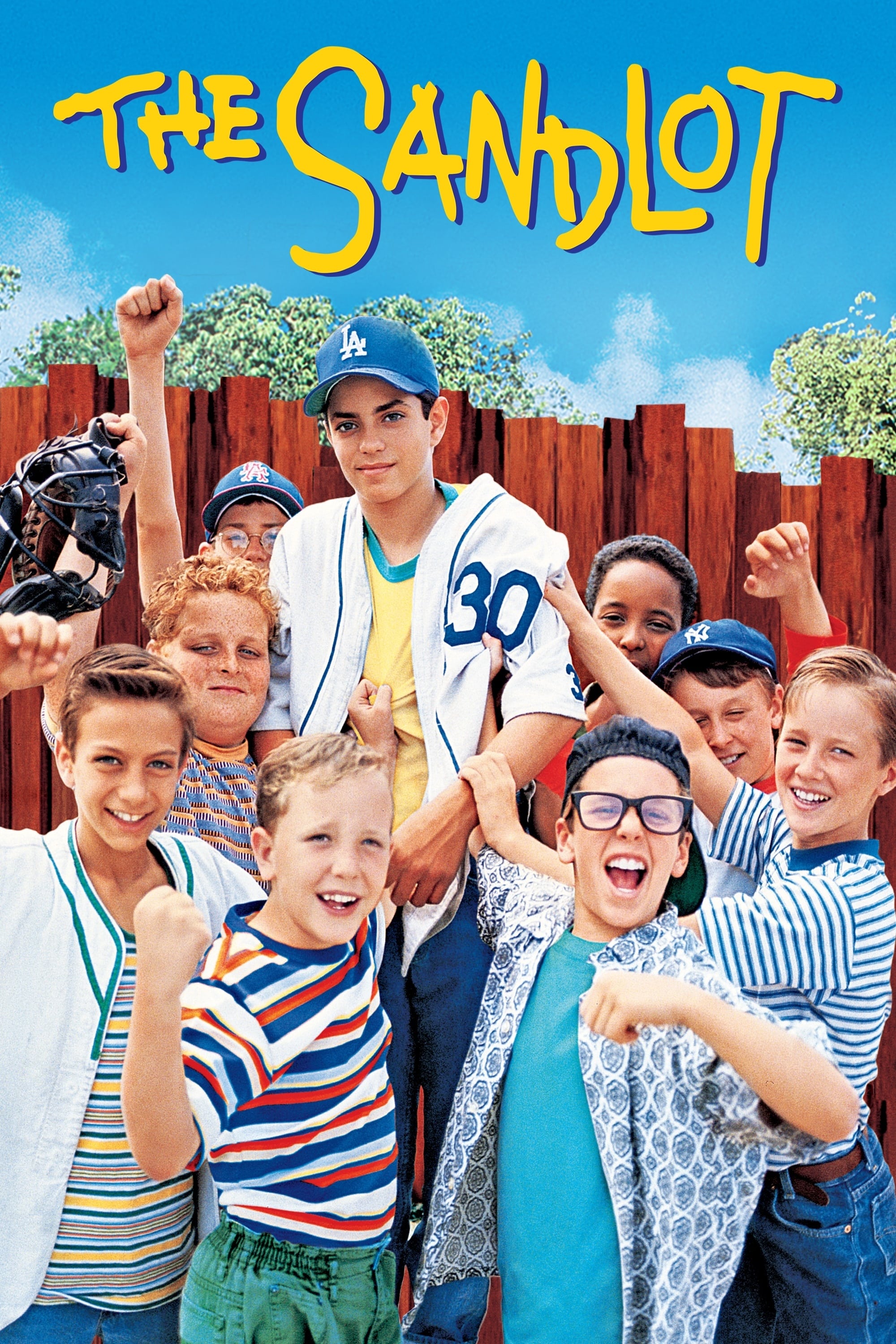
The Sandlot

The Neil McCauley “A Book about Metals” Award for Best Line from the Movie

"You're killing me, Smalls"; "Everybody gets one chance to do something great"; "Heroes get remembered, but legends never die"; "Baseball was life. And I was good at it."; "L7 weenie"; "We're clearly dealing with a superior intelligence here"

In the discussion (5)
Approx. transcript time · 01:13:02Read transcript
  • 'You're killing me, Smalls' became the iconic quote and is still a thing. — Bill Simmons
  • The Babe Ruth dream pep talk ('Everybody gets one chance to do something great') and 'Heroes get remembered, but legends never die' are chosen. — Mallory Rubin
  • Mr. Myrtle's 'Baseball was life. And I was good at it' could come from The Natural. — Mallory Rubin
  • Two more: the L7 weenie line, meaning a square, which was baffling as a child without Google; and 'We're clearly dealing with a superior intelligence here' about the beast. — Mina Kimes
  • Being compared to an Oscar Meyer or Dodger dog would be a compliment. — Bill Simmons
The Sandlot

Picking Nits

Smalls unable to throw; stepdad never teaching; Hercules's implausible age; unkept backyard; unquestioned gift ball; misspelled Babe Ruth ball; no Playboys; Hank Aaron card giveaway; unprotected signed ball; unused second baseball; 98-cent baseball; unrepaired fence

In the discussion (16)
Approx. transcript time · 01:04:08Read transcript
  • No 12-year-old could be that bad at throwing; maybe he just has the yips. — Bill Simmons
  • The stepdad never actually teaches him, just says watch. — Bill Simmons
  • The narrator says Hercules lived to 199 dog years, about 28 and a half, which no mastiff could. — Bill Simmons
  • A chained dog with a blind owner who is never walked means the backyard should be full of dog waste.
  • Hercules and Mr. Myrtle share a special bond; the chaining in the sun is distressing, but the dog may have learned his own bathroom etiquette. — Mallory Rubin
  • A stepdad should be alarmed when a strange man gives his kid a 1927 Yankees ball and weekly visits. — Mina Kimes
  • Babe Ruth's name is misspelled on the ball and never paid off, a red herring like the Russian in the woods on The Sopranos; Benny as a student of the game should know the spelling.
  • None of the boys having seen a Playboy magazine in 1962 is not believable. — Mallory Rubin
  • The boys buy candy at drugstores and got hold of chewing tobacco; there should also have been packs of 1962 baseball cards in the tree house. — Mallory Rubin
  • Even in a dream, Benny would not give away a Hank Aaron rookie card, given 253 home runs from 1954 to 1961. — Mallory Rubin
  • A signed Babe Ruth ball should be in a protective case; a counterpoint says that is how it was done in 1962.
  • The mother's line about the stepdad not liking his stuff touched is creepy, reinforcing the belief that he hit Smalls on purpose.
  • The film centers on memorabilia, a very early-1990s preoccupation; a signed ball would not carry that weight now. — Mina Kimes
  • Why Smalls takes the signed ball when he has the one he played catch with is unexplained. — Mallory Rubin
  • A baseball costing 98 cents in 1962, around $15 now, is questioned. — Bill Simmons
  • No one tells the blind Mr. Myrtle his fence fell, and it is never repaired: kids who built an erector set can't put a fence back up.
The Sandlot

What’s Aged the Worst?

Mr. Mertle's blindness feint; the director's narration; no breakout star; Karen Allen's faded weight; the parenting; steak on a black eye; overly elaborate erector set; unconvincing Babe Ruth; color end photo; the Wendy Peffercorn kiss

In the discussion (16)
Approx. transcript time · 00:42:08Read transcript
  • Mr. Myrtle's 'you went blind' line plays as a feint where 'you're black' was expected, and the film is called whitewashed.
  • The Negro Leagues history could have been addressed in about 30 seconds. — Bill Simmons
  • The setting is said to be the San Fernando Valley though filmed in Utah; race and the era of segregated pools go unaddressed. — Mina Kimes
  • The narrator is bad because it is the writer-director; someone like Tim Robbins should have been hired, and half the lines are about the biggest pickle. — Bill Simmons
  • No cast member became a breakout star, unlike a movie with a future star as sixth lead. — Bill Simmons
  • Karen Allen as the mom mattered more in 1993, 11 years after Raiders of the Lost Ark; the stepdad actor is now better known. — Bill Simmons
  • The parenting: the stepdad ignoring Smalls's requests to play catch, and the mother making him feel like a loser for being smart and calling him an egghead. — Mallory Rubin
  • Smalls might have founded a tech company without the pressure to play baseball; instead he became an announcer, perhaps with invention income on the side. — Mallory Rubin
  • Smalls's father died; the stepdad barely engages and is angry when called dad. — Bill Simmons
  • Putting a frozen steak on a black eye would never happen now. — Bill Simmons
  • The erector set catapult seems too elaborate for 1962. — Bill Simmons
  • The Babe Ruth dream actor does not seem like Ruth, and his Field of Dreams role lingers. — Bill Simmons
  • The host's son's pick: the end photo of the kids would not be in color in 1962. — Bill Simmons
  • Roping the lifeguard into a kiss, grabbing her head and tricking her would not fly today, and the narration adds to the cringe. — Mallory Rubin
  • The pool sequence follows the Fast Times tradition later homaged in Stranger Things, but its conclusion does not age well. — Mallory Rubin
  • The ending's marriage-and-nine-kids wink and the boys saying she knew what she was doing feel emotionally beyond such young kids. — Mina Kimes
The Sandlot

Most Rewatchable Scene

Smalls's home run with the Babe Ruth ball and its aftermath

In the discussion (20)
Approx. transcript time · 00:22:55Read transcript
  • Seven nominees are offered, only three of which are said to really matter. — Bill Simmons
  • Smalls joins the sandlot as a disaster, then catches Benny's shot hit right into his glove and immediately learns to throw. — Bill Simmons
  • Benny's paper-route advice unlocks Smalls by tapping into something already inside him, doing what his stepdad could not.
  • The stepdad is called a terrible dad whom one participant believes hit Smalls in the face on purpose; early-1960s dads are described as rough.
  • The game against the rivals could have been built into a longer scene, but the swerve in which the sandlot kids crush the other team works. — Bill Simmons
  • Ham's trash talk behind the plate channels Bull Durham and gets inside the batter's head, including the shaved-dog insult. — Mallory Rubin
  • Ham's style is compared to an early Pudge Rodriguez crossed with 'John Crook' (as transcribed). — Mina Kimes
  • At a Dodgers Sandlot Night, the actor who played Ham looked exactly the same; his line deliveries age terrifically while the other kid actors are not very good. — Mina Kimes
  • The performance made kids think constant trash talk was part of catching; now it would draw a suspension. — Mina Kimes
  • Smalls homers with the Babe Ruth ball, though not knowing who Ruth was in 1962 is called as unbelievable as not knowing Elvis; the scene is full of Ruth's nicknames. — Bill Simmons
  • The pool scene loses its shock value on each viewing; the triple vacuum explosion and Benny finally taking the ball from the beast round out the seven.
  • Also nominated: the tree-house legend of the beast and the s'mores 'You're killing me Smalls' moment; Squints's campy black-and-white retelling is worth stopping to watch.
  • The whole ball-retrieval sequence holds up, especially Smalls's erector set attempt, which answers his mother shaming him for being inventive. — Mallory Rubin
  • Further nominees: Benny and Smalls with Mr. Myrtle, and the Babe Ruth dream held for What's Aged the Best. — Mallory Rubin
  • The favorite is the scene where Smalls is integrated and Benny hits the ball directly to him, a display of skill and empathy that is emotional to watch. — Mina Kimes
  • The Peppercorn (as transcribed) pool scene has hilarious moments, especially Squints's look, and the carnival puking scene is also a favorite. — Mina Kimes
  • The carnival puking scene is left out because it blatantly borrows the Stand By Me puke scene from about seven years earlier. — Bill Simmons
  • Smalls hitting the Babe Ruth ball, the reaction, the quotes and the plotting to get it back make a really good five minutes. — Mallory Rubin
  • Asked for a pick, the reply seconds the Babe Ruth ball home run as a good pick because the other main contenders spring from it: the retrieval attempts, Benny pickling the beast and the Mr. Myrtle conversation, which recalls Boo Radley in To Kill a Mockingbird. — Mallory Rubin
  • The 1927 Yankees ball is a nice exclamation point. — Bill Simmons
The Natural

Most Rewatchable Scene

The walk-off home run; Hobbs showing up for the final game while Brimley shaves

In the discussion (10)
Approx. transcript time · 00:31:04Read transcript
  • Hobbs versus the Whammer is fantastic; Joe Don Baker is the best Hollywood Babe Ruth, with the size, nose, gut and swagger, compared favorably to John Goodman; the scene dates to 1923, Ruth's 14-WAR MVP season, and both hosts prefer the Whammer as a cover rather than naming Babe Ruth, partly because a lefty would have been needed.
  • The foul tip taking out Duval (as transcribed), or rather the poor old catcher, with nobody wearing masks is noted, and Duval backing up twenty paces, to the Whammer's protest about how he will call it from there, is a classic moment.
  • Hobbs' first batting practice, with the Wonderboy clip played, is wonderful for three reasons: the sheer spectacle like Josh Hamilton in a home run derby, Brimley guzzling the filthy water he had complained about, and the 'I've been here every day' line that shows Roy is kind of a dick, entitled and owed something; Redford's swing was modeled on Ted Williams per the Roger Angel New Yorker piece (as transcribed), and he and Costner both looked like ballplayers.
  • Roy storming out of the meeting, deflowering Iris and immediately falling for the bad-luck niece after Pop's warning, then slumping, shows poor judgment with women and no understanding of birth control, which is excused as 1923.
  • Third on one list is Hobbs' first at bat, tearing the cover off the ball as the rain comes at the perfect time; the 'is this team alive' exchange between Red and Pop captures the rhythms of a baseball season when a team gets hot; Roy's batting-practice pitch and Max Mercy sprinting from his seat raise whether he could still pitch with the bullet in his side, answered with pain tolerance and no Toradol.
  • Other nominees: the lady in white scene with Glenn Close standing up, Hobbs' homer breaking the Wrigley Field clock, which did not exist until two years later, Brimley crossing Hobbs out of the lineup, Roy's last at bat, and the lightning bolt splitting the tree to forge Wonderboy, with the glowing stump called good special effects for 1984.
  • The 'losing is a disease' speech, comparing losing to syphilis and the bubonic plague, is hilarious, and the newspaper headline montages are praised for propelling the pace like Twitter or push notifications, though that is ruled to belong in what's aged the best.
  • One pick is the walk-off homer, the greatest chill scene of any sports movie, except perhaps Rocky getting up in the 14th round of Rocky 1; everything leading up to it, breaking Wonder Boy and 'pick me a winner, Bobby' with the Savoy special, is iconic.
  • The other pick, after 35 years of watching, is Hobbs showing up for the final game while Brimley shaves, with the 'suit up' clip played twice; a dad who calls whenever it is on to quote 'you're the best damn hitter I ever saw' is recalled.
  • Wilford Brimley's chest hair in that scene, and every scene, is like a forest, a peninsula, a platypus bill, a pelt; the hosts wonder how he does not trim it, whether it is a masculine calling card and whether he is still alive at 84.
Displaying all 6 discussions