‹ All people

Film credit

Anthony Hopkins

Also referred to as Hopkins

Stats

Episodes featuring their films
3
Movies in this archive
4

Rewatchables episodes featuring Anthony Hopkins’s films

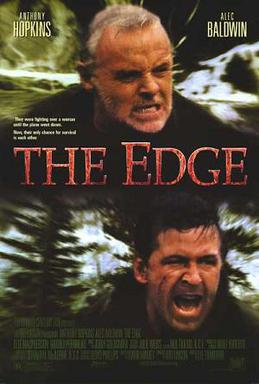
The Edge

1997 film

Bill Simmons · Van Lathan

Aired October 25, 2022

Displaying all 3 episodes

Mentioned in discussions

In the discussion (8)
Approx. transcript time · 00:20:12Read transcript
  • Walter and Donny were written for their actors, while the Big Lebowski drew the casting search. — Chris Ryan
  • Marlon Brando was reportedly the Coens’ dream choice, but his improvisational production style could have disrupted the tightly scripted film. — Chris Ryan
  • Robert Duvall reportedly disliked the script, Anthony Hopkins did not want to play an American, and Gene Hackman was taking an acting break. — Chris Ryan
  • A second list reportedly included Mailer, Scott, Falwell, Griffith, Buckley and Borgnine. — Chris Ryan
  • The panel concludes that Huddleston was the right landing point. — Chris Ryan
  • Mailer would have been an incredible Jackie Treehorn, rather than necessarily the Big Lebowski. — Chris Ryan
  • Vidal is considered a perfect possibility. — Chris Ryan
  • Borgnine would have been fine, though the final Huddleston choice is considered right. — Chris Ryan
Zodiac The Rewatchables
In the discussion (8)
Approx. transcript time · 00:47:18Read transcript
  • Before the nominees, a moment in the credits is called possibly the best in the film: after Gyllenhaal, Ruffalo and Downey, the names Brian Cox, John Carol Lynch, Elias Codius, Dermot Malroney and Donal Loge (as transcribed) appear, a that-guy all-star team; Malroney as Captain Marty Lee is loved and Cox as Melvin Belli really makes the most of his moment.
  • More favorites: Philip Baker Hall as Sherwood, the handwriting specialist who starts drinking a little; Clea Duvall, with a great heat-check scene; John Goetz (as transcribed), from Blood Simple, as the Chronicle editor; and Anthony Edwards, fantastic and unexpected.
  • One pick gives the award specifically to Cox, with the Melvin Belli phone-call clip played, 'Is there something I can call you that's a little less ominous?', for making the most of his few moments, the television interview, the sincere attempt to offer the caller a lifeline, and the way he physically takes the incredible screaming sound.
  • Jimmy Simpson (as transcribed), who plays the shooting victim at the start and returns at the end, prompts a detail: the character is Mike Mageau, and when the name is reported over the Vallejo PD wire it is said aloud in the newsroom as 'Mayhew', so the film intentionally misleads in a way that was probably true to how it was said, an obsessive Fincherism; James LeGroix (as transcribed) is good and weird, and Zach Granier (as transcribed), the boss in Fight Club, runs the Vallejo police department.
  • A second pick is Elias Codius (as transcribed) as Detective Mullinax (as transcribed), a great real name: a that-guy who can shoot when given the ball, known to the hosts' generation as Casey from Teenage Mutant Ninja Turtles, a guy who looks like a cop and rarely gets a stage this large, and a great serial killer in Fallen with Denzel Washington, directed by Gregory Hoblitz (as transcribed).
  • Asked directly for a winner, a third pick is John Carroll Lynch as Arthur Lee Allen, with the 'Nobody calls me Arthur' clip: the role basically made the second half of his career, he directed the last film starring Harry Dean Stan (as transcribed) this year, and he is a well-known theater actor remembered as Norm in bed with Francis McNormand (as transcribed) at the end of Fargo.
  • Asked whether the film still works with a huge star like Anthony Hopkins as Arthur, the answer is not as well: it has to be a face whose physical presence unsettles because you feel you could have seen him without knowing why, since viewers bring previous films into the room and would read a famous actor as an important part; the misdirect succeeds because the only place to remember Lynch is Fargo, where Norm is a completely different, friendly disposition.
  • Later, the Ioni Sky (as transcribed) roadside scene is called another Dion Waiters performance and the hardest scene for one host to watch.
Zodiac The Rewatchables
Zodiac

Casting What-Ifs

Gary Oldman was to play Melvin Belli but was judged not heavy enough; Jennifer Aniston recommended Mark Ruffalo to Fincher; Andrew Garfield as a later Graysmith; Anthony Hopkins as Arthur Leigh Allen

In the discussion (4)
Approx. transcript time · 00:47:18Read transcript
  • The only casting what-if with any internet leftovers is Melvin Belli: Gary Oldman was supposed to play the role, and Fincher passed because he lacked the girth to play Belli, which lands oddly now that Oldman is playing Winston Churchill in all his girth in Darkest Hour; the hosts ask why a director who can add blood splatter could not add a few pounds, doubt anyone cares whether Belli weighed 250 or 175, and joke that human body fat is as sacred to Fincher as oak trees.
  • Ruffalo was recommended to Fincher by Jennifer Aniston, and Fincher had liked him in Collateral.
  • A side question asks whether Andrew Garfield, a little more of a boy scout, would have been a better Graysmith had the film been made five years later; Eisenberg is floated and rejected, and Gyllenhaal is called alarmingly handsome despite the wide-eyed look, as is Garfield.
  • Asked whether the film still works with a huge star like Anthony Hopkins as Arthur, the answer is not as well: it has to be a face whose physical presence unsettles because you feel you could have seen him without knowing why, since viewers bring previous films into the room and would read a famous actor as an important part, and the only place to remember Lynch is Fargo, where Norm is a completely different, friendly disposition.
In the discussion (4)
Approx. transcript time · 01:02:05Read transcript
  • The candidates offered are Anthony Hopkins, Jodie Foster, Demme (misspoken as 'Ted Demme') and Ted Levine; one participant chooses Jonathan Demme, and another would have said Hopkins and asks for the case.
  • The case for Demme: he bridged late-70s and 80s independent filmmaking with a subversive yet entertaining genre blockbuster, the reason something new appears on every rewatch, aided by his regular cinematographer Tack Fujimoto (as transcribed), who shot Pretty in Pink and Ferris Bueller; Demme had recently died.
  • After a joke answer naming Miggs's actor, the case for Hopkins is that his would be among the first performances named in any bar argument about the most memorable ever.
  • The Demme backer answers "You're not going to get any argument from me", just wanted to shout Demme out, expected the other to have Hopkins, and calls it "a 1A, 1B thing".
Podcast choices
Speaker not identified
Jonathan Demme
Speaker not identified
Anthony Hopkins
The Silence of the Lambs

Probably Unanswerable Questions

What did Lecter say to make Miggs kill himself?; Is it okay to root for Hannibal Lecter?; Did Catherine Martin keep Precious?; Would you watch a 1997 Buffalo Bill prequel with Ted Levine?; Should Jodie Foster have done the Hannibal sequel?; Was Jodie Foster good in this movie?

In the discussion (7)
Approx. transcript time · 00:58:10Read transcript
  • Is it okay to root for Lecter: he is one of the five worst people the hosts have rooted for, they cheer when he attacks Charles Napier's character, Clarice tells her FBI roommate he would not come after her because he would find it rude, and he seems to attack only people he has a grudge against.
  • Did Catherine Martin keep Precious: she carries the dog out at the end after the bone-and-bucket Hail Mary, and the host thinks she kept it.
  • Would they watch a Buffalo Bill prequel with Ted Levine in 1997: yes, though the investigation of serial killers interests one host more than their origins; should Foster have done the Hannibal sequel: no, she knew to leave well enough alone.
  • Was Foster good: one host thinks she is great; the other, since learning Michelle Pfeiffer had turned the role down, watches imagining Pfeiffer, would be more scared and more convinced, and thinks Pfeiffer the better actress, perhaps a year or two old for it.
  • The rebuttal is that Clarice's background as a rural West Virginia sheriff's daughter fits Foster, while Pfeiffer seems like a Tequila Sunrise, Fabulous Baker Boys person; the accent is still judged not good enough, with the claim that Hopkins knew it, and the advice is never to do an accent unless you are Daniel Day Lewis.
  • The Pfeiffer backer, calling her a favorite actress, adds that Castaway would be better with her in the Helen Hunt part and admits to simply not being a big Jodie Foster fan; another voice asked for an opinion praises her rookie vulnerability, Julia Roberts is rejected as too much of a megastar against Foster's diminutive presence, and there were few great actress options at the time.
  • Earlier, during the nits, what Lecter told Miggs over six hours to make him kill himself was parked for this segment.
The Silence of the Lambs

The Neil McCauley “A Book about Metals” Award for Best Line from the Movie

"A census taker once tried to test me. I ate his liver with fava beans and a nice glass of Chianti."; "Senator, one more thing. Love your suit."; "Hey, are you about a size 14?"; "You don't know what pain is!"; "Oh, is she a big fat person?"

In the discussion (3)
Approx. transcript time · 00:56:28Read transcript
  • With the Gumm lines already covered, the census-taker line is called iconic, along with Hopkins's pronunciation of Chianti, and 'Senator, one more thing. Love your suit' is praised for its delivery, which Gene Hackman might not have matched; it was an era, with Terminator 2, of lines built to be repeated.
  • Lecter's remark in the breastfeeding exchange with the senator made theater audiences squirm; Gumm's size 14 question and 'you don't know what pain is' are also cited.
  • One host's personal favorite is Gumm answering Clarice's knock about Mrs. Lippman by asking whether she was a big fat person and then fetching the index cards; the other has no additions, and Charles Napier's scream when he is hit is added.
The Silence of the Lambs

Apex Mountain

Anthony Hopkins; Ted Levine; Jodie Foster (one host rates her performance in The Accused higher)

In the discussion (5)
Approx. transcript time · 00:43:49Read transcript
  • Anthony Hopkins is a yes: this is the apex for him.
  • Ted Levine is a yes, called the apex not just for him but for all actors.
  • Jonathan Demme is a no from one host, who would choose Stop Making Sense or Something Wild; the other asks how a five-for-five Oscar sweep is not the apex, and the first host admits to being a hipster about it but sticks with that choice.
  • Chris Isaac's apex (as transcribed) is instead the Wicked Game video, called a top-12 video of all time.
  • Jodie Foster is a yes: after an initial 'I think so', the reply agrees this was her apex; her performance in The Accused is rated higher, she is called good in Panic Room and Inside Man without those being apex work, and her most iconic role plus a second Best Actress Oscar settle it.
The Silence of the Lambs

Half-Assed Internet Research

Hopkins mocked Foster's Southern accent in their first scene; James Gumm combines Ed Gein, Ted Bundy and Gary Hednick (as transcribed); Gene Siskel gave the film a negative review; Brooke Smith gained 25 pounds for Catherine Martin; Goodbye Horses replaced a Bob Seger song and Ted Levine insisted on the dance; Levine and Scott Glenn did extensive research; the story was inspired by Robert Keppel and Ted Bundy; William Goldman got Demme to cut a 12-minute Crawford-Clarice sequence

In the discussion (10)
Approx. transcript time · 00:33:36Read transcript
  • According to Jodie Foster, Hopkins improvised mocking her Southern accent during their first meeting, so her horrified reaction is genuine; the hosts love when good actors unsettle their scene partners, and the accent is called not great and one of several problems with her performance.
  • James Gumm ('Jame Gum' variously as transcribed) combines three real killers: Ed Gein, who skinned victims, Ted Bundy, who escaped and killed again, and Gary Hednick (as transcribed), who kept captives in a basement pit.
  • Gene Siskel gave the film a negative review, and one host calls Siskel the movie equivalent of the host's perpetual disagreements with Greenwald.
  • Brooke Smith, who played Catherine Martin, gained 25 pounds for her first major role, and the hosts wonder whether she deserved a supporting actress nomination.
  • The dance song Goodbye Horses by Q Lazarus was originally supposed to be a Bob Seger song, which one host is glad it was not; the hosts joke about how men their age would react if it came on in a bar.
  • Ted Levine insisted the dance scene be in the film, and the screenwriter did not know it would be until he saw it; it was improvised, Levine needed two drinks first, and he researched by visiting trans bars and talking to people.
  • Scott Glenn researched child murder cases and worked with the real-life model for Crawford, with tempestuous political arguments because Glenn opposed capital punishment; a host jokes that Glenn then murdered him.
  • The story was inspired by the relationship between University of Washington criminology professor and profiler Robert Keppel and Ted Bundy, which is how the Green River killer was caught.
  • The second host's research, from a Deadline oral history: after an LA screening, William Goldman told Demme to cut a filmed 12-minute sequence in which the attorney general chews out Crawford and Clarice, kicks her out of the academy and takes him off the case; Demme and the editor resisted, cut it anyway, and the film became a tight hour and 54 minutes.
  • Goldman is also credited with telling the Good Will Hunting writers to drop the second half where Will becomes a spy; the host found the Goldman story the most interesting, the Hackman material having been covered.
The Silence of the Lambs

What’s Aged the Worst?

The opening title graphics; the Crawford-Clarice relationship; the trans material; the sequel Hannibal and the prequel Red Dragon
In the discussion (5)
Approx. transcript time · 00:31:03Read transcript
  • The opening graphics have an early-90s look compared to X Files and Twin Peaks.
  • The Crawford-Clarice relationship feels as if it is missing a scene, such as a late-night hotel bar where he half hits on her, called one host's biggest nitpick.
  • The trans material has not aged great given what we now know, though one host notes a serial killer is never going to flatter whatever group he belongs to.
  • Hannibal, which nobody but a well-paid Hopkins wanted to make, with Julianne Moore as Starling, and Red Dragon with Ed Norton, where Lecter looks ten years older in a prequel, taint the film slightly for one host; people love the Hannibal TV show, the rights are split, and the story never became the franchise people expected.
  • Final choices: the Crawford-Clarice relationship for one host, the title graphics for the other.
A Few Good Men

Probably Unanswerable Questions

Bigger impact in fewest minutes, Jessup or Lecter? What position did Caffey play? Did Sam Weinberg mail it in? Who is treated more like a subordinate? Can you make a flight disappear? Did Caffey and Galloway end up together? Which on-the-rise actor should have played Harold? What if Jessup never admits it? Was the code red scene Cruise's career highlight? Did Santiago kind of deserve to die?
In the discussion (17)
Approx. transcript time · 00:31:09Read transcript
  • Bigger impact in the fewest minutes, Nicholson's Jessup or Anthony Hopkins's Lecter: Jessup, since Hopkins is in jail most of that movie while Jessup has three scenes (the letter, the lunch, the ending); Lecter is put at about 18 minutes and Jessup at 11 or 12.
  • The usage-rate joke gives Nicholson a 12-for-13 line with eight threes, ten rebounds and nine assists in 12 minutes, very Iguodala game six.
  • Caffey's softball position: as player-coach probably shortstop, or second base, a middle infielder either way, while Herby (as transcribed) wants shortstop and the others grumble.
  • Did Sam Weinberg mail it in? Yes: nobody found out Downey was not there to hear the order, and while a spouse watching blamed Joe Galloway, preparing witnesses was Weinberg's one job.
  • That is a big hole in the movie; Sam is also dunked on hardest when, after Joe storms out and Daniel trashes the apartment, he starts tidying and is told to stop, like a houseboy.
  • A speech shortly after about Caffey's father, meant to be motivational, backfires, since the father is recalled as an attorney general who did Brown v. Board: with a life on the line one would pick the father over the son who settles every case; Cruise is weirdly casual in a military court, as in his 'just ain't so' opening statement.
  • The panel agrees Weinberg mailed it in: uncommitted until late in the trial, thinking the defendants were bullies, useful as a middle position that tempers Sorkin's ideology but useless as a lawyer.
  • Asked who gets sent for legal pads, pens and lamps and who is treated more like a subordinate, Sam or Joe, the answer is Joe; whether an entire flight can be erased from the logs without the internet never sits right.
  • Did Caffey and Galloway end up together or ever hook up? No; a third draft of Sorkin's script had him ask her on a date with a matching-socks callback, which one panelist prefers to 'The End' in big script letters.
  • The objection is that they have less than zero chemistry, which leads to asking who Cruise has chemistry with at all, even Nicole Kidman in Days of Thunders (as transcribed), before a joke that they hooked up once after a softball game.
  • Caffey's love life is floated and the answer offered is that he is asexual or too busy with work.
  • Which on-the-rise Black actor of 1991 would have been better as Harold: the role has about ten big scenes, Cuba Gooding could have done it, the actor had to be big because Dawson leads the troop, and Morris Chestnut would make little difference and was not known then.
  • What if Jessup never admits the code red: Caffey (transcribed as Kathy) goes to jail or is court-martialed and ends up coaching softball; in a real-life version the marshals come in, Bacon's character would not allow it, and it is game over once contempt is called.
  • Caffey almost does not go for it until Jessup taunts him about phone records and toiletries; the realization that Santiago did not pack, prompted by seeing his own shirts in the closet, is praised against the usual bird-across-the-sky light-bulb moments.
  • Was the code red scene the highlight of Cruise's career? He goes toe to toe with a multiple Oscar winner, Sean's view that Cruise beats Nicholson is held for later, and no single Cruise scene is better, not 'You complete me', Top Gun, the barman's poet in Cocktail or the Risky Business dance; it is called his career highlight.
  • Whether Joe Galloway set back the women's movement by one, three or five years is answered with 'Demi Moore might have' and pushed to Picking Nits.
  • Did Santiago (transcribed as San Diego) kind of deserve to die? Answers range from no to just a tiny bit; one panelist inches closer each viewing to thinking Jessup has a point, since the private could not keep up, ratted on his troop and broke the chain of command, and another goes that far but not to deserving to die.
Displaying discussions 13 - 23 of 23 in total

Films in the archive