Alcatraz; San Francisco car chases; Simpson-Bruckheimer logo card; characters who don't exist; former That Guys; Claire Forlani what-if; Connery's Alcatraz cabin; the film's politics
Alcatraz: no movie using it has failed to be cool. — Bill Simmons
San Francisco car chases are one speaker's pick, over the others' disagreement. — Bill Simmons
The "losers always whine about their best; winners go home and fuck the prom queen" line is raised: it seemed the coolest thing at 13 but now reads as bizarre and very 90s. — Bill Simmons
The Simpson-Bruckheimer logo card, and RIP to Don Simpson, whose last film this was; a 1996 EW piece quoted Connery that Simpson did not look right on set, and his legendary appetite for cocaine is noted.
Action-movie characters who "don't exist" because their records were wiped clean are a winner every time. — Bill Simmons
Claire Forlani's what-if: after Mallrats it seemed she would happen until Meet Joe Black; the belief that it still could happen has aged best. — Bill Simmons
Too good for half-assed internet research: Connery made the producers build him a cabin on Alcatraz rather than travel to the mainland, compared with Arnold's private-plane demands on T2.
The politics have aged well, unusually for Bay: a nuanced view of government and patriotism in the Hummel-Mason conversation, where Connery cites Oscar Wilde; the bluff ending, where Hummel refuses to kill a million people, keeps the film resting on whether he would do it. — Mina Kimes
The weapons-theft scene is praised: the "bubble face" guy trapped in the vault, the rockets with green balls inside, and David Morris's "sorry, dude"; a take follows that Bubbleface deserved to die for dropping the rocket. — Bill Simmons
Connery's first scene, 25 minutes in, with long hair in prison, is called one of the coolest entrances ever; the "lead left in your pencil" line and William Forsy's needlessly cutting insults are singled out. — Bill Simmons
The balcony escape (haircut on the balcony, lobster for the Secret Service, flipping John Spencer over the rail with a rope) is everything wanted in a rewatchable action scene: nine things wrong with it, but super fun; it shows a 66-year-old being underestimated, after the quarter cutting the interrogation window.
Any San Francisco movie with an out-of-control trolley going down the hills gets a defense of the car chase. — Bill Simmons
"Welcome to the Rock" follows Connery remembering the fire pattern; Bay himself pointed out the boiler would not still be working at Alcatraz, and remembering the sequence 30-plus years later is questioned. — Bill Simmons
The shower room shootout sets a record for slow-motion bullet deaths with arms-out convulsions; "I cannot give that order / you will give that order" is as good as it gets, and Michael Bean's commander scene is the first test of Hummel's morals, with Harris visibly upset.
The mine cart chase is the walkthrough's favorite: it feels like an abandoned Disney World or Pirates of the Caribbean ride, with a cart impenetrable to bullets like a protective bathtub.
Connery versus Harris is fun as two preeminent bald actors go head to head, though Connery wears a toupee; a Robert Duvall cameo is wished for. — Bill Simmons
Asked whether the mutiny shootout (with Tony Todd killed by a rocket) was Tarantino's one uncredited contribution, the reply is that after Reservoir Dogs everybody wanted every character pointing a gun at one another at the same time, perhaps with Tarantino suggesting a mutiny within the mutiny, as in John Wu and Tony Scott movies until about 2001. — Chris Ryan
The mutiny shows who is hardcore: Tony Todd (Candyman) signals he is not fooling around, Boeem Woodbine is softer, and David Morris delivers the ultimate betrayal; Harris should not have chosen new guys for the mission. — Mina Kimes
The green flares finale gets slow motion from many angles and green smoke; Bay flashes back to the Chekhov's flares rather than trusting viewers, it is unintentionally funny, Cage does another Christ pose, and it is guessed to be Bay's favorite part, with F-16s under the Golden Gate Bridge.
Favorite scene: the decontamination chamber where Stanley Goodspeed is first seen in action ("you want me to stick this into my heart?"), which sets a grittier tone for an R action movie. — Chris Ryan
Also rewatchable: the situation room call where Ed Harris calls in, with John Spencer, the White House Chief of Staff and Philip Baker Hall in the room; no movie has ever suffered from a situation room. — Chris Ryan
The situation room is felt to be a couple of that-guy types short (where was Robert Ridgely?); Harris announcing "Hummel from Alcatraz" and looking straight into the camera after the shower room scene are highlighted.
Favorite is the "Cistern scene" with a "Welcome to the Rock" attempt; second is the morgue scene, with the knife throw ("You must never hesitate"), the air conditioner kill, "that's just about the most awful thing I've ever seen," and the kicking feet. — Mina Kimes
A further most-rewatchable answer names the shower assault (SEALs versus Marines in the shower) and the mine cart chase; the answering voice is unresolved. — Bill Simmons
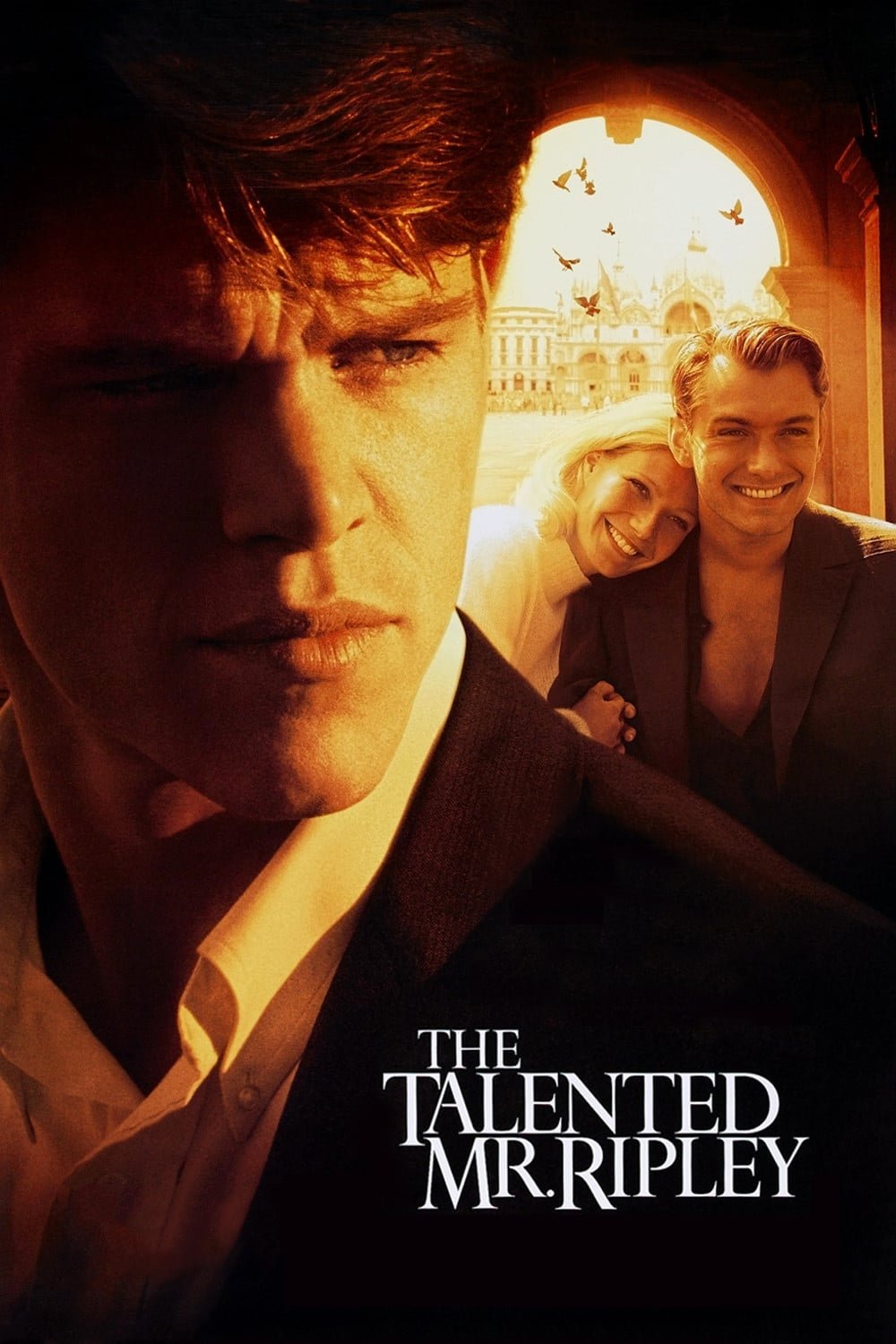
James Rebhorn, who plays Dickie's dad, is named an all-time that guy, with both called all-timers. — Bill Simmons
His credits are listed: a film transcribed as 'incentive of a woman' (also with Hoffman), My Cousin Vinny and Basic Instinct back to back, Carlito's Way, White Squall, a psychiatrist in Basic Instinct, and the dad on Homeland.
Rebhorn is called the G.D. Spradlin of his generation, who would have played Senator Geary in the 70s; a that-guy pyramid is proposed with Joe Panelliano (as transcribed) as the overlord for his 80s run. — Bill Simmons
Rebhorn's character hating jazz, paying a player $100 to stop, is liked; his hatred of Europe is explained as post-war American snobbery, with a Brexit joke.
Flagged as material for the aged-best category: the big-picture theme of a super-wealthy culture others aspire to, which Ripley infiltrates through the father's errand and then kills to avoid leaving. — Bill Simmons
Peak Blanchett and peak Paltrow are offered; one participant refines it to the young versions of them, caught at the perfect time of their careers. — Amanda Dobbins
Italy, with an exclamation point: the production value is sumptuous and makes you want to be part of it, at least for the first two-thirds, and to visit; this is offered as a reason a host's wife likes the film.
The film's town, transcribed 'Mangabello', does not exist, but Positano does, prompting a joke about a live Rewatchables there. — Bill Simmons
The 'Tom is talented, Tom is tender' sequence ending with 'Tom, you're crushing me' is praised; the camera cuts to Tom's room while the dialogue continues, and the hosts debate whether he strangles Peter from behind with a belt or a bear hug.
Scammer season: the film applies to recent events and the obsession with surfaces, from Anna Delvey to Instagram people trying to get closer to wealth they cannot access; a reference to Hathaway being scammed by an Italian comes up in passing. — Amanda Dobbins
Italy is named again as aging well with thousands of years of history; a wish is voiced to have seen Rome in the 1950s before mass tourism, with a joke about the year 1000 versus 1400. — Sean Fennessey
Rome is praised for history on the street and pasta, though a recent summer trip was crowded, hot and smelly; the Italian Mediterranean coast is called an A plus experience. — Amanda Dobbins
A participant's honeymoon theme was this movie without the murder, joking that the husband threw in one murder that was covered up. — Amanda Dobbins
John Ashton, Marvin here and Rosewood's partner in Beverly Hills Cop, with Cop 2 one of the great heat checks, would win going away in any other movie; it is a mystery why he never had a bigger career or a Fox cop drama, since he could easily have been the Dennis Franz character in NYPD Blue.
Yafet Kodo (as transcribed), the FBI agent whose identity De Niro steals, is in maybe fifteen minutes yet hits seven threes on presence alone, and carried it over to network TV.
Joe Pantoliano, who has his own award on the show, was in the stretch where he stopped being that guy, after Risky Business, Running Scared and Eddie and the Cruisers, and became Joe Pantoliano here, dyed hair and all; by the strict letter of the Dion Waiters law one host gives it to Pantoliano for making the most of his opportunity.
The other host goes Farina, who is in about five scenes, all filmed in Vegas because he was doing Crime Story, and is completely over the top in a baggy gray-and-black sweater; they agree to disagree, and his threats about the pencil, the cream soda and burying the telephone in his lawyer Sydney's head are recited.
Farina's best work is argued over: his mob boss Lombard in the first Miami Vice season, which led to Crime Story and typecasting as cop or mob boss after eighteen real years as a Chicago cop; Manhunter as Will Petersen's boss (preferred over the Bronx Tale performance of the actor transcribed as 'Chaz Pimentary'); and Out of Sight as Jennifer Lopez's father.
More favorites: Philip Baker Hall as Sherwood, the handwriting specialist who starts drinking a little; Clea Duvall, with a great heat-check scene; John Goetz (as transcribed), from Blood Simple, as the Chronicle editor; and Anthony Edwards, fantastic and unexpected.
One pick gives the award specifically to Cox, with the Melvin Belli phone-call clip played, 'Is there something I can call you that's a little less ominous?', for making the most of his few moments, the television interview, the sincere attempt to offer the caller a lifeline, and the way he physically takes the incredible screaming sound.
Jimmy Simpson (as transcribed), who plays the shooting victim at the start and returns at the end, prompts a detail: the character is Mike Mageau, and when the name is reported over the Vallejo PD wire it is said aloud in the newsroom as 'Mayhew', so the film intentionally misleads in a way that was probably true to how it was said, an obsessive Fincherism; James LeGroix (as transcribed) is good and weird, and Zach Granier (as transcribed), the boss in Fight Club, runs the Vallejo police department.
A second pick is Elias Codius (as transcribed) as Detective Mullinax (as transcribed), a great real name: a that-guy who can shoot when given the ball, known to the hosts' generation as Casey from Teenage Mutant Ninja Turtles, a guy who looks like a cop and rarely gets a stage this large, and a great serial killer in Fallen with Denzel Washington, directed by Gregory Hoblitz (as transcribed).
Asked directly for a winner, a third pick is John Carroll Lynch as Arthur Lee Allen, with the 'Nobody calls me Arthur' clip: the role basically made the second half of his career, he directed the last film starring Harry Dean Stan (as transcribed) this year, and he is a well-known theater actor remembered as Norm in bed with Francis McNormand (as transcribed) at the end of Fargo.
Asked whether the film still works with a huge star like Anthony Hopkins as Arthur, the answer is not as well: it has to be a face whose physical presence unsettles because you feel you could have seen him without knowing why, since viewers bring previous films into the room and would read a famous actor as an important part; the misdirect succeeds because the only place to remember Lynch is Fargo, where Norm is a completely different, friendly disposition.
Later, the Ioni Sky (as transcribed) roadside scene is called another Dion Waiters performance and the hardest scene for one host to watch.