‹ All people

Referenced person

Dion Waiters

Also referred to as DN waiters, DN Waiters

Stats

Episodes featuring their films
0
Movies in this archive
0

Rewatchables episodes featuring Dion Waiters’s films

No episode credits in the archive yet.

No episodes found

Mentioned in discussions

In the discussion (2)
Approx. transcript time · 00:56:13Read transcript
  • The overacting award clearly goes to Luther, who is going for it, with the convenience-store 'for one!' exchange cited.
  • During aged best, the hosts already know Luther will win the Saul Rubinick (as transcribed) award for going for it; during the heat check he is given it so Cyrus can take Dion Waiters.
In the discussion (2)
Approx. transcript time · 00:50:46Read transcript
  • Cyrus has to be the heat check, on screen for about four minutes in one of the great heat checks ever; cases are also made for Ajax and Luther, narrowing to Cyrus and Luther.
  • The two are split across awards: Luther takes the Saul Rubinick (as transcribed) and Cyrus, who plays eight minutes and hits seven threes, gets Dion Waiters, with agreement.
The Fast and the Furious

Most Rewatchable Scene

Dom's post-race 'you almost had me' speech to Brian; Dom's 'quarter mile at a time' speech

In the discussion (10)
Approx. transcript time · 00:16:04Read transcript
  • The plot is summed up as truck heists that Paul Walker's undercover cop first pins on Dom's crew, then on Johnny Tran's, with a twenty-second fake-out on Hector's crew, before circling back to Dom once he has shared a Corona with Vin Diesel; the movie is described as centered on rewatchable scenes with recovery stretches between them.
  • Nominees: the first big street race; Dom's quarter-mile-at-a-time speech about his background, with special recognition owed to whoever wrote real dramatic acting for Vin Diesel; his flipping out at the street race when Johnny Tran accuses him of selling him out, with the line 'I never knocked on nobody'; the aborted truck hijacking with Vince dangling from the car; and the last ten minutes.
  • One host's most-rewound scene, after ten to fifteen viewings now that it is on Netflix, is the speech after the first race rather than the one in the garage: Dom putting on a show for the crowd, arms out, jibbing and jabbing at Brian to learn what he is made of while letting him know who runs things, the most we see of what Vin Diesel can do as an actor; the clip with 'Granny shifting, not double-clutching like you should' and 'Winning's winning' is played and becomes the sixth nominee.
  • Vin Diesel, like The Rock, belongs to everybody because he checks every box; this was the first big-budget action movie where representation felt like a big part of it, with Ja Rule, the Johnny Tran gang and Hector, and that diversity, mirrored in the theater audience, is credited as a reason the franchise became so huge, even though nobody can pin down his background.
  • Dom is written with a core and a code rather than as an emotionless tough guy: you don't tell on people, you take care of your family and your car; the hosts run the action-lead lineage from Clint Eastwood and Charles Bronson through Stallone, Schwarzenegger, Swayze and Nick Cage and note the leads were almost always white, with Wesley Snipes, Eddie Murphy and Carl Weathers the rare exceptions.
  • The eighties were the steroids era, with Stallone and Schwarzenegger making nineteen action movies between them, then Die Hard and Roadhouse moved to smaller guys with a philosophy degree; Vin in this role was the first big guy doing the philosophical stuff, able to give the speech about watching his dad die and also body slam The Rock, and his height remains amorphous, somewhere between 5'4 and 6'4.
  • Vin Diesel also has the unintentional comedy Schwarzenegger and Stallone had, where imitating the voice or the walk is funny; one host enjoys making fun of how he drank a Corona and calls the acting good but also terrible, which the other rejects outright.
  • The defense is that he is so committed he might believe the Fast and the Furious is real and Dominic Toretto's family is his; both enjoy his weird run with the arms held low, ranked with the girl in Taken among the weirdest runs in recent action movies, though he is reportedly very coordinated and a former background dancer.
  • Polled, one host goes with the post-race speech because it shows both Brian and Dom doing their stuff, Brian remarkably charming and peacocking with a little Dion Waiters irrational confidence; a clarification follows that Paul Walker is considered a good actor while Vin Diesel's acting is enjoyed without being called good.
  • The other host's favorite is the quarter-mile-at-a-time speech, remembered from the theater as unclear whether it was serious yet amazing; it is recited, called really touching, and the host always sticks around for it when it is on TV.
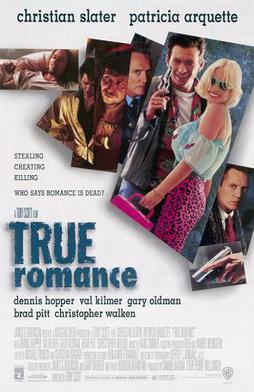
True Romance The Rewatchables
In the discussion (11)
Approx. transcript time · 01:00:29Read transcript
  • There are individually probably five Dion Waiters winners, like an Oscar category where every nominee could win; Val Kilmer cannot crack the top five and sits sixth; his Elvis is fine, and his 1993 of The Real McCoy, Tombstone with the all-time Doc Holliday, and this is incredible; a Doors episode is offered to Chris Iron (as transcribed) whenever he is ready.
  • The field: Gary Oldman's Drexel, the white pimp who thinks he is black; Brad Pitt's Floyd, so great it spawned Pineapple Express; Christopher Walken pulling off a Sicilian; Gandolfini as the most evil hitman; Hopper counts with only two scenes; and a surprise entry, Saul Rubinek; Pinchot is left out for having too big a part, and Kilmer (as transcribed: 'Kim') and Rappaport are in too many scenes.
  • A Pinchot tangent: he got the script finishing Perfect Strangers, was Serge in both Beverly Hills Cop films, the roller coaster scene was shot over two days with the cast throwing up or sedated, and his run from Risky Business through Perfect Strangers to this is not bad; he became a punching bag unfairly, like Andrew McCarthy, light comic actors who could star in 1989 but not 1999; the elevator scene with Sizemore and Penn bluffing Elliot is great.
  • A Walken question: his only two Tarantino scenes are the watch speech in Pulp Fiction and this one, which is nuts; a Pulp Fiction episode would spend thirty minutes on the watch speech.
  • Rubinek is shouted out for a Joel Silver impersonation at the height of Joel Silver on cocaine, doing the most with the least while Oldman, Gandolfini and Pitt had a lot to work with in their parts, smoking and driving on the PCH asking Elliot why he is calling on a Sunday.
  • Cannot really decide for the first time; it is something between Pitt, Rubinek or Walken, and Oldman is loved too. — Chris Ryan
  • Oldman is in three scenes and out of control and might have the line of the movie with white boy day; one host has Saul Rubinek in a walk because he has never done anything else, which is where another wanted to go; all the other characters' actors went on to Oscars and Emmys, while Rubinek's highlight reel starts here.
  • Rubinek did not know he was doing Joel Silver; the character is written as just a producer and Tony Scott, who hated Silver, made him Silver, so Scott gets a lot of credit for molding the performance; it probably hurt Rubinek's career.
  • Rubinek is the eleventh man who should not be able to score twenty points in seven minutes, the definition of the award; favorite moments are the taunt about knowing Elliot's name, the Body Bags 2 taste line and the 357,000 dollars someone is stealing; he was 20 to 1 heading in with Oldman applauding in the stands, Twitter expected Floyd or Drexel, but watched closely Rubinek is the correct winner.
  • Earlier the cast is called the best Dion Waiters field the show has had, better than Heat, with Sam Jackson, Val Kilmer, Gary Oldman and Saul Rubinek in five-minutes-or-less performances; it is self-aware, actors knowing they have six pages and lighting them on fire, which Craig the producer, seeing it for the first time, noticed.
  • During aged best, the Lee Donowitz discussion is saved for a fascinating Dion Waiters argument.
True Romance The Rewatchables
In the discussion (2)
Approx. transcript time · 00:57:21Read transcript
  • Two candidates: Ed Lauder (as transcribed), Eddie Albert's sidekick quarterback in The Longest Yard, the head coach in Youngblood, in a hundred sports movies, the bald lieutenant type of the seventies and eighties and the lieutenant here; and Saul Rubinek, whose name people do not know though they know him from things, with the 'I treated you like a son' tirade quoted; he is not Mandy Patankin (as transcribed), he is a that guy, and he wins.
  • This is the iconic Saul Rubinek performance to end all his performances, so it goes in Joey Pants while he stays eligible for Dion Waiters; two more are thrown out, Victor Argo as one of Walken's men and Conchata Farrell (as transcribed) as the casting agent at Michael Rappaport's audition, with the 'thanks so much, Mr. Ritchie' brush-off.
True Romance The Rewatchables
True Romance

What’s Aged the Best?

The way the film looks; the dialogue; Gandolfini

In the discussion (10)
Approx. transcript time · 00:33:33Read transcript
  • Young Gandolfini: he is basically auditioning for Tony Soprano, and this and his Get Shorty role (transcribed 'bare') are the two poles of that character, sweet, charming, evil, menacing and violent; the film was one of the first DVDs a host bought, so he was always the guy from this movie.
  • Floyd, who gives the directions down Beachwood to the Beverly Ambassador, was an A++ in the nineties and the DVD era, a spirit animal for anyone getting baked at two in the morning; the whole idea of Pineapple Express came from Judd Apatow and company loving Floyd and asking what would have happened if he chased the Italians.
  • Unlike Tom Cruise in Tropic Thunder working to go viral, Pitt just lies on the couch with a couple of improv lines; the Floyd stuff is largely improvised, as are Hopper's eggplant and Walken's cantaloupe lines; Floyd is the most important character because he gets everyone together for the shootout, and 'don't condescend me' is a favorite line.
  • Brad Pitt has an alternate path as one of the great character actors, fifteen non-essential but memorable parts up through Burn After Reading, but he was so handsome he had to be a leading man; Seven is a character he put thought into before material started being created for him; the Tarantino relationship continues through Inglourious Bastards and the coming Once Upon a Time in Hollywood.
  • Dennis Hopper is so likable that even the Speed villain was hard to root against; the Clarence-Clifford scene is economical writing, 'you're just like your mother', three years apart, a recovering alcoholic who only has a Seven Up, telling you why Clarence would throw it all away; two lines are lifted, 'you're just like your mother' from Hopper's own line in Rumblefish and the beer line from The Last Picture Show.
  • Pre-internet, movie quotes and pulling from the past mattered more; a host's column threw in movie lines because that is how he and his friends connected, and Twitter gifs have given it a renaissance.
  • Sizemore and Penn together are the twelve-episode Fox cop show we never got; the hosts saw a Reitman live read at the Ace Hotel with Slater and Arquette, the Duplass brothers as the cops, J.K. Simmons as the estranged father, Kevin Pollack as Walken's part, Jon Favreau as Gandolfini's, Keegan-Michael Key and Paul Scheer as Drexel and Elliot Blitzer, May Whitman in several parts and Jason Segel as Floyd.
  • Coming Home in a Body Bag is funny right on the heels of forty Vietnam movies; Saul Rubinek's Lee Donowitz as Joel Silver, Bronson Pinchot as his assistant, Boris the bodyguard who hates cops, and Dick Ritchie constantly asking whether the producer knows he is an actor; Donowitz is one of a host's favorite movie characters, saved for the Dion Waiters argument.
  • The Hans Zimmer score is distinct and gives the movie levity; according to a host it is based on a composition from the 1500s by Carl Orff that Terrence Malick used in Badlands, which Zimmer redoes as an homage, and Arquette's opening voiceover mimics the Badlands voiceover; the film pulls the best parts of other things.
  • Asked for a single best out of all of it, one goes with the way it looks, the peak of Tony Scott's neon vision of urban America; another is still responding to the dialogue, over the top and offensive on purpose because it is pulp; a third says Gandolfini, like watching Michael Jordan at North Carolina.
In the discussion (3)
Approx. transcript time · 00:49:44Read transcript
  • Everyone was written down, but the pick is Rictus, with the 'I had a baby brother, he's perfect in every way' reading recalled as so good; the wives in the back seat after Rosie Huntington Whitley's character dies are also cited, where the direction could only have been to act really sad.
  • Rictus Erectus is played by Nathan Jones, named earlier among the Dion Waiters nominations as really going for it.
  • A further nomination, offered without full conviction: the moment late in the film when the Gastown general runs over the sniper Vuvillini and makes a strange face that is the visual representation of 'they knew', first misattributed to the Bullet Farmer, who had been blinded; the same character is regularly touching his nipples throughout his screen time, prompting the remark that Bill should have been on this podcast.
In the discussion (4)
Approx. transcript time · 00:32:43Read transcript
  • Recommendations: Nathan Jones as Rictus Erectus, who was really going for it with expert line readings; Zoe Kravitz in a flex performance before the hosts had much of a relationship to her; and Hugh Keaton's Keysburn (as transcribed) as Immortan Joe.
  • The pick is the Doof Warrior, played by iOTA (transcribed 'Oda'), described as a musician, writer and painter from New Zealand who apparently beat Hugh Jackman for a Tony Award; in a landscape of dust, brown, chrome, neutral colours and monotone voices he wears a red pajama suit and plays a flaming double-neck guitar, impossible not to look at, and wakes from a hammock of guitar straps straight into his riff like G.E. Smith coming out of a commercial break.
  • In a Noisy (as transcribed) interview iOTA described being strapped into the harness for eight hours after six-a.m. makeup, noodling ACDC songs to himself and eventually banging out nonsensical riffs because staying animated mattered most; the thinking behind the character is left as a question: is it that an announcement of destruction was needed?
  • Though also nominated as what aged the worst for its wasteful nu-metal excess, the Doof Warrior is loved, and the Dion Waiters Award goes to the Doof Warrior.
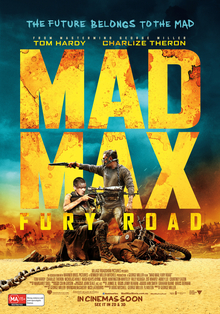
Mad Max: Fury Road

What’s Aged the Worst?

Nothing substantial after three years; Immortan Joe's unclear plan; the Doof Warrior's nu-metal act

In the discussion (6)
Approx. transcript time · 00:22:15Read transcript
  • Only three years old, the film has none of the usual aging problems, nothing like relitigating the comedy of Wedding Crashers; the action sequences are perfect as they were, and the casting, direction and look all hold up.
  • Flagged as more of a nitpick: what was Immortan Joe's plan? He pursues his five or six wives, who exist to help him produce one healthy son, and the question is why he must marshal the whole Citadel for a wild goose chase rather than turn to other women, and whether he is just an avatar of avarice with no logical motivation.
  • A Helen of Troy defence: Joe's so-called brothers are really allied generals, war-mad enough to go fire bullets into the desert over a family squabble; the women pumping mother's milk look past their prime, so these wives are his shot at a male heir who is not Rictus or the man with the telescope.
  • Whether Rictus could lead the Citadel is doubted, since all he does is guzzle breast milk and fire a Gatling gun with no Tony La Russa-level strategy; the hosts perform his 'I had a baby brother' line readings, joke about doing them in the office over blog posts, and one voice answers that Rictus does not realise he is being passed over and does not understand much.
  • Legacy matters to Joe because, with little recorded history or stability, evil royal families have always cared most about continuing their reign through a male heir; the same primal urge to live beyond one's natural life explains podcasts, writing and books, which leads to the joke of what Immortan Joe's podcast would be called, answered with 'The Immortan Joe Budden podcast'.
  • The Doof Warrior, despite winning the Dion Waiters Award, is also nominated as what aged the worst: rock is dead, the Slipknot-style nu-metal is dead, and in a world where energy is scarce and people drink breast milk, two mountainous stacks of 100-watt amps are the most wasteful and ridiculous part of the movie, though still loved; it is odd that English barely survives the wasteland while drop-D guitar and late-aughts metal do.
In the discussion (6)
Approx. transcript time · 00:46:22Read transcript
  • There may never have been more candidates, with Heat the only comparison; the field is Dennis Farina as Serrano, John Ashton, Yafet Kodo (as transcribed), Joe Pantoliano and Philip Baker Hall as Farina's lawyer.
  • John Ashton, Marvin here and Rosewood's partner in Beverly Hills Cop, with Cop 2 one of the great heat checks, would win going away in any other movie; it is a mystery why he never had a bigger career or a Fox cop drama, since he could easily have been the Dennis Franz character in NYPD Blue.
  • Yafet Kodo (as transcribed), the FBI agent whose identity De Niro steals, is in maybe fifteen minutes yet hits seven threes on presence alone, and carried it over to network TV.
  • Joe Pantoliano, who has his own award on the show, was in the stretch where he stopped being that guy, after Risky Business, Running Scared and Eddie and the Cruisers, and became Joe Pantoliano here, dyed hair and all; by the strict letter of the Dion Waiters law one host gives it to Pantoliano for making the most of his opportunity.
  • The other host goes Farina, who is in about five scenes, all filmed in Vegas because he was doing Crime Story, and is completely over the top in a baggy gray-and-black sweater; they agree to disagree, and his threats about the pencil, the cream soda and burying the telephone in his lawyer Sydney's head are recited.
  • Farina's best work is argued over: his mob boss Lombard in the first Miami Vice season, which led to Crime Story and typecasting as cop or mob boss after eighteen real years as a Chicago cop; Manhunter as Will Petersen's boss (preferred over the Bronx Tale performance of the actor transcribed as 'Chaz Pimentary'); and Out of Sight as Jennifer Lopez's father.
In the discussion (7)
Approx. transcript time · 00:32:26Read transcript
  • Nominees are Snoop Dogg in a wheelchair, Eva Mendes in a rookie performance and Tom Berenger, with Smiley and Bone added as the other two heat check performances.
  • Tom Berenger looks exactly like this host's father, which is disorienting, so Berenger from Training Day to Inception is like watching that father in a movie; Berenger also plays a narcotics cop here, which the father is. — Sean Fennessey
  • Berenger was a massive star for about six years after The Big Chill and Platoon, shows up as the Marine recruiting Cruise in Born on the Fourth of July, and Someone to Watch Over Me, with Mimi Rogers, is slated for year seven of the show.
  • Scott Glenn is ruled out as a Dion Waiters candidate because he is coming up in a different category and one host is not allowed to talk about him yet, though when asked for a heat check a voice still answers Scott Glenn.
  • Snoop, by all accounts, should have been bad and Snoop in a wheelchair should have been one of the biggest movie disasters, but his crack-corner lines are recited admiringly as really good Snoop stuff; a nomination for Harris Ewan (as transcribed) is held for another new category.
  • Bone was played by Klee Shahid Sloan (as transcribed), an activist and documentary director who worked to reform gang culture from inside the Athens Park Bloods, part of how much Fuqua worked within L.A. gang culture to make the movie authentic.
  • One host gives it to Cliff Curtis for Smiley, now on Fear the Walking Dead and great in Danny Boyle's Sunshine: Smiley did not have to be so interesting, making you feel it will be okay with menace underneath and the tattoos; another concedes Smiley is great but gives it to Snoop Dogg because it was so unexpected.
In the discussion (2)
Approx. transcript time · 01:09:45Read transcript
  • The overacting award goes to Dennis O'Hare for the Greer scene, especially all the lines about the guy jogging in the middle of the street at midnight, well deserved for how over the top he goes.
  • Flagged earlier during the Dion Waiters discussion as getting a different award.
Displaying discussions 73 - 84 of 92 in total