Film credit
David Patrick Kelly
Also referred to as Luther, Luthor
Stats
- Episodes featuring their films
- 3
- Movies in this archive
- 3
Episodes featuring David Patrick Kelly’s films
The Rewatchables
Mentioned in discussions


Recasting Couch
Melanie Griffith as Bianca; multiple Vukovich alternatives
In the discussion (4)
- Gary Sinise’s reported audition and recommendation of Petersen inform recasting alternatives: Sinise, Andy Garcia and John Malkovich, with Garcia considered too handsome and Pankow’s chase acting defended. — Bill Simmons
- Further Vukovich alternatives include Kelsey Grammer, Jeff Goldblum, Stanley Tucci, Will Patton, Michael Biehn and Bill Paxton, with age, height and attractiveness qualifications; Malkovich remains favored by one participant.
- Bianca recasting candidates include Melanie Griffith, Rosanna Arquette, Jennifer Jason Leigh, Kelly McGillis and Daryl Hannah; dance credibility matters and Griffith is favored.
- More Vukovich recasts are David Patrick Kelly, Michael Madsen, James Remar, J. T. Walsh and John Heard, with Madsen considered too handsome.


The Joey Pants “That Guy” Award
David Patrick Kelly; Toby Leonard Moore alternative
In the discussion (3)
- Reddick, Peters, Palicki and Winters are considered too identifiable by name for the category. — Bill Simmons
- David Patrick Kelly as the cleaner is favored over the son’s actor. — Bill Simmons
- Toby Leonard Moore is raised as a potentially better recent that-guy choice.
Half-Assed Internet Research
Filming locations; the dangling-stunt refusal; the cut love scene; Sunbeam Alpine; body count of 109
In the discussion (8)
- The mall was the Sherman Oaks mall, which still exists; the Val Verde island is San Nicolas Island ('Nicholas' in the transcript) off Santa Barbara; the climax compound is the Harold Lloyd Estate in Beverly Hills. — Bill Simmons
- The same house hosted Beverly Hills Cop's final shootout a year earlier. — Bill Simmons
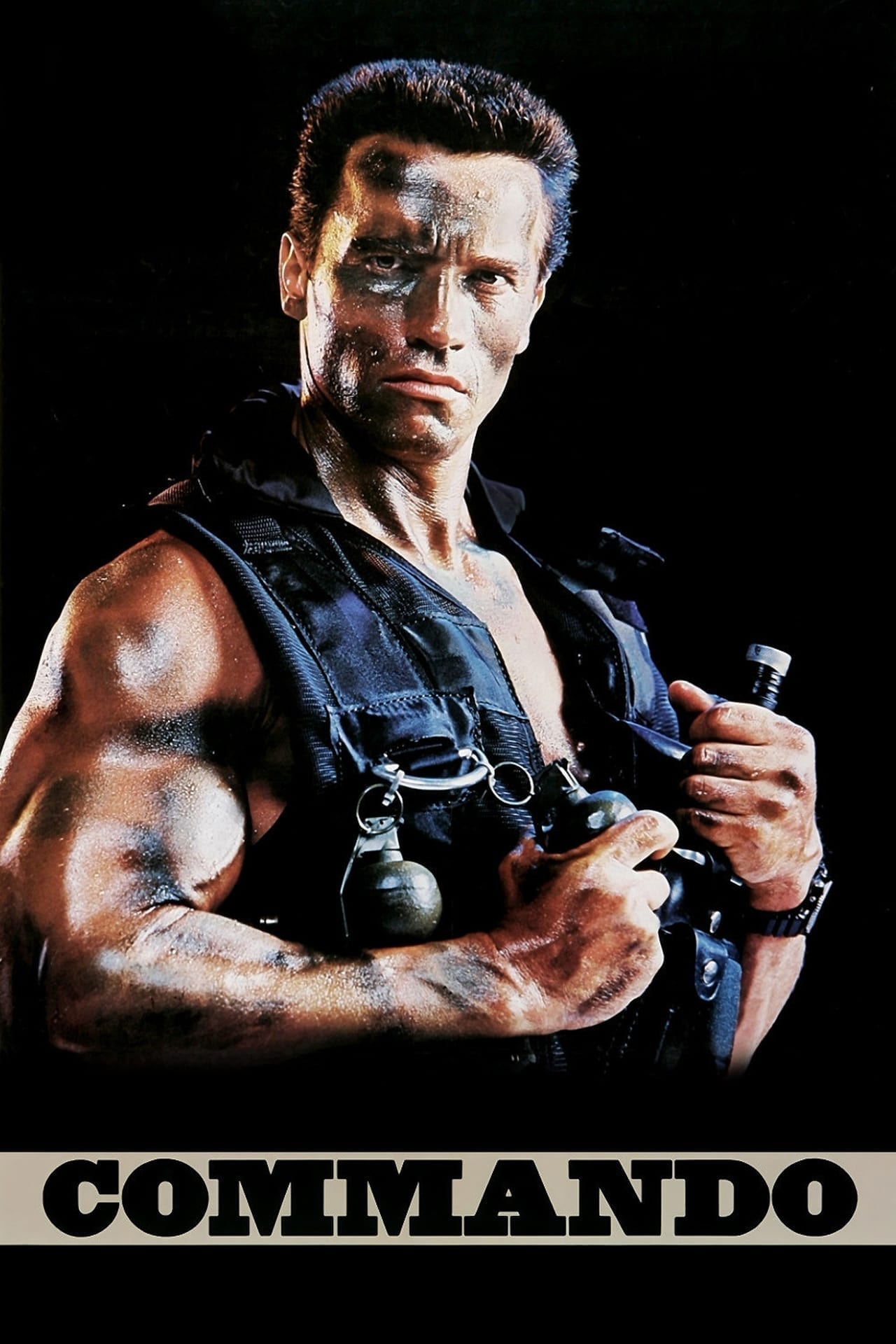
- Mark Lester wanted Arnold to dangle David Patrick Kelly over the edge unaided; Arnold refused and a crane was used. — Bill Simmons
- One account says the love scene was shot and cut; it was reportedly meant for the amphibious plane, which makes no sense with a knife at his daughter's throat. — Bill Simmons
- Rae Dawn Chong's wrecked red car is a Sunbeam Alpine, a 1960s British sports car. — Bill Simmons
- The body-count guess is 206. — Shea Serrano
- Other guesses are 185 and 85; the official count is 109, with 102 killed by Arnold and seven by others. — Bill Simmons
- It is likely the most deaths in an Arnold movie; 300 is cited as a film where about 300 die. — Shea Serrano
In the discussion (4)
- The category is framed as having two winners, something not normally done in this category. — Bill Simmons
- Vernon Wells, who played Bennett and is remembered from Weird Science, is named first, but is later said not to have won the Joey Pants Award. — Bill Simmons
- David Patrick Kelly is one of the best ever in the category, known as the Warriors gang leader and Luther in 48 Hours, and seen in The Crow, Crooklyn and John Wick; the award is given to him. — Bill Simmons
- The flight attendant who says the flight will take exactly 11 hours is another candidate: she played Bruce Willis's wife in The Last Boy Scout and Teela ('Tila' in the transcript) in the Dolph Lundgren He-Man movie, but nobody could recall her name. — Kyle Brandt


Who Won the Movie?
Walter Hill; Luther; New York
In the discussion (5)
- Walter Hill, the director, is one pick for creating the prototype for the action movies that followed; another host did not know his name until this podcast.
- Swan is praised as a sweetheart taking care of his people, smart and willing to turn it up when challenged by the Orphans, but another host does not think he won the movie.
- Luther clearly won for one host as the one character everybody knows, whose 'Warriors' prompts the next four words; a case is made for Cyrus and for Dwayne The Rock Johnson for ripping off Cyrus's bit on WWE.
- New York is another vote: cinematographer Andrew Laszlo's story about fearing rain led to an early rain sequence and wetting the streets every night, giving the neon a post-rain shimmer that makes the city a dingy crystal palace, seen across more of the city than Serpico or Dog Day Afternoon.
- The wet-street trick was also a Miami Vice season one signature that many have since copied, and The Warriors may have started it.
Podcast choices
- Speaker not identified
- Walter Hill
- Speaker not identified
- Luther
- Speaker not identified
- New York
In the discussion (5)
- Which gangs were too weak to be invited was already covered; whether a DJ communicating in code to gangs would have worked in 1979 or whether the police would have simply listened is asked, with the defense that it is underground and nobody talks.
- The DJ is the most clever part of the movie for solving how to reach everyone at once, and the shot of Lynn Thinkpen's (as transcribed) mouth against pink-red light dropping the needle is slick.
- How long Swan and Mercy stayed together: maybe a week, tops, since Coney is far, and he needed to see her after a shower.
- Ajax is probably dead within three years, going to jail and then shot in an armed robbery; the alternative where he grows up to be the rich guy from Sex and the City is enjoyed.
- Later, whether the Riffs killed Luther at the end is called an unanswerable question; one host thinks they killed him slowly over many days in that dark cement parking garage compound.
Picking Nits
The Orphans fold after one Molotov cocktail; no police after the Union Station death; the Lizzies' shooter misses everyone; the Turnbull ACs drive past instead of running them over; where Luther's bullet went; Luther's reaction to a knife in the hand; nobody could hear Cyrus; the Orphans' dirty faces; cops arrive too fast for the whistle; Ajax's hormones; nobody has a car; where are the other Warriors; the Warriors are not the best
In the discussion (11)
- The Molotov cocktail routs the Orphans, showing why they are a bottom-tier gang not invited to the party; the lack of police or ambulances after a Warrior dies at Union Station (as transcribed) is repeated.
- The Lizzies have the Warriors in a confined room, fire about nineteen shots and miss everybody; the gangs are terrible with missed opportunities, and the Turnbull ACs should have run them over instead of driving past.
- When Swan's knife hits Luther as he fires, there are three people behind him and nobody is hit, raising where the bullet went, like a magic JFK bullet; Luther reacts to a knife in the hand as if dying, and the Rogues freeze rather than use their numbers, perhaps because nobody liked him; he is a bad leader picked for his chin.
- Nobody could hear Cyrus outdoors to 900 gang members without a baso profundo or Sonos beams; the Orphans' dirty faces and jersey-style shirts raise whether they are actual orphans.
- The cops arrive in a minute and a half after the undercover cop handcuffs Ajax and blows her whistle; Ajax misplayed a race home by letting his hormones take over.
- A Texan perspective: nobody in the gang has one friend with a car or makes one phone call; the nine delegates per gang suggests Terry Rozier and Jalen Brown (as transcribed) style tension over minutes, and the tenth guy might have had a car.
- Where are the other Warriors, since Cyrus's math implies a hundred members per gang; nobody is waiting at Coney and nobody calls for backup, and other gangs never go to Coney Island to finish them, compared to what Michael Corleone did between 1946 and 1951.
- The Warriors are not the best when several of them die, though they did fight 28 miles from the Bronx to Coney Island; the Riffs are clearly the best, and the Furies with nine guys made a complete strategy error.
- Earlier, the subway stops seem mostly correct but the jump from 96th and Broadway to Central Park and the unknown timing of the summit and the arrival at Coney Island are flagged for picking nits.
- During the scene discussion, how the Furies lose a nine-against-three fight with bats is raised and parked for picking nits.
- Another nitpick during the gang rundown: the Rogues pass the gun down the line instead of having it ready, which is read as dramatic effect or as Luther deciding on a whim while Cyrus spoke.

In the discussion (2)
- The overacting award clearly goes to Luther, who is going for it, with the convenience-store 'for one!' exchange cited.
- During aged best, the hosts already know Luther will win the Saul Rubinick (as transcribed) award for going for it; during the heat check he is given it so Cyrus can take Dion Waiters.

In the discussion (2)
- Cyrus has to be the heat check, on screen for about four minutes in one of the great heat checks ever; cases are also made for Ajax and Luther, narrowing to Cyrus and Luther.
- The two are split across awards: Luther takes the Saul Rubinick (as transcribed) and Cyrus, who plays eight minutes and hits seven threes, gets Dion Waiters, with agreement.

In the discussion (12)
- Cleon, the original warlord who is killed after the Rogue in the leopard-print headpiece blames the Warriors, has more scenes in the uncut version; he dies under a pile of elbows from 25 guys, flicks Luther off him with an amazing move, and a Cleon prequel about the rise of the Warriors is wished for; the jackets and shirtless vests also hold up.
- A vest with no shirt is never a win unless you are a professional wrestler. — Sean Fennessey
- Others disagree about the vest, one joking about wearing a leather vest with sunscreen and phone pockets to the beach before admitting it is not serious; the vest is the part connected to most because of the Orphans scene, where Mercy goads the Orphans into demanding the Warriors remove their colors, which recalls the cuts in Sons of Anarchy that you die before taking off.
- Central Park in seventies movies is creepy, empty and dangerous; Luther, the leader of the Rogues, is an over-the-top villain going for it, loved for having no reason for anything he does beyond 'because we can', and one host's son loves how over the top he is.
- Whether villains need motivation splits the room: one says explaining a villain is a waste of time, citing the Joker, and two disagree and need a reason; Luther was one of only two actors one host recognized, from Commando, with Remar recognized as Raiden from Mortal Kombat 2.
- The actor who plays Luther was purposefully recast by Walter Hill as Luther in 48 Hours, turning on Eddie Murphy's crew, and has been on Twin Peaks and in Spike Lee movies; Walter Hill hit a zone with this film and 48 Hours in how an action movie moves with music.
- Barry DeVorzen's weird-guitar soundtrack has aged well, but ending on a big Joe Walsh song creates cognitive dissonance after a black gang beats the Rogues; in the movie's defense there is no hip hop yet in 1979, though Sugarhill Gang existed, and a hard funk record or Across 110th Street would make more sense.
- The Orphans scene is too long but the one Orphan asleep who missed the meeting is pitied; the gang DJ is a great device for spreading information in coded language before texting and Twitter.
- The seventies prom couple scene is weirdly effective because the film is about guys with no hope fighting all night to get back to the Wonder Wheel, the action-movie version of the end of The Graduate, with the couple looking at Mercy's dirty feet and Swan stopping her from fixing her hair.
- 'You guys are real good, the best' is a precursor to intentionally hokey, iconic moments like Carl Weathers and Schwarzenegger in Predator; the stilted dialogue is a purposeful comic-book, stentorian, Greek-tragedy theatricality, and nobody talks the way people actually talk. — Sean Fennessey
- The world building has aged best for another host: an elaborate gang network with rules and systems that later films such as John Wick's assassin network build on, which is undeniably cool even for a viewer who does not get the Greek-tragedy part.
- Cyrus has aged best: a charismatic figure offering hope whose plan makes no sense if you listen carefully, likened to how Trump got elected and to Obama's 2008 'yes we can', and his death four and a half minutes after meeting him is devastating. — Bill Simmons

Most Rewatchable Scene
Cyrus's speech
In the discussion (16)
- The movie is described as six scenes that are fun to watch over and over with lagging in between; Cyrus's speech is amazing, including the little wooden platform built for him that fell apart when he bumped it, and his 'can you count, suckers?' to 900 juvenile delinquents.
- The production could not afford 900 extras and used real gang members, whose cheering during the speech was genuine; Roger Hill's performance is called all-time, with three lines in the lexicon ('can you count, suckers', 'can you dig it', 'the future is ours if you can count'), and The Rock's late-nineties wrestling persona seemed like a Cyrus impersonation.
- The film had a renaissance around the video game some twenty-plus years later after being on cable for twenty straight years, a rap song sampled 'can you dig it', and like Scarface it was adopted by a later generation; the Craig Mack 'Flava in Ya Ear' video with Puffy saying 'come out and play' is cited, and Scarface's own arc from bust to cable classic is compared.
- Other rewatchable moments: the run to the first train station after Cyrus is shot while the Turnbull ACs cruise around in a school bus with 25 guys and two-by-fours, and the Baseball Furies reveal, Ajax's 'what the fuck is that' as the camera cuts to four dudes in painted faces and baseball uniforms.
- The sprint through Central Park, where they run about a mile and then stop to fight, prompts admiration for the cast's cardio; Michael Beck described on a making-of shooting all night, sleeping six hours and doing two hours in the gym, and this is called one of the most running movies ever, with running in about twelve scenes shot twenty or thirty times.
- One host tells an airport story about a delayed flight in Oregon and a half-mile sprint to a gate that ended after a quarter mile, concluding the Furies would catch them fast.
- An imagined SNL sketch has the gang asking the Furies to wait ninety seconds before fighting; the bathroom battle with the Punks, the roller-skate gang, was reportedly filmed for five days, only one guy had skates, and a tall 6'5 member compared to Miles Plumlee should have done more in the fight.
- 'Warriors, come out to play' was reportedly ad-libbed by David Patrick Kelly with the three bottles, and the hosts wonder why the Golden State Warriors do not use it before games, though the Rogues are an evil gang the team may not want to ride for.
- The ending, where Swan throws the knife into the Rogues' leader and 150 Riffs materialize in silence before 'You warriors are good. We are good. The best', is compared to the tri-lamps (as transcribed) showing up in Revenge of the Nerds; the Gramercy Riffs all know kung fu and have a number two ready to lead right after Cyrus dies.
- A theory that Masai, with the mirrored sunglasses and looking born to lead the Riffs, may have had Cyrus killed while working with the Rogues, which would explain why the Riffs kill Luther at the end without asking questions because he knows they set it up.
- Asked for the most rewatchable scene, the answer is the Cyrus speech, the favorite part and the scene seen most from the movie. — Sean Fennessey
- The asker concedes they have to go with the Cyrus speech; the fight with the Lizzies is held for later and would not totally make the list.
- Another host personally likes the Baseball Furies scene most, for the moment they stop running and ask if they lost them as the Furies come over the hill, with the first Fury called an assassin.
- The Furies' loss is already picked at: a nine-man baseball gang that swings bats all day loses to three after the cowboy goes down; Ajax does the popsicle line and fights one at a time while the others stand around, which is called terrible planning, too much honor, and all gimmick, no substance, more Florida Marlins than Boston Red Sox.
- The Furies' face paint, silence and cleats are questioned; they are read as bad athletes inspired by the 77-78 Yankees, somewhere near Union Square or 96th, and a corny white-guy frat gang from Murray Hill rather than Harlem or the Bronx; the Tyson-Douglas analogy is that everyone has a plan until they get hit, and maybe James Remar as Ajax is simply underrated as a badass.
- Swan's play of cutting around a corner with two guys to double back and catch the out-of-shape Fury and take his bat is called amazing.

Picking Nits
Jack handing over his gun; why Luther left the money in Reggie's car for years; Rosalie vanishes; no manhunt for Gans; the $957 suit; the lost twelve hours; Jack's dates with Annette O'Toole's character; Reggie leaving the hotel for Roman's; the easy return to Billy Bear's apartment; the Roman's girl; the night's timeline
In the discussion (10)
- Jack Cates giving up his gun when Jonathan Banks's cop has been shot but is not dead is not 1982 police procedure, and since these men have already shot cops one more hostage should not be enough; it should be a Mexican standoff.
- Why was Reggie's car in the parking garage so long, and if Luther had the keys why did he wait for Gans to break out of prison instead of taking the money any time, and why does he have the keys at all; Rosalie screams when Luther is shot on the bus and is never seen again, presumably killed, perhaps cut because the movie had been hard enough on women.
- Why there is no bigger manhunt for Gans after he kills two cops, unless it is the early-eighties feel of a city under budget siege; only Cates seems to be on it, and when he phones for messages after parting from Reggie at the subway the station of thirty people is business as usual.
- Whether Reggie's suit would really cost $957, a lot of money then, perhaps a two-thousand-dollar suit adjusted for inflation or even ten thousand; it should have said $457.
- The morning timeline: they wake, Luther crosses the street and gets the car, the chase leads to the subway and a near shootout, Gans and Billy Bear escape, Jack is nearly arrested by cops who do not know he is a cop, and Reggie runs after the money at about 9:30; the next scene is at night, so Reggie is gone ten to twelve hours before he phones from Roman's.
- Is anyone worried that Jack has now lost the cop killers twice and lost the man he sprung for forty-eight hours; Reggie follows Luther to the hotel, eight hours pass, and he turns up at Roman's with a gun he somehow acquired, presumably from a friend.
- The biggest nitpick is Jack making dates with Annette O'Toole's character during a cop-killer investigation, with her complaining that he makes her work too hard at it, which makes her a terrible girlfriend; Reggie leaving the hotel assuming Luther is in for twelve hours instead of hanging outside is an investigative faux pas, and Billy going back to his ex-girlfriend should have been staked out instead of abandoned after thirty seconds.
- A tally of Jack and Reggie's interactions: a fistfight, Reggie coming clean, sleeping in the car without talking, the morning chase, the split, ten hours apart, Roman's, the bus chase and shooting at the bus; then Frank McRae's captain yells and Jack tells him Reggie has more guts than any partner after about ten minutes together and a stream of racial insults, which is movie magic.
- Circling back to Billy Bear's apartment the second time is too easy, and if the girls there were harboring Billy why do they call the cops on Jack and Reggie; most importantly, Olivia Brown's character dances with Reggie once and is immediately ready to go across the street with him, paying since he has no money, until he spots Luther; the evening's clock is debated between 7:30, 8 and 10 with Roman's pumping.
- After the bus crashes and the sheriff yells, there are drinks, Billy Bear, a big fight and Gans shot around two in the morning at a homicide scene, yet Eddie finds the Roman's girl, whose name he may not know, the same night; someone named Zach is asked when San Francisco bars closed in the eighties, and a reconstructed clock from a 7 o'clock Roman's to an 11 o'clock shootout leaves the girl waiting nine hours; a lot of holes.