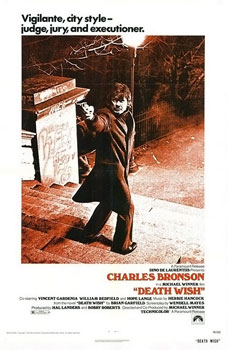
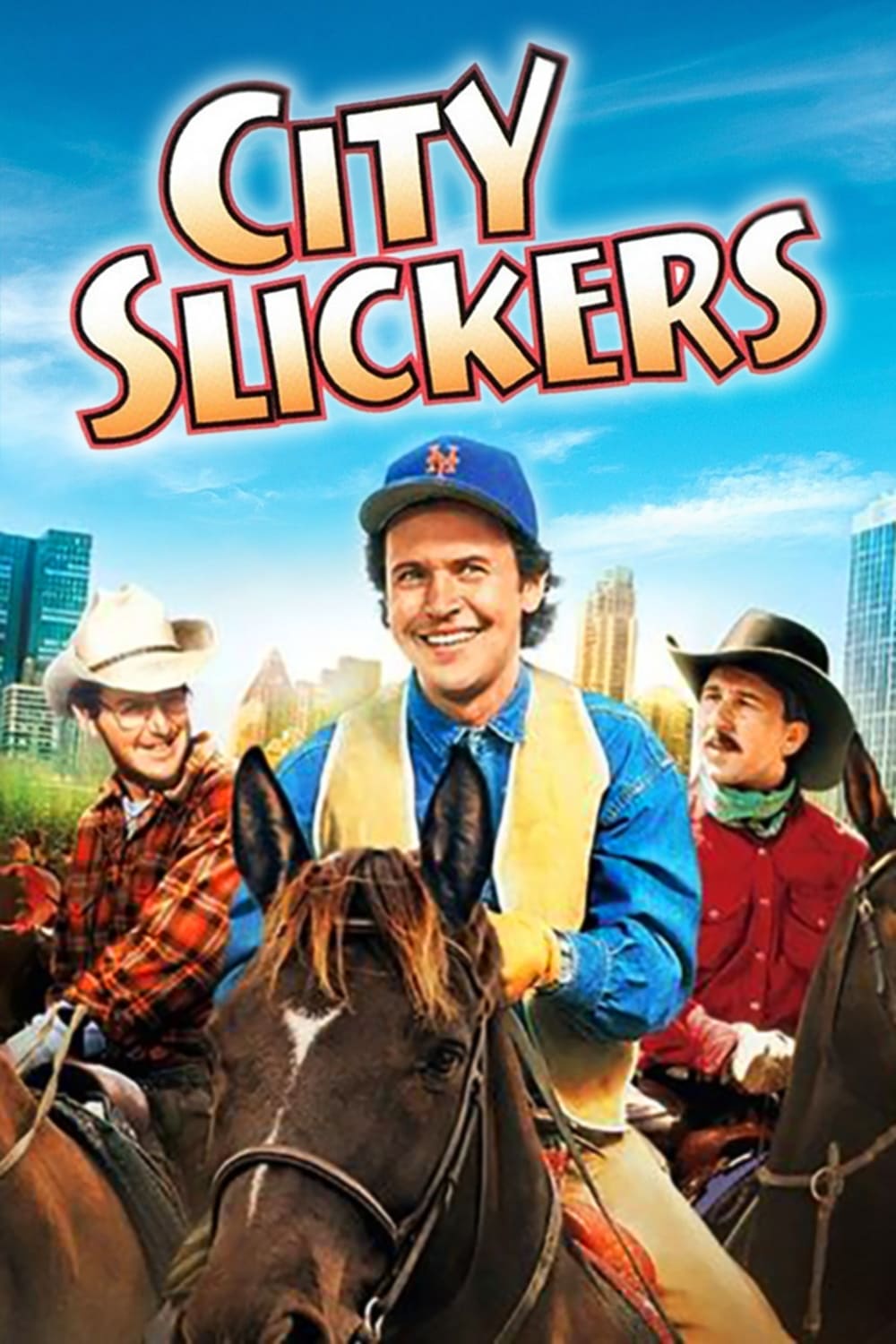
By the account attributed to Crystal, Palance was the first choice but had another film; Charles Bronson was contacted and said no because the character dies; Palance then got out of the other movie.
Crystal's story of Bronson on the phone insisting 'I don't die' is great given the movie turns on Curly dying, Palance won the Oscar, and Palance came back as a twin anyway.
Bronson, younger than Palance but in the same Western-hero space, would have been good. — Chris Ryan
Curly should not have died since the movie falls apart after; alternatives like a broken leg are floated, countered that Ganz and Mandel's rules require testing the main character. — Bill Simmons
Rick Moranis was originally cast as Phil but left because his wife became ill with cancer; Stern was added about three weeks before filming, and Moranis left movies for 25 years, returning in a Honey, I Shrunk the Kids sequel said to be called Shrunk. — Bill Simmons
The performer whose name is transcribed as Season Hubbly was married to Kurt Russell, which is offered as the reason she joined the cast. — Bill Simmons
The plot is summed up as truck heists that Paul Walker's undercover cop first pins on Dom's crew, then on Johnny Tran's, with a twenty-second fake-out on Hector's crew, before circling back to Dom once he has shared a Corona with Vin Diesel; the movie is described as centered on rewatchable scenes with recovery stretches between them.
Nominees: the first big street race; Dom's quarter-mile-at-a-time speech about his background, with special recognition owed to whoever wrote real dramatic acting for Vin Diesel; his flipping out at the street race when Johnny Tran accuses him of selling him out, with the line 'I never knocked on nobody'; the aborted truck hijacking with Vince dangling from the car; and the last ten minutes.
One host's most-rewound scene, after ten to fifteen viewings now that it is on Netflix, is the speech after the first race rather than the one in the garage: Dom putting on a show for the crowd, arms out, jibbing and jabbing at Brian to learn what he is made of while letting him know who runs things, the most we see of what Vin Diesel can do as an actor; the clip with 'Granny shifting, not double-clutching like you should' and 'Winning's winning' is played and becomes the sixth nominee.
Vin Diesel, like The Rock, belongs to everybody because he checks every box; this was the first big-budget action movie where representation felt like a big part of it, with Ja Rule, the Johnny Tran gang and Hector, and that diversity, mirrored in the theater audience, is credited as a reason the franchise became so huge, even though nobody can pin down his background.
Dom is written with a core and a code rather than as an emotionless tough guy: you don't tell on people, you take care of your family and your car; the hosts run the action-lead lineage from Clint Eastwood and Charles Bronson through Stallone, Schwarzenegger, Swayze and Nick Cage and note the leads were almost always white, with Wesley Snipes, Eddie Murphy and Carl Weathers the rare exceptions.
The eighties were the steroids era, with Stallone and Schwarzenegger making nineteen action movies between them, then Die Hard and Roadhouse moved to smaller guys with a philosophy degree; Vin in this role was the first big guy doing the philosophical stuff, able to give the speech about watching his dad die and also body slam The Rock, and his height remains amorphous, somewhere between 5'4 and 6'4.
Vin Diesel also has the unintentional comedy Schwarzenegger and Stallone had, where imitating the voice or the walk is funny; one host enjoys making fun of how he drank a Corona and calls the acting good but also terrible, which the other rejects outright.
The defense is that he is so committed he might believe the Fast and the Furious is real and Dominic Toretto's family is his; both enjoy his weird run with the arms held low, ranked with the girl in Taken among the weirdest runs in recent action movies, though he is reportedly very coordinated and a former background dancer.
Polled, one host goes with the post-race speech because it shows both Brian and Dom doing their stuff, Brian remarkably charming and peacocking with a little Dion Waiters irrational confidence; a clarification follows that Paul Walker is considered a good actor while Vin Diesel's acting is enjoyed without being called good.
The other host's favorite is the quarter-mile-at-a-time speech, remembered from the theater as unclear whether it was serious yet amazing; it is recited, called really touching, and the host always sticks around for it when it is on TV.
Bruce Willis was chosen after an extraordinary list of stars; Sam Neill was considered for Hans Gruber, while Tom Berenger and Don Johnson are the panel’s plausible McClane alternatives.
Because the source novel followed an earlier Roderick Thorp book adapted with Frank Sinatra, Sinatra reportedly held a contractual right of refusal.
Tom Berenger and Don Johnson are proposed as alternatives who could have worked, though the released film would have been less iconic.
Nick Nolte is rejected as physically and tonally wrong for the required action.
Sam Neill is reported as considered for Hans Gruber, but Alan Rickman is treated as impossible to replace after seeing the performance. — Chris Ryan
The panel wonders whether Chris Rock or a Wayans brother was considered for Argyle and asks what the final Argyle shortlist looked like; the transcript does not resolve it. — Bill Simmons