The production reportedly filmed sequentially to let the children become attached to E.T. — Bill Simmons
Spielberg reportedly imagined an alien companion after his parents’1960 divorce. — Mallory Rubin
Loneliness while filming Raiders in Tunisia reportedly revived that childhood idea; Matheson developed the script, initially called E.T. and Me, following a Night Skies concept. — Bill Simmons
Columbia rejected the project as commercially doubtful and pursued Starman instead, though the simplified executive-blame story is qualified. — Bill Simmons
Universal reportedly bought the project for $1 million while Columbia retained 5 percent of net profits, making its rejection less disastrous financially. — Bill Simmons
Nine Oscar nominations produced four technical and music wins; Gandhi winning picture,director and actor over this film is strongly criticized. — Bill Simmons
Henry Thomas’s lack of a nomination prompts debate over whether a child lead would be entered as lead or supporting actor. — Bill Simmons
Wallace’s absence from the nominations is lamented as a missed great mother performance. — Bill Simmons
Attenborough reportedly said E.T. should have won and praised its invention and power. — Bill Simmons
A John Sayles Close Encounters sequel concept is recalled; Spielberg reportedly responded to reviews calling that film personal by making a genuinely personal alien story. — Sean Fennessey
The film idealizes Spielberg’s Arizona childhood after divorce; The Fabelmans is anticipated as a more direct autobiography, while simultaneous Poltergeist work underscores his productivity. — Sean Fennessey
The reported budget is $10.5 million against $793 million gross, an unusually large disparity for the show. — Bill Simmons
Reported records include surpassing Star Wars until Jurassic Park,16 weeks at number one,15 million VHS units,$250 million video revenue,50 million dolls and $1 billion merchandise; delaying home-video release frustrated viewers. — Bill Simmons
The 1990 Universal Studios Florida bike ride is recalled as still operating. — Bill Simmons
M&M’s rejection of product placement is called a major mistake that helped create a Reese’s Pieces competitor.
Rambaldi’s creature reportedly used four heads, animatronic facial controls and several costumed performers; Kennedy studied real and glass eyes, and the effects cost about $1.5 million. — Bill Simmons
Winger supplied temporary vocals, while Pat Welsh’s heavy smoking contributed to the final voice. — Bill Simmons
Welsh reportedly received $380 for nine-and-a-half recording hours; other sounds came from Spielberg, Winger, a sleeping sick wife, a professor’s burp, raccoons, otters and horses. — Bill Simmons
The shoot reportedly used A Boy’s Life as a secrecy title; locations listed are Culver City, Northridge, Tujunga, Crescent City and Porter Ranch for flying bicycles. — Bill Simmons
Barrymore’s dislike of E.T.’s feet was reportedly an ad-lib about visible wires that Spielberg retained. — Bill Simmons
Spielberg screened the movie for Ronald and Nancy Reagan; Michael Jackson reportedly owned a puppet, and a wet T-shirt filled with gelatin supplied walking sounds. — Bill Simmons
Spielberg reportedly described E.T. as a plant-like creature, neither male nor female. — Bill Simmons
Universal reportedly first saw the film at a Texas audience test, showing Spielberg’s unusual control, supported by his restrained budget. — Sean Fennessey
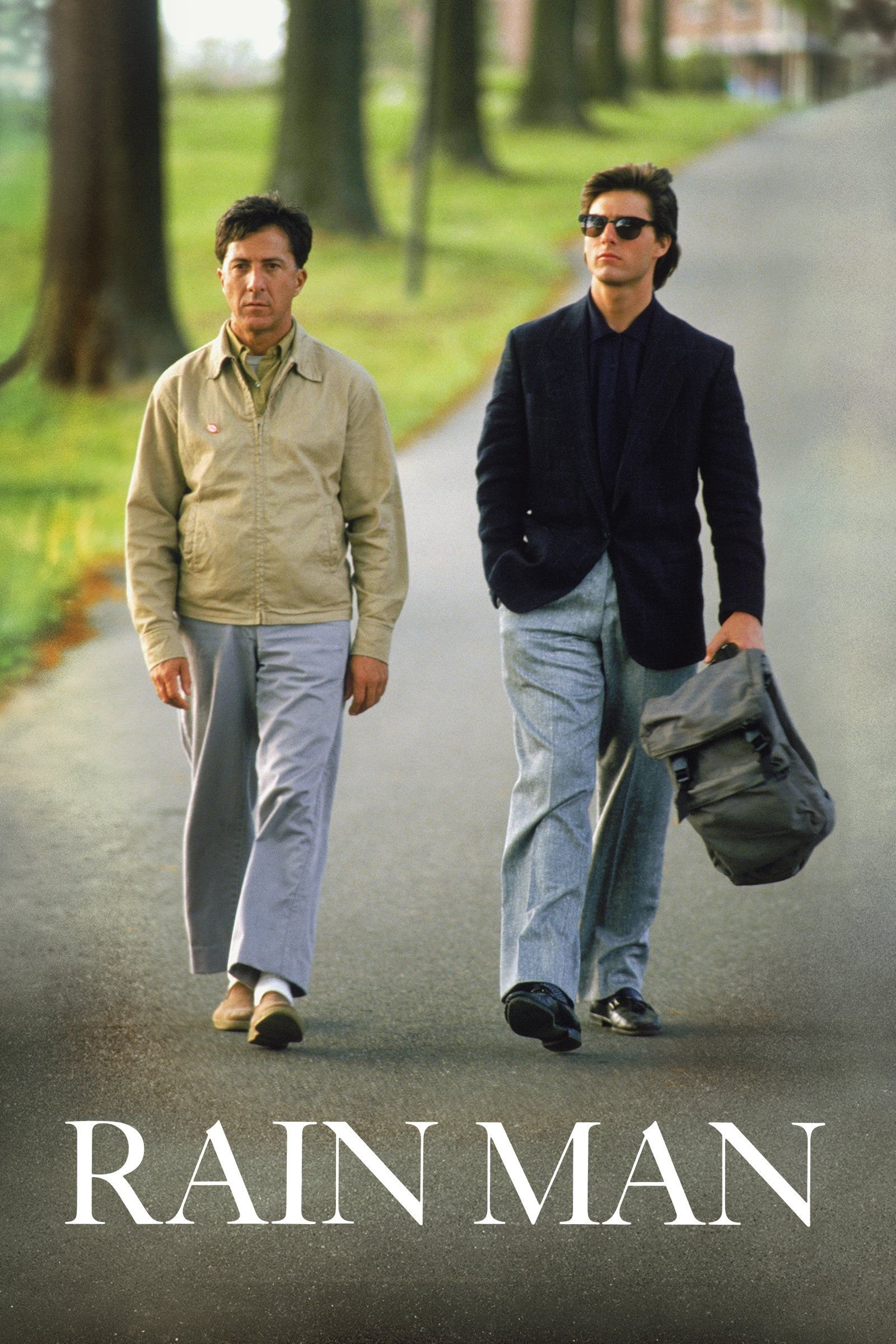
CAA wanted Dustin Hoffman and Bill Murray, with Hoffman as Charlie; Murray went on to make What About Bob, called a similar but different-toned lane that suited him better. — Bill Simmons
CAA agent Paula Wagner, later Cruise's producing partner, suggested making Charlie the younger brother to get Tom Cruise in, raising objections that the two could never be brothers given the age gap. — Bill Simmons
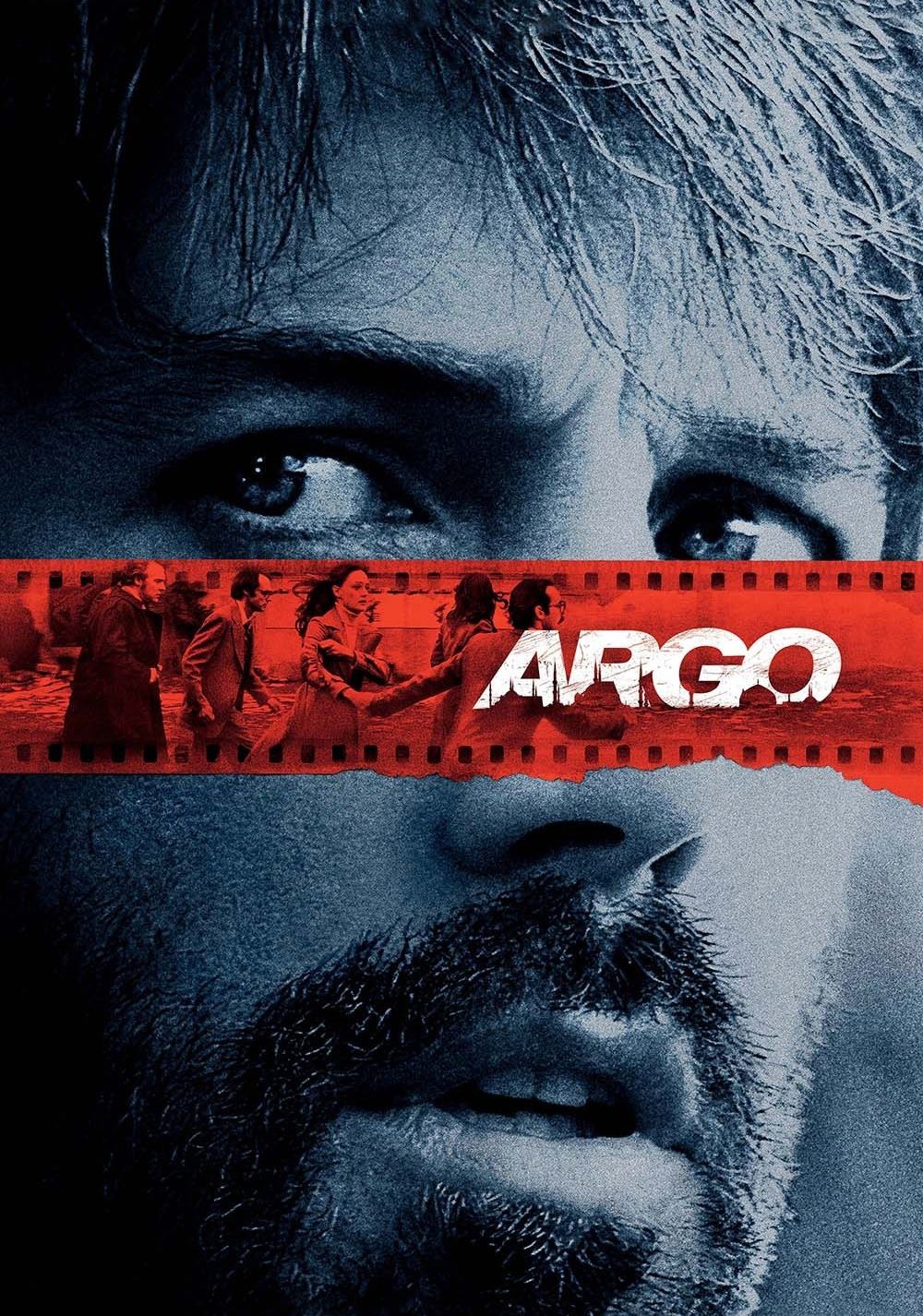
The hosts cite Mendez saying the fake Studio Six was so convincing that 26 scripts arrived after it folded, including one from Steven Spielberg. — Bill Simmons
The hosts cite a 2016 Vice report, based on Freedom of Information Act research, that the CIA was involved in the production of Argo and Zero Dark 30. — Bill Simmons
The hosts report that several hundred thousand bootleg copies circulated in Iran, watched out of hate, curiosity and quiet protest. — Bill Simmons
The hosts report that Carter only delayed authorization by 30 minutes, well before Mendez left for Europe, and that the chase sequence never happened. — Bill Simmons
The hosts report that Affleck had the six actors dress and hang out in character for a week to build chemistry. — Bill Simmons
The hosts note that Jack Kirby, who made the storyboards, was a comics pioneer. — Bill Simmons
The hosts cite the original Wired article placing the Studio Six offices at Sunset Gower, in Michael Douglas's vacated China Syndrome offices. — Chris Ryan
One vote goes to Spielberg for reclaiming the top of Hollywood after 1941, securing participation, developing E.T., and becoming effectively bulletproof. — Bill Simmons
The last vote returns to Ford because Indiana Jones became a four-decade costume, icon, and Disney attraction.
The economics and regular clientele of Marion’s isolated Nepal bar are unknowable.
The panel asks why Belloq’s exploding head did not become the dominant reference instead of Scanners.
They ask how much worse the movie and its box office would be with Tom Selleck, and whether E.T. exists without Melissa Mathison and Spielberg discussing it on this set. — Bill Simmons
Indy’s bag prompts a satchel-versus-man-purse debate, and his treasure-taking is questioned as looting rather than archaeology.
Marion’s frequent wardrobe changes and Sallah’s subdued response to her presumed death are treated as unexplained behavior.
The largest question is what actually motivates Indy beyond holding and donating history, since neither money nor romance explains his risks.
Profit participation, production shorthand, Tunisia, animal work, reused footage and sets, props, stunts, costume origins, and the physical cost to Ford
Lucas reportedly received between one and four million dollars plus gross participation, while Spielberg received $1.5 million plus participation.
The script described the Ark opening only as “all hell breaks loose,” leaving the effects team to invent the sequence. — Bill Simmons
Tunisia stood in for Egypt in extreme heat; widespread dysentery spared Spielberg because he ate imported canned food. — Bill Simmons
The monkey salute reportedly required about 50 takes and a grape on fishing line; depleted stunt staffing led producer Frank Marshall to pilot the airplane for days in severe cockpit heat. — Bill Simmons
Stock footage came from Lost Horizon and The Hindenburg, while the canyon location and hieroglyphs connect visually to Star Wars. — Bill Simmons
Indy’s bullwhip sold for about $43,000 in 1999, and the Well of Souls occupied the same soundstage set footprint as the writing room in The Shining.
Vivian Kubrick reportedly halted production over snake handling until additional protections were provided. — Chris Ryan
Ford performed many stunts, bruising ribs, tearing a knee ligament, and narrowly avoiding worse injury under the airplane. — Bill Simmons
The German-mechanic fight was largely improvised as Spielberg kept adding ideas, and Indy’s clothing was based on Charlton Heston in Secret of the Incas. — Bill Simmons
Philip Kaufman was initially to direct, while Deborah Winger declined Marion, Amy Irving was unavailable, Barbara Hershey was considered, and Sean Young screen-tested opposite Indy candidates. — Bill Simmons
Jeff Bridges was liked and auditioned but apparently was not formally offered Indy; the hosts think he would be good but less physically hard-nosed than Ford.
Tom Selleck was fitted and nearly cast until CBS retained him for Magnum P.I.; a strike later would have freed him, but Ford had already been chosen.
Lucas resisted overusing Ford, Spielberg pushed for him, and Ford accepted salary, gross participation, and dialogue-rewrite rights while actively questioning production choices.
Danny DeVito could not play Sallah because of Taxi, Klaus Kinski rejected Toht for better pay on Venom, and Jonathan Pryce was considered for Belloq.
The Selleck/Ford choice is ranked among the most consequential movie sliding doors because it affects both Indiana Jones and Ford’s later career. — Bill Simmons
Ebert’s four-star review is summarized as an enthusiastic defense of the film’s story and adventure machinery. — Bill Simmons
Pauline Kael’s cooler review is treated as a parallel critical lens: she saw a well-made thrill ride but disliked what its success forecast for mainstream movies. — Bill Simmons
The miniature house explosion, a reported Spielberg Oscar campaign, Murray’s awards history, the Murray-Dreyfuss feud, the Virginia filming location, and Charlie Korsmo’s academic and legal career
The panel notes Murray has only one Oscar nomination despite his long importance to movies.
Sean Penn’s win over Murray’s Lost in Translation performance is criticized; the winning film title is unclear in the machine transcript. — Bill Simmons
Murray is reported to have acknowledged that aggravating Dreyfuss helped the movie. — Bill Simmons
Dreyfuss is reported to have called the experience unpleasant while still admitting Murray made him laugh. — Bill Simmons
A Dreyfuss account says Murray aggressively confronted him and threw a heavy glass ashtray. — Bill Simmons
The panel condemns physical harm but treats Murray’s verbal insult as darkly funny. — Bill Simmons
The vacation house was filmed at Smith Mountain Lake in Virginia. — Bill Simmons
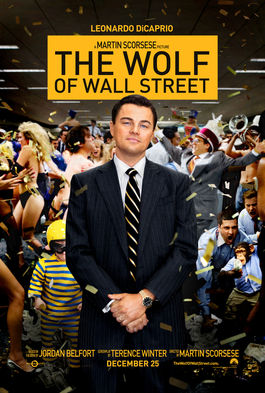
McConaughey's scenes were shot in the second week and his chest-beating was his warm-up; the film was financed with money allegedly stolen from Malaysia's 1MDB fund and Red Granite paid $60 million to settle; 400 to 450 VFX shots, shot digitally; a Guinness record 506 F-words; the actors snorted crushed B vitamins; Christina McDowell's open letter about the victims; Robbie's paper cuts on the bed of cash; Spielberg spent a day on set during the Steve Madden speech; Belfort coached DiCaprio on quaaludes; 27 takes for the Joanna Lumley kiss; the drug scenes are edited oddly on purpose
McConaughey's scenes were shot in the second week of filming; the chest-beating and humming were improvised from his pre-acting warm-up; the brief shot of Leo looking uneasily away from the camera was him looking to Scorsese for approval, and DiCaprio pushed to keep it in and later said it set the tone for the film, a pretty good sliding-doors moment.
The Malaysian Anti-Corruption Commission alleged the film was financed with money stolen from the One Malaysia Development Berhad sovereign wealth fund by producer Riza Aziz, who pled not guilty to charges in July 2019; 2016 Department of Justice civil complaints named it as having provided a trust account through which hundreds of millions were siphoned; Red Granite Pictures paid $60 million to settle with no admission of wrongdoing.
The story is part of Billion Dollar Whale by Bradley Hope and Tom Right (as transcribed): Joe Low (as transcribed), a well-off Malaysian kid at Pen among generational wealth, became a networker who threw parties without paying, went home to start a fund with Aziz, the prime minister's stepson, pulled in Middle East money and Goldman Sachs, took Paris Hilton on ski trips, bought Lindsay Lohan 23 bottles of champagne, bought part of EMI, sent Marlon Brando's Oscar to DiCaprio, who gave it back, and made a $43 million art purchase.
DiCaprio and Scorsese saw guys offering total control and endless money after Scorsese had wasted half a year in development; in a poetic twist the financing is a testament to the reality the film depicts, money at your fingertips making you throw away principles; the money is still being chased, Low is thought to be under Chinese protection, DiCaprio and others gave back everything gifted, and whether anyone actually liked the guy is an open question; the movie is a lot different without a kid from Malaysia stealing money.
The budget was needed partly for 400 to 450 VFX shots, uncommon for Scorsese outside Hugo; the film was shot digitally after he had been one of the last bastions of film, and without it there is probably no Irishman.
The film set a Guinness World Record with 506 uses of the F word, 2.81 per minute, beating Casino at 422 and the 1997 British film Null by Mouth (as transcribed) at 428; CinemaScore audiences gave it a C, the lowest of anything in theaters that week, which is why America is not to be trusted.
The actors snorted crushed B vitamins for the cocaine scenes and Jonah Hill ended up hospitalized with bronchitis; the film also commits the consistent Scorsese error of a character throwing the head back after a line as if hooked by the neck, which nobody does in real life.
Christina McDowell, daughter of Tom Prusalis, who worked with Belfort at Stratton Oakmont, wrote an open letter criticizing the film for not portraying the victims; the response is that Boiler Room did have the family-guy victim, that this is like replying to a tweet with the seven things it left out, and that nobody would have seen a movie about the victims, which they made as 99 Homes with Andrew Garfield; the popularity of a movie like this is itself the point, which is where the final shot out into the audience lands: you thought this was fun, think about it.
Margot Robbie reported the sex scene on a bed of fake cash was uncomfortable because the sharp paper bills gave her multiple paper cuts on her back.
Asked for takes on the sex scenes, the addressed host declines to vamp for twenty minutes about them. — Chris Ryan
The last sex scene is disturbing and awesome, such a fuck you and the ultimate turn; she deserves exactly what he has done to everyone else, and it should be an awful heartbreaking moment for him, the rock-bottom guy finally seeing the woman who had his back and not deserving to get her back; the sequence up to the freak-out and the kidnapping is the Scorsese of Raging Bull and Taxi Driver, dread, fear and violence, the eggs out of her hands.
On a routine visit Steven Spielberg spent a day on set watching the Steve Madden speech and, per Scorsese, essentially co-directed it, advising actors and suggesting angles; that shows Scorsese's confidence, where anyone a tier below would say scram, like a host in the background wanting quicker questions when Simmons had Damon in studio; two cinematic geniuses might just agree there is a right way to tell a scene.
Belfort coached DiCaprio's behavior, especially how he reacted to quaaludes and the dope-induced confrontation with Danny Porish (as transcribed), the character Jonah plays; a weird conversation that nonetheless makes sense since we are out of ludes and cannot know, something like trying to stay up on Ambien but much harder.
DiCaprio was so nervous about the kissing scene with Joanna Lumley that it took a reported 27 takes; Scorsese has confirmed the editing is odd on purpose, with continuity issues after every scene where Jordan takes drugs; DiCaprio's dance was done on the spot but learned over decades, a real bar mitzvah robot he presumably did after a few sarsaparillas, in another smashed-up sequence with three songs in a minute and a half.
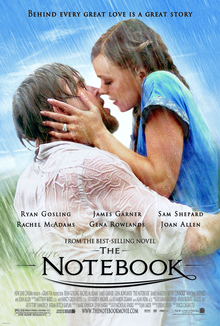
Quite a few actresses wished they had gotten Allie; Jessica Biel is the most vocal, having called it in an interview the film that got away, though one host no longer acknowledges Jessica Biel.
Britney Spears would have been terrible, and with Justin Timberlake rumored as Noah a Justin-and-Britney Notebook was probably considered; she is a really bad actress who has never had chemistry with anyone, said with respect; Reese Witherspoon may not be a true rumor, and Ashley Judd would have been too old.
Timberlake is not a good actor but fun in The Social Network; he later worked with Nick Cassavetes in Alpha Dog with Emile Hirsch, a time capsule of 2006 that nobody saw.
Steven Spielberg apparently wanted to direct this with Tom Cruise starring, which prompts a wish to ask Spielberg what attracted him, with the war part the guess, and a joke that Kevin Connolly would have fared better; the timing is first placed right after Jerry Maguire, then corrected to around 2002, after Eyes Wide Shut and the Nicole divorce, coming off Minority Report and Vanilla Sky.
Cruise's Noah would be a different take that would not make the movie work, though possibly accurate to the script, and not the romantic movie we know; the what-ifs are fun because where they landed is so perfect, Gosling was famously cast first, and a DVD extra shows McAdams coming in for her read looking even younger.
Spielberg, Shaw, Scheider, Dreyfuss, Williams and the shark are nominated; Dreyfuss is mentioned with an immediate probably-not qualification. — Bill Simmons
The first Spielberg choice credits a career-launching, industry-changing and exceptionally entertaining movie while acknowledging luck. — Chris Ryan
Spielberg’s repeated practical and artistic decisions rescued a production another director might have lost: the unseen shark, effective small score, replacement actors and repeated script rewrites all worked. — Sean Fennessey
The final response agrees with Spielberg but makes a substantial case for Quint as an irreplaceable supporting character. — Bill Simmons
Coogler is compared with the young director, whose early television experience is cited as years of preparation.