
‹ All movies
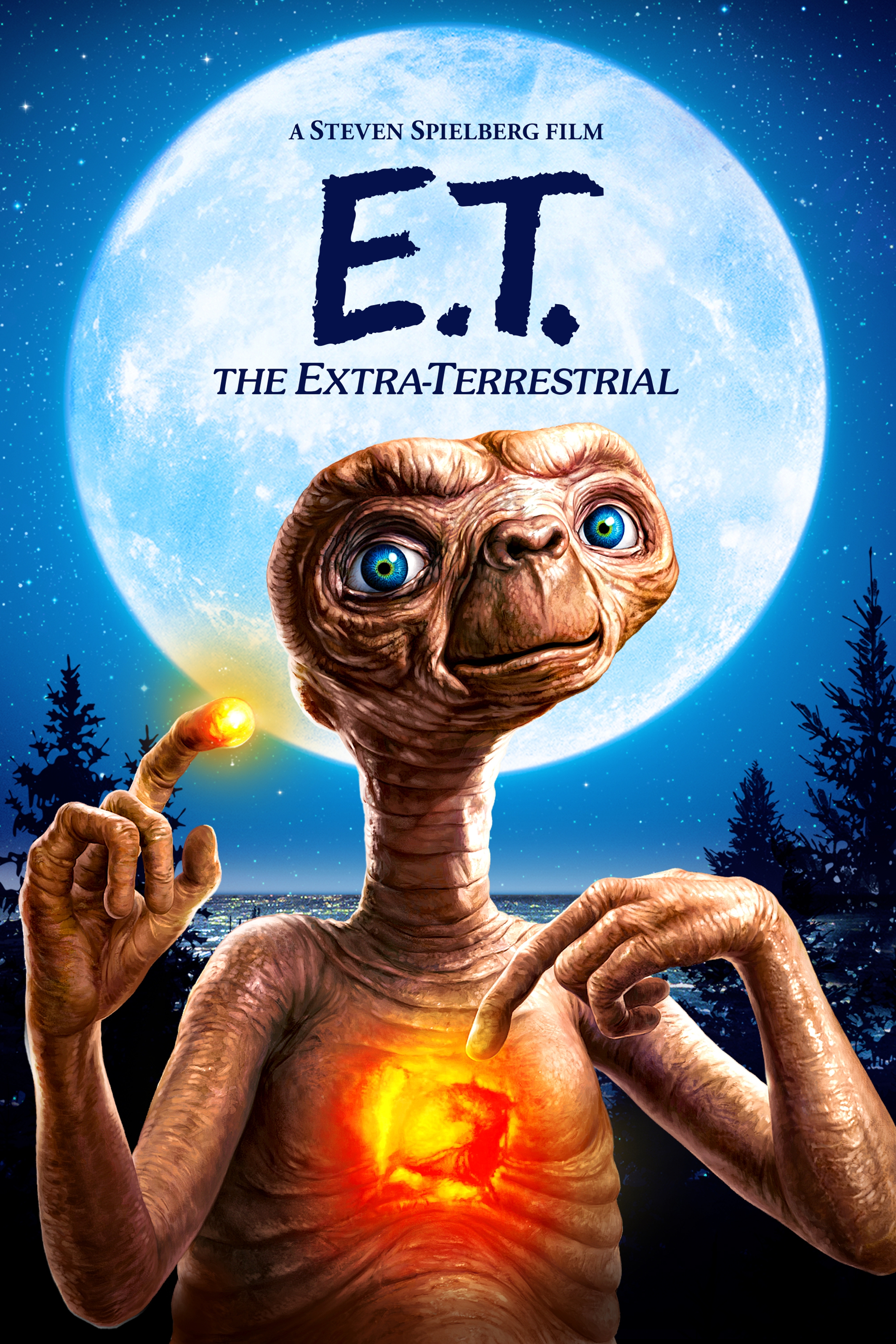
E.T. the Extra-Terrestrial poster

E.T. the Extra-Terrestrial

115 minutes

Cast

Selected cast credits · Film reference

Henry Thomas Elliott
Sean Frye Steve
Tom Howell Tyler
Erika Eleniak Pretty girl
David O'Dell Schoolboy
Richard Swingler Science teacher
Frank Toth Policeman
Robert Barton Ultra sound man
Michael Darrell Van man
Pat Welsh E.T.’s voice
Debra Winger E.T.’s voice

E.T. the Extra-Terrestrial | The Rewatchables

Explore episodeClose episode

Producer credits not yet identified.

Half-Assed Internet Research

Sequential filming for the children’s attachment

In the discussion (23)
Approx. transcript time · 00:11:10Read transcript
  • The production reportedly filmed sequentially to let the children become attached to E.T.
  • Spielberg reportedly imagined an alien companion after his parents’1960 divorce.
  • Loneliness while filming Raiders in Tunisia reportedly revived that childhood idea; Matheson developed the script, initially called E.T. and Me, following a Night Skies concept.
  • Columbia rejected the project as commercially doubtful and pursued Starman instead, though the simplified executive-blame story is qualified.
  • Universal reportedly bought the project for $1 million while Columbia retained 5 percent of net profits, making its rejection less disastrous financially.
  • Nine Oscar nominations produced four technical and music wins; Gandhi winning picture,director and actor over this film is strongly criticized.
  • Henry Thomas’s lack of a nomination prompts debate over whether a child lead would be entered as lead or supporting actor.
  • Wallace’s absence from the nominations is lamented as a missed great mother performance.
  • Attenborough reportedly said E.T. should have won and praised its invention and power.
  • A John Sayles Close Encounters sequel concept is recalled; Spielberg reportedly responded to reviews calling that film personal by making a genuinely personal alien story.
  • The film idealizes Spielberg’s Arizona childhood after divorce; The Fabelmans is anticipated as a more direct autobiography, while simultaneous Poltergeist work underscores his productivity.
  • The reported budget is $10.5 million against $793 million gross, an unusually large disparity for the show.
  • Reported records include surpassing Star Wars until Jurassic Park,16 weeks at number one,15 million VHS units,$250 million video revenue,50 million dolls and $1 billion merchandise; delaying home-video release frustrated viewers.
  • The 1990 Universal Studios Florida bike ride is recalled as still operating.
  • M&M’s rejection of product placement is called a major mistake that helped create a Reese’s Pieces competitor.
  • Rambaldi’s creature reportedly used four heads, animatronic facial controls and several costumed performers; Kennedy studied real and glass eyes, and the effects cost about $1.5 million.
  • Winger supplied temporary vocals, while Pat Welsh’s heavy smoking contributed to the final voice.
  • Welsh reportedly received $380 for nine-and-a-half recording hours; other sounds came from Spielberg, Winger, a sleeping sick wife, a professor’s burp, raccoons, otters and horses.
  • The shoot reportedly used A Boy’s Life as a secrecy title; locations listed are Culver City, Northridge, Tujunga, Crescent City and Porter Ranch for flying bicycles.
  • Barrymore’s dislike of E.T.’s feet was reportedly an ad-lib about visible wires that Spielberg retained.
  • Spielberg screened the movie for Ronald and Nancy Reagan; Michael Jackson reportedly owned a puppet, and a wet T-shirt filled with gelatin supplied walking sounds.
  • Spielberg reportedly described E.T. as a plant-like creature, neither male nor female.
  • Universal reportedly first saw the film at a Texas audience test, showing Spielberg’s unusual control, supported by his restrained budget.

Apex Mountain

Spielberg (one of several peaks); child actors except Barrymore; Wallace; friendly aliens; penis-breath insult; Speak & Spell; organic product placement (qualified)

In the discussion (10)
Approx. transcript time · 00:14:59Read transcript
  • The child ensemble is proposed as a possible Apex, with Stand by Me as a competing benchmark.
  • Spielberg receives an affirmative choice for the Raiders/E.T./Poltergeist period, while 1993 and multiple career peaks remain plausible alternatives.
  • Every child actor except Barrymore is assigned this peak; her later rom-com years, Fever Pitch,50 First Dates and The Wedding Singer are alternatives.
  • Wallace receives an affirmative choice amid a strong run; discussion corrects assumptions about her age to 34.
  • Aliens broadly are rejected in favor of Alien, but friendly aliens receive a yes.
  • Children’s movies are disputed: E.T. may be a favorite, but Toy Story’s industry influence and Star Wars compete.
  • Cute little-girl performers brings Barrymore versus Shirley Temple; semi-degenerate California children prompts Repo Man, and stealth divorce movies is proposed without a settled answer.
  • The penis-breath insult and Speak & Spell receive affirmative choices, with the insult’s post-film popularity recalled.
  • Merchandising is rejected in favor of Star Wars; Grogu and the connected Star Wars/E.T. period complicate the friendly-alien discussion.
  • Reese’s Pieces earns a qualified product-placement Apex for feeling organic; Coke, Coors and V 8 illustrate additional brands.

Roger Ebert's review

In the discussion (1)
Approx. transcript time · 00:38:07Read transcript
  • Ebert gives four stars and praises the film’s ability to overcome caution and win hearts.

Most Rewatchable Scene

Last bicycle ride and farewell; first moon flight; meeting the siblings

In the discussion (12)
Approx. transcript time · 00:39:33Read transcript
  • The whole film feels rewatchable; the opening efficiently makes even young viewers understand the curious botanist being left behind.
  • Elliott leading E.T. to his room with Reese’s Pieces is nominated.
  • Meeting the siblings is a favorite for Gertie’s scream, collapsing shelves, Michael’s protection and the toy-filled bedroom.
  • E.T. exploring the house, drinking beer, watching television and bonding with Harvey could sustain a whole comedy by itself.
  • Gertie dressing E.T. and teaching him speech showcases Barrymore’s exceptional child performance opposite a puppet.
  • The first Halloween bicycle flight, silhouetted against the moon, and Elliott’s offer to protect E.T. are nominated.
  • The illness passages are distressing rather than a preferred rewatch, but the revival and glowing heart after Elliott’s goodbye are loved; the glass framing resembles a spaceship window.
  • The group bicycle chase and sunset flight lead naturally into the farewell; dated effects remain charming within strong action filmmaking.
  • E.T. phone home is essential for the line, finger-shadow image and doll costume; extending the Halloween sequence captures his view through the sheet and delighted noises.
  • The beer-drinking psychic link, freed frogs and Quiet Man-inspired sequence supply a sweet tonal departure.
  • The suited scientists’ alarming entrance through the opened door is another favorite.
  • The last bike ride and final 15 minutes are explicitly favored, alongside the first moon flight; meeting the siblings is the favorite short sequence.

What’s Aged the Best?

Williams score; cinematography; child performances; physical E.T.; standalone story; lasting popularity and iconic imagery

In the discussion (12)
Approx. transcript time · 00:52:37Read transcript
  • Williams’s score makes viewers emotionally believe in the puppet, restores childhood wonder and gives the ending its force.
  • Spielberg reportedly edited the final chase to Williams’s music, reversing the usual film-first scoring process and showing unusual trust.
  • The almost wholly score-driven soundtrack and Williams’s many iconic themes put him at the peak of his profession; Gordon Willis is offered as a comparable technical master.
  • Favorite images include forest flashlights, steam above the kitchen sink as Elliott looks skyward, and the wide shed shot when the ball rolls out.
  • The unsettling dolly zoom over the housing development is a favorite, compared with later Goodfellas camera work.
  • The ambiguous early 1980 sCalifornia setting works without a precise location, with a near-Tahoe intention recalled.
  • Barrymore’s continuing adult success and Spielberg’s chronological shoot, letting the children genuinely say goodbye at the end, have aged well.
  • The child-eye-level shots and C. Thomas Howell are enjoyed, with a wish for another recognizable child actor in the group.
  • The physical E.T. effects still work despite their age; the living, blinking creature had to meet an audience already familiar with Yoda.
  • Keeping the original science-fiction story standalone instead of making its planned sequel preserved its legacy; Spielberg’s existing Indiana Jones franchise may have helped him resist.
  • The yearlong theatrical run and stronger eighth Friday illustrate extraordinary staying power. The moon silhouette and phone-home line are called top-ten icons, with the moon shot proposed as the most iconic ever.
  • Imitating E.T.’s voice has aged both best and worst because impressions vary greatly.

What’s Aged the Worst?

Adult skepticism; M&M’s; Asteroids reference; lost Barrymore surprise; plagiarism dispute; voice impressions; video game

In the discussion (9)
Approx. transcript time · 01:00:02Read transcript
  • E.T.’s apparent death, especially the overhead river image, remains painfully distressing; the earlier resurrection reference offers hope.
  • Growing older shifts identification toward Mary’s safety concerns and the scientists’ lost discovery, reducing childhood’s unquestioning wonder.
  • Mars declining M&M’s placement and the now-obscure Asteroids-score reference have aged poorly.
  • The surprise that the child became adult star Barrymore has disappeared; this is merely something that aged rather than a moral criticism.
  • The hosts discuss an unresolved plagiarism allegation involving Ray’s 1967 Alien script, Scorsese’s apparent support and Spielberg’s denial; independent similar ideas remain plausible.
  • Bad E.T. voice impressions are a downside to the memorable vocal style.
  • The rushed 1982 holiday video game is called among the worst and blamed in contemporary accounts for the 1983 industry crash.
  • The hosts recount unsold cartridges buried in a New Mexico landfill and a 2014 excavation, illustrating the video game failure.
  • Sayles’s unmade Night Skies is a regretted lost project despite elements surviving in E.T.; his Piranha work reportedly led to Spielberg hiring him.

Casting What-Ifs

Macchio; Feldman; unconfirmed Shelley Long; cut Harrison Ford

In the discussion (3)
Approx. transcript time · 01:11:59Read transcript
  • Ralph Macchio reportedly nearly played another child, Tyler; Thomas rescued his audition by thinking about his dead dog and moving Spielberg to tears.
  • Feldman’s part reportedly disappeared in rewrites. Shelley Long being offered Mary is an unconfirmed internet report, with Night Shift and Cheers making the alternative outcome seem fine.
  • Ford’s cut principal appearance reportedly concealed his face, but a recognizable Star Wars actor could still distract in this world.

Picking Nits

Missing Han Solo figure; dog acceptance; Keys close-ups; medical and quarantine decisions; neighbors and police; hygiene; pizza; bicycle skill

In the discussion (13)
Approx. transcript time · 01:13:38Read transcript
  • Elliott owns Lando, Boba Fett and Greedo but no Han Solo figure; this absence complicates the joking objection to Ford appearing in a Star Wars-aware world.
  • Harvey’s quick acceptance of E.T. is questioned, countered by initial mutual alarm and E.T.’s ability to connect.
  • Repeated close-ups of Keys feel excessive, defended as a child’s memorable visual identifier.
  • Four-year-old Gertie should be kept away from the traumatic death scene.
  • Treating Elliott and E.T. together and then leaving the child alone with the unprecedented discovery strain medical and security logic.
  • The quarantine should draw more neighbor concern and news coverage than a small onlooking crowd.
  • Gertie’s arrival at the farewell prompts an initial question, answered provisionally as coming with her mother.
  • Mary, Gertie and Keys reaching the farewell alone without police following is implausibly convenient; federal charges for the children are jokingly imagined.
  • An online essay’s horror-film interpretation—E.T. disrupts a family, endangers it and leaves—earns respect for its contrarian commitment but strong rejection as a reading.
  • Keys eating discarded candy from the forest floor is inconsistent with later biohazard caution.
  • Everyone removing protective equipment immediately after E.T.’s death makes no quarantine sense while his body remains present.
  • One pizza for four teenage boys seems inadequate; leaving the fallen pizza and insecticide near food also bothers the hosts.
  • Elliott’s advanced bicycle riding seems improbable for his age, but visible cautious stopping and falling distinguish him from the older riders.
In the discussion (2)
Approx. transcript time · 01:14:21Read transcript
  • Coyote was initially recognizable as Keys before becoming a familiar name; the older brother similarly became known through this role.
  • Eleniak as the science-class girl is a qualified that-guy choice, with later Baywatch and Under Siege fame noted.

Recasting Couch

Leave intact; De Niro as Keys; Stone as Mary (joking)

In the discussion (1)
Approx. transcript time · 01:18:19Read transcript
  • The cast should remain intact; if forced,1982 De Niro as Keys is proposed. Stone as Mary draws a defense of Wallace, and Hopkins as Elliott makes the escalating premise plainly comic.

Probably Unanswerable Questions

Location and cornfield; E.T.’s biology and risks; keys; school; Sally; Mary’s romance; leaving Earth; Elliott’s future

In the discussion (11)
Approx. transcript time · 01:35:19Read transcript
  • The California setting remains imprecise: Elliott points near Tahoe, while the visual geography mixes the valley and redwoods.
  • The backyard cornfield appears from one angle but not others, making its existence puzzling despite its effectiveness.
  • The plant-like description prompts joking questions about E.T. as a Beyond Burger and whether he could be eaten.
  • Hypothetical disasters include a raccoon attack, bicycle crush, herpes, medical dissection, contacting invading aliens, alcohol poisoning and a DUI.
  • The many keys’ functions are unknown; house, storage, car and trunk are possibilities, and keeping them over a hazmat suit seems especially odd.
  • Whether the school continued having children chloroform live frogs after the escape remains unanswered.
  • Sally’s identity and relationship to the absent father are unknown; a performer transcribed as Dana Wheeler-Nickleson is proposed as a type, with the appearance of the imagined character disputed.
  • The father’s departure is reconsidered as a young couple falling out of love; the hosts connect it with Spielberg later learning a more complicated account of his own parents’ split.
  • E.T.’s Halloween reaction to Mary prompts a joking attraction question; Keys’s behavior raises a more plausible future date with her.
  • Elliott accepting the invitation to space divides the panel: some would go as children, others stay with family, with future sports and entertainment making departure less appealing.
  • Elliott’s next decade is imagined either as chasing an unrepeatable high through drugs or creating magical stories for others; Michael’s future is pessimistically imagined too.

What Piece of Memorabilia Would You Want From This Movie?

Elliott’s bicycle; communicator/Speak & Spell; posters; puppet debated

In the discussion (3)
Approx. transcript time · 01:43:53Read transcript
  • The bicycle with its basket is the leading choice over the communicator; an inert puppet would feel disappointing rather than magical.
  • A Coors beer is an easily obtained alternative; Speak & Spell, the NFL poster and Elvis Costello poster are desired, but the bike is immediately recognizable without explanation.
  • The puppet remains appealing to another speaker, with display in a glass case suggested and its present whereabouts unknown.

More from the conversation

The show invites future category suggestions and marks E.T.’s 40 th anniversary with Simmons, Ryan, Fennessey and Rubin.
Approx. transcript time · 00:00:00Read transcript
The essential films to show children are E.T., Home Alone and Toy Story, leaving a fourth Rushmore slot open; Lion King, Elf, Finding Nemo and Toy Story 3 are alternatives, with Wizard of Oz a personal childhood staple. Adult-film suggestions are jokes.
Approx. transcript time · 00:01:49Read transcript
E.T. bridges Star Wars and later Stranger Things; bikes, games, secrets and unsupervised children evoke memories so vividly that the film and actual childhood blur.
Approx. transcript time · 00:03:08Read transcript
Its sincerity, friendship and family emotions contrast with commercial 1980 s violence; its reverse-Wizard-of-Oz structure brings an extraordinary being into ordinary suburbs.
Approx. transcript time · 00:05:39Read transcript
A divorced-family childhood makes Elliott relatable; later parenthood changes identification toward Mary. Child-height camerawork and the eventual humanization of Keys express empathy, while busy adults fail to notice nearby wonder.
Approx. transcript time · 00:07:47Read transcript
Child-level shooting and sequential filming are praised as decisive choices; the closet becomes a magical space rather than a threat, and the unsupervised suburban setting feels increasingly remote from screen-focused modern childhood.
Approx. transcript time · 00:10:31Read transcript
Ordinary closets, flowers and household communicator parts become gateways to wonder; the plant doubles as a health indicator.
Approx. transcript time · 00:13:37Read transcript
Thomas is called the greatest child performance, with Barrymore a possible second; the burden of making E.T. believable and Spielberg’s precise child-direction footage are praised. Thomas’s later Flanagan work earns respect despite Elliott’s career-defining fame.
Approx. transcript time · 00:14:59Read transcript
The film avoids making Michael a bully or the officials simple villains; the siblings join forces after divorce, rather than competing to exploit the visitor.
Approx. transcript time · 00:17:54Read transcript
E.T. can fill a missing-father role or act as Elliott’s twin and route to self-belief. Keys’s lifelong search humanizes him, while adults’ scientific outlook limits their capacity for connection.
Approx. transcript time · 00:19:23Read transcript
The final Come, Stay, Ouch and I’ll be right here lines communicate longing; pointing to Elliott’s head rather than heart emphasizes imagination.
Approx. transcript time · 00:22:15Read transcript
Childhood loneliness, action figures, bikes and solitary imagined sports make Elliott relatable; Melissa Matheson’s creative partnership and marriage to Harrison Ford prompt affectionate envy.
Approx. transcript time · 00:23:05Read transcript
Jaws, Close Encounters,1941,Raiders and E.T. form a remarkable early run despite 1941; reciprocal Lucas references show a decades-long creative friendship.
Approx. transcript time · 00:28:41Read transcript
E.T. combines spectacle with personal expression; Spielberg’s 1993 pair and later commercial run, through West Side Story, show unusual longevity and range.
Approx. transcript time · 00:30:25Read transcript
A desert-island filmography favors Spielberg’s volume and quality, while Tony Scott and Michael Mann prompt jokes; the 2000 srun enumerates A.I., Minority Report, Catch Me If You Can, The Terminal, War of the Worlds, Munich and Indiana Jones.
Approx. transcript time · 00:32:23Read transcript
Spielberg’s films converse across decades, with War of the Worlds supplying hostile aliens and The Fabelmans returning to the childhood subject directly.
Approx. transcript time · 00:35:06Read transcript
Ebert’s later account of watching with grandchildren is praised for observing their reactions alongside the film; watching children become absorbed is part of its appeal.
Approx. transcript time · 00:38:35Read transcript
Candy preferences split between Reese’s Pieces, peanut M&M’s, Reese’s cups and peanut-butter M&M’s; the discussion distinguishes flavor balance from crunch.
Approx. transcript time · 00:41:06Read transcript
The camera discussion becomes a fanciful Goodfellas-style re-edit with Elliott narrating frantic errands; it is a joke rather than production history.
Approx. transcript time · 00:57:44Read transcript
A broader What’s Aged? category is jokingly proposed to distinguish simple loss of surprise from something aging badly.
Approx. transcript time · 01:08:27Read transcript
Wallace’s mother-role run includes E.T., Cujo and Secret Admirer, with The Howling discussed as a broader career credit.
Approx. transcript time · 01:12:30Read transcript
Coyote’s documentary narration and 1985 Jagged Edge/Legend of Billie Jean roles prompt a film-class anecdote; his birth name is looked up.
Approx. transcript time · 01:14:56Read transcript
The Legend of Billie Jean tangent recalls the scooter dispute, runaway teens and media-message plot, with a future podcast episode desired.
Approx. transcript time · 01:16:22Read transcript
A listener is challenged to track every award in the show’s history, while category ambiguity is jokingly acknowledged.
Approx. transcript time · 01:18:19Read transcript
The preferred child group to join divides between E.T. and Stand by Me, with The Goonies another option; personality clashes complicate the latter choice.
Approx. transcript time · 01:24:45Read transcript
Yoda and E.T.’s Halloween recognition is described as a shared-universe nod; the exact Spielberg–Lucas points swap is recalled uncertainly.
Approx. transcript time · 01:26:49Read transcript
The nitpick list was organized into Han Solo, health/safety, food, California living and stealth; not every item is read aloud.
Approx. transcript time · 01:33:30Read transcript
Old office keys and a retained Grantland icon become sentimental reminders of a past workplace, despite difficulty finding its old content.
Approx. transcript time · 01:38:27Read transcript
The producer is addressed in the close about having seen and liking the film; the machine-rendered surname is unclear.
Approx. transcript time · 01:46:20Read transcript
The closing conversation looks back on Fucked Up Family February and defends Rachel Getting Married and Ordinary People; it does not establish a theme for this episode.
Approx. transcript time · 01:46:54Read transcript