‹ All people

Film credit

Joanna Lumley

Also referred to as Lumley

Stats

Episodes featuring their films
1
Movies in this archive
1

Rewatchables episodes featuring Joanna Lumley’s films

Displaying 1 episode

Mentioned in discussions

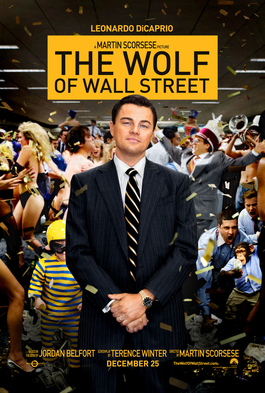
The Wolf of Wall Street

Half-Assed Internet Research

McConaughey's scenes were shot in the second week and his chest-beating was his warm-up; the film was financed with money allegedly stolen from Malaysia's 1MDB fund and Red Granite paid $60 million to settle; 400 to 450 VFX shots, shot digitally; a Guinness record 506 F-words; the actors snorted crushed B vitamins; Christina McDowell's open letter about the victims; Robbie's paper cuts on the bed of cash; Spielberg spent a day on set during the Steve Madden speech; Belfort coached DiCaprio on quaaludes; 27 takes for the Joanna Lumley kiss; the drug scenes are edited oddly on purpose

In the discussion (14)
Approx. transcript time · 01:33:33Read transcript
  • McConaughey's scenes were shot in the second week of filming; the chest-beating and humming were improvised from his pre-acting warm-up; the brief shot of Leo looking uneasily away from the camera was him looking to Scorsese for approval, and DiCaprio pushed to keep it in and later said it set the tone for the film, a pretty good sliding-doors moment.
  • The Malaysian Anti-Corruption Commission alleged the film was financed with money stolen from the One Malaysia Development Berhad sovereign wealth fund by producer Riza Aziz, who pled not guilty to charges in July 2019; 2016 Department of Justice civil complaints named it as having provided a trust account through which hundreds of millions were siphoned; Red Granite Pictures paid $60 million to settle with no admission of wrongdoing.
  • The story is part of Billion Dollar Whale by Bradley Hope and Tom Right (as transcribed): Joe Low (as transcribed), a well-off Malaysian kid at Pen among generational wealth, became a networker who threw parties without paying, went home to start a fund with Aziz, the prime minister's stepson, pulled in Middle East money and Goldman Sachs, took Paris Hilton on ski trips, bought Lindsay Lohan 23 bottles of champagne, bought part of EMI, sent Marlon Brando's Oscar to DiCaprio, who gave it back, and made a $43 million art purchase.
  • DiCaprio and Scorsese saw guys offering total control and endless money after Scorsese had wasted half a year in development; in a poetic twist the financing is a testament to the reality the film depicts, money at your fingertips making you throw away principles; the money is still being chased, Low is thought to be under Chinese protection, DiCaprio and others gave back everything gifted, and whether anyone actually liked the guy is an open question; the movie is a lot different without a kid from Malaysia stealing money.
  • The budget was needed partly for 400 to 450 VFX shots, uncommon for Scorsese outside Hugo; the film was shot digitally after he had been one of the last bastions of film, and without it there is probably no Irishman.
  • The film set a Guinness World Record with 506 uses of the F word, 2.81 per minute, beating Casino at 422 and the 1997 British film Null by Mouth (as transcribed) at 428; CinemaScore audiences gave it a C, the lowest of anything in theaters that week, which is why America is not to be trusted.
  • The actors snorted crushed B vitamins for the cocaine scenes and Jonah Hill ended up hospitalized with bronchitis; the film also commits the consistent Scorsese error of a character throwing the head back after a line as if hooked by the neck, which nobody does in real life.
  • Christina McDowell, daughter of Tom Prusalis, who worked with Belfort at Stratton Oakmont, wrote an open letter criticizing the film for not portraying the victims; the response is that Boiler Room did have the family-guy victim, that this is like replying to a tweet with the seven things it left out, and that nobody would have seen a movie about the victims, which they made as 99 Homes with Andrew Garfield; the popularity of a movie like this is itself the point, which is where the final shot out into the audience lands: you thought this was fun, think about it.
  • Margot Robbie reported the sex scene on a bed of fake cash was uncomfortable because the sharp paper bills gave her multiple paper cuts on her back.
  • Asked for takes on the sex scenes, the addressed host declines to vamp for twenty minutes about them. — Chris Ryan
  • The last sex scene is disturbing and awesome, such a fuck you and the ultimate turn; she deserves exactly what he has done to everyone else, and it should be an awful heartbreaking moment for him, the rock-bottom guy finally seeing the woman who had his back and not deserving to get her back; the sequence up to the freak-out and the kidnapping is the Scorsese of Raging Bull and Taxi Driver, dread, fear and violence, the eggs out of her hands.
  • On a routine visit Steven Spielberg spent a day on set watching the Steve Madden speech and, per Scorsese, essentially co-directed it, advising actors and suggesting angles; that shows Scorsese's confidence, where anyone a tier below would say scram, like a host in the background wanting quicker questions when Simmons had Damon in studio; two cinematic geniuses might just agree there is a right way to tell a scene.
  • Belfort coached DiCaprio's behavior, especially how he reacted to quaaludes and the dope-induced confrontation with Danny Porish (as transcribed), the character Jonah plays; a weird conversation that nonetheless makes sense since we are out of ludes and cannot know, something like trying to stay up on Ambien but much harder.
  • DiCaprio was so nervous about the kissing scene with Joanna Lumley that it took a reported 27 takes; Scorsese has confirmed the editing is odd on purpose, with continuity issues after every scene where Jordan takes drugs; DiCaprio's dance was done on the spot but learned over decades, a real bar mitzvah robot he presumably did after a few sarsaparillas, in another smashed-up sequence with three songs in a minute and a half.
In the discussion (8)
Approx. transcript time · 01:23:25Read transcript
  • Possibly the hardest one ever done, ranked least to greatest: Bo Dietl as Bo Dietl, with an 'are you fucking high' impression; he was a recurring in-studio character on a New York radio show, New York's top cop turned PI turned conservative pundit praising Rudy, an object of obsession for Scorsese and Spike Lee as a New York institution, like Curtis Sola (as transcribed) commenting on crime; a New York One regular; he is good in it and has a prominent mob-boss role in The Irishman.
  • Kristen Milioti (as transcribed) as the first wife may be the most likable and only innocent character; Jake Hoffman as Steve Madden is a purposeful cold check, like Mikhail Bridges (as transcribed); Shea Wiggum (as transcribed) as Captain Ted Beecham making a little chop; Joanna Lumley as Aunt Emma, with nobody admitting to being an AbFab guy.
  • Rob Reiner as Max Belfort is amazing: the Equalizer phone tirade, the weird British accent he affects as soon as he answers, and the seemingly improvised 'sides cure cancer' exchange with Jonah while explaining marriage to his son.
  • Jon Bernthal as Brad, the Quaalude King of Bayside, has not been discussed enough: the diner performance, asking for the ketchup, 'tell your sister I was asking about her'; visually incongruous with these guys, he is the one animal every crew of normal guys had, the one with the Adderall; a guy still in his hometown asking younger dudes to hang out is a red flag, yet Belfort likes him most as the guy who gets it; a human wrecking ball who is a classically trained, thoughtful actor kept getting cast as violent meatheads after The Walking Dead and The Punisher, and is now a jacked Lee Ayacocca (as transcribed) in Ford versus Fari (as transcribed).
  • A tangent on Craig Kilbourne (as transcribed): his 'old man Ferrari' Instagram videos, made with his old writing crew, are ten times funnier than expected, awaited like Christmas morning, and he is floated as the new Robert Evans.
  • Spike Jonze as Dwayne the investment center leader, blotchy skin, bad shirt, uneven mustache; Spike Jonze is only ever great in movies, Three Kings, Moneyball and this; a host's wife found him cute, prompting a re-evaluation.
  • Jean Dujardin as Jean-Jacques Sorrel is doing a lot; for anyone not alive in 2013, he starred in The Artist, which won best picture and won him best actor during the Benigni run of handing Europeans best actor, compared to the late-nineties NBA draft and Jan Vesely; a host has still not watched or returned the DVD; he is in a different movie and takes one host's overacting award.
  • Number one is McConaughey with one scene; the only other name to throw in is PJ Byrne as Rugrat, who is in much of the movie but whom one host did not like, preferring Cuthbert and Sea Otter, who sold meat and weed; those guys go in the That Guy award.
The Wolf of Wall Street

Casting What-Ifs

Brad Pitt and Paramount lost the 2007 rights bidding war to DiCaprio and Warner Brothers; Chris Evans and Joseph Gordon-Levitt auditioned; Jonah Hill took $60,000; Blake Lively, Rosie Huntington-Whitley, Teresa Palmer, Amber Heard and Olivia Wilde were in the mix for Naomi; Julie Andrews was considered for Aunt Emma; Ridley Scott was wanted to direct


In the discussion (9)
Approx. transcript time · 01:14:52Read transcript
  • In 2007 Leonardo DiCaprio and Warner Brothers won a bidding war against Brad Pitt and Paramount for the rights to Belfort's memoir, and Belfort made a million dollars on the rights.
  • Does it work with Pitt: absolutely for some, since Pitt is better at the darker thing and a less attractive, rougher guy might let you hate Jordan more, there being moments when DiCaprio looks too great on screen; the counter is that DiCaprio uses his handsomeness as a tool to push further, as in Django, while Damon plays relatable, and Jordan's looks explain why anyone would let him sell them anything; the telephone-terrorists speech, banging the microphone on his head, is a place Pitt may not be able to go.
  • Many Pitt and DiCaprio roles would be interchangeable, though The Aviator is hard to see with Pitt for one host while another could see Pitt there more than in this; both were circling The Departed at the same time; Pitt in California, twenty years earlier, and Fight Club show a weird dark gear.
  • Chris Evans and Joseph Gordon-Levitt auditioned for an unspecified role, presumably Donnie, which does not seem right for Evans; Jonah took about sixty grand per his Howard Stern interview, while Leo had box-office points; he was already Moneyball-nominated and in Superbad, flew to see DiCaprio, joked that Leo should kill anyone else cast, and practiced with the capped teeth and phone calls.
  • Moneyball was essentially playing Paul De Podesta (as transcribed), so it is hard to believe he was nominated for that and did not win for this, strong, unique and weird even if some scenes are too much; the cousin exchange, she grew up hot and if anyone is going to fuck my cousin it's going to be me out of respect, and the 'you're free' scene are things only Jonah could have done.
  • Asked for his Blake Lively thoughts, the addressed host would have been fine with her as Naomi. — Ryen Russillo
  • Blake Lively and Rosie Huntington-Whitley were considered and Teresa Palmer and Amber Heard auditioned for Naomi before Robbie; her being unknown helped, and Lively at the height of her post-Town moment could have nailed it but could not have reached the Robbie phenomenon; Robbie is doing Marissa Tomei in My Cousin Vinny, the voice and Buick Skylock (as transcribed), and the daughter is even named Skylar.
  • Olivia Wilde auditioned for Naomi but was deemed too old to play DiCaprio's wife even though he is ten years older, a tough beat; Julie Andrews was considered for Aunt Emma before Joanna Lumley but was convalescing from a titanium ankle implant, probably for the best given the Mary Poppins crowd; the Emma scene is sneaky extra evidence that Belfort is a bad guy.
  • People wanted Ridley Scott to direct for a time: his version is forty minutes shorter with a four-and-a-half-hour director's cut and less chaotic; Scorsese related to the addiction and throwing-your-life-away-for-cocaine material, which he discussed on the promo circuit, whereas Scott would bring less dialogue, longer driving scenes and a lude scene more like Kingdom of Heaven.
Displaying all 3 discussions

Films in the archive