
Stats
- Episodes featuring their films
- 8
- Movies in this archive
- 12
Rewatchables episodes featuring Kevin Bacon’s films
Mentioned in discussions
In the discussion (12)
- Ending immediately after the trial avoids an unnecessary coda of congratulations, romance and supporting-character resolutions. — Chris Ryan
- The Kaffee–Dawson relationship’s recovery culminates in the emotionally effective final salute, despite its corniness. — Bill Simmons
- Bacon’s exceptional supporting work is praised as a career turn toward elevating another lead rather than competing with Cruise as a star. — Bill Simmons
- Cruise and Cuba Gooding Jr. sharing the courtroom anticipates their Jerry Maguire partnership. — Bill Simmons
- Kaffee and Ross’s hallway conversations exemplify the developing Sorkin walk-and-talk trademark. — Bill Simmons
- Relaxing with baseball, a bat and a Hawaiian shirt without constant online distractions is admired. — Chris Ryan
- Kaffee’s 1963 Chevrolet Impala is praised. — Bill Simmons
- Airmen O’Malley and Rodriguez are cited as highly consequential characters without dialogue. — Bill Simmons
- Sutherland reportedly struggled to drive the Humvee and hit Marines during takes, leading Noah Wyle to replace him as the driver; the story is received with incredulity. — Bill Simmons
- Guantanamo Bay as a site of corrupt conduct is described as continuing to resonate, with the wording of aged-best itself questioned. — Bill Simmons
- Early 1990s Cruise is warmly remembered despite later discomfort around aspects of his public persona. — Bill Simmons
- Kaffee’s Nintendo atop the television is belatedly praised as authentic to 1992. — Sean Fennessey
In the discussion (20)
- Reiner reportedly planned stand-ins for reaction shots, but Nicholson insisted on fully delivering the climactic speech repeatedly and explained that he loved acting. — Bill Simmons
- Bacon and Sutherland reportedly regarded Nicholson’s work that day as a demonstration of movie stardom and professional commitment. — Bill Simmons
- Sorkin’s Navy-lawyer sister’s hazing case reportedly inspired the play, which he began on cocktail napkins while bartending at Broadway’s Palace Theatre. — Bill Simmons
- William Goldman’s rewrite contribution is clarified: instead of a documentary smoking gun, the flight-log issue provides no proof, forcing Kaffee to elicit a confession. — Bill Simmons
- The film reportedly received picture, supporting-actor, editing and sound nominations but none for Sorkin or Reiner, and won no Oscars. — Bill Simmons
- The film is described as Reiner’s only $100-million box-office release. — Bill Simmons
- The reported budget is $40 million against $243 million earned, with an 84 percent Rotten Tomatoes score mentioned. — Bill Simmons
- Cruise’s Nicholson impression reportedly was unscripted and elicited genuine laughter; that production anecdote is questioned but defended through Moore’s reaction.
- A making-of featurette praises the other actors extensively but reportedly gives Moore only Reiner’s acknowledgment that she auditioned and won the part. — Sean Fennessey
- Moore reportedly reduced her asking price from $3 million to $2 million after The Butcher’s Wife, Mortal Thoughts and Nothing but Trouble disappointed. — Bill Simmons
- Wolfgang Bodison reportedly moved from Reiner’s location scout to playing Dawson without prior acting experience; his ability to hold his own opposite Cruise is admired.
- Cruise reportedly received $12.5 million and Nicholson $5 million for ten shooting days. — Bill Simmons
- Nicholson reportedly disliked the release-date move that put the film against Hoffa; filming at Camp Pendleton was not permitted. — Bill Simmons
- Nicholson and Walsh reportedly became close while making this film and Hoffa, and Nicholson later dedicated his third Oscar to Walsh’s memory. — Bill Simmons
- Bacon is said to have played a Jack in six films: Frost/Nixon, My Dog Skip, Apollo 13, A Few Good Men, Quicksilver and Friday the 13th. — Bill Simmons
- Pollak reportedly described a screening of both Godfather films at a home screening hosted by Cruise, separated by an Italian meal. — Bill Simmons
- The first televised baseball game is identified as a Braves–Padres extra-inning game featuring a David Justice tying homer before San Diego won 11–10; Atlanta later lost the 1991 World Series. — Bill Simmons
- The second game is identified as Minnesota–Baltimore, with Rick Aguilera surrendering the save and Randy Milligan’s winning double ending a Twins streak; Minnesota later won the World Series. — Bill Simmons
- A New York Times account reportedly exposed lawyers advertising themselves as Kaffee’s inspiration, with one removing the claim when questioned. — Chris Ryan
- An executive reportedly demanded a Kaffee–Galloway sex scene and questioned her being a woman without one; Sorkin objected that women have other purposes. — Bill Simmons

In the discussion (5)
- Called one of the most important awards handed out, with three nominees: John Candy, Kevin Bacon and Donald Sutherland. — Bill Simmons
- Oldman is in the movie too much to be eligible; Brian Doyle-Murray is proposed and rejected. — Bill Simmons
- Bacon and Candy annihilate brief roles, but Sutherland is first called the winner for the 16-minute monologue, then his screen time is said to be about third most. — Bill Simmons
- The pick moves to Candy because he did something he never did before or after, while Bacon found a tough swagger and kept doing it, as in A Few Good Men. — Brian Koppelman
- Candy as Dusty Rhodes in a biopic is imagined on the spot; Candy wins. — Brian Koppelman
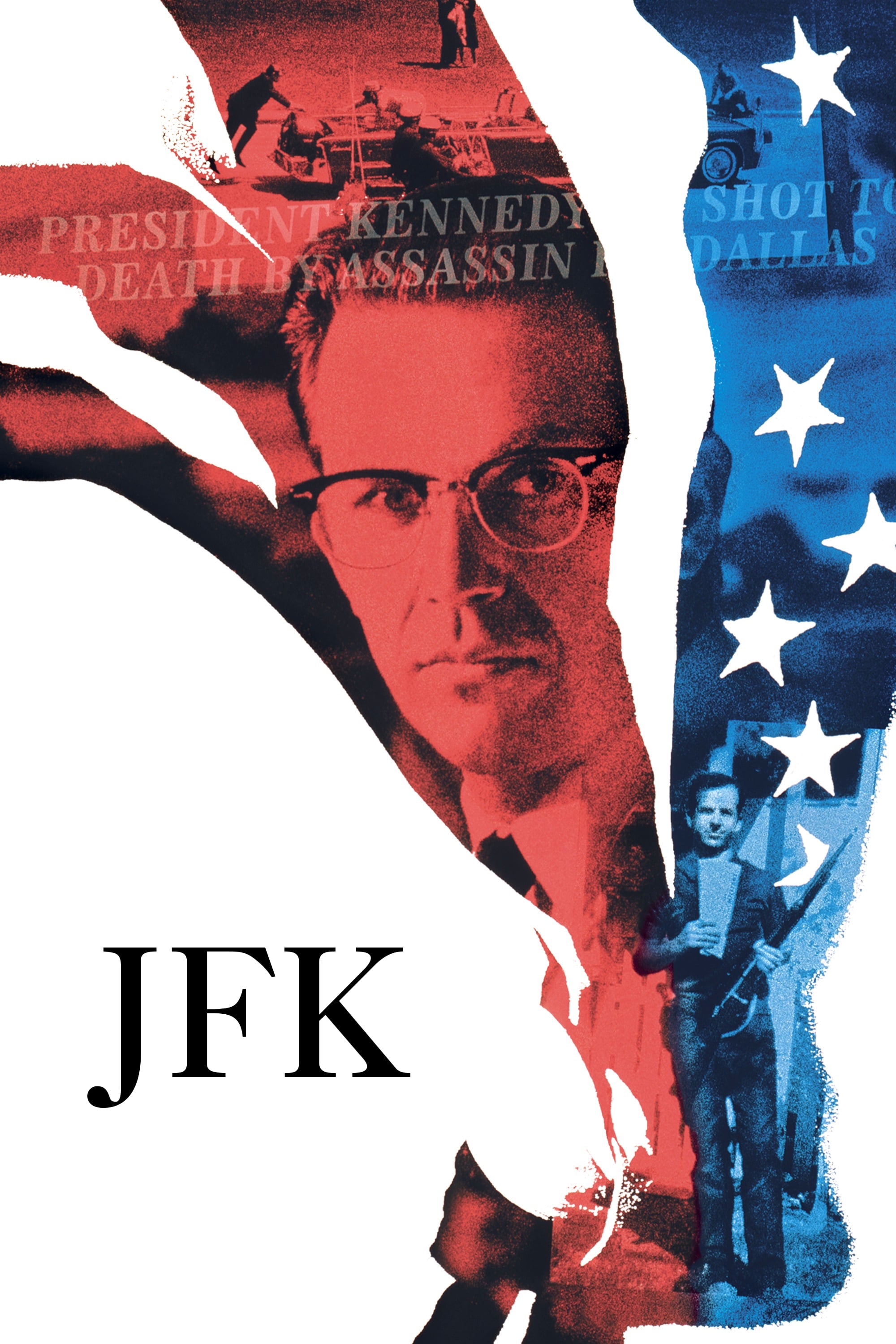

What’s Aged the Best?
Gary Oldman as Oswald; Seinfeld spoof; Pesci-Tommy Lee Jones wig battle; Kevin Bacon's career revival; Oliver Stone's Dave cameo; Tommy Lee Jones in gold paint; Dealey Plaza recreation; John Williams score; New Orleans setting; specter of JFK; character actors in tiny roles
In the discussion (15)
- Offered as number one: Oldman as Oswald is creepy, great, and looks like Oswald.
- Oldman must have shot much of his material separately with Stone; a 'Gary Oldman cut' as a standalone Oswald movie is wished for. — Chris Ryan
- Deleted-scene story: Oldman asked Stone to point the camera at him late at night for an elegiac Oswald monologue; Stone shot him in a casket and planned to end the film with it before making a different call; it can be found on YouTube. — Brian Koppelman
- The 1992 Seinfeld spoof 'The Boyfriend' features Wayne Knight and Keith Hernandez; Hernandez is praised and then jabbed as possibly a QAnon guy.
- 'The Boyfriend' is remembered as the episode that showed Seinfeld would be the biggest show, with the spitter bit called lights out. — Bill Simmons
- The wig battle between Pesci and Tommy Lee Jones: Tommy Lee wins a 10-8 round. — Bill Simmons
- Bacon is said to call the film a turning point that reignited his career, leading to A Few Good Men. — Bill Simmons
- Stone's self-deprecating cameo in Dave two years later has aged best for one participant. — Bill Simmons
- Tommy Lee in gold paint getting slapped by Pesci in a Dangerous Liaisons outfit is praised as the good version of a wild idea, unlike a cut Nicholson idea in The Departed; Tommy Lee doing it is what makes it great. — Bill Simmons
- Objection: the same scene bumps against what's aged worst, the film's attitude about homosexuality, called retrograde and unacceptable; the counterpoint is that it was part of Garrison's case against Shaw and that era's judgment. — Brian Koppelman
- Stone recreated the assassination in Dealey Plaza, spending $4 million to restore it to 1963 conditions and reroute traffic; Sutherland and Costner memorized their monologues. — Bill Simmons
- Debate on whether acting is mostly memory: one participant says no, the camera reveals compelling people like Sutherland and memorizing matters more in theater; it is jokingly settled at 70% memory. — Brian Koppelman
- John Williams's score and New Orleans as a setting are named.
- The specter of JFK himself: the speech that opens Stone's documentary, the Caesar-like shot in the X speech and the still photograph of Kennedy.
- Top character actors appear for less than a scene, including Ron Rifkin with one line, Lolita Davidovich, Brian Doyle-Murray and John Larroquette. — Sean Fennessey

Most Rewatchable Scene
Mr. X scene; John Candy scene
In the discussion (16)
- Costner's 'ashamed to be an American' moment and his New Orleans walk with his investigators, pointing out the FBI, CIA, Secret Service and O&I buildings, are nominated; the editing is praised. — Bill Simmons
- The New Orleans scenes make participants want to drink and smoke; New Orleans is called the only place one participant still smokes.
- John Candy's big scene is quoted at length: the big enchilada, a mouse fighting a gorilla, Kennedy as dead as that crab meat, and 'Daddy-o'; his moving sunglasses are praised.
- Asked when Candy died, the joking reply is that 'they killed him'. — Bill Simmons
- The hosts want to work Candy's 'any idea what you're getting into, Daddy-o' line into NBA conversations, such as Lakers defense and Frank Vogel.
- Kevin Bacon's prison scene is quoted; he 'hits a four-three from 30 feet', culminating in a crude line one participant can't believe was in the script, likened to Ashley Schaeffer from Eastbound & Down. — Chris Ryan
- Pesci's last big scene ('a mystery wrapped in a riddle inside an enigma', 'the shooters don't even know') is called great, though Pesci is said to dial it up too much. — Chris Ryan
- Pesci's wig is called out of control, and he never inhales while smoking, compared to Tom Cruise smoking.
- The first Pesci interrogation and the way Costner comports himself in the Sunday detention scene are singled out as a movie-star sequence noticed in the theater. — Brian Koppelman
- Setting the film in New Orleans lets the actors play Foghorn Leghorn, and Richardson's frames are packed with layers, such as the flambe in the restaurant scene. — Brian Koppelman
- For the Mr. X scene, Dale Die (as transcribed) wearing aviator sunglasses indoors is praised, and Garrison appearing as Earl Warren is a moment one participant rewinds to watch.
- Anecdote: after moving to Los Angeles to work for Grantland, one participant repeatedly made his wife and a friend's wife watch the Mr. X scene on Friday nights to show how the two friends talk; they never enjoyed it. — Sean Fennessey
- The Mr. X scene is compared to the 35-minute Boogie Nights sequence at Jack Horner's house as a mega-sequence. — Bill Simmons
- Two more nominations: Jim explaining the magic bullet theory, iconic once Seinfeld grabbed it, and 'back and to the left' leading to the big monologue. — Bill Simmons
- 'X is the answer' is stated over the John Candy scene, while another participant votes for the John Candy scene but says they understand.
- Also praised: the Clay Shaw interrogation, Jack Lemmon at the horse track, and Ed Asner beating up Lemmon's character at the opening. — Brian Koppelman

In the discussion (4)
- The proposal replaces William Fickner's part with Ben Affleck, letting him use his accent. — Bill Simmons
- An objection says it would turn Affleck into a character actor; the reply is that he was already a movie star after Armageddon. — Bill Simmons
- If Affleck is in a Boston movie, he has to die saving someone, so he dies saving John C. Riley. — Bill Simmons
- Affleck is said to have needed a fourth-lead part like this during his 97 to 03 run, agreed with a Kevin Bacon in Apollo 13 comparison. — Bill Simmons

In the discussion (7)
- The question draws four quick 'Cruz' answers and 'That easy', for how much time he spends on camera running the gamut while physically doing little: funny, panicked, cool, sad.
- Asked which athlete performance it compares to, the answer is a quarterback performance, cool and going for it when everything is on the line, followed by 'I think Cruise too'.
- As a last question, who won the code red scene: Sean Phenasy (as transcribed 'fantasy') thought Cruise did, and one panelist agrees, citing how Cruise walks around and quietly approaches the camera while Jessup is stuck in a chair, so Nicholson works at a disadvantage.
- Says Tom Cruise wins the movie largely because of this scene and calls it his best performance, but Nicholson owns every inch of the frame: the 'entitled' speech drips with contempt only Nicholson could deliver, and his quiet, growling, low-register power is the most powerful. — Amanda Dobbins
- 'I think Nicholson wins. Go Nicholson' is offered with evidence from an interview in which Cruise marvels at the subtle things Nicholson did, while the reverse never happened.
- One panelist rides or dies with Nicholson; the case made is that Cruise gives the platonic ideal of a Cruise performance, while this and The Shining are atypical late-career Nicholson unlike Chinatown and Fizey's pieces (as transcribed), catching him past his prime after Terms of Endearment, known from Lakers games, tan and clearly having fun; the section closes with 'I think Nicholson first when I think of this movie' and agreeing to disagree.
- Asked whether the late Bacon appreciation means going rogue for Bacon, the reply is no, since he has about four scenes and is like a table in most, despite the softball line, the basketball scene and his shell-shocked look at the end; 'I just can't get off Cruise Island'.
Podcast choices
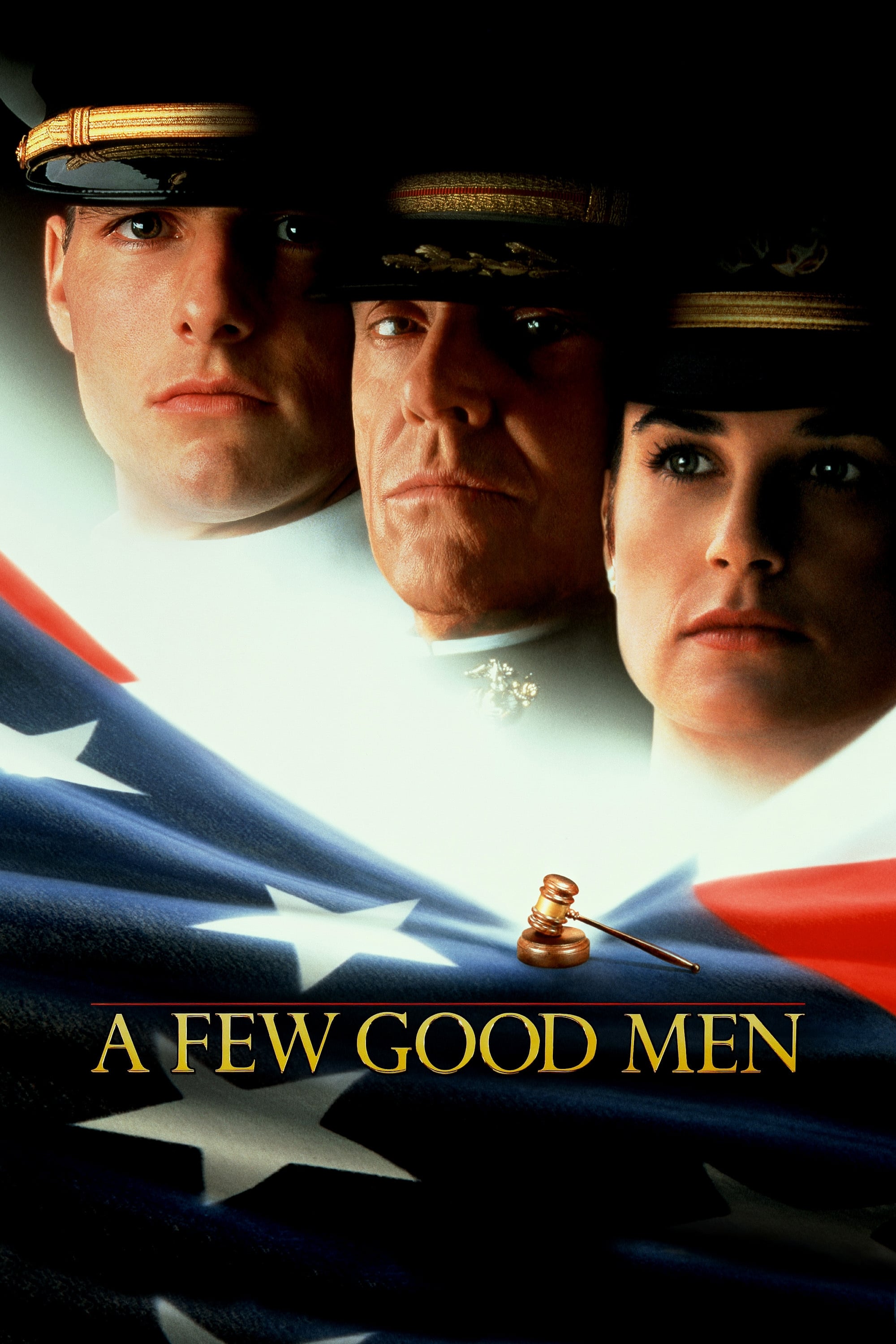

Picking Nits
Putting Jessup on the stand; Caffey calling Jessup a son of a bitch in court; whether Joe Galloway was a terrible lawyer; who should have played Joe Galloway
In the discussion (13)
- Putting Jessup on the stand was insane: they gamble six months and their careers on a fake-out with the two airmen whom Sam almost fails to get to court in time, a huge bluff that, like Rounders, is fun to rewatch even knowing how it ends.
- Cruise's 'Don't call me son. I'm a lawyer and an officer in the United States Navy, and you're under arrest, you son of a bitch' would not really happen in court, though another notes the formality had already gone once Nicholson was screaming his own threats.
- Was Joe Galloway a terrible lawyer? A prepared list argues she is good: she knows what a code red is, a quote from her advisors calls her a hell of an investigator, and she memorizes extensive biographical details.
- The list continues: she believes in due process, unlike Caffey's '12 years and out in six' deals, and at the Gitmo lunch she angers Jessup into admitting off the record that he condones code reds and will take any bait, which becomes the winning strategy.
- Further points: being a lawyer is client services, she is not friends with the prosecution, she has the idea to put Jessup on the stand, and she is never held in contempt; she is not a litigator in a film about litigation as performance, so she gets no credit, but he would not win without her and she motivates him.
- Non-legal points in her favor: her jeans are back in style, she has great taste in bar-and-grills such as the crab shack, her hair, the business suit she wears off duty on the first night with the tower logs and Chinese food, and Malcolm X glasses worn in one scene.
- The 'twice as hard as you' dynamic is called a good foil for Cruise's character and an honest picture of a woman in that workplace, making her one of the best Sorkin female characters despite the disrespect; 'I strenuously object' is bad, but she earns credit for the 'exceptional lawyer' speech that pumps Cruise up, and a host wishes Ringer colleagues gave speeches like that.
- The case against her: she is blamed for Downey, having befriended Aunt Ginny without learning Downey was not in the room; the reply is that Weinberg did witness prep, Caffey was lead counsel, and the defendants never volunteered anything they were not asked, which is when Cruise freaks out.
- 'Strenuously object' is her scarlet letter, before she was in The Scarlet Letter, along with saying 'we're going to win'; one panelist calls it a bad performance with Demi Moore miscast.
- Julia Roberts is floated as better, though she could not have been cast for the same reason as Bacon's haircut; Roberts and Cruise never made a movie together; asked to split the blame 65 to 35 between Demi Moore and Sorkin or blame 1991, the answer is that it is majority Demi Moore's fault.
- In a 2017 version the character could not just be stuck in middle-management paperwork; one suggestion flips it, making Caffey a woman and Joe Galloway a man.
- Jodie Foster was also up for the role, with one other name forgotten; Foster with Cruise is mocked as having no chemistry, measured against McConaughey and Foster in Contact and Helen Hunt with Nicholson in As Good as It Gets.
- The Galloway question is left unsolved but seeds are planted; with Julia Roberts getting every part back then, Linda Hamilton in Terminator 2 shape is suggested as a good alternative.
Probably Unanswerable Questions
Bigger impact in fewest minutes, Jessup or Lecter? What position did Caffey play? Did Sam Weinberg mail it in? Who is treated more like a subordinate? Can you make a flight disappear? Did Caffey and Galloway end up together? Which on-the-rise actor should have played Harold? What if Jessup never admits it? Was the code red scene Cruise's career highlight? Did Santiago kind of deserve to die?
In the discussion (17)
- Bigger impact in the fewest minutes, Nicholson's Jessup or Anthony Hopkins's Lecter: Jessup, since Hopkins is in jail most of that movie while Jessup has three scenes (the letter, the lunch, the ending); Lecter is put at about 18 minutes and Jessup at 11 or 12.
- The usage-rate joke gives Nicholson a 12-for-13 line with eight threes, ten rebounds and nine assists in 12 minutes, very Iguodala game six.
- Caffey's softball position: as player-coach probably shortstop, or second base, a middle infielder either way, while Herby (as transcribed) wants shortstop and the others grumble.
- Did Sam Weinberg mail it in? Yes: nobody found out Downey was not there to hear the order, and while a spouse watching blamed Joe Galloway, preparing witnesses was Weinberg's one job.
- That is a big hole in the movie; Sam is also dunked on hardest when, after Joe storms out and Daniel trashes the apartment, he starts tidying and is told to stop, like a houseboy.
- A speech shortly after about Caffey's father, meant to be motivational, backfires, since the father is recalled as an attorney general who did Brown v. Board: with a life on the line one would pick the father over the son who settles every case; Cruise is weirdly casual in a military court, as in his 'just ain't so' opening statement.
- The panel agrees Weinberg mailed it in: uncommitted until late in the trial, thinking the defendants were bullies, useful as a middle position that tempers Sorkin's ideology but useless as a lawyer.
- Asked who gets sent for legal pads, pens and lamps and who is treated more like a subordinate, Sam or Joe, the answer is Joe; whether an entire flight can be erased from the logs without the internet never sits right.
- Did Caffey and Galloway end up together or ever hook up? No; a third draft of Sorkin's script had him ask her on a date with a matching-socks callback, which one panelist prefers to 'The End' in big script letters.
- The objection is that they have less than zero chemistry, which leads to asking who Cruise has chemistry with at all, even Nicole Kidman in Days of Thunders (as transcribed), before a joke that they hooked up once after a softball game.
- Caffey's love life is floated and the answer offered is that he is asexual or too busy with work.
- Which on-the-rise Black actor of 1991 would have been better as Harold: the role has about ten big scenes, Cuba Gooding could have done it, the actor had to be big because Dawson leads the troop, and Morris Chestnut would make little difference and was not known then.
- What if Jessup never admits the code red: Caffey (transcribed as Kathy) goes to jail or is court-martialed and ends up coaching softball; in a real-life version the marshals come in, Bacon's character would not allow it, and it is game over once contempt is called.
- Caffey almost does not go for it until Jessup taunts him about phone records and toiletries; the realization that Santiago did not pack, prompted by seeing his own shirts in the closet, is praised against the usual bird-across-the-sky light-bulb moments.
- Was the code red scene the highlight of Cruise's career? He goes toe to toe with a multiple Oscar winner, Sean's view that Cruise beats Nicholson is held for later, and no single Cruise scene is better, not 'You complete me', Top Gun, the barman's poet in Cocktail or the Risky Business dance; it is called his career highlight.
- Whether Joe Galloway set back the women's movement by one, three or five years is answered with 'Demi Moore might have' and pushed to Picking Nits.
- Did Santiago (transcribed as San Diego) kind of deserve to die? Answers range from no to just a tiny bit; one panelist inches closer each viewing to thinking Jessup has a point, since the private could not keep up, ratted on his troop and broke the chain of command, and another goes that far but not to deserving to die.

Unintentional Comedy Award
Kevin Bacon leaving the hoops game; Joe Galloway's 'they stand on a wall' answer; Tom Cruise holding a bat
In the discussion (9)
- Nominees start with Cruise swinging a softball bat and drunk Cruise, which may not be unintentional, though it is funny to watch him play drunk when he has clearly never had a drink.
- More nominees: randomly anti-Semitic Jessup ('You, Lieutenant Weinberg'), Kendrick's one laugh, Kevin Pollack asking why she likes the Marines so much and Joe Galloway answering 'because they stand on a wall and they say, nothing's gonna hurt you tonight not on my watch', Bacon leaving the hoops game, and Amazon billing Wolfgang Bodison first.
- The presenter's choice is Bacon leaving the hoops game: walking into a pickup game and shouting about doctored logbooks is a life dream, the players protest 'what the hell, Jack' at 10-8, and his slick ballet-like half turn is called Footloose training.
- The hallway scene where she says they are going to do this and he answers no, you're not, is also very good Bacon.
- Asked for a pick, another goes with Galloway's 'they stand on a wall' answer, noting the panel keeps dancing around the Galloway question.
- A third pick is Cruise holding a bat, with a subsection for him shooting Nerf basketballs while asking 'where's my bat?', two sports at once.
- Cruise's screen sports: hustling basketball in Cocktail with a shot like a six-year-old's, a suspicion he was a wrestler, All the Right Moves, football and a future Super Bowl in Oblivion, a catch in War in the Worlds (as transcribed), and volleyball in Top Gun in jeans on the beach.
- His softball swing is too fast: the tight shot has him hitting ball after ball like a batting machine; the early grounders are fine, but the batting practice when Joe comes to talk is not.
- A favorite nineties screenwriting trope: after 'you don't even know me', a character recites the other's résumé from memory, which one host plans to try on Amanda in their next argument.

Apex Mountain
JT Walsh; Wolfgang Bodison; Tom Cruise; Kevin Bacon; Jack Nicholson (late career)
In the discussion (10)
- JT Walsh gets an 'Apex for me for sure' and a second yes calling it his most infamous role, prompting a joke about how seriously the question was taken.
- Aaron Sorkin is close but not the apex, a nice view but not the top; the first season of The West Wing and The Social Network are his apex, this film is likened to his 63-point Michael Jordan game with not a bad scene in it, and Moneyball is set aside because he rewrote somebody else's script.
- Kevin Pollack is a no because of The Usual Suspects, which another agrees with.
- Kevin Bacon is a no from one panelist, who calls him great and underrated here but notes how many films he has made, with The River Wild mentioned; another says no too, theorizing his bad haircut was deliberate so he would not distract from Cruise, like Kiefer's haircut, and puts his apex at Footloose, also liking him in Mystic River.
- A third panelist disagrees with both and says this is Bacon's apex: not a meaty part but memorable, likable, with a dash of unintentional comedy, and hard to imagine anyone from that era, such as Matt Dillon, playing it without competing with Cruise.
- Bacon was taking smaller parts in bigger movies then, as in JFK; though he is on the prosecuting side backing Jessup, he has some morality, saying he does not think the guys deserve jail but does not make that call; after an aside that his leaving the pickup game is unforgivable, a 'yes' for him is restated, possibly by the same panelist.
- Wolfgang Bodesen (as transcribed) is a yes: 'that's the Apex for Wolfgang. I wish him well.'
- Jack Nicholson's career overall draws four 'No' answers; then 'Late Jack Nicholson. Yes.' is offered, with one voice naming As Good as It Gets, and challenged over The Departed the late-career yes holds, because the Departed performance with its accent as a Whitey Bulger figure is called out of control and the weak link of that film.
- Tom Cruise gets two yeses, with this chosen over Cocktail and a 'this or The Firm' aside; no one else in 30 years could bring this mix of unintentional comedy, good acting, sarcasm and bravado, Leo DiCaprio could not, though Matt Damon ten years later might have.
- A TV version is planned for next year with Alec Baldwin, who is called amazing, but Caffey has not been cast; James Franco was rumored, a terrible idea, since the part needs an airhead who is really smart, a lawyer who plays softball, attractive but not a romantic lead; Demi Moore is left off the list as the nadir of her career.
What’s Aged the Best?
Cruise's 'why the two orders' brainstorm; the mess hall cross-examination; Harold and Caffey at the end
In the discussion (9)
- Nominees: the ending, the 'galactically stupid' tirade when a drunk Cruise loses it on Demi Moore, the mess hall cross-examination that Bacon later praises as a great redirect, Cruise's Nicholson impersonation, Harold's 'ten hut' with Cruise, the 'why the two orders' brainstorm in the Jessup cross, and Jack Ross's face at Jessup's code red admission.
- Like a decanted wine, the subtler moments should age best, which rules out Cruise doing Nicholson, since people their age have spent their lives watching others imitate Nicholson.
- 'Why the two orders' always gets one panelist, and another answers 'me too'.
- Picks the mess hall cross-examination: rewatched it last night, it is subtle and lands every time, and the way Cruise grabs the notebook back from Kevin Bacon is peak Cruise swagger. — Amanda Dobbins
- The scene has an early Noah Wiley (as transcribed), later important on ER, and shows the cleverness of the script solving problems without being showy or straining plausibility.
- Another pick is Harold and Cruise's character finding common ground at the end, which still gives chills on the 557th viewing: 'Harold, you don't have to have a badge to have honor' and the 'Ten Hut'; Harold is never seen again.
- The actor playing Harold appeared in a couple of nineties action movies and is believed to have been Rob Reiner's assistant before being thrown into the film.
- The ending leaves the film dying for a coda: it is unclear how much trouble Jessup is in, unlike the court-martial that follows the submarine battle in Crimson Tide, and the two Marines are still dishonorably discharged.
- A small flaw: after the code red admission Bacon's character later says he has to go arrest Kendrick, prompting the question of why he waited a week.
Films in the archive
A Few Good Men
1992


Animal House
1978

Apollo 13
1995

Crazy, Stupid, Love
2011

Footloose
1984


Friday the 13th
1980
Frost/Nixon
2008
JFK
1991

Picture Perfect
1997
The River Wild
1994

Tremors
1990

Wild Things
1998