
Stats
- Episodes featuring their films
- 5
- Movies in this archive
- 6
Rewatchables episodes featuring Brian De Palma’s films
Blow Out
1981 film
Bill Simmons · Chris Ryan · Sean Fennessey · Wesley Morris
Aired November 15, 2022
Mentioned in discussions


Half-Assed Internet Research
Career choices; Blow-Up inspiration; budget; reviews; local casting; Allen’s reception; insomnia; stolen footage; reshoot; dam; parade; Murder à la Mod
In the discussion (13)
- Travolta reportedly turned down An Officer and a Gentleman, Splash and American Gigolo while choosing Staying Alive, Two of a Kind and Perfect during his decline. — Bill Simmons
- Blow Out is described as a reimagining or homage to 1966’s Blow-Up, shifting perception from eye to ear; the earlier film’s influence is distinguished from rewatchability. — Sean Fennessey
- The film reportedly cost 18 million dollars and made 13 million, following Dressed to Kill’s success; the bleak ending is offered as a reason for commercial failure. — Sean Fennessey
- Pauline Kael’s rave compares De Palma’s achievement to Altman and Coppola transcending genre, and praises Travolta and Allen. — Bill Simmons
- Philadelphia weatherman Dave Roberts appears early in the film and is identified as David Boreanaz’s father; the discussion corrects confusion between him and the actor playing Frank Donahue.
- Allen reportedly received both Golden Globe new-star recognition and a Razzie nomination for Dressed to Kill, illustrating her divisive reception; her subsequent career moved toward genre work including RoboCop. — Sean Fennessey
- Travolta reportedly had insomnia throughout filming, which is thought to help his tired appearance and performance. — Bill Simmons
- Two reels of parade footage were reportedly lost when a delivery van was stolen during a doughnut stop, requiring a 750000-dollar Philadelphia reshoot. — Bill Simmons
- Kovács reportedly shot the replacement ending because Zsigmond had moved on; its visual relationship to the rest of the film is questioned. — Chris Ryan
- Missy Cleveland, the shower performer, is identified as Playboy’s April 1979 Playmate. — Bill Simmons
- The water crash required a 60-foot-long 15-foot-tall dam and environmental involvement; the parade used 11 cameras,1000 extras and 25 stunt drivers. — Bill Simmons
- Manny watches De Palma’s first film, Murder à la Mod, on television.
- De Palma wanted to make Prince of the City, which ultimately went to Lumet, considered well suited to it. — Sean Fennessey

What’s Aged the Best?
Analog craft; Travolta; expert jobs; local news; Philadelphia; Franz; film stock; diopter; fake films; names; dubbing; craft team; conspiracy relevance; split screens
In the discussion (15)
- The tactile analog equipment and manual labor are cherished; an iPhone-era version would be easier and less singular, though De Palma might still find an expressive visual method. — Chris Ryan
- Travolta at the end of his first star era is praised, especially his relaxed, believable station-bar flirting while Sally does her makeup. — Chris Ryan
- Movie characters who are world-class at unusual jobs remain a favorite. — Chris Ryan
- The era when threatening to go on local television carried weight is nostalgically praised. — Bill Simmons
- Early 1980s Philadelphia, its recognizable locations and geographically honest cuts are praised; the city dictates the action rather than being rearranged to suit it.
- Early Dennis Franz is praised, including his unmistakable Chicago quality and connection to Dressed to Kill. — Chris Ryan
- High-quality film stock supports the extensive night photography. — Chris Ryan
- Manny Karp is admired as a character name.
- De Palma’s use of the split diopter is praised as unmatched. — Bill Simmons
- De Palma’s fake films within films are celebrated, including Body Double’s music-video and pornography crossover. — Bill Simmons
- The cop’s instruction to save paranoia for public television is enjoyed. — Chris Ryan
- The dubbing-session performer’s knowing smile while pulling another woman’s hair is praised as a quintessentially perverse directorial moment. — Chris Ryan
- The craft team is praised: Sylbert’s run Heaven Can Wait, Hardcore, Kramer vs. Kramer and Blow Out, and Hirsch’s The Fury, Empire Strikes Back, Blow Out and Creepshow illustrate remarkable consecutive work. — Chris Ryan
- The consuming belief in political conspiracy is considered newly relevant to online conspiracy culture. — Sean Fennessey
- The filmmaking and split screens are praised; the slow-motion owl still produces a visceral shock. — Wesley Morris
In the discussion (1)
- Scarface supplies a De Palma crime-epic pairing; No Way Out supplies a 1987 Costner double bill, played before The Untouchables. — Bill Simmons

In the discussion (1)
- As a Hall-of-Fame-plaque film, Connery’s Oscar competes with his Bond identity before an affirmative choice; De Palma remains arguable between this and Scarface. — Bill Simmons
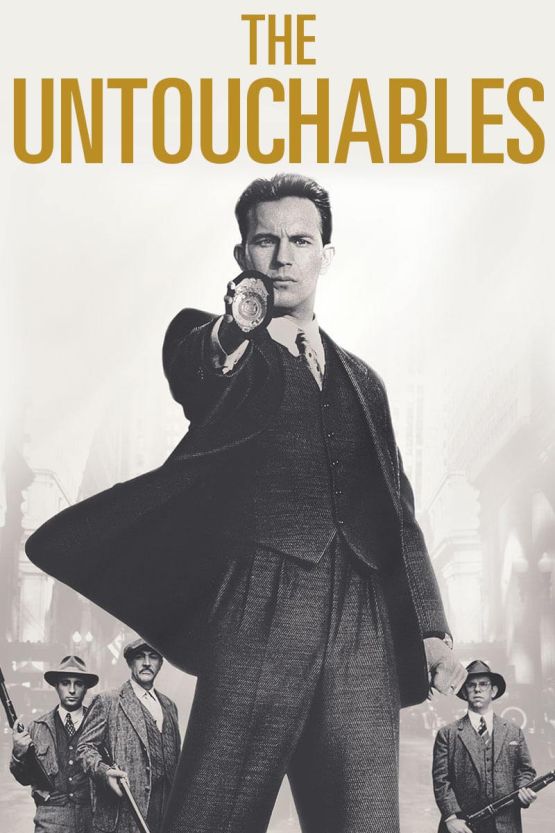

Apex Mountain
Al Capone
In the discussion (6)
- Costner and Garcia are rejected; The Sting is preferred for Prohibition, despite its less central use of the subject. — Bill Simmons
- Marriage is floated jokingly, with Kramer vs. Kramer as an incongruous comparison, without a settled affirmative answer. — Bill Simmons
- This is preferred for Capone over the secret-vault television event and Stephen Graham’s Boardwalk Empire portrayal. — Chris Ryan
- De Palma is rejected: Mission: Impossible is the large-budget alternative, while the period around Dressed to Kill and Blow Out better represents maximum career leverage. De Niro is also rejected. — Bill Simmons
- Older Connery prompts The Rock and Finding Forrester comparisons, with The Hunt for Red October preferred. — Bill Simmons
- The Chicago-movie comparison lists Running Scared, About Last Night, Ferris Bueller’s Day Off, Above the Law, Adventures in Babysitting, Midnight Run, The Big Town and The Untouchables; Ferris Bueller is preferred for use of the city. — Bill Simmons
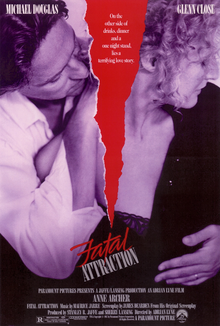
Casting What-Ifs
Glenn Close’s casting challenge; Sharon Stone and other Alex candidates; Christopher Reeve; Andie MacDowell; Brian De Palma; John Carpenter
In the discussion (6)
- The producers doubted Close’s sexual suitability until her hair and chemistry with Douglas helped establish the role. — Bill Simmons
- Stone auditioned and was passed over; the panel argues Alex should be Douglas’s contemporary. Field, Alley and Thompson are reported as considered, with uncertainty. — Bill Simmons
- Elisabeth Shue’s candidacy is doubted because of her age; Carrie Fisher is mentioned, and Field’s ability to play Alex is debated through Sybil.
- Reeve reportedly declined Dan; the panel doubts his fit for spontaneous moral compromise. MacDowell was considered for Beth. — Wesley Morris
- MacDowell is described as a later market replacement for Archer, with hypothetical Archer roles in Sex, Lies, and Videotape, Groundhog Day and Short Cuts.
- De Palma reportedly wanted Douglas replaced; Carpenter then declined over similarities to Play Misty for Me and objections to the original ending. — Wesley Morris
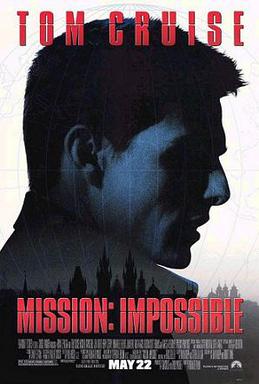

Who Won the Movie?
Tom Cruise or the chaotic collaborative Hollywood process that made the film
In the discussion (3)
- Cruise and De Palma are named first, then a wrinkle: Hollywood, the studio system putting people at the top of their craft in position to succeed, with the money to build an aquarium that did not exist and blow it up, the tanks being Tom Cruise's idea; the chaotic, almost old Hollywood way the film came together is now heard of only as a cautionary tale, like the fired Star Wars director or Fantastic Four, so the victor may be that improvisatory collaborative filmmaking.
- The case cuts both ways: the manic nature of Hollywood creation showed this can work, but the film is also end times for movies, signaling a new path for the greatest movie star of the last 30 years who realizes he must keep falling off things to stay relevant into his 50s, the end of Brian De Palma, the least celebrated yet maybe most talented movie brat, the start of the powerful Wagner-Cruise partnership that ended badly at United Artists, and the end of Jon Voight's good movies after Heat; it feels like a win for nobody but Mission Impossible.
- The counter-pick is Cruise, the engine of the whole thing, since nobody else could play Ethan Hunt and the attempt to try failed; the what-ifs of a different director or Cruise continuing to make films like A Few Good Men are unknowable, and the recent films have leveled out and gotten better.
Podcast choices
- Speaker not identified
- Tom Cruise
Apex Mountain
No affirmative selection
In the discussion (4)
- Apex Mountain and who won the movie are bundled because they are complicated; Tom Cruise, Brian De Palma and Ving Rhames all get no, with Baby Boy preferred to Pulp Fiction for Rhames.
- Jon Voight is not close, with Anaconda as the joke; Kristen Scott Thomas is a no, joked to be Only God Forgives; Jean Reno is a no, so this is Apex Mountain for nobody.
- Henry Zerny (as transcribed) is floated hesitantly as the one possible apex, immediately answered that he is better in Clear and Present Danger, with the two self-described only Henry Zerny experts in the world saluting each other.
- Danny Elfman is a no, with Beetlejuice and Batman as his peak and a plug for the Midnight Run soundtrack; cinematographer Stephen Burham (as transcribed) has The Outsiders, Rumblefish, St. Elmo's Fire, Eight Million Ways to Die, The Untouchables and Hoffa, and The Untouchables is chosen as his peak instead.
Picking Nits
Why Jim shoots Claire first on the train; Jim and Claire's confounding relationship; Krieger's end game; what Kittredge's deal with Max amounts to; the helicopter in the train tunnel; what Max and Phelps are actually after
In the discussion (5)
- Nobody understands why Jim had to shoot Claire first: she only asks whether they really have to kill Ethan and tells him not to, and he guns her down on the train, which makes no sense; maybe Emmanuel Bayard (as transcribed) did not want to return, or the film needed to underline that Phelps is deranged, but it remains confusing.
- Jim and Claire's relationship confounds the hosts: on reuniting with her, Phelps immediately disparages her to Ethan in crude terms and later tells Ethan to take her, which seems unnecessary when Ethan has been a gentleman apart from the handsy magic trick; the joke is that De Palma has a problem with sexual politics.
- Krieger's end game is unclear beyond living and dying by the black market and cutting out the middleman; and what really happens at the end when Kittredge offers Max a deal, implying she has information they can use, after which Ethan is simply back in the mix.
- The science of flying a helicopter into the train tunnel is very tough, even if Krieger's earlier boast about flying one into the lobby of Fort Knox sets it up, and where he would have learned that is unknown; when the other train comes the other way the film cuts to a hard close-up on Ethan's face because it is illogical.
- Flagged earlier during the Redgrave discussion as a flaw or a nitpick: every villain in the series has elusive aims, this film has Phelps and Max, and whether they are just shifting money around is unclear.
What’s Aged the Best?
De Palma's visual style
In the discussion (5)
- The movie is in a race against time as digital life changes; it was weirdly prescient about wireless streaming video, while things like Netscape no longer make sense; the first nominees are the Hitchcockian vibe of drawing on 1950s and 1960s Hitchcock for an espionage movie, especially in the Prague sequence, the cat-and-mouse format of the set pieces built on ducking into rooms, masks, disguises and hanging from places rather than buildings falling, and Cruise's performance.
- Casting great actors in supporting roles is argued to hold up: Voight at the right stage of his career to be Phelps, a character from the television series; Manuel Bear (as transcribed), an actress few American filmgoers had seen; Jean Reno coming off Leon the Professional with his dickishness; Ving Rhames, who becomes the only other connecting figure in the series along with Monaghan; Kristen Scott Thomas, Vanessa Redgrave, Emilio Estevez and Henry Zerny (as transcribed), later of Sharp Objects, all lived in and knowing what movie they are in.
- The Prague sequence is bittersweet because two or three movies of the Estevez, Kristen Scott Thomas and Cruise team would be welcome; it is set up like Alien with people who know each other, down to the wife's coffee and the barn in Kiev, and the scene where Cruise and Kristen Scott Thomas make out while tracking the arms dealer shows legitimately good chemistry, if less than Cruise's with Vanessa Redgrave; killing off those movie stars 35 minutes in is called a Hitchcockian twist like Janet Leigh in Psycho.
- Estevez's line about lasagna while showing Cruise the chewing gum explosive is a favorite; red light green light and 'you've never seen me very upset' show Robert Towne style dialogue sprinkled throughout, and the hosts assign roles: Koepp the genius of action plotting, Zalian (as transcribed) the dramatic storyteller, Towne the king of memorable lines, with Tom Cruise movie starring on top.
- De Palma's visual flair under control is the final nominee: the deep-focus shot where Don Lowe (as transcribed) is dressed down by Henry Zirny's (as transcribed) CIA character before being sent to Siberia, a charismatic look unlike same-looking modern blockbusters, stylish and fun where a Villeneuve film never makes you laugh; De Palma's playful visual style is named the pick.

Most Rewatchable Scene
The Langley heist
In the discussion (6)
- Nominees run through the Prague sequence as a whole (a 32-minute opening act that even fades to black after Tom Cruise jumps through the Aquarium and escapes from Kittredge), Ethan and Max's negotiation, the Langley heist, and the Phelps versus Hunt coffee scene where Hunt sees what Phelps has done while Phelps lies to him, the scene that confused a generation of filmgoers.
- One host admits not understanding the coffee scene until rewatching it yesterday after roughly 20 viewings; the Langley break-in is called the most iconic, incredibly staged, ripped off numerous times, and the precedent for Tom Cruise attempting something that seems impossible, even though Wu takes it to another level.
- The scene one host rewound four times is Ethan on the horn with Kittredge after the team is killed, shouting that his team is dead, that they knew we were coming, that the disc is gone and the list is in the open; the clip is played, and Cruise is said to go Ruffalo before Ruffalo and to resemble Bill Paxton in Aliens.
- The Kittredge call is a bookend to the Aquarium restaurant scene: before it Cruise is loud and brash, cracking jokes while Jon Voight's Phelps lays out the plan, and in the restaurant he turns cerebral, seeing the other team, the waiters and the lovers on the river bank; the Langley heist is then named the pick, iconic and almost all in silence, with the tension of Don Lowe (as transcribed) about to come back, and compared to the silent drilling heist in Rafifi (as transcribed), the host's favorite heist movie.
- Further Langley favorites: the digital sound meter, the rat in the air duct likened to the final shot of The Departed, the Top Copy (as transcribed) reference to the same filmmaker Jules Dassen (as transcribed), the trope of explaining the heist on the train before doing it with Jean Reno, Ving Rhames and Emmanuel Bayard (as transcribed), Cruise's Cheshire Cat grin saying it is even worse than you think, and the first encounter with the idea of an air-gapped computer; Langley is confirmed as the most rewatchable scene.
- Asked for memories earlier, the Langley drop of Cruise hanging is named the iconic image inside the movie, one the later Mission Impossible films call back to every time, and the film is called De Palma's last great movie. — Sean Fennessey

Half-Assed Internet Research
Oak trees were helicoptered in for the Lake Berryessa murder scene; all the gore was added with CGI because repeated takes made fake blood impractical; the film was shot digitally apart from the opening sequence; James Ellroy called the three lead performances inadequate yet the film great; Downey left jars of urine on set to protest the long hours
In the discussion (4)
- When the crew arrived to shoot the lake murder scene in Napa the oak trees were no longer there, so Fincher had oak trees flown in by helicopter and temporarily planted with water to keep them alive for the shot; the hosts joke about the trees flying commercial to Santa Rosa next to Groot.
- Fincher used CGI for everything gory because with so many takes fake blood would have meant wiping down the set each time, so for the taxicab murder he could shoot a hundred takes of Mark Ruffalo unlocking a door and add the blood splatter later; the opening sequence was shot on film and the rest digitally, edited on an Avid rig, and much of the tangible period feel the hosts admire is actually post-production.
- James Elroy (as transcribed), whose Black Dahlia Fincher was going to direct before Brian De Palma did, is quoted finding it most interesting that Gyllenhaal, Downey and Ruffalo are miserable in the film, three inadequate and unconvincing performances he does not believe a word of, and that it is still a great movie; the hosts observe he is in harmony with Andy Greenwald.
- An earlier research aside on Fincher's methods: Downey reportedly left jars of urine around the set to protest the long hours and decided to give Fincher what he wanted because he understands gulags; Gyllenhaal is quoted on takes running from five to ninety plus reshoots that left him asking where the risk was; Fincher's reply was that he is not interested in earnestness, the thing he hates most in acting, and that about fifteen takes gets actors out of it.
Films in the archive
Blow Out
1981


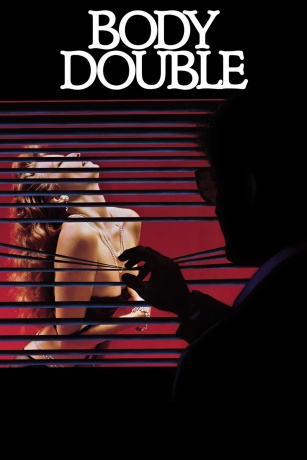
Body Double
1984
Mission: Impossible
1996

Scarface
1983


Snake Eyes
1998
The Untouchables
1987