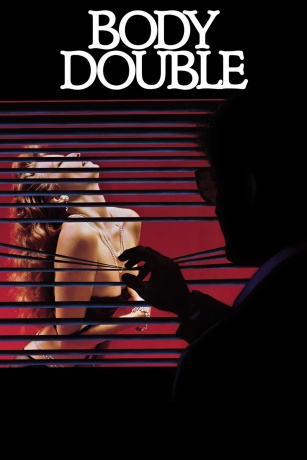
The dog is tentatively linked with White Dog, and its survival is imagined rather than established; Sam’s failure to swim also raises a question. — Sean Fennessey
Whether Sam was also the man with Jake’s girlfriend is briefly wondered and considered unlikely.
Gloria’s payphone confidant is unidentified; an affair is presumed as a possible motive but remains speculative.
Jake’s physical suitability for adult performance is wondered about because his initial characterization seems inconsistent with his comfort there. — Chris Ryan
A hypothetical accidental casting of underage Traci Lords raises questions about removing footage or withdrawing tapes; the discussion distinguishes ordinary acting from explicit scenes and remains speculative.
The most humiliating sexual position to discover a partner in becomes a crude hypothetical, with doggy style proposed and a Longlegs joke added. — Bill Simmons
The whole story might be Jake’s claustrophobic fantasy: the spinning kiss, reservoir unreality and restored job suggest either an opening-set episode or acting-class trauma as a starting point.
An imagined De Palma interview confirming the dream theory is explicitly not a real statement he made. — Bill Simmons
The reservoir ending sacrifices understandable plotting for a location De Palma liked, with a dream transition and seemingly bottomless grave, though the dog’s attack is well staged.
Despite De Palma’s provocative promises, the movie seems tamer than its potential and more interested in the absurd workaday sex business than arousal; Crimes of Passion is an extreme comparison.
Jake should remain in adult filmmaking after immediately landing featured work, with the Chemosphere an ideal set and comic qualifications about technique. — Chris Ryan
Consensual unsimulated sex in mainstream films is advocated as a remaining boundary, contrasted with screen violence; The Brown Bunny’s backlash and explicitly unconfirmed rumors about other films are discussed.
This is called the best limited integration of the adult-film world into a mainstream movie; Boogie Nights, Hardcore, Wonderland, 8MM, Orgazmo and others supply comparisons. — Bill Simmons
Jake and Holly encountering another actress after drinks is identified as a scene where the two film-industry worlds look similar. — Bill Simmons
Sid Goldberg’s adult-industry interview and correction from expressionist to exhibitionist are singled out as comic highlights.
Jake discovering his girlfriend with another man is nominated: his cheerful obliviousness and humiliating retreat establish his weakness, with the staging compared to Boogie Nights. — Bill Simmons
The acting-class sardine exercise is judged important but not especially successful because Sam recognizes Jake’s vulnerability there. — Bill Simmons
The house-sitting offer provides an appealing leap into luxury, prompting an anecdote about temporary loft living after moving to Los Angeles.
Sam introducing the precise nightly striptease is absurd but persuasive to the entranced Jake, who accepts the house and spectacle without the obvious questions.
Jake follows Gloria to the Rodeo collection, behaving conspicuously at a payphone and retrieving discarded underwear; security intervention is deserved. — Bill Simmons
The mall’s moving camera, escalators, payphone staging and Donaggio score make apparently uneventful following mesmerizing, recalling Dressed to Kill’s museum sequence.
The crowded elevator triggers claustrophobia, while the underwear-shop viewpoint and later police rebuke emphasize Jake’s creepiness. — Bill Simmons
The purse-snatch chase offers tiring, realistic running and striking Long Beach terraces, though easy access to Gloria’s phone call and her calm reaction are questioned. — Bill Simmons
The tunnel repeats claustrophobia before an extravagant spinning kiss, whose dreamlike unreality and sweeping camera are connected with Hitchcock and Blow Out.
The drill murder is admired for not showing penetration, comic plugging-in interruptions and blood dripping through the floor, despite its contested phallic imagery.
Sid Goldberg’s program, Linda Shaw’s adult-film titles and his smooth transition to a trailer make the television sequence especially funny. — Bill Simmons
Holly Does Hollywood’s five-minutes joke and lurid review blurbs are praised as meticulously observed adult-film parody. — Bill Simmons
The move into the adult industry is considered a high point across video store, trailer, sets and casting, with strong influence on Boogie Nights; Goldberg is distinguished as a fictional role from real performer Linda Shaw.
The Relax adult-film/music-video sequence is praised as an early successful translation of MTV aesthetics into narrative film, with De Palma studying visual form and choosing Frankie Goes to Hollywood at the right moment.
Holly’s businesslike contract and boundary speech on the date is praised for effortless delivery; Jake’s producer impersonation is compared unfavorably with George C. Scott in Hardcore.
The encounter with Kimberly Hess and her career/body advice is admired as industry satire; the claim that her actor Rebecca Stanley was an adult performer is stated uncertainly rather than verified.
Jake confessing he is not a producer sends Holly away and leads to the visually striking but confusing reservoir confrontation.
Relax is the most-rewatched choice; the following sequence is another favorite, while the stretch from video discovery through Holly’s first date is called elite. — Bill Simmons
The first nightly dance is a late most-rewatchable-scene nomination, emphasizing the uncertainty between Shelton and Griffith. — Sean Fennessey
De Palma’s combative interview style and post-Scarface three-picture deal are connected with doubling down on sex and violence; the body-double idea reportedly grew from Dressed to Kill.
Robert Avrech reportedly worked from De Palma’s reinterpretations of Hitchcock, and the studio rejected the original plan for unsimulated sex. — Bill Simmons
Shelton’s performance was reportedly redubbed by Helen Shaver, an unusual American-production choice; an interview suggests Shelton’s own voice is normal, while Shaver’s sultry tone is praised.
Griffith’s casting and nomination revived her career; De Palma reportedly knew her through Trivial Pursuit with Stephen Bauer and recovering actors. — Bill Simmons
A $10 million budget and $8.8 million gross are reported; De Palma’s continued sense of failure contrasts with later affection for the movie. — Bill Simmons
Kael’s disappointment is contrasted with Ebert’s praise and her earlier De Palma advocacy; her Hollywood experience and critical judgments are debated.
The discussion identifies several real adult performers and Bauer’s cameo, while naming Michael Kearns as the stunt-cock performer; these are podcast casting claims rather than newly verified metadata. — Bill Simmons
Locations are listed with explicit uncertainty about the Beverly Center and whether the video store is Tower; the Chemosphere is preferred as the defining Los Angeles place. — Bill Simmons
The Relax set was reportedly reused for Fright Night’s nightclub sequence. — Bill Simmons
Jake’s car is identified as a 1967 Chevrolet Camaro RS convertible, prompting jokes about jumping into cars. — Bill Simmons
De Palma denies a persistent rumor of many women performing private auditions at his home, saying only Haven and Griffith worked there on the routine; the response is teased but not established as false. — Bill Simmons
Griffith’s routine audition tape was reportedly destroyed at her request. — Bill Simmons
An all-Black Philadelphia cast is proposed enthusiastically. — Bill Simmons
A 2022 prestige series could expand the politician’s story and pervasive phone imagery; Fincher is suggested but disputed over whether he would preserve the fun and De Palma’s distinctive style.
De Palma is rejected here in favor of Dressed to Kill’s commercial freedom; Scarface is an alternative, and producer George Litto’s Filmways position is credited with enabling Blow Out.
Lithgow’s Burke is the weak-link candidate for excessive craziness: a political setup escalating into serial murder strains plausibility, though the objection is to degree rather than eliminating him. — Bill Simmons
The portrayal is defended through De Palma’s recurring maniacal Lithgow roles and because Burke’s serial-killer cover story ultimately succeeds in hiding the political connection. — Sean Fennessey