‹ All movies

Ness misuses his accountant

Chris Ryan: Assigning the accountant to guard the key witness instead of the skilled shooter effectively sentences him to death.

Bill Simmons: Catching Capone came at the cost of two colleagues.

Get the apple off the tree

Bill Simmons: Recruit directly from the source rather than risking a rotten apple in the barrel is preferred; trust nobody is also offered, despite the contradiction of asking Ness to trust Malone.

The film

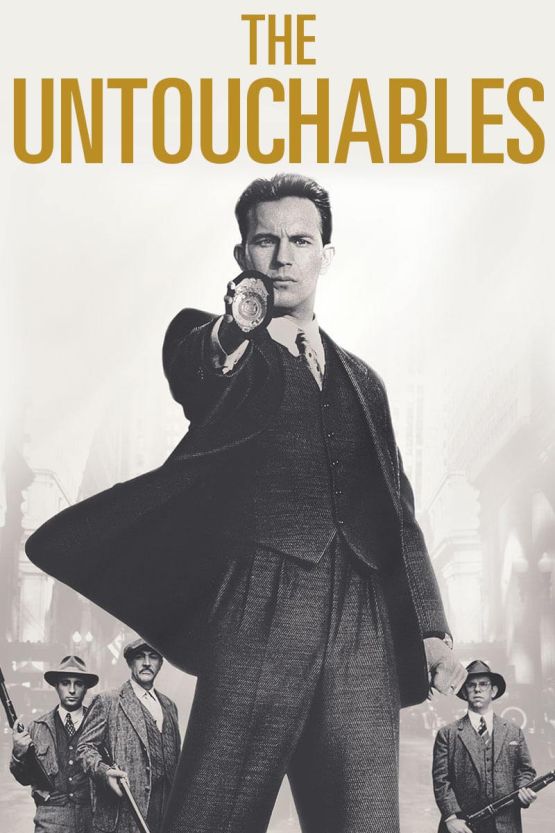
The Untouchables (1987)

Directed by Brian De Palma · Crime

120 minutes

Cast

Selected cast credits · Film reference

Kevin Costner Eliot Ness
Charles Martin Smith Oscar Wallace
Andy Garcia George Stone
Richard Bradford Mike Dorsett
Jack Kehoe Walter Payne
Robert De Niro Al Capone
Sean Connery Jim Malone
Billy Drago Frank Nitti
Brad Sullivan George
Patricia Clarkson Catherine Ness
Vito D’Ambrosio Bowtie driver
Don Harvey Preseuski
Chelcie Ross Reporter
Robert Miranda Gunned head

Everything from the episode

In the order the hosts got to it. Open a row for the discussion.

26:16

Roger Ebert's review

In the discussion (2)
Approx. transcript time · 00:26:16Read transcript
  • Ebert’s two-and-a-half-star assessment and preference for the uncut Once Upon a Time in America are challenged on rewatchability grounds. — Bill Simmons
  • Ebert’s complaint about clichés rather than invention is rejected; the filmmaking and set pieces merit at least three stars in the response. — Bill Simmons
31:32

Most Rewatchable Scene

Train-station baby-carriage shootout

Train-station baby-carriage shootout

In the discussion (12)
Approx. transcript time · 00:31:32Read transcript
  • Capone’s opening interview, overhead framing and shaving nick establish both theatrical charm and danger. — Craig Horlbeck
  • Malone joining Ness and the church conversation deliver the Chicago-way bargain, blood oath and memorable Mamet rhythms. — Bill Simmons
  • Garcia’s recruitment is enjoyed for the combative exchange and physical back pat; the ethnic casting reversal and hotheaded persona prompt discussion. — Bill Simmons
  • Capone’s teamwork speech and baseball-bat killing are memorable; the single impact and others’ reactions are considered sufficient violence. — Bill Simmons
  • The Canada raid is enjoyable but called clumsy in one assessment; Malone’s fake execution of an already-dead man is particularly admired, while the charge fulfills the Western conception. — Bill Simmons
  • The elevator revelation and blood-written accusation are admired as a single-shot death reveal. — Bill Simmons
  • Malone’s assassination is powerful but lengthy, with questions about blood loss and diminished surprise on later viewings. — Bill Simmons
  • The train-station shootout is called a masterpiece, with the Battleship Potemkin homage and slow motion praised; budget restrictions reportedly replaced an expensive train action sequence. — Bill Simmons
  • Garcia’s slide, gun toss, baby-carriage stop and precise aim remain indelible. — Bill Simmons
  • The roof confrontation is enjoyable, though simply shooting Nitti seems legally defensible before the eventual fall. — Bill Simmons
  • Ness and Malone’s first bridge encounter is an additional favorite, including the joke about claiming to be a treasury officer. — Chris Ryan
  • The final courtroom confrontation and jury switch are also enjoyed; the train-station sequence remains the shared obvious choice. — Chris Ryan
37:43

What’s Aged the Worst?

Connery’s accent; slow opening; Capone’s baseball analytics; lost death-scene surprise

Connery’s accent; slow opening; Capone’s baseball analytics; lost death-scene surprise

In the discussion (3)
Approx. transcript time · 00:37:43Read transcript
  • Knowing Malone will die removes the original shock on repeat viewings. — Bill Simmons
  • Connery’s accent and the slow opening are criticized; the child’s bombing death redundantly establishes Capone’s evil after the opening introduction. — Bill Simmons
  • Capone’s teamwork speech is jokingly faulted for outdated baseball analysis, with VORP and win shares proposed instead. — Bill Simmons
41:07

What’s Aged the Best?

Prohibition; Capone; accent comedy; Armani wardrobe; young Costner; Drago; Heat parallels; trusted crew; Chicago; Mam...

Prohibition; Capone; accent comedy; Armani wardrobe; young Costner; Drago; Heat parallels; trusted crew; Chicago; Mamet dialogue; Morricone score

In the discussion (8)
Approx. transcript time · 00:41:07Read transcript
  • Prohibition is an amusingly productive setting for stories; hidden liquor compartments in old Los Angeles homes illustrate the era. — Bill Simmons
  • Capone is a great villain, and De Niro’s opulent public performance is compared with Trump. — Chris Ryan
  • Connery’s conspicuously non-Irish accent has become enjoyable comedy, despite also being an aged-worst choice. — Bill Simmons
  • The Armani wardrobe credit, period clothes and hats, and young Costner’s hair are admired. — Bill Simmons
  • Billy Drago has an ideal villain’s face, prompting curiosity about his later character-actor career. — Bill Simmons
  • The dead-man-talking line and limited meetings between Ness and Capone are compared with Heat, inspiring a hypothetical diner conversation. — Bill Simmons
  • Building a trusted crew outside the usual system prompts a joke about founding The Ringer. — Bill Simmons
  • Real Chicago locations, accessible Mamet dialogue, and both the opening and romantic Morricone themes are admired. — Chris Ryan
45:35

The Slow Ride / Kid Cudi – Pursuit of Happiness Award for Best Needle Drop

Opening theme

Opening theme

In the discussion (1)
Approx. transcript time · 00:45:35Read transcript
  • Morricone’s opening-credit theme is the choice despite being score rather than a conventional song needle drop. — Bill Simmons
46:00

The Big Kahuna Burger Award for Best Use of Food and Drink

Capone’s breakfast in bed

Capone’s breakfast in bed

In the discussion (1)
Approx. transcript time · 00:46:00Read transcript
  • Liquor bottles are floated before Capone’s orange juice, coffee and newspapers are chosen; a personalized breakfast-and-basketball-news routine becomes a joke. — Chris Ryan
46:18

The Great Shot Gordo Award for Most Cinematic Shot

Opening barbershop shot; church split-diopter shot

Opening barbershop shot; church split-diopter shot

In the discussion (2)
Approx. transcript time · 00:46:18Read transcript
  • The opening barbershop shot leads a field of visual candidates. — Chris Ryan
  • The church composition keeping both Costner and Connery in focus is admired as a split-diopter technique. — Chris Ryan
47:11

The Butch’s Girlfriend Award for the Weakest Link in the Film

Ness’s underwritten wife scenes

Ness’s underwritten wife scenes

In the discussion (2)
Approx. transcript time · 00:47:11Read transcript
  • Patricia Clarkson is considered a good actress given little to do. Her wholesome home life supplies a moral contrast with Capone, but the scenes themselves still need better writing. — Chris Ryan
  • The thin wife role prompts speculation that the script remained an unfinished sketch while Mamet was occupied with House of Games. — Bill Simmons
49:07

The Ron Burgundy Flute Award for the Best Time for a Pee Break

Opening fifteen minutes before Connery arrives

Opening fifteen minutes before Connery arrives

In the discussion (1)
Approx. transcript time · 00:49:07Read transcript
  • Joining when Connery appears is considered sufficient; the slow opening becomes a long pee-break suggestion. — Bill Simmons
50:02

Is There a Better Title for This Movie?

The Untouchables

The Untouchables

In the discussion (1)
Approx. transcript time · 00:50:02Read transcript
  • The Chicago Way is offered as an alternative, but the existing title is preferred and gains force from its use inside the movie. — Bill Simmons
50:18

The Neil McCauley “A Book about Metals” Award for Best Line from the Movie

“What the hell, you got to die of something”; “They pull a knife, you pull a gun”

“What the hell, you got to die of something”; “They pull a knife, you pull a gun”

In the discussion (1)
Approx. transcript time · 00:50:18Read transcript
  • The death-of-something line and the entire Chicago-way speech are the main quote choices. — Bill Simmons
50:40

The Neil McCauley “A Book about Metals” Award for Best Line from the Movie

“You married? Nice to be married, huh?”; “You got him?” / “Got him” / “Take him”; “That’s the next chief of police ri...

“You married? Nice to be married, huh?”; “You got him?” / “Got him” / “Take him”; “That’s the next chief of police right there”

In the discussion (2)
Approx. transcript time · 00:50:40Read transcript
  • Belated appreciation goes to Ness’s marriage remark and the terse exchange before Stone shoots the hostage-taker. — Bill Simmons
  • Malone’s prediction that the babbling academy candidate will become chief of police is added as a belatedly appreciated line. — Bill Simmons
51:27

The Stephen A. Smith Hottest Take Award

Ness misuses his accountant; 1987 is Costner’s best movie year

Ness misuses his accountant; 1987 is Costner’s best movie year

In the discussion (3)
Approx. transcript time · 00:51:27Read transcript
  • Assigning the accountant to guard the key witness instead of the skilled shooter effectively sentences him to death. — Chris Ryan
  • Catching Capone came at the cost of two colleagues. — Bill Simmons
  • The Untouchables plus No Way Out make 1987 a favored Costner calendar year; Bull Durham and Field of Dreams are a rival twelve-month run across separate years. — Bill Simmons
53:44

Casting What-Ifs

Don Johnson or Mickey Rourke as Ness; Bob Hoskins as Capone; other reported candidates

Don Johnson or Mickey Rourke as Ness; Bob Hoskins as Capone; other reported candidates

In the discussion (4)
Approx. transcript time · 00:53:44Read transcript
  • Don Johnson is admired as a plausible Ness, reportedly recommended by Armani and constrained by Miami Vice; the hosts imagine his version smoking. — Bill Simmons
  • Mickey Rourke reportedly turned down Ness, but his temperament is considered wrong for the film compared with Angel Heart. — Bill Simmons
  • Bob Hoskins reportedly lost Capone when De Niro accepted; the payment is corrected from $250,000 to $200,000, followed by the joke about other films he could be paid not to appear in. — Bill Simmons
  • Bridges and Tommy Lee Jones are considered more credible Ness possibilities than a broad Gibson/Keaton list; a Brando Capone offer is mentioned tentatively. The hosts distinguish contemporary reporting from unreliable internet casting lists. — Bill Simmons
57:13

The Ruffalo / Hanna / Rubinek / Partridge Overacting Award

Train-station hostage-taker; Capone’s courtroom tirade; Nitti’s fall

Train-station hostage-taker; Capone’s courtroom tirade; Nitti’s fall

In the discussion (3)
Approx. transcript time · 00:57:13Read transcript
  • The bow-tied gangster threatening the bookkeeper pushes his single scene into exaggerated territory.
  • De Niro’s repeated insistence that Ness has nothing is unusually excessive, compared with the heightened acting in Dick Tracy.
  • Nitti’s death plunge is also nominated, though dated falling effects share the blame. — Bill Simmons
58:43

Picking Nits

Crew photograph; witness security; calm baby; sailors and Mounties; Capone’s impunity; Ness’s moral shift; falling ef...

Crew photograph; witness security; calm baby; sailors and Mounties; Capone’s impunity; Ness’s moral shift; falling effects

In the discussion (8)
Approx. transcript time · 00:58:43Read transcript
  • The artificial-looking fatal fall is blamed partly on period effects, with Die Hard and The Departed comparisons. — Bill Simmons
  • Allowing a crew photograph conflicts with distrust of everyone; the promise not to publish it does not eliminate the risk of Capone obtaining it. — Chris Ryan
  • Celebrating and smoking during the witness transfer neglects an obvious security priority. — Chris Ryan
  • A baby should be crying while bouncing down stairs in an old carriage. — Chris Ryan
  • Sailors repeatedly entering lethal gunfire to save the carriage seem implausibly self-sacrificing. — Chris Ryan
  • Mounties advancing slowly with revolvers against automatic weapons should suffer casualties; their unscathed crossing is implausible. — Chris Ryan
  • Capone’s prolonged immunity prompts frustration, countered by public demand for alcohol and bribery. — Chris Ryan
  • Ness moves too quickly from a law-abiding family man to casual lethal violence after his family is threatened.
59:06

The Joey Pants “That Guy” Award

Charles Martin Smith; Midnight Run gangster; Chelcie Ross; Brad Sullivan

Charles Martin Smith; Midnight Run gangster; Chelcie Ross; Brad Sullivan

In the discussion (3)
Approx. transcript time · 00:59:06Read transcript
1:00:13

The Dion Waiters Award for Best Heat Check Performance

Billy Drago

Billy Drago

In the discussion (2)
Approx. transcript time · 01:00:13Read transcript
  • De Niro, Drago and the baby are candidates; the baby’s performance and reported stuntman parentage prompt jokes. — Chris Ryan
  • Drago’s villainous face and effectiveness produce agreement on him as the choice. — Chris Ryan
1:00:54

Recasting Couch

Richard Gere as Ness; Gene Hackman as Malone

Richard Gere as Ness; Gene Hackman as Malone

In the discussion (2)
Approx. transcript time · 01:00:54Read transcript
  • Gere would make Ness darker and less wholesome, prompting jokes about sexual ambition and infidelity rather than straightforward family life. — Bill Simmons
  • Hackman is proposed for Malone’s authority and a potentially more authentic accent; Connery remains difficult to replace imaginatively. — Bill Simmons
1:02:30

Half-Assed Internet Research

De Niro’s requests and salary; Ness research; fictional action; Naked Gun parody

De Niro’s requests and salary; Ness research; fictional action; Naked Gun parody

In the discussion (4)
Approx. transcript time · 01:02:30Read transcript
  • De Niro reportedly requested an additional scene and time to finish Cuba and His Teddy Bear, wanted to gain weight, and earned $1.5 million for eighteen days according to Premiere. — Bill Simmons
  • Costner reportedly consulted former agent Al “Wallpaper” Wolff about Ness; the nickname draws amusement. — Bill Simmons
  • The Canadian action, courthouse and railway shootouts, and Ness killing Nitti are identified as fictional; the discussion says Nitti died by suicide and Ness’s unit had little role in the tax conviction. — Bill Simmons
  • The railway sequence’s Naked Gun 3 parody is recalled. — Bill Simmons
1:03:55

Apex Mountain

Al Capone

Al Capone

In the discussion (6)
Approx. transcript time · 01:03:55Read transcript
  • Costner and Garcia are rejected; The Sting is preferred for Prohibition, despite its less central use of the subject. — Bill Simmons
  • Marriage is floated jokingly, with Kramer vs. Kramer as an incongruous comparison, without a settled affirmative answer. — Bill Simmons
  • This is preferred for Capone over the secret-vault television event and Stephen Graham’s Boardwalk Empire portrayal. — Chris Ryan
  • De Palma is rejected: Mission: Impossible is the large-budget alternative, while the period around Dressed to Kill and Blow Out better represents maximum career leverage. De Niro is also rejected. — Bill Simmons
  • Older Connery prompts The Rock and Finding Forrester comparisons, with The Hunt for Red October preferred. — Bill Simmons
  • The Chicago-movie comparison lists Running Scared, About Last Night, Ferris Bueller’s Day Off, Above the Law, Adventures in Babysitting, Midnight Run, The Big Town and The Untouchables; Ferris Bueller is preferred for use of the city. — Bill Simmons
1:06:48

Hall of Fame Plaque

Connery; De Palma, qualified against Scarface

Connery; De Palma, qualified against Scarface

In the discussion (1)
Approx. transcript time · 01:06:48Read transcript
  • As a Hall-of-Fame-plaque film, Connery’s Oscar competes with his Bond identity before an affirmative choice; De Palma remains arguable between this and Scarface. — Bill Simmons
1:07:27

Best Race Horse Name from This Movie

Untouchable; Dago Bastard

Untouchable; Dago Bastard

In the discussion (1)
Approx. transcript time · 01:07:27Read transcript
  • Untouchable and the quoted ethnic insult are proposed as horse names; Screaming Irish Pig is rejected as unavailable. — Bill Simmons
1:09:58

Probably Unanswerable Questions

No remaining question

No remaining question

In the discussion (1)
Approx. transcript time · 01:09:58Read transcript
  • No additional unresolved question is offered after the prior discussion. — Bill Simmons
1:10:14

Sequel, Prequel, Limited Series, or All-Black Remake

Untouchable, with possible prestige-TV version; Ness sequel or Torso

Untouchable, with possible prestige-TV version; Ness sequel or Torso

In the discussion (2)
Approx. transcript time · 01:10:14Read transcript
  • A hypothetical prewar sequel is compared with The Fugitive leading to U.S. Marshals; an unrealized Rise of Capone prequel is recalled. — Bill Simmons
  • A costly prestige series is conceivable but overlaps Boardwalk Empire; leaving the film alone is a tentative preference. The unmade Fincher project Torso, concerning Ness and a serial killer, is an appealing alternative. — Chris Ryan
1:11:35

Is This Movie Better With…?

Steve Buscemi; Wayne Jenkins as Stone

Steve Buscemi; Wayne Jenkins as Stone

In the discussion (1)
Approx. transcript time · 01:11:35Read transcript
1:12:06

Just One Oscar

Morricone’s music

Morricone’s music

In the discussion (1)
Approx. transcript time · 01:12:06Read transcript
  • Connery, Costner and Mamet are considered; Costner is judged unlikely to beat the year’s lead-actor field, and Brooks remains an objection to Connery. The music suggestion receives agreement. — Bill Simmons
1:12:53

Best Double Feature

Scarface; No Way Out
In the discussion (1)
Approx. transcript time · 01:12:53Read transcript
1:13:03

The Andy and Red – Zihuatanejo Award for What Happens the Next Day?

The minutes after Capone’s baseball-bat killing

The minutes after Capone’s baseball-bat killing

In the discussion (1)
Approx. transcript time · 01:13:03Read transcript
  • The question becomes whether dessert is canceled, guests retreat for cognac or a speakeasy, and how they explain blood on their suits after the dinner murder. — Bill Simmons
1:13:59

What Piece of Memorabilia Would You Want From This Movie?

Baseball bat; St. Jude charm

Baseball bat; St. Jude charm

In the discussion (1)
Approx. transcript time · 01:13:59Read transcript
  • The murder weapon and Malone’s St. Jude charm are the desired props. — Bill Simmons
1:14:29

The Coach Finstock Award for Best Life Lesson

Get the apple off the tree; trust nobody

Get the apple off the tree; trust nobody

In the discussion (1)
Approx. transcript time · 01:14:29Read transcript
  • Recruit directly from the source rather than risking a rotten apple in the barrel is preferred; trust nobody is also offered, despite the contradiction of asking Ness to trust Malone. — Bill Simmons
1:14:57

Who Won the Movie?

Sean Connery

Sean Connery

In the discussion (2)
Approx. transcript time · 01:14:57Read transcript
  • Connery receives the first choice, while Costner is favored for proving his leading-man credentials and unlocking his next decade. — Bill Simmons
  • Connery’s magnetism in a supporting role is defended; the tiebreaking choice is Connery because the performance creates interest in seeing more of the actor.
Podcast choices
Speaker not identified
Sean Connery
Speaker not identified
Sean Connery
1:16:31

Producer review

Four standout scenes; occasional cheesiness

Four standout scenes; occasional cheesiness

In the discussion (1)
Approx. transcript time · 01:16:31Read transcript
  • The first viewing is enjoyable, especially four standout sequences, but finds some of Ness’s closing lines unexpectedly Hollywood-like and cheesy. — Craig Horlbeck
1:16:58

Third Act Meltdown

Closing Hollywood dialogue, without a full meltdown

Closing Hollywood dialogue, without a full meltdown

In the discussion (1)
Approx. transcript time · 01:16:58Read transcript
  • The omitted third-act category is reconsidered: Costner is not judged to have a full meltdown, but the final minutes and abrupt moral compromise feel strained; period corniness and the thin wife role are acknowledged.

More from the conversation

The Old Man is enthusiastically recommended, alongside competing coverage on The Watch and Prestige TV.
Approx. transcript time · 00:01:32Read transcript
The ensemble is compared with building around a rookie-contract quarterback: an inexpensive pre-superstar Costner permits spending on De Palma, De Niro, Connery and Mamet, with Garcia as a scouting discovery. Contemporary budget anxiety looks modest in retrospect.
Approx. transcript time · 00:02:36Read transcript
Cinematography, clothes and production design exemplify Hollywood craft; despite slower stretches, the film repeatedly delivers entertainment.
Approx. transcript time · 00:04:08Read transcript
Capone remained closer to living memory in 1987, and the familiar television series supplied additional recognition.
Approx. transcript time · 00:04:32Read transcript
Using a major actor sparingly is compared with Nicholson in Terms of Endearment and Brando in The Godfather; Costner supplies a Cooper/Stewart center between larger personalities.
Approx. transcript time · 00:05:29Read transcript
De Niro’s post-Raging Bull run is surveyed through True Confessions, The King of Comedy, Once Upon a Time in America, Falling in Love, Brazil, The Mission and Angel Heart, with mixed reactions and admiration for Angel Heart.
Approx. transcript time · 00:06:27Read transcript
Changing blockbuster culture and other rising stars are used to explain why De Niro needed this success before Midnight Run and Cape Fear; Nicholson is seen as holding the acting championship during the period.
Approx. transcript time · 00:07:22Read transcript
Capone is compared with the shark in Jaws: limited appearances preserve an omnipresent threat.
Approx. transcript time · 00:08:49Read transcript
Connery’s resurgence runs through his 1983 Bond return, Highlander, The Name of the Rose, The Untouchables, The Presidio and the third Indiana Jones film.
Approx. transcript time · 00:09:08Read transcript
Connery’s Irish accent is criticized, with The Hunt for Red October offered as another conspicuously Scottish performance; charisma and the death scene overcome it for one assessment.
Approx. transcript time · 00:09:54Read transcript
Connery’s handling of Mamet dialogue is praised; Mamet’s distinctive writing serves entertainment without becoming impenetrable, after an initial plan involving Wendy Wasserstein.
Approx. transcript time · 00:11:15Read transcript
The film is discussed as an example of building around a rising star, with Batman and Superman comparisons, amid increasing public interest in filmmaking craft.
Approx. transcript time · 00:12:07Read transcript
Mamet’s recognizable dialogue is contrasted with Sorkin and Goldman. The screenplay survey includes The Postman Always Rings Twice, The Verdict, The Untouchables, Hoffa, The Edge, Wag the Dog, Ronin and Hannibal; Heist illustrates an unmistakable voice.
Approx. transcript time · 00:13:45Read transcript
Carrie, Dressed to Kill, Blow Out, Scarface and Body Double are admired as De Palma rewatchables. Criticism of Hitchcock borrowing is compared jokingly with Stone Temple Pilots/Pearl Jam comparisons.
Approx. transcript time · 00:15:49Read transcript
De Palma’s sexuality and visual psychology are illustrated by Dressed to Kill’s museum sequence, Body Double’s music-video turn and house, and voyeuristic observation in Carlito’s Way.
Approx. transcript time · 00:17:18Read transcript
Camera movement, Morricone’s music, Armani suits, editing, lighting and acting combine to make the liquor raid emotionally exciting.
Approx. transcript time · 00:19:52Read transcript
Carlito’s Way is a possible favorite De Palma film; Scarface is the most watched, while Blow Out is especially admired, including Travolta’s performance and Philadelphia locations.
Approx. transcript time · 00:20:20Read transcript
Mission: Impossible and The Untouchables demonstrate De Palma’s mainstream range. A suggested viewing order is Carrie, Dressed to Kill, Blow Out, Scarface, Body Double and The Untouchables; Melanie Griffith’s Body Double performance is highlighted.
Approx. transcript time · 00:21:21Read transcript
Costner’s buildup includes being cut from The Big Chill, Fandango, Silverado and American Flyers, before The Untouchables and No Way Out establish his stardom.
Approx. transcript time · 00:22:13Read transcript
Conceiving the film as a Western helped make Silverado’s Costner appealing as Ness; his charisma, believable vulnerability and emotional reactions are praised.
Approx. transcript time · 00:23:06Read transcript
Costner’s emergence is compared with McConaughey moving from Dazed and Confused and Lone Star to A Time to Kill, followed by a Tyler Parker/Body Double sequel joke.
Approx. transcript time · 00:24:09Read transcript
Costner is placed in a rising generation with Willis, Cruise and Washington; an old Premiere profile is amusingly tentative about his coming success.
Approx. transcript time · 00:25:09Read transcript
Garcia’s small role radiates star potential and anticipates Internal Affairs and The Godfather Part III.
Approx. transcript time · 00:25:56Read transcript
The four Oscar nominations are recalled as art direction, score, costumes and supporting actor. Connery’s win is debated against Brooks, Freeman, Gardenia and Washington, with Brooks preferred in one reassessment.
Approx. transcript time · 00:27:38Read transcript
A reported $25 million budget and $106 million gross are cited as strong business.
Approx. transcript time · 00:28:38Read transcript
Pauline Kael’s distinction between a great audience film and morally comfortable good-versus-evil storytelling prompts debate about Ness breaking the law without grappling with the implications.
Approx. transcript time · 00:29:23Read transcript
Amy Brenneman’s role in The Old Man prompts a joke about another ill-advised relationship, echoing Heat.
Approx. transcript time · 00:50:40Read transcript
Running Scared’s musical vacation interlude inspires enthusiasm for an entire film about the pair running a Bahamas bar.
Approx. transcript time · 01:06:23Read transcript
Hats and period clothes make Connery look younger and enhance his appearance.
Approx. transcript time · 01:16:19Read transcript
An undisclosed forthcoming July Fourth episode is teased as a possible in-person recording.
Approx. transcript time · 01:18:16Read transcript

Mentions across The Rewatchables

Recorded movie reference

Field of Dreams

The Rewatchables · aired April 19, 2019

The Untouchables is listed in the sourced research for this episode. The precise discussion has not been linked yet.

Recorded movie reference

Broadcast News

The Rewatchables · aired March 12, 2019

The Untouchables is listed in the sourced research for this episode. The precise discussion has not been linked yet.

Recorded movie reference

Midnight Run

The Rewatchables · aired July 20, 2018

The Untouchables is listed in the sourced research for this episode. The precise discussion has not been linked yet.

Recorded movie reference

Mission: Impossible

The Rewatchables · aired July 26, 2018

The Untouchables is listed in the sourced research for this episode. The precise discussion has not been linked yet.