
Film credit
Gene Hackman
Also referred to as Hackman
Stats
- Episodes featuring their films
- 8
- Movies in this archive
- 13
Rewatchables episodes featuring Gene Hackman’s films




Mentioned in discussions


What’s Aged the Best?
The shooting range standoff; Pablo Schreiber's performance; Gerard Butler's performance; the cop names Borracho, Murph, Tony Z and Gus; the name Merriman; O'Shea Jackson's arrival; 50 Cent's performance; Pablo Schreiber's chin; the double-date dinner scene
In the discussion (9)
- The shooting range, where Merriman unleashes forty bullets in a row and Butler shoots back looking impressed, is their version of the Heat diner scene without any talking.
- Schreiber carries his body like an ex-athlete and ex-military man; he was in The Wire season two and Emmy-nominated for Orange Is the New Black yet reads as three different people with the same face, his six-foot-five height may hold him back next to five-foot-eight stars, and the training from 13 Hours shows here.
- If Vin Diesel never existed, the first backup pick for Dom Toretto would be Pablo Schreiber, who could do the backyard familia scenes The Rock cannot; four inches shorter he would be Henry Cavill, and he should be the bad guy who joins the gang in a later Fast and Furious.
- Butler based the performance heavily on Gene Hackman in French Connection; it is unlike anything else in his career, and he is compared to Devin Booker, a talent who never quite became the top-tier lister the rom-coms sold him as, never getting a Gladiator or Beautiful Mind, though he has the Has Fallen franchise and this is his LA Confidential.
- The cop names Borracho, Murph, Tony Z and Gus are great; Merriman is a great name because he is the worst hang of all time, and the host keeps thinking of the football player Sean Merriman.
- O'Shea Jackson's arrival as someone who will be in movies for a long time has aged well.
- 50 Cent is very good at playing the one guy with the volume turned down, giving everything gravity, and never seems to mourn his wife and daughter before the highway shootout; the pushback is that Val Kilmer does more with the same quiet-partner role in Heat, and Ray Lewis or Ed Reed are imagined as stunt casting, while Idris Elba is too famous and flipping Mo McCray with 50 would be worse because of body types.
- Pablo's chin is a neat trick: a street fighter either tucks the chin or puts it out daring you to hit it, and Merriman is the guy who always puts it out, which fits his all-in ending.
- The double-date dinner scene unapologetically rips off Pacino taking his TV back in Heat and is ludicrous, with no clear motivation for Nick going there or for the wife dating so fast.

What’s Aged the Best?
The real mustaches; the loaded cast; Dana Delaney; the 1880s Wild West world-building; the closing credits; the Val Kilmer era; what the film shows of tuberculosis; Joanna Pacula; Billy Bob Thornton
In the discussion (15)
- The mustaches, all real and magnificent: an hour and a half in, one host wonders why nobody wears hats and mustaches now and says producer Craig should have one right now; another cannot grow one, Kurt Russell can grow incredible facial hair, and a Christmas challenge is set to grow a Tombstone mustache or goatee for the fans.
- Powers Booth and Val Kilmer actually have a soul patch with a mustache rather than goatees; the challenged host is in, even though a mustache makes him look like a dirtbag cop from 1974, which is when the challenger feels most like his friend, like being friends with Gene Hackman.
- The crazy loaded cast, already discussed, and Dana Delaney, whose good career felt like it could have been better; a China Beach fan likens her to Carla Gugino, first said as 'Carlo Gugino' and mocked as a Fellini actor and the Godfather toll-booth gunman, as a why-aren't-you-a-bigger-star actress, asking why Demi Moore was so much bigger.
- Delaney had a bigger career than Gugino, whom everyone loves, but should have been an A list star; this was the one time a big movie made her the female lead, Exit to Eden being the joke about where it went wrong, and she remains one host's second-favorite actress in the film.
- The 1880s Wild Wild West world-building: liquor, brothels, gambling, hats and mustaches; the Godfather tone Russell talked about shows in Wyatt moving in, taking over the faro game (transcribed 'Pharaoh') at the Oriental and winning the deeds to mines, a man who stands for law and order screwing people out of things because fame left the Earps with nothing to show for it.
- The film is called the bridge from John Ford Westerns to Deadwood, one of the first Westerns full of people cursing each other out and then shooting somebody in the head; the blood in the Bill Paxton scene and Sam Elliott being told he will never use his arm again were new and intense for a Western.
- The closing credits, four solid minutes of the cast walking in their outfits for no reason like a Vanity Fair photo shoot, are unintentionally funny but cool, compared to a Countdown segment one host once shot with Jalen.
- That era of Val Kilmer, all the way through Heat, is savored like old Fab Five tapes from Michigan: it did not totally work out, but if you could bottle this there was something special, and he really should have been a bigger star.
- Why the film is special: you can watch the other actors recognize what Kilmer is doing and change their performances to elevate his, making themselves more buttoned-down and austere, solid American oak, while he is free jazz, a coughing, sweating, feverish, green Byron or Shelley figure; the Kansas Earps versus Georgia Doc contrast is credited, with colleague Amanda Dobbins invoked as the poetic Georgian, and tuberculosis explaining the rest.
- Kurt Russell's Wyatt is looking for a wife who gets him and stokes his soul, but the real partner is Holliday, from the first 'how the hell are you' line; the friendship is the love story at the center of the movie, an amazing portrayal of it.
- Revisiting the 1993 Best Supporting Actor field (Tommy Lee Jones, DiCaprio, Ralph Fiennes, Malkovich, Pete Postlewaite), it is amazing Kilmer was not nominated, though the category was stacked; Malkovich is good in In the Line of Fire but not as memorable, and with the wished-for five-year Oscar delay Kilmer gets nominated.
- The film was a modest hit that took on a new life: one host is not sure he saw it in theaters despite seeing everything then, another definitely did over Christmas break when movies were the only thing to do, and another watched it maybe 25 times in a friend's basement because it was always on TV.
- The tuberculosis vaccine has aged best, in the sense that the film shows how much having tuberculosis sucked: Doc turns green, coughs blood, is insulted as a 'lunger' by everyone, and keeps smoking and drinking whiskey around the clock until the doctor orders no more whiskey, cigarettes, sex or gambling.
- Joanna Pacula, whose name nobody can pronounce, is the last pick: she was around for a while as a why-not-bigger actress and then just never made it, her credits being Marked for Death (transcribed 'Mark for Death') with Steven Seagal, Tombstone and My Giant; while her credits are looked up, Kilmer's 'I have not even begun to defile myself' is performed, his accent likened to Yosemite Sam reading Oscar Wilde, ridiculous but perfect.
- Asked again later, Billy Bob Thornton is one host's answer; another sticks with the mustaches.

In the discussion (2)
- Candidates are Dave Grusin, Cruise, Brimley, Hackman, Grisham and Pollack, for whom this was the first good film in a long time, since Out of Africa, with Havana a dud; the score is declared the winner as the best part of the film and what makes it stand out twenty-five years later, and the others agree.
- A Brimley aside asks how the briefcase survives being swung thirty times and jokes that the gymnastics exist so Mitch can hang from the ceiling.
Podcast choices
- Speaker not identified
- Dave Grusin
- Speaker not identified
- Dave Grusin

Half-Assed Internet Research
Hackman's name was left off the poster over Cruise's above-the-title deal; the ending differs from the book; Tripplehorn dated Ben Stiller for six years; Pollack voices the prison warden; a 2012 TV series continued the story; the Hyatt Regency Grand Cayman was destroyed by Hurricane Ivan; Hackman has not made a film since 2004
In the discussion (4)
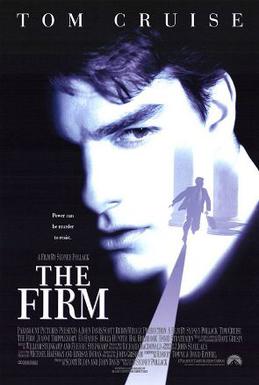
- Gene Hackman's name did not appear on the release poster because Cruise's Paramount deal allowed only his name above the title; Hackman asked to be removed entirely and appears only in the end credits.
- The ending differs significantly from the book, where Mitch swindles ten million from the firm and there is a manhunt; Jeanne Tripplehorn dated Ben Stiller for six years, and the hosts think she was a nineties face who had a better career than remembered, including Big Love, with one calling her better than Holly Hunter here.
- Sidney Pollack voices the prison warden on the phone to Ed Harris's agent; a 2012 TV series picked up Mitch ten years later; the Cayman hotel was the Hyatt Regency Grand Cayman, destroyed by Hurricane Ivan in 2004 and later demolished.
- Hackman's last film was Welcome to Mooseport in 2004; Grantland accidentally made people think he had died through a headline Sean Fennessey wrote; Tarantino wanted him for the Robert Forster role in Jackie Brown; a 2018 bicycling article shows him at 88 riding an electric bike in New Mexico.

In the discussion (4)
- Wilford Brimley qualifies and therefore wins; David Strathairn, Holly Hunter, Paul Sorvino playing a mob boss again after Goodfellas, the actor beside Sorvino and Gary Busey make up the rest of the top five.
- Brimley is his own planet in the film: the hosts quote his 'oral and whatnot' speech, note that Hackman was five years older yet Brimley seemed born at fifty, recall him as the Quaker Oats man and the manager in The Natural, and perform his catalog monologue, which the Ringer's president Jeff Chow does best.
- Brimley had never played a bad guy before, brings an unexpected edge, and the blockbuster hinges on him checking whether the fax machine has paper; it is traumatic to watch Cruise fall on him and kick him, and whether he died is left for unanswerable questions.
- Brimley carried himself like a hated stepfather and makes the office scene before the chase feel like Mitch is about to be killed; the 'oral and whatnot' line is recited again and he is declared the winner.
Casting What-Ifs
Jason Patric turned down Mitch; Meryl Streep was wanted for a gender-swapped Avery until Grisham objected; Robin Wright turned down Abby; Halle Berry auditioned for the woman on the beach
In the discussion (3)
- Jason Patric turned down Mitch two years before Speed 2; Cruise was probably Plan B and expensive, the biggest star in the world at the time.
- Gene Hackman joined late because the producers wanted to gender-swap Avery and cast Meryl Streep until John Grisham objected; one host thinks it might be a better movie without the beach scene, but another says Hackman is why the film makes sense, and Streep never played that older, divorced, sexualized, secretly bad character.
- Robin Wright turned down Abby, as she seemed to for every movie, and Halle Berry auditioned for the woman on the beach, which one host would have preferred.
Casting What-Ifs
Katharine Graham, Deep Throat, and Al Pacino alternatives
In the discussion (3)
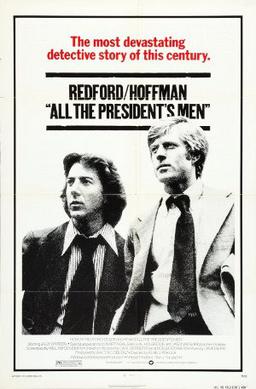
- A Katharine Graham role was considered and removed before filming; the transcript is uncertain which actress was attached — Bill Simmons
- Richard Widmark, Christopher Plummer, Anthony Quinn, Gene Hackman, Burt Lancaster, Robert Stack, Robert Mitchum, and Telly Savalas are reported as possible Deep Throat choices with explicit source uncertainty — Bill Simmons
- Robert Redford reportedly first considered Al Pacino before choosing Dustin Hoffman — Bill Simmons

What’s Aged the Worst?
Gretchen Maul's (as transcribed) wet-blanket girlfriend Joe and her performance; the judges' instant hand-reading scene; Mike McD not hooking up with Famke Janssen's character
In the discussion (11)
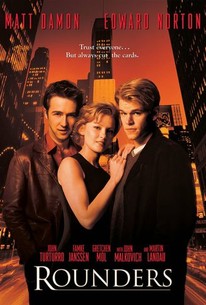
- Gretchen Mala (as transcribed) plays the stereotypical wet-blanket girlfriend, a staple of 80s and 90s sports movies for undermining the hero: a girlfriend or wife who does not believe in what he is doing.
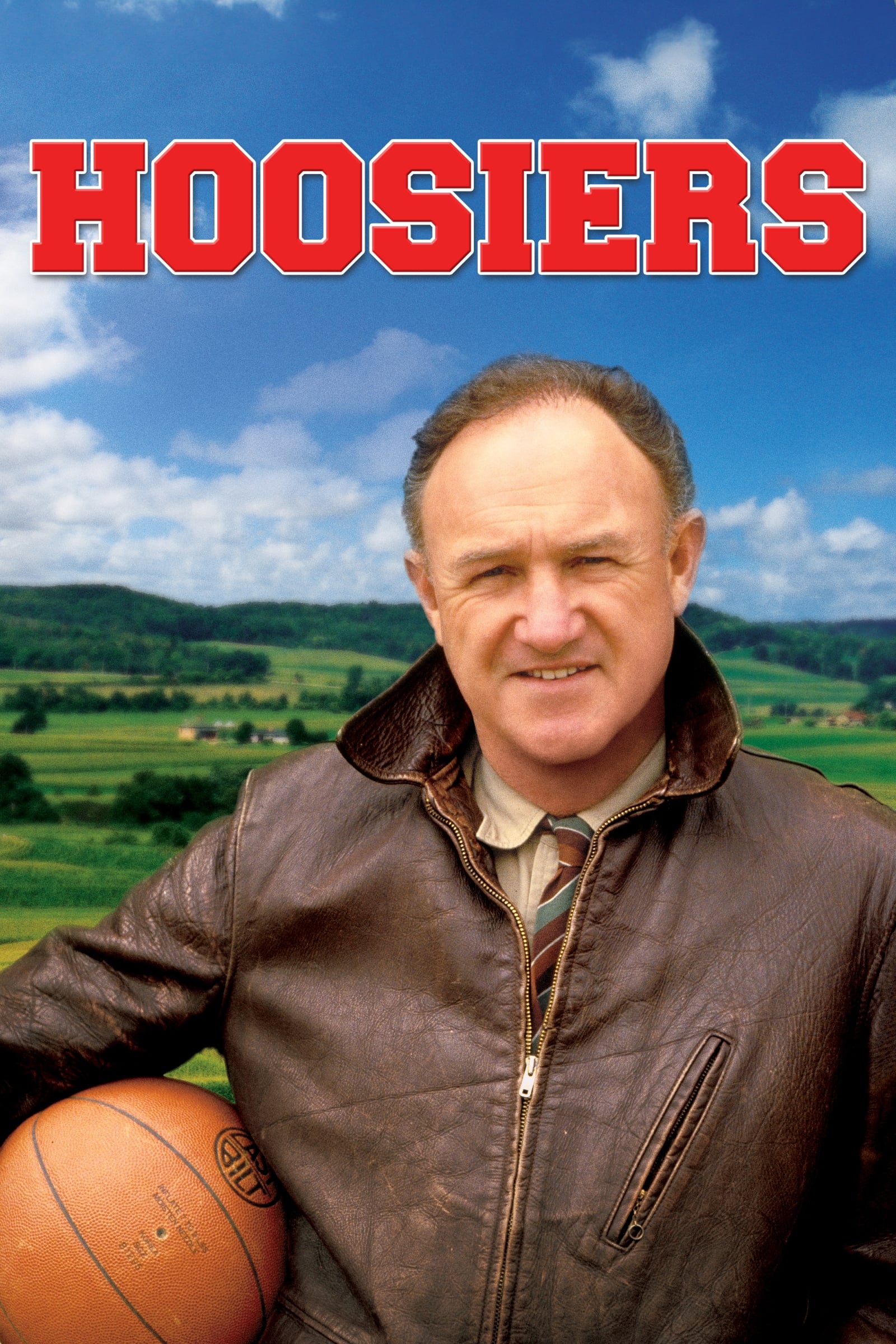
- A Mount Rushmore of wet-blanket girlfriends: Adrian Balboa in Rocky IV, who quits on Rocky and shows up belatedly in Russia, leaving one host still in go-fuck-yourself-Adrian mode; Myra Fleener in Hoosiers, the number one, subject of an old ESPN magazine column, with no idea why Gene Hackman liked her.
- A theory: many men do not know how to write female characters, so they pour their own relationship anxieties into a figure who is holding the hero back, which is why so many movies have a woman you cannot place; the last Rushmore member is Ned Braden's wife in Slapshot (as transcribed), a tough hang who even throws it at Paul Newman.
- The defense from Koppelman and Levine, given in a back-and-forth with one host: Damon's girlfriend was originally in only three scenes, and a law-school best friend named Atkinson, a counterpoint to Worm, was in the script until the studio made them merge Joe and Atkinson and boost Joe, leaving her inessential and simply in Worm's way.
- Not a great performance either, though she rallied in the 2000s; she is flat-out bad and unlikable here, around the time of the Vanity Fair cover anointing her the next ingenue when she had made little more than Donnie Brasco, and hers is the only stretch where the movie loses its rhythm.
- The judges' card scene, which both like, has aged worst: Mike McD standing for eight to fourteen seconds and reading everyone's hand is not believable, even if Koppelman and Levine claim to have seen it happen; the clip is played; such reads take hours of study.
- The judges' game is not Texas Hold'em, perhaps a seven-card stud variant with many cards showing, which makes the reads more plausible, and the judges' cards are never shown, so he might have missed some; it sets him up as a savant, a reach one host is fine with.
- Martin Lando's (as transcribed) character is described as a cross between a law professor, Confucius, the fairy godmother and Red Arbeck (as transcribed); not a great character but essential, and the bar scene where he pours gin and tells the yeshiva story is loved; movies like this need an old guy, as Charlie Pierce was for Grantland.
- Mike McD not hooking up with Famke Jansen (as transcribed) is called the biggest flaw of the movie and maybe of a host's life, raised with Koppelman and Levine multiple times: his girlfriend has moved out, he is home alone watching an old World Series of Poker, she comes over about Worm's tab and makes a hard pass, and he says now is not the time, which is called inexplicable and indefensible.
- Her character is the manic poker dream girl, after the manic pixie dream girl of Penny Lane and the Zooey Deschanel movies: beautiful, a Bond girl three years earlier, works at the Chesterfield and recounts World Series hands; the case against is that he loves Joe, is trying to go straight, and Petra represents the old version of him.
- On rewatch the hosts think the two should simply have gotten together; Koppelman and Levine admit it is their biggest mistake, prompting a joke about adding a scene for the 25th anniversary; for one host it is the what's aged the worst, and the explanation offered does not convince him.
In the discussion (14)
- The first line, 'if you can't spot the sucker in your first half hour at the table then you are the sucker', may not be the greatest opening line in movie history but is one of the most memorable; the hosts want to see that list, which must exist on the internet, and float it as a vacation column.
- There is Billions DNA in the film: watching Rounders is like watching Tracy McGrady on the Raptors, and the pop culture throwaways such as Buckner going into Shea became signatures of Billions, which also brought in Malkovich in season three.
- The face Mike McD makes after losing the 30K is one of the best acting moments of Damon's career: the face everyone makes when destroyed in poker or blackjack, the life sinking out of your body; the sports-fan equivalent is the Marco Bellinelli corner three or the Case Keenum pass.
- Having a big hand cracked while deluded with euphoria is called the most crushing unimportant thing that can happen in life; all the throwaway poker lines have aged beautifully and one host understands the lingo partly because of this movie.
- Damon and Norton at fun points in their careers: Norton arrives with Primal Fiction (as transcribed), American History X, one of the most interesting performances of the last 25 years, then Rounders and Fight Club; 25th Hour mixes that guy with Worm; also Everyone Says I Love You, a terrible Woody Allen musical, and The People vs. Larry Flint, which has not aged well.
- The Larry Flint writers, Larry Krasuski and Scott Alexander (as transcribed), also wrote the OJ Ryan Murphy show and Ed Wood and set the template for the clever, controversial biopic, like Man in the Moon, a style that now lives on TV in 13-episode runs.
- The late-nineties talent cluster: in a fantasy draft Leo, Damon and Norton are the top three or in the top five, with Brad Pitt, Affleck gravitating to popcorn movies, feeder films like School Ties and Dazed and Confused, and Vince Vaughn; weirdly no black actors went to the stratosphere, Halle Berry aside.
- Clooney, Matthew Perry twenty years ago, Wahlberg after Boogie Nights, Will Smith and Jim Carrey round out one of the best clusters, all 35 and under, compared with the Godfather generation around Brando; these people get credit as movie stars rather than actors, in the era when the Entertainment Weekly cover mattered and Carrey got $20 million a movie.
- Norton took a left turn after the mid-nineties string: directing Keeping the Faith, which Juliette Littman likes, The Score with De Niro, Death to Smoochie, then 25th Hour, probably his best of the 2000s, and The Illusionist; he never had the Pacino or Gene Hackman career one host wanted, though he may still.
- Worm is a character unique to Norton, out of the John Cazale 1970s: the lovable scumbag you root for without knowing why, with a little Fredo in him.
- The movie looks surprisingly cool and undated for 1998 and is a good New York movie that still looks like the New York the hosts remember; the Chesterfield is based on a club called the Mayfair, and one host once played in a private room like it, the film's room being a slightly nicer red leather version of his, with that seedy but exciting feeling.
- Russians as villains has aged the best: in 1998 the Cold War had ended eight years earlier and Russia was in free fall, but twenty years on Roman, Maurice, Teddy KGB and the underground network are far more believable villains.
- Forgotten from aged best: Teddy KGB's accent, ridiculous in 1998 and loved in 2018 largely from familiarity; in the theater it was the movie's biggest flaw, a completely unnatural choice in a natural film, but twenty years later it works, is distinct, fun to imitate and almost a parody of bad Russian accents.
- The ending of Mike McD heading to Vegas and the World Series of Poker makes far more sense now, since within five years that became the dream of basically everyone who played; it could have been aged best too.

Half-Assed Internet Research
An extraordinarily troubled shoot shaped the finished film
In the discussion (23)
- Spielberg reportedly paid for the additional floating-head scare himself, filming a model in a pool clouded with powdered milk. — Bill Simmons
- Spielberg reportedly tried to leave Jaws for Lucky Lady but was blocked. The discussion names its director as Stanley Donnan in the transcript and its cast as Liza Minnelli, Burt Reynolds and Gene Hackman, calls it a hit that has become obscure, and says Lucas recruited its British crew for Star Wars. — Sean Fennessey
- Shallow ocean depth allowed recovery of the mechanical shark, which required continuous maintenance. — Chris Ryan
- Spielberg reportedly regretted not using a tank, while the speakers defend the real ocean as essential to the movie. — Bill Simmons
- Unwanted boats, soaked equipment and a sinking vessel contributed to a shoot expanding far beyond its schedule. — Bill Simmons
- A reported anticipated crew prank prompted Spielberg to leave before the final shot. — Bill Simmons
- The Making of Jaws is strongly recommended for its extensive interviews and production history. — Sean Fennessey
- Visions of Light is cited for Michael Chapman’s account of rejecting fixed tripod shots because tilting boat horizons would make audiences sick, leading to fluid handheld work. The speaker is uncertain whether Chapman was Jaws’s camera operator and connects him with later Raging Bull cinematography. — Chris Ryan
- Shaw’s drinking and antagonism toward Dreyfuss are described through production accounts and documentary recollections. — Bill Simmons
- A reported escalating cash dare to jump from the mast ended when Spielberg intervened to protect the actor needed for filming. — Bill Simmons
- The mechanical shark was reportedly named Bruce after Spielberg’s lawyer. — Bill Simmons
- The tracking-and-zoom shot is admired as iconic, with concern that repeating it now would feel clichéd.
- Mythbusters reportedly found that shooting the tank would not cause the film’s explosion.
- A writer whose surname is uncertain in the transcript, heard as Gabbler or Gables, is credited with interpreting Dreyfuss as science, Quint as spiritualism and Brody as the common man. The speakers find the spiritualism label amusing and call the interpretation overthinking while enjoying the idea that the common man succeeds. — Bill Simmons
- The Taylors reportedly used a smaller diver and cage to make real shark footage look proportionally larger. — Bill Simmons
- Footage of an empty cage attack reportedly led to Hooper surviving; the shark’s accidental snag also entered the rewritten scene. — Sean Fennessey
- Mrs. Kintner’s performer reportedly struck the actor for real across seventeen takes because a fake slap was difficult. — Bill Simmons
- Benchley reportedly objected to the tank climax and was removed from the set; he also appears as a reporter. — Bill Simmons
- A proposed Quint introduction mocking Moby Dick was abandoned when Peck reportedly withheld permission because he disliked his performance. — Bill Simmons
- The extra head scare reportedly weakened the later shark scare, prompting a single-major-scare lesson; the speakers question whether that holds in the trailer-heavy present. — Bill Simmons
- The reshoot reportedly cost Spielberg three thousand dollars; a tarp helped cover the milk-clouded pool. — Bill Simmons
- The filming schedule went from 52 days to 155 days. — Bill Simmons
- Shaw reportedly kept fleeing back to Canada because staying in the United States too long would mean paying taxes. — Bill Simmons

Casting What-Ifs
David Huddleston retained; Marlon Brando, Robert Duvall, Anthony Hopkins, and Gene Hackman considered
In the discussion (8)
- Walter and Donny were written for their actors, while the Big Lebowski drew the casting search. — Chris Ryan
- Marlon Brando was reportedly the Coens’ dream choice, but his improvisational production style could have disrupted the tightly scripted film. — Chris Ryan
- Robert Duvall reportedly disliked the script, Anthony Hopkins did not want to play an American, and Gene Hackman was taking an acting break. — Chris Ryan
- A second list reportedly included Mailer, Scott, Falwell, Griffith, Buckley and Borgnine. — Chris Ryan
- The panel concludes that Huddleston was the right landing point. — Chris Ryan
- Mailer would have been an incredible Jackie Treehorn, rather than necessarily the Big Lebowski. — Chris Ryan
- Vidal is considered a perfect possibility. — Chris Ryan
- Borgnine would have been fine, though the final Huddleston choice is considered right. — Chris Ryan


Apex Mountain
Heath Ledger; Aaron Eckhart; Christopher Nolan, for cultural impact; Christian Bale, as a movie star only
In the discussion (16)
- Heath Ledger is Apex Mountain, with the 'all part of the plan' speech performed; this and Brokeback are his two shining achievements, he is an all-time great American, or Australian, actor, the performance is burned into the brains of a generation, and he has kind of ruined comic book villains.
- Tangent: basically all other comic book villains are bad or problematic; Marvel punted with various space monsters, Thanos is a rip-off of Darkseid, and apart from Magneto there is no psychological depth to apply.
- Two exceptions are offered: Magneto, especially the Fassbender iteration, and Sam Raimi's Dr. Octopus as played by Alfred Molina in the second Spider-Man, good for the opposite reason to Ledger because he is vulnerable, with a story about his wife driving him mad. — Sean Fennessey
- There are only a handful of great villains, Anton Chagru (as transcribed), Hannibal Lecter and the Joker; a great villain thinks he is the hero, which cannot apply to a cartoon Nazi like the Red Skull, while the Joker understands he is the flip side of Batman; Lex Luthor was left on the table, Gene Hackman's version a great movie character if schlocky.
- Taken on its face, Ledger's Joker literally asks the audience why they care about anything, lighting a mountain of money on fire, which pokes at the heroism and financial motivations of these movies.
- Bale is the most interesting Apex question: his only huge non-ensemble success is Batman, Big Short and American Hustle were ensembles and his top-lined films are strange, a couple of Malicks and Scott Coopers; The Fighter is arguably his greatest role, one host personally picks Empire of the Sun though he was a child, and some are partial to American Psycho.
- The vote is American Psycho: he is extraordinarily well suited to that role and not to Bruce Wayne; this host has never liked his Batman, finding many of his choices grating, particularly the voice. — Sean Fennessey
- Does the movie work without Ledger: no. Not being all the way in on Christian Bale, with American Psycho his most interesting and The Fighter his most realized performance, leads to this not being Apex Mountain for him as a performance, though probably as a movie star, a framing that is agreed to.
- American Psycho is also picked, as an investigation of the dark side of the handsome, square-jawed movie-star image, where Bruce Wayne is a blank mirror for the far more interesting Joker; the tonal similarity between Bane's and Bruce's voices is part of why Dark Knight Rises did not resonate.
- Batman might be the hardest role in movies: a performer with any sense of irony cannot play Bruce Wayne, which is why Bale's funny American Psycho turn and Affleck's larded irony are problems; Keaton did a good job and nobody has tried the snappy Adam West version.
- Aaron Eckhart's canon is read out: In the Company of Men, Any Given Sunday, Erin Brockovich (as transcribed, Aaron Brockovich), The Core, Thank You for Smoking, Battle for Los Angeles, President Benjamin Asher in Olympus Has Fallen and London Has Fallen, and Jeff Skiles, Sully's loyal co-pilot.
- Is Harvey Dent Apex Mountain for Eckhart: yes, citing a Twitter meme that one of the great movie moments is Dent not recognizing the Joker in the hospital until the surgical mask comes off, a scene liked a lot, with the comment that it is a good scene for Eckhart too and a huge flex for Ledger, every line of his great; Eckhart is a pretty good actor, a really good number two, and well cast and good here.
- Maggie Gyllenhaal: no, that goes to The Honorable Woman or Secretary, and she is phenomenal in The Deuce.
- Nolan: in terms of cultural impact, yes; whether it is his best movie splits the room among Dunkirk, Inception, and Dark Knight first with Inception second; what he accomplishes even in fits and starts is above almost all his peers, he can be John Ford, Howard Hawks or Spielberg, which is why one host is harder on him than on anyone.
- Does Nolan need a David Coop (as transcribed) or William Goldman to write his scripts, the way Andy Reid needs a time-management coach; his Dark Knight dialogue is more comic-booky than remembered, telling you the theme of each scene, and the set pieces hold the movie up while seams show in the small moments.
- Nolan and Fincher together would be the greatest filmmaker of all time, since Fincher cares about the precision of intimate one-on-one scenes while Nolan's set pieces are incredible but he does not know how two people talk to each other; another host accepts comic-book corniness but finds the plotting of almost all his movies too convoluted for no reason, charming only in Memento.

