
‹ All movies
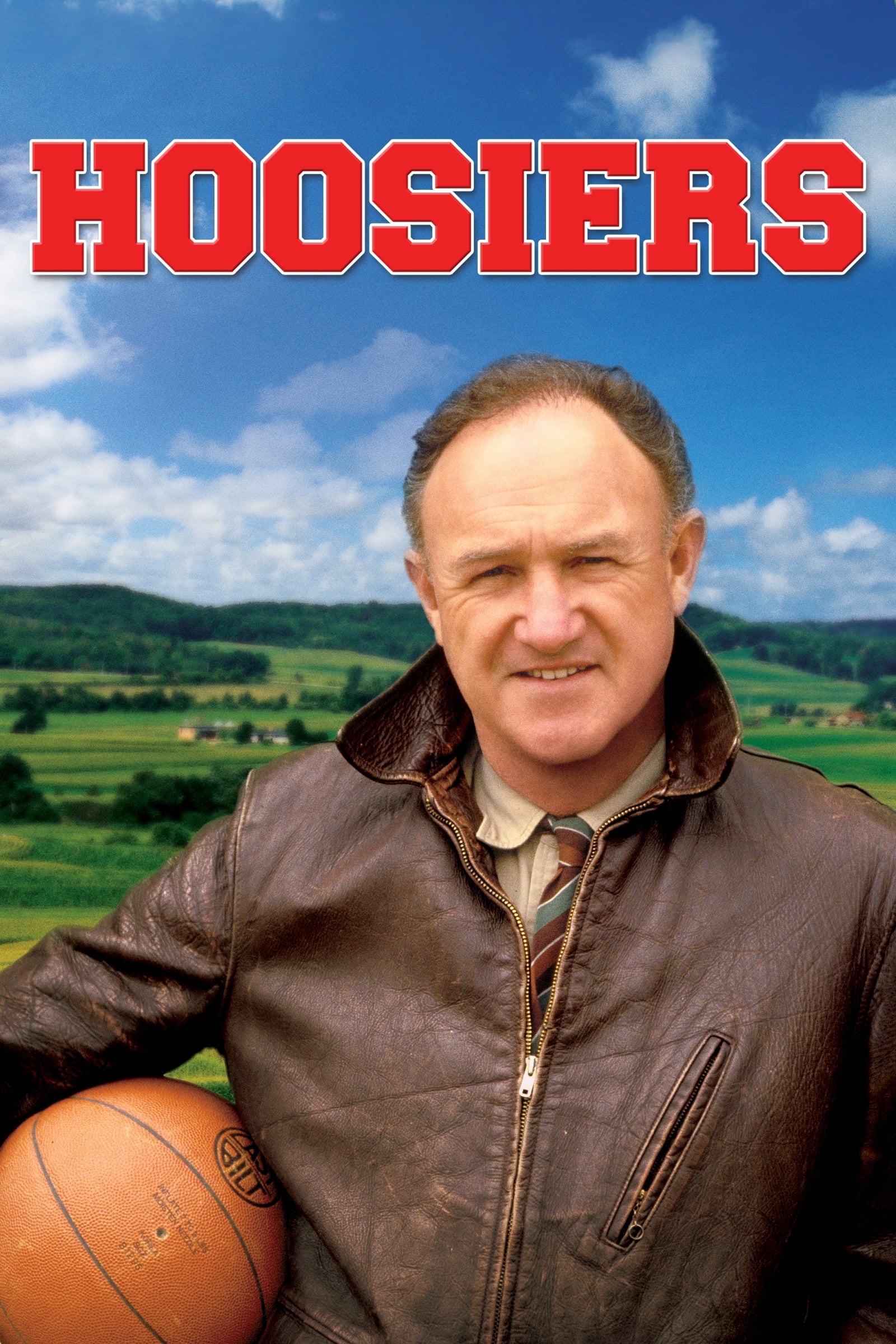
Hoosiers poster

Hoosiers

115 minutes

Cast

Selected cast credits · Film reference

Gene Hackman Coach Norman Dale
Barbara Hershey Myra Fleener
Dennis Hopper Wilbur "Shooter" Flatch
Sheb Wooley Cletus Summers
Maris Valainis Jimmy Chitwood
David Neidorf Everett Flatch
Brad Long Buddy Walker
Steve Hollar Rade Butcher
Kent Poole Merle Webb
Wade Schenck Ollie McLellan
Scott Summers Strap Purl
Fern Persons Opal Fleener
Chelcie Ross George Walker
Robert Swan Rollin Butcher
Brad Boyle Whit Butcher
John Robert Thompson Sheriff Finley

Hoosiers | The Rewatchables

Explore episodeClose episode

Roger Ebert's review

In the discussion (4)
Approx. transcript time · 00:25:23Read transcript
  • Roger Ebert gave the movie four stars.
  • Ebert wrote that Hoosiers works magic in getting us to really care about the fate of the team and the people depending on it.
  • Ebert said the way it combines sports with human nature reminded him of another wonderful Indiana sports movie, Breaking Away, and called it a movie that is all heart.
  • The hosts joke that Ebert loves plot and loves heart.

Most Rewatchable Scene

Ollie's free throws in the Linton game; Coach Dale asking Shooter to join the staff

In the discussion (18)
Approx. transcript time · 00:25:42Read transcript
  • Candidate: Norman Dale kicking George out of practice, with the 'two kinds of dumb' threat played as a clip and the 'what kind of team do I have here' reaction.
  • Candidate: the coach visiting Jimmy with 'I don't care if you play or not'; Jimmy makes his first 12, misses one and finishes 13 for 14, and whether the miss counts is debated.
  • Candidate: the town meeting on firing Coach Dale leading into Jimmy joining and the winning montage; Myra's line about not wanting Jimmy to coach at 50 is called one of the meanest in a sports movie.
  • Three of Jimmy's four lines come at the meeting ('I play, coach stays; he goes, I go'); only Ivan Drago did more with less; the sequence is called one of the best nine-minute sequences in any sports movie.
  • Candidate: the picket fence game, Hopper's greatest scene: Hackman is ejected, Hopper freezes, his son pulls him in, and the delivery of the instructions shows the fog parting.
  • The defensive instruction does not seem to match what happens, but the play works and ends with 'You did good, pop'.
  • Teams run versions of the picket fence today, compared to Warriors sets for Steph Curry and a 'hammer'; a fifth-grade team ran a double-screen play because of the movie, called 'Ted' after Ted Williams.
  • Candidate: the Turhoun game fight, with Hackman's 'that's a gutless way to win' line praised as perfectly delivered.
  • Candidate: the Linton game; Strap should have played more, and Ollie's dribble off the foot seemed staged and his air ball was implausibly short.
  • Having the worst player hit two free throws to reach the state finals is called one of the most brilliant moves in any sports movie, and the second shot is praised for how it was filmed.
  • Ollie probably goes one for two at best in real life, and an opposing player with adult chest hair bumping him evokes Teen Wolf.
  • Candidate: the 'way past big speech time' pregame speech with Merle, Flatch, Buddy and the Reverend's David and Goliath, which had a second life with the Jumbotron slow clap.
  • Hopper arguing a call off a bender and Coach Dale's 'you stay in the game' to Flatch is called an underrated chill moment.
  • Candidates: the basket-measuring scene and the last few minutes of the title game, including Jimmy being carried off and the South Bend players' reactions.
  • One pick is the Ollie scene in the Linton game, for how it is shot.
  • Hackman going to Hopper's shack is liked, with a question of when a man on that kind of bender had time to scout teams.
  • The other pick is when the coach seriously tells Hopper to be on the staff, praised for its writing and for having someone's back.
  • Hopper's 'wing dinger' line about the suit and his awkward walk in a suit at the first game are praised.

Picking Nits

Jimmy's unexplained hiatus; South Bend's end-game coaching; Coach Dale not drawing the final play for Jimmy; Buddy's unexplained return; Shooter's scouting

In the discussion (5)
Approx. transcript time · 00:30:40Read transcript
  • It is unclear why Jimmy isn't playing; the old coach died, but he is the best player in 40 years.
  • The South Bend coach, up four in the final minute with no shot clock, called a play instead of holding the ball and never called timeouts, one of the worst coaching moments.
  • Maybe overconfidence set in; the South Bend guards are a mess.
  • Coach Dale diagramming the final play away from Jimmy, the thrown-away Chitwood hiatus, and Buddy reappearing after about 15 minutes.
  • Shooter's pre-online scouting while hungover is unexplained, prompting a 'Shooter the Scout' spinoff joke.

What’s Aged the Best?

Hopper's performance; Hackman as a coach; the Jimmy Chitwood trope; Flatch visiting the coach; Jimmy's jump shot; Rade Butcher; the music

In the discussion (9)
Approx. transcript time · 00:46:03Read transcript
  • Hopper's performance: if he were an athlete he would be one who could have been even greater with his life together.
  • Hackman ranks as a movie basketball coach, compared with Nolte doing Bobby Knight in Blue Chips and Affleck in The Way Back; he is as believable as anyone who has coached in a movie.
  • A critical note: it was unclear what Hackman's system or offense was at the beginning beyond passing.
  • The concept of a Jimmy Chitwood, like Kelly Leak in Bad News Bears, is a fun sports-movie trope; Steph was a Jimmy Chitwood at Davidson.
  • Flatch going to see Hackman about his dad is praised.
  • Jimmy's jump shot: by one count he is 37 for 41 in the movie.
  • Mr. Butcher and his sons are praised, and Raid Butcher's athletic ability is compared to a little Angish game.
  • The music is uplifting.
  • A personal story: after being overlooked, the storyteller skipped senior varsity, worked alone for the seniors-versus-faculty game, scored 17 in the first half and told curious fans to 'ask them'.

What’s Aged the Worst?

Myra Fleener's mean-spirited character; Hackman and Hershey kissing; the racial pattern criticized in Best Seat in the House; Coach Dale's coaching

In the discussion (12)
Approx. transcript time · 00:55:40Read transcript
  • Barbara Hershey's Myra Fleener is the token wet-blanket female character (the 'Adrian Balboa Hall of Fame'), the most mean-spirited version, who jumps on the bandwagon once the team wins.
  • Deleted scenes released on DVD around 2003-2004 include Myra thanking Coach Dale, saying she is moving to Chicago and that Chicago isn't that far away.
  • The studio wanted it under two hours (the final film is an hour 57), so scenes were cut, including Buddy asking back on the team; 19 minutes of scenes are missing.
  • A column asking how Buddy just showed back up was reportedly read in Bristol by John Walsh.
  • Hackman's aroused look after the feed-truck and dinner exchange prompts jokes about his lack of sex scenes, and The Firm as horny Gene Hackman.
  • Any scene with Hackman and Hershey kissing is rough, like watching grandparents kiss.
  • The actor who played Flatch was seemingly spotted as a cop in a late-night erotic thriller that is not on his IMDb.
  • A basketball book written with Ralph Wiley, Best Seat in the House, called Hoosiers racist for white players toppling South Bend's black players, a pattern traced to Rocky; this tainted the movie about 10%.
  • The film is based on the 1954 Milan team, whose opponent had black players, though Milan was a strong team; the white-hero pattern recurred in that era.
  • Watching with that lens, the South Bend white backcourt, not the black players, costs the game.
  • Coach Dale's coaching is questioned: the pass-four-times rule, hiring the town drunk, playing four players, ejections, not running the final play for Jimmy, and not playing Strap enough.
  • His greatest gift was getting everybody rowing in the same direction, like Joe Tori, but the resume is not one of the all-time greats.
In the discussion (5)
Approx. transcript time · 01:04:54Read transcript
  • Jack Nicholson wanted to play Coach Dale, but a lawsuit sidelined him for six months, so the production went with Hackman.
  • Nicholson later told the director that with him as the star it would have been a mega hit.
  • One view agrees it would have been a bigger movie with Nicholson, then one of the biggest stars, though he would seem to want to get drunk with Shooter.
  • Hackman is more believable, and after 35 years the role can't be reimagined with Jack; Nicholson might have played it scaled back like Terms of Endearment.
  • Harry Dean Stanton turned down Shooter, which led to Hopper, and later expressed regret.
In the discussion (3)
Approx. transcript time · 01:06:13Read transcript
  • The actor who played George, Chelcie Ross ('Chelsea Ross'), with Hoosiers, Major League and Rudy, may have become too well known to be a That Guy.
  • The winner is the actor who played Rollin ('Roland') Butcher, the dad who becomes assistant coach: Robert Swan, who was also in The Untouchables.
  • George's barbershop introduction is praised; he was the other planned pick but is almost too prominent.
In the discussion (3)
Approx. transcript time · 01:08:29Read transcript
  • Shooter is not eligible because he is in too much of the movie.
  • The cop shows up to practice freaking out, is mad at the meeting, and comes into the locker room at halftime.
  • Making him the town cop made it believable he could do whatever he wanted.

Half-Assed Internet Research

Shooter moved from the title game to the hospital; Chitwood actor's later life; filming locations; NCAA suspensions; Hopper's drunk trick; Chitwood's one-take final shot; real Milan details; Hackman's joke to Hopper; Merle actor's death

In the discussion (9)
Approx. transcript time · 01:09:50Read transcript
  • Shooter was scripted to attend the title game, but Hopper, newly sober, objected that the character would fear relapsing, so he was put in the hospital.
  • Jimmy Chitwood's actor, Maris Valainis ('Maris Valanis'), became a golf pro in California and was the only player who didn't play college ball.
  • Most Hickory scenes were shot in Richmond, Indiana.
  • The NCAA suspended five college-player actors for being paid in the movie.
  • For drunk scenes, Hopper's trick was 10 seconds' notice before action and spinning in a circle to look disoriented, a trick from James Dean in Giant.
  • The fans-rushing title shot could be filmed only once; the Chitwood actor missed in rehearsal but made it on the take.
  • The locker-room blackboard lists real Milan names; Milan won 32-30 in 1954 on Bobby Plump's shot from about the same spot; it was filmed at Hinkle Fieldhouse.
  • Hopper's laugh in a montage came from Hackman saying they would never work again after this movie.
  • The actor who played Merle, Kent Poole ('Kent Pool'), killed himself in 2003.

Apex Mountain

All the basketball guys; sports movies

In the discussion (6)
Approx. transcript time · 01:13:26Read transcript
  • Hackman, no; Hopper, no.
  • All the basketball guys in the cast, yes; basketball itself, no.
  • Sports movies: it's close, but a case is made that the genre peaks here after 12 years of bangers; afterward come rip-offs or movies merely rooted in sports.
  • It also set a template for later Disney sports movies.
  • Mid-80s Cold War fear made feel-good movies an escape, and The Day After was emotionally scarring.
  • Indiana's apex is Keith Smart.

Sequel, Prequel, Limited Series, or All-Black Remake

10-episode Netflix series set in 1951

In the discussion (4)
Approx. transcript time · 01:20:12Read transcript
  • Absolutely; the idea draws more enthusiasm than expected.
  • It must be set in 1951, because a 2021 version would not tell the same story.
  • Shooter's scouting could be at least one episode of the series.
  • Series ideas include the cop as a Shield-style rogue, George's shady business, and a Yellowstone-style sick-cattle plot.

Probably Unanswerable Questions

Hoosiers box score; slow clap origin; top NBA Jumbotron movie characters; pass-four-times rule for the Celtics; a Dentyne ad; Jimmy Chitwood's next 15 years; Norman Dale's next 10 years

In the discussion (7)
Approx. transcript time · 01:20:48Read transcript
  • A 2002 Hoosiers diary reconstructed the title-game box score: Jimmy 14 for 18 for 30 of the 42 points; the count is revisited with 26 points and 13 of 14 seen.
  • Hoosiers did not invent the slow clap; Brubaker (about 1980) did, though Hoosiers has the best one.
  • Coach Dale and Hickory are proposed as the most-played movie characters on NBA Jumbotrons, ahead of Animal House and Braveheart; a classroom clip is identified as Network.
  • The pass-four-times rule might even help the 2022 Celtics.
  • The Buddy Dentyne ('Dentine') scene was never used in a Dentyne ad; gum preferences include Mentos.
  • Jimmy's next 15 years: maybe college at Indiana and dropping out quickly, like Larry Bird leaving Indiana under Bobby Knight.
  • Norman Dale's next 10 years: maybe the punching incident resurfaces and he is canceled, or he follows Myra to Chicago and coaches under a new name.

What Piece of Memorabilia Would You Want From This Movie?

Framed state championship team picture; Chitwood's jersey

In the discussion (3)
Approx. transcript time · 01:31:12Read transcript
  • Options: the yellow Hickory warm-up suit, Jimmy's game-worn jersey, a Hickory letterman jacket, or the giant framed state championship picture from the end.
  • One choice is the original framed team picture, displayed in the living room.
  • The other choice is Chitwood's jersey, framed.

Producer review

Loved it

In the discussion (2)
Approx. transcript time · 01:36:06Read transcript
  • Loved the movie, but did not understand why Barbara Hershey's character, who hates basketball, goes to any of the games. — Craig Horlbeck
  • Suggested explanations: she loves Jimmy and is looking out for him, or she likes the attention of being the curmudgeon.

More from the conversation

Episode framed around Hoosiers' 35th anniversary the previous week; it and The Natural were long the only answers for greatest sports movie.
Approx. transcript time · 00:02:43Read transcript
As a kid Hoosiers was preferred to The Natural, which got weird; the synthesizer soundtrack is dated but Hackman and the script hold up.
Approx. transcript time · 00:03:39Read transcript
A trip to the Knights Town gym for a Grantland video during the Indianapolis Super Bowl weekend; the final game was shot at Butler.
Approx. transcript time · 00:04:51Read transcript
First viewing around November 1986 was followed by hours of playing basketball; a college friend's high school team watched it before every game.
Approx. transcript time · 00:07:41Read transcript
By 1986 sports movies had covered every sport; Hoosiers took what worked, with a major star, underdog theme and about seven chill scenes.
Approx. transcript time · 00:09:24Read transcript
Players draining shots during dialogue, as Bob Coozy did in Blue Chips and Jimmy does here, is a favorite device.
Approx. transcript time · 00:12:55Read transcript
Hackman reportedly hated the shoot; director Anspa told Vulture Hackman nearly gave him a nervous breakdown and Hackman's agent tried to get him fired, and Pizzo says Hackman predicted the movie would be forgotten.
Approx. transcript time · 00:13:40Read transcript
Budget $6 million and gross $28.6 million; VCRs and cable made it a rewatchable staple by the mid-90s.
Approx. transcript time · 00:15:57Read transcript
Authentic basketball, 1950s set shots and meticulous extras help it last where 70s sports movies had glitches.
Approx. transcript time · 00:18:07Read transcript
Hoosiers is probably Hackman's most watched film; an Unforgiven 30th-anniversary episode next year is floated.
Approx. transcript time · 00:23:27Read transcript
Hopper and Jerry Goldsmith received Oscar nominations and neither won.
Approx. transcript time · 00:25:02Read transcript
Jimmy Chitwood as an early player-empowerment figure is floated as a theory, but not fully believed.
Approx. transcript time · 00:29:48Read transcript
Greatest sports movie discussion: Warrior, Cool Runnings, a Big Picture top five (Caddyshack, Slap Shot, Rocky 3, Rounders) that omitted Hoosiers, Rollerball, and Hoop Dreams as number one if documentaries count.
Approx. transcript time · 01:32:30Read transcript
The producer has not seen Hoop Dreams, which is called the first great sports documentary.
Approx. transcript time · 01:35:16Read transcript