‹ All people

Film credit

John Cazale

Also referred to as john kazal

Stats

Episodes featuring their films
1
Movies in this archive
3

Episodes featuring John Cazale’s films

The Rewatchables

The Godfather Part II

1974 film

Bill Simmons · Sean Fennessey · Chris Ryan · Brian Koppelman

Aired December 17, 2019

Displaying 1 episode

Mentioned in discussions

Rollerball The Rewatchables
In the discussion (3)
Approx. transcript time · 01:21:41Read transcript
In the discussion (8)
Approx. transcript time · 01:34:12Read transcript
Rocky The Rewatchables
Rocky

Recasting Couch

John Cazale as a more likable Paulie; otherwise unchanged
In the discussion (2)
Approx. transcript time · 01:18:58Read transcript
  • Caan as Rocky with Harvey Keitel or John Cazale as Paulie is imagined, but Caan and Reynolds are considered too established for the unknown-underdog effect. — Bill Simmons
  • Recasting: initial leave cast alone, then more palatable Paulie considered; John Cazale failed-brother type may repeat roles but charisma would make him likable. Imagined neglected skinny alcoholic and robe-logo hustler.
...And Justice for All

The Stephen A. Smith Hottest Take Award

Pacino’s second-best performance after The Godfather Part II, strongly disputed

In the discussion (17)
Approx. transcript time · 01:15:50Read transcript
  • This is proposed as Pacino’s second-best performance after The Godfather Part II, with Heat placed third; another response rejects even a top-five ranking.
  • Dog Day Afternoon is preferred for greater nuance, and Donnie Brasco, Heat, Any Given Sunday, The Godfather, Scarecrow, Serpico and Sea of Love are offered as competing peaks. — Sean Fennessey
  • Carlito’s Way is offered as a soulful alternative, and The Insider is added to the competing Pacino performances. — Wesley Morris
  • Dick Tracy and The Godfather Part III are added to the performance debate; this film is proposed as the moment Pacino overtook De Niro. — Sean Fennessey
  • The top-two or top-three defense treats Arthur as the culmination of Pacino’s early mastery: quiet and explosive passages form a coherent journey as the system breaks him. — Wesley Morris
  • Both Godfather performances and Dog Day Afternoon are placed definitively above Arthur in the opposing ranking; Dog Day receives admiration but is called personally exasperating. — Wesley Morris
  • The Godfather’s Kay scenes and marital storyline are criticized as obstacles to placing Michael in the top two; the challenge of playing Brando’s son is offered in defense.
  • The distinction is clarified as carrying and justifying an entire film rather than delivering a bad performance within an ensemble. — Wesley Morris
  • Playing Michael in the first Godfather is provocatively called comparatively easy, while Part II is considered much harder; a particular scene remains admired without being named in this exchange.
  • Michael’s transformation is defended as indispensable to the film; the counterargument imagines De Niro or John Cazale in the role. — Sean Fennessey
  • The ensemble is said to elevate Michael’s performance, and James Caan is ranked above Pacino by one participant; a suggestion that Cazale is better is retracted.
  • Arthur is defended as the full range of Pacino’s abilities, requiring trust in the director and editor, in contrast with Michael’s more observational role. — Wesley Morris
  • The Godfather ranking dispute returns: Part II is called the best male screen performance in 50 years, while the first film is framed as a young actor still discovering the role. — Bill Simmons
  • Raging Bull and Scarface are called damaging influences on later actors who imitate them, as an argument against accepting inherited performance rankings. — Wesley Morris
  • The first Godfather’s stature is argued to confer automatic greatness on Pacino, while the restaurant assassination is singled out as exceptional. — Wesley Morris
  • A defense enumerates Michael’s wedding exposition, revenge planning, Italian interlude and hospital protection of his father as stages of a demanding transformation. — Sean Fennessey
  • Michael is defended as the role that made Pacino a star and helped make The Godfather great; the opposing argument distinguishes iconic characters from great acting to defend Arthur’s high ranking.
Alien The Rewatchables
Alien

Casting What-Ifs

Streep as Ripley; Ford as Dallas; Cartwright casting confusion

In the discussion (6)
Approx. transcript time · 01:17:01Read transcript
  • The screenplay reportedly wrote the crew as men while explicitly making all roles interchangeable; Ripley was not originally specified as female.
  • Meryl Streep reportedly competed with Yale classmate Sigourney Weaver for Ripley but was mourning John Cazale; the panel believes Streep could have played the part.
  • Weaver's imposing physical presence distinguishes her from the imagined Streep casting, though Streep's acting ability is not doubted. — Bill Simmons
  • Harrison Ford reportedly declined Dallas; a speaker believes Ford would improve the acting and chemistry with Weaver, anticipating their Working Girl pairing. — Bill Simmons
  • Veronica Cartwright reportedly arrived in England believing she would play Ripley and learned during wardrobe fitting that she was Lambert; the panel expresses disbelief at the miscommunication. — Bill Simmons
  • An anecdote says John Hurt lost another film after being mistaken in South Africa for a similarly named apartheid opponent, then became available for Alien after the replacement actor developed diabetes; the transcript does not reliably distinguish the two names.
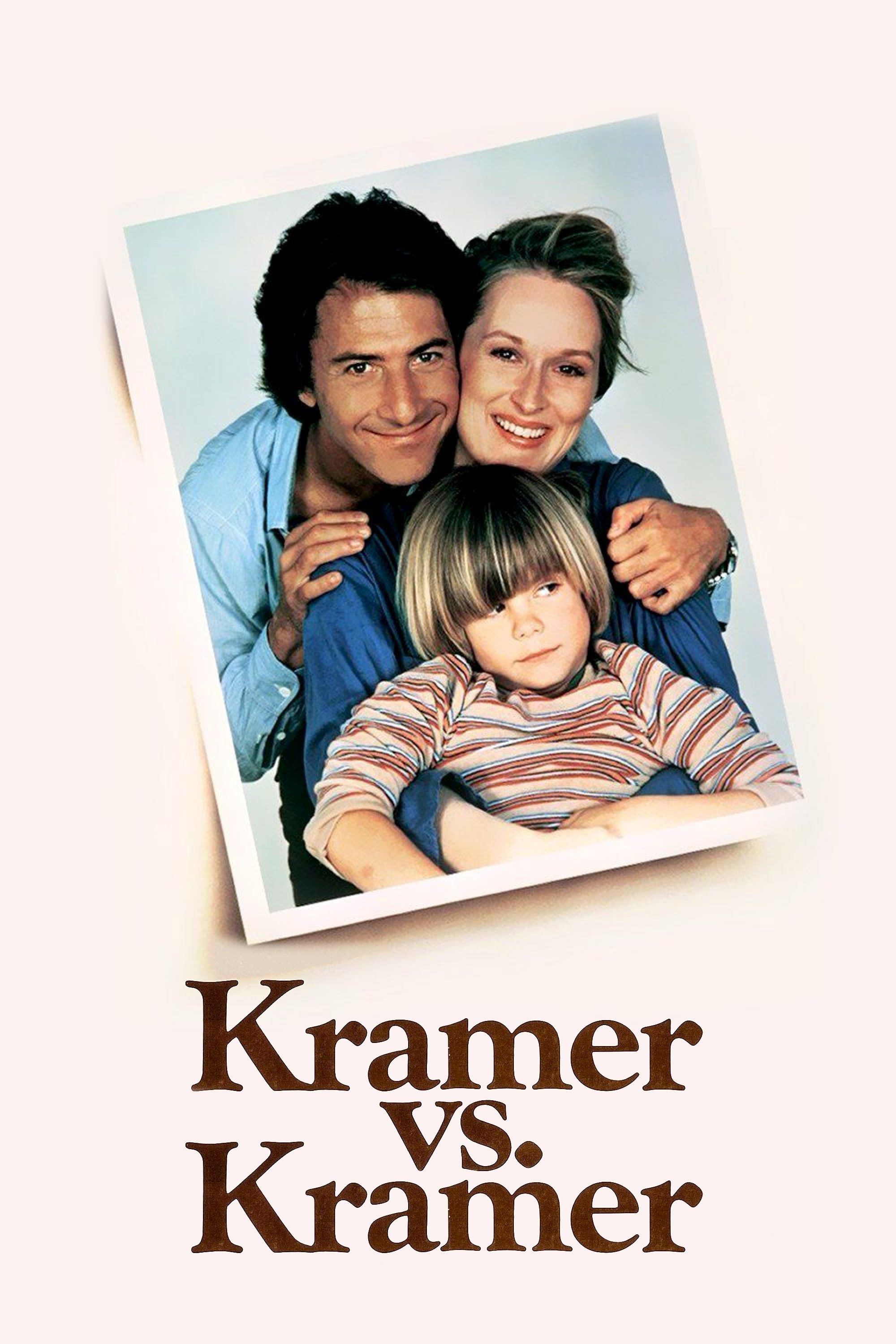
Kramer vs. Kramer

Half-Assed Internet Research

Avery Corman novel; darkened nude scene; Justin Henry improvising at seven; Library of Congress omission; J.G. Melon location; Streep pregnant during filming
In the discussion (6)
Approx. transcript time · 01:41:43Read transcript
  • The source novel was by Avery Corman, and Jaffe and Benton bought it. — Bill Simmons
  • The JoBeth Williams nude scene was optically darkened to avoid an R rating. — Bill Simmons
  • Justin Henry was seven when filming began and improvised a lot with Hoffman, who was reportedly nice to him. — Bill Simmons
  • As of 2020 it was reportedly the only 1970s Best Picture winner not selected by the Library of Congress for preservation, which puzzles the hosts. — Bill Simmons
  • The wine-glass scene was filmed at J.G. Melon on East 74th Street and Third Avenue, which displays a framed photo from the film. — Bill Simmons
  • Streep was reportedly pregnant during filming, hidden by a raincoat, having met the sculptor Gummer shortly after John Cazale died. — Bill Simmons
In the discussion (6)
Approx. transcript time · 02:29:35Read transcript
  • Coppola, as with the first film, confirmed as one of the ten most important filmmakers. — Brian Koppelman
  • De Niro announced himself as the next major movie star, doing it all in Italian. — Brian Koppelman
  • Lee Strasberg, a teacher who had not performed, lays down a performance that never seems overmatched next to Pacino, like Brad Stevens climbing onto the court. — Brian Koppelman
  • Pacino, called the greatest performance ever seen and the first thing thought of with this movie. — Bill Simmons
  • A tangent asks whether Pacino resented De Niro becoming Brando's heir, comparing their later careers. — Sean Fennessey
  • A zag picks Cazale and Duvall as the soul of the movie. — Chris Ryan
Podcast choices
The Godfather Part II

Apex Mountain

Coppola; Pacino; Gordon Willis; John Cazale; G.D. Spradlin; horrific Oscar results; movies; mafia movies

In the discussion (8)
Approx. transcript time · 01:55:24Read transcript
  • Coppola is a yes: he never had more power, getting the San Francisco opera and the Great Gatsby script. — Bill Simmons
  • De Niro is named without a verdict; Pacino gets a yes because this was his best performance and gave him the power to do anything. — Bill Simmons
  • Gordon Willis gets it for this film, though he did equal work in some Woody Allen films.
  • Cazale is a yes.
  • Lake Tahoe and Merle/Troy Donahue are raised without a clear verdict.
  • Spradlin is given Apex Mountain. — Brian Koppelman
  • Paramount is proposed but questioned by pointing to Top Gun and the Transformers movies.
  • Horrific Oscar results are a yes, and Apex is given to movies and to mafia movies.
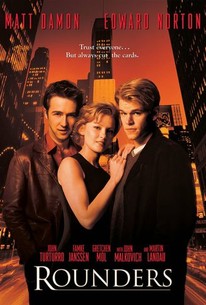
Rounders The Rewatchables
Rounders

What’s Aged the Best?

The 'spot the sucker' opening line; the Billions DNA; the Mike McD face; the throwaway poker lingo; Damon and Norton at fun points of their careers; the look and the New York setting; Russians as villains; Teddy KGB's accent; the World Series of Poker ending

In the discussion (14)
Approx. transcript time · 00:25:53Read transcript
  • The first line, 'if you can't spot the sucker in your first half hour at the table then you are the sucker', may not be the greatest opening line in movie history but is one of the most memorable; the hosts want to see that list, which must exist on the internet, and float it as a vacation column.
  • There is Billions DNA in the film: watching Rounders is like watching Tracy McGrady on the Raptors, and the pop culture throwaways such as Buckner going into Shea became signatures of Billions, which also brought in Malkovich in season three.
  • The face Mike McD makes after losing the 30K is one of the best acting moments of Damon's career: the face everyone makes when destroyed in poker or blackjack, the life sinking out of your body; the sports-fan equivalent is the Marco Bellinelli corner three or the Case Keenum pass.
  • Having a big hand cracked while deluded with euphoria is called the most crushing unimportant thing that can happen in life; all the throwaway poker lines have aged beautifully and one host understands the lingo partly because of this movie.
  • Damon and Norton at fun points in their careers: Norton arrives with Primal Fiction (as transcribed), American History X, one of the most interesting performances of the last 25 years, then Rounders and Fight Club; 25th Hour mixes that guy with Worm; also Everyone Says I Love You, a terrible Woody Allen musical, and The People vs. Larry Flint, which has not aged well.
  • The Larry Flint writers, Larry Krasuski and Scott Alexander (as transcribed), also wrote the OJ Ryan Murphy show and Ed Wood and set the template for the clever, controversial biopic, like Man in the Moon, a style that now lives on TV in 13-episode runs.
  • The late-nineties talent cluster: in a fantasy draft Leo, Damon and Norton are the top three or in the top five, with Brad Pitt, Affleck gravitating to popcorn movies, feeder films like School Ties and Dazed and Confused, and Vince Vaughn; weirdly no black actors went to the stratosphere, Halle Berry aside.
  • Clooney, Matthew Perry twenty years ago, Wahlberg after Boogie Nights, Will Smith and Jim Carrey round out one of the best clusters, all 35 and under, compared with the Godfather generation around Brando; these people get credit as movie stars rather than actors, in the era when the Entertainment Weekly cover mattered and Carrey got $20 million a movie.
  • Norton took a left turn after the mid-nineties string: directing Keeping the Faith, which Juliette Littman likes, The Score with De Niro, Death to Smoochie, then 25th Hour, probably his best of the 2000s, and The Illusionist; he never had the Pacino or Gene Hackman career one host wanted, though he may still.
  • Worm is a character unique to Norton, out of the John Cazale 1970s: the lovable scumbag you root for without knowing why, with a little Fredo in him.
  • The movie looks surprisingly cool and undated for 1998 and is a good New York movie that still looks like the New York the hosts remember; the Chesterfield is based on a club called the Mayfair, and one host once played in a private room like it, the film's room being a slightly nicer red leather version of his, with that seedy but exciting feeling.
  • Russians as villains has aged the best: in 1998 the Cold War had ended eight years earlier and Russia was in free fall, but twenty years on Roman, Maurice, Teddy KGB and the underground network are far more believable villains.
  • Forgotten from aged best: Teddy KGB's accent, ridiculous in 1998 and loved in 2018 largely from familiarity; in the theater it was the movie's biggest flaw, a completely unnatural choice in a natural film, but twenty years later it works, is distinct, fun to imitate and almost a parody of bad Russian accents.
  • The ending of Mike McD heading to Vegas and the World Series of Poker makes far more sense now, since within five years that became the dream of basically everyone who played; it could have been aged best too.
Displaying all 11 discussions

Films in the archive