‹ All movies
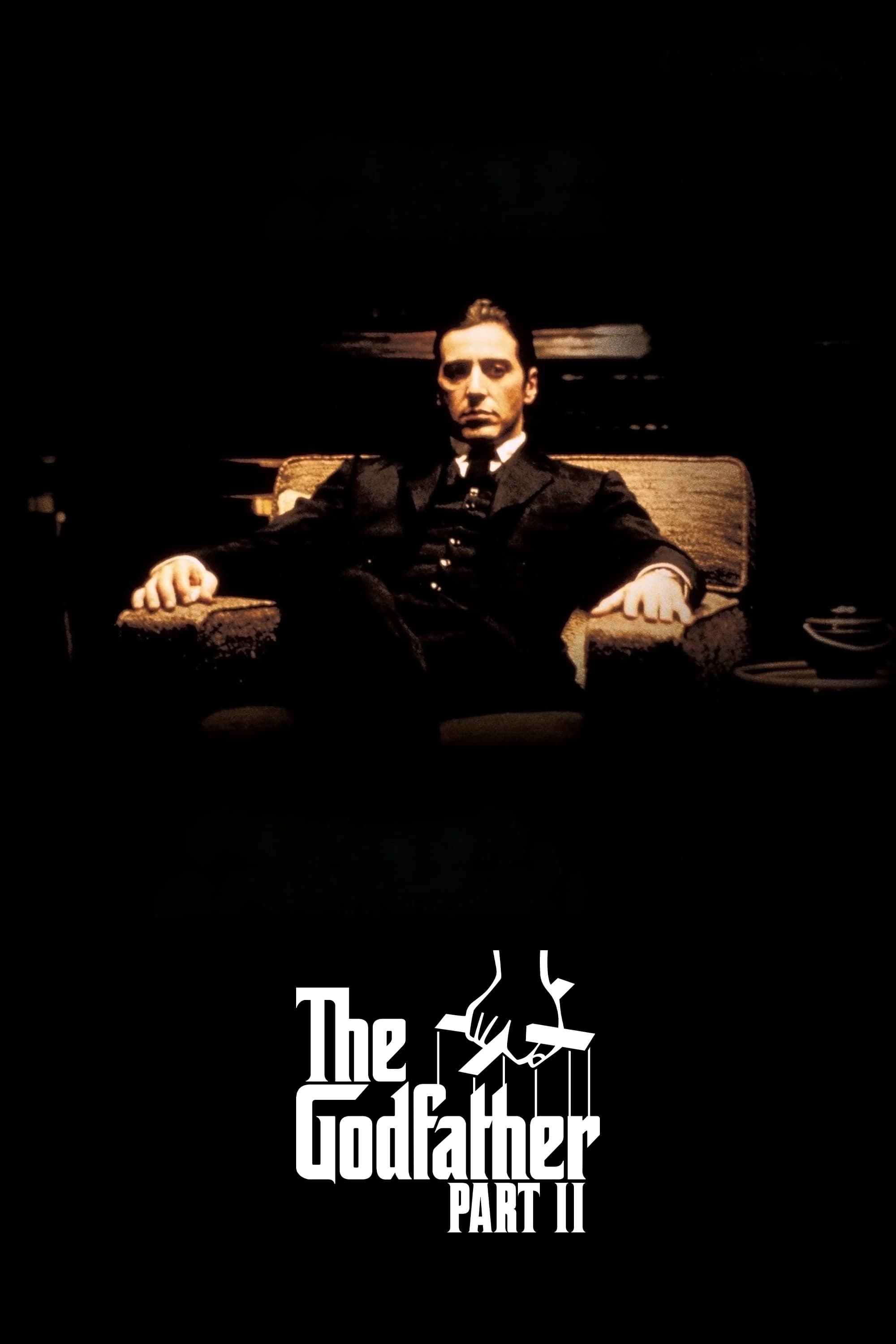
The Godfather Part II poster

The Godfather Part II

200 minutes

Cast

Selected cast credits · Film reference

Al Pacino Michael Corleone
Robert Duvall Tom Hagen
Diane Keaton Kay Adams Corleone
Robert De Niro Vito Corleone
John Cazale Fredo Corleone
Talia Shire Connie Corleone
Lee Strasberg Hyman Roth
Michael V. Gazzo Frank Pentangeli
G. D. Spradlin Senator Pat Geary
Richard Bright Al Neri
Gastone Moschin Don Fanucci
Tom Rosqui Rocco Lampone
Bruno Kirby young Peter Clemenza
Frank Sivero Genco Abbandando
Morgana King Mama Carmela Corleone
Marianna Hill Deanna Corleone
Leopoldo Trieste Signor Roberto
Dominic Chianese Johnny Ola
Troy Donahue Merle Johnson
Joe Spinell Willi Cicci
Danny Aiello Tony Rosato
Amerigo Tot Bussetta
James Caan Sonny Corleone
Roger Corman Senator #2
Harry Dean Stanton F.B.I. agent #1

The Godfather Part II | The Rewatchables

Explore episodeClose episode

Producer credits not yet identified.

Roger Ebert's review

In the discussion (4)
Approx. transcript time · 00:18:24Read transcript
  • Ebert gave the film three out of four stars, praised Pacino's performance and said Coppola was a master of mood, atmosphere and period.
  • The three-star grade is joked to be a little better than Poseidon, like a Simmons review of The Irishman.
  • Ebert wrote that the flashbacks gave Coppola the greatest difficulty in maintaining pace and narrative force, a structural weakness from which the film never recovers.
  • Ebert later amended the review in a re-review as a four-star movie; he did hundreds of re-reviews, and in his Great Movies book rarely notes that he originally disliked a film.

Most Rewatchable Scene

Senator Geary negotiation; Havana sequence; Fredo and Michael scene

In the discussion (38)
Approx. transcript time · 00:46:54Read transcript
  • Geary's insult and Michael's reply that his offer is nothing, not even the fee for the gaming license, show Michael has gone to another level; the line is often quoted between the hosts.
  • Hyman Roth starts slowly, watching the real Notre Dame-USC game, before his Mo Greene speech about the man who invented Las Vegas.
  • Michael pulling his chair close to Roth is a lesson in how men of that era learned a code; pulling a chair uncomfortably close to get the truth is called very effective in real life.
  • Strasberg, a legendary acting teacher in his first film performance, is perfectly cast as a Meyer Lansky stand-in; Coppola fills the film with figures from movie history, such as Gazzo and Roger Corman.
  • Roth is Michael's aspirational Vito figure yet lives alone in a small Miami house watching college football and eating sandwiches; a peanut-butter-and-jelly versus tuna fish mix-up is corrected.
  • For Roth it is about power, not money; his "wise and considerate young man" really means Michael is a fool, and the scene plays differently on a second viewing.
  • Shirtless Roth came from Coppola meeting Elia Kazan, who declined the role but was not wearing a shirt at their meeting.
  • The banana daiquiri scene shows Michael never saw Fredo as an equal; it is called the most important scene rather than the most rewatchable.
  • Part II scenes grow painful, so the Geary scene is the most rewatchable, with Michael still the Michael of the first film defending his family.
  • Pentangeli drunk at the communion, blending Italian and English with "Cheech, aport," is a favorite rewatch that brings the old ways back into the room.
  • The Havana sequence has Michael realizing Fredo betrayed him at the sex club, intercut with the Roth assassination going sideways.
  • Roth's would-be assassin Bessetta wears one turtleneck outfit the whole film, even in Havana heat.
  • The book tells how Michael recruited Rocco Lampone and Al Neri, and the Havana assassin is assumed to be a Sicilian executioner, like Furio before Furio.
  • "I know it was you, Fredo. You broke my heart," with the kiss, is called the number one movie acknowledgment of betrayal; Coppola is the master of big noisy set pieces.
  • Vito killing Finucci during the festa is praised for the rooftops, the white suit to track him, the oranges, the light bulb and the towel over the gun.
  • Vito bringing home a single pear after losing his job and sharing it silently with his wife is a wordless moment that brings a viewer to tears every time.
  • Themes of what comes from the earth, including oranges, the pear, olive oil and wine, are purposeful; Gordon Willis fought with Coppola over actors moving within the frame.
  • In the Tahoe confrontation, Fredo could perhaps have saved himself by going straight to his brother the night of the assassination, but not by then.
  • Michael banishing Fredo is almost worse than killing him; another view never felt bad for Fredo, since Johnny Ola's call proves the betrayal.
  • Killing his brother is called the second-worst thing Michael does, behind having the innocent woman killed.
  • The abortion scene is defended as rewatchable and Pacino's greatest scene, rewatched almost daily; his face after "it was an abortion" is called the greatest five seconds in a movie.
  • Hagen must have known about the abortion because he would know the doctor Kay went to, which contributes to Michael's anger at him.
  • A hottest take calls the abortion Kay's only good scene and Kay the worst character, dumber than Fredo; others defend Diane Keaton as a great dramatic actress and cite her other scenes.
  • The abortion was Talia Shire's idea, and Coppola thanked her by adding her plea that Michael forgive Fredo.
  • Talia Shire is praised as a smart actress and for looking great in Rocky 3.
  • The Kay argument continues with Trump-style jokes about how many people agree.
  • Vito killing Don Chitio with the 18-inch knife prompts questions about whether a knife could do that.
  • Connie asking Michael to forgive Fredo ends with the hug and the menacing look to Al Neri.
  • Tom and Frankie's prison scene with the Roman emperors story is called perhaps the best acting and writing in the two films, shot through the fence until Frankie is left alone.
  • The scene ties to Clemenza talking about history and to Coppola's Patton script about warriors steeped in heritage, the idea that the empire ends.
  • The final three deaths are rewatchable: Roth's high-difficulty murder, Frankie in the bathtub, and Fredo killed on the lake during the Hail Mary.
  • The final flashback dinner is praised; the Sonny actor returned for the same pay, while Brando did not show up and the scene was rewritten, which is judged better.
  • The rug theft by Clemenza and Vito is another pick, as is the Don Roberto rent scene, with a nail in the door that the actor could not open.
  • The spaghetti scene shows Vito taking over from Clemenza.
  • The Senate hearing, where Pentangeli recants after his brother appears and Hagen yells for an apology, is highly watchable.
  • A final pick is the Senator Geary scene, which can be watched thousands of times.
  • Another final pick is the Havana sequence, specifically the Michael-Fredo cafe scene and the recreation of pre-revolution Havana.
  • Two more picks go to a Fredo and Michael scene; whether it is Cuba or Tahoe is left unclear.

What’s Aged the Best?

Young Pacino and young De Niro together; Merle; drapes shooting sequence; 'In my home' outburst; all things Fredo; Johnny Ola; Michael's IBM stock; Pentangeli's brother; Rocco Lampone; oranges; Gordon Willis photography; bathtub Roman-history scene; Talia Shire

In the discussion (20)
Approx. transcript time · 01:26:35Read transcript
  • Young Pacino and young De Niro in the same movie; De Niro spent four months studying Brando, learned Sicilian and speaks about eight words of English.
  • De Niro had been cast as Paulie in the original and read for Sonny.
  • Merle asking for a drink in Michael's office and Michael saying "I don't know this Merle" in the third person; the hosts speculate about what Merle does for a living.
  • The drapes-and-gunfire sequence, Michael diving for cover and finding Rocco alive, is great.
  • Pacino's "In my home!" outburst shows his volume changes in their pure form.
  • Michael's advice about trying to think like the people around you is great life advice.
  • All things Fredo: his outfits, hot drunk wife, hair and fishing; he gets wins left and right unlike Kay.
  • Dominic Cheney as Johnny Ola starts a Sopranos lineage of casting from these films.
  • The Geary dead-woman scene is praised for Duvall, though one view says the idea has aged worst; Duvall is argued as possibly the best actor of his generation.
  • The scene shows the family is now doing the killing themselves, unlike the horse in Part I.
  • More entries include the daiquiri, Vito and Signor Roberto, and Michael's IBM stock.
  • Pentangeli's brother flying in from the old country and staring is the most Italian part of the movie.
  • Tom telling Michael he is staying, met with Michael being mean to him again, and the "anyone can be killed" line three years before JFK.
  • Rocco Lampone is underrated for two high-profile mob murders, including Roth.
  • The oranges are a literary echo; oranges reportedly represent memory and nostalgia to Sicilians.
  • Gordon Willis's photography, turn-of-the-century New York, the Ellis Island arrival and the recorder.
  • The top pick for one participant is the bathtub scene and its Roman history.
  • Another pick is the look of the film with Willis, plus De Niro and Pacino in their prime.
  • The 2012 Thunder comparison casts Kendrick Perkins as that team's Kay Corleone.
  • Talia Shire is added late: much better than in the first film, with an arc.

What’s Aged the Worst?

Kay Corleone; the dead sex worker used to frame Geary; Pacino's on-set demands; Willie Cicci; "Was it a boy?"; Rocco's Roth hit plan; cut Fabrizio revenge scene; Vito walking away from the Fanucci threat

In the discussion (11)
Approx. transcript time · 01:38:32Read transcript
  • The dead sex worker is read differently now than in the 70s and is called the thing that holds up the least; Michael has an innocent woman killed for leverage.
  • The Geary dead-woman idea is called what has aged worst, though Duvall's part in the scene is praised.
  • Pacino was reportedly difficult: he nearly dropped out, wanted a massive salary, complained about the script and the slow pace.
  • A tangent argues whether Serpico has aged poorly and whether Prince of the City is better; the Prince of the City take is rejected.
  • Willie Chichi is called a scumbag and the true betrayer; the actor is Joe Spinell, also in Rocky 2 and many grindhouse movies.
  • Michael asking "Was it a boy?" after hearing about the miscarriage marks him as evil.
  • Rocco's plan to kill Roth has no exit strategy; theories include a terminal diagnosis and an internet theory that Rocco left the drapes open.
  • A deleted scene where Michael takes revenge on Fabrizio should have stayed in the movie.
  • The opaque Roth-Pentangeli blame early on is raised, then defended as what makes the film rewatchable, and the objection is dropped.
  • Aiello's ad-libbed hello-from-Michael line is called the worst moment because it makes no sense, though it may twist the knife and it deepens the mystery.
  • Vito lets Finucci hold a knife to a girl's eye and walks away, which a modern hero would not do.

Casting What-Ifs

James Cagney; Peter Sellers as Hyman Roth; Richard Castellano as Clemenza

In the discussion (4)
Approx. transcript time · 01:47:47Read transcript
  • Coppola offered James Cagney a part, possibly Roth or Senator Geary, but Cagney refused.
  • Peter Sellers was considered for Roth, which would have been a different movie.
  • Richard Castellano declined to return as Clemenza after demanding to write his dialogue, and Gazzo was brought in a day before filming.
  • In a New York Post interview Castellano disputed this, saying Coppola told him to lose weight and that Clemenza would not betray the family.
In the discussion (4)
Approx. transcript time · 01:49:54Read transcript
  • Yes: Clemenza is the tie to Vito and Bruno Kirby's young Clemenza, so a betrayal would feel weightier.
  • Against: Gazzo brings warmth and a crazy-uncle energy; audiences saw Clemenza kill people, so he would bring a different energy.
  • Duvall's absence is why the third film does not work; they should have paid him.
  • Frankie Five Angels creates his own character with an energy the rest of the film lacks.
In the discussion (5)
Approx. transcript time · 01:52:07Read transcript
  • G.D. Spradlin is nominated for a five-year run of One on One, North Dallas Forty, this film and Apocalypse Now.
  • Bruno Kirby as young Clemenza and Roth's one-outfit assassin are also mentioned.
  • A personal choice is Frankie's brother from Italy, unforgettable with one look.
  • Fredo's wife Deanna, played by Marianna Hill, is another intended pick.
  • Frank Severo, Janko here and Carbone in Goodfellas, is praised along with his Instagram.

Apex Mountain

Coppola; Pacino; Gordon Willis; John Cazale; G.D. Spradlin; horrific Oscar results; movies; mafia movies

In the discussion (8)
Approx. transcript time · 01:55:24Read transcript
  • Coppola is a yes: he never had more power, getting the San Francisco opera and the Great Gatsby script.
  • De Niro is named without a verdict; Pacino gets a yes because this was his best performance and gave him the power to do anything.
  • Gordon Willis gets it for this film, though he did equal work in some Woody Allen films.
  • Cazale is a yes.
  • Lake Tahoe and Merle/Troy Donahue are raised without a clear verdict.
  • Spradlin is given Apex Mountain.
  • Paramount is proposed but questioned by pointing to Top Gun and the Transformers movies.
  • Horrific Oscar results are a yes, and Apex is given to movies and to mafia movies.

Half-Assed Internet Research

Hagen affair with Sonny's widow; Spradlin writing his own lines; the Mosulu

In the discussion (3)
Approx. transcript time · 02:01:20Read transcript
  • An early script had Tom Hagen having an affair with Sonny's widow.
  • Spradlin reportedly wrote many of his lines, including the anti-Italian speech, which is doubted.
  • The Mosulu is also visible in Rocky and the ending of Blowout and is now a floating restaurant in Philadelphia.

Picking Nits

Young Vito presented as dim-witted; unexplained Clemenza death; Pentangeli's sudden importance; Bussetta's single outfit; who opened the drapes

In the discussion (13)
Approx. transcript time · 02:03:54Read transcript
  • Young Vito is presented as dim-witted, though others say he is just mute and his mother lies to save him; a better child actor is wanted.
  • Clemenza's death is thrown away with "that was no heart attack"; the late Castellano exit explains it, but 30 seconds on it is wanted.
  • Frankie Pentangeli suddenly matters and takes over the house without having been in the first film.
  • The turtleneck assassin wearing one outfit is counted as a nit.
  • The drapes: Kay only notices after an hour in the bedroom, and nobody normally notices drapes.
  • A friend was once told not to stand near the windows in a mob family's house.
  • The bigger question is who opened the drapes: Fredo either gave them the house plans or opened the drapes, or it is a director mistake.
  • Listeners are invited to tweet other explanations. — Brian Koppelman
  • If Fredo opened the drapes, Michael is justified; an internet theory says Fredo thought it was only to scare Michael, like in The Irishman.
  • Fredo's behavior in Tahoe and his shock at Johnny Ola's call suggest he did not know it was a hit, which the drapes line confuses.
  • By the rules of the movie Fredo deserves to die, though a king can forgive; Italian and Irish grudges are compared.
  • After 300 viewings it is unclear who opened the drapes or what Fredo knew; Coppola might not know either.
  • Rocco's remark that the dead killers are from New York, which does not add up, and Fredo blurts out at the sex show that Johnny Ola brought him.

The Neil McCauley “A Book about Metals” Award for Best Line from the Movie

"Keep your friends close, but your enemies closer"; "This is the business we've chosen"; "I don't feel I have to wipe everybody out, Tom, just my enemies"; "He's been dying from the same heart attack for 20 years"; "Let me wet my beak"; "I don't want anything to happen to him while my mother's alive"

In the discussion (7)
Approx. transcript time · 02:16:39Read transcript
  • "Keep your friends close, but your enemies closer" is cited first.
  • "This is the business we've chosen" is said by douchebags in every business after doing something awful.
  • "I don't feel I have to wipe everybody out, Tom, just my enemies" has been said to a host before.
  • "He's been dying from the same heart attack for 20 years" is loved.
  • "Let me wet my beak" is a favorite even though it is in Italian.
  • "I don't want anything to happen to him while my mother's alive" is called the most savage thing to say.
  • Geary's line about despising the family's dishonest way is also recalled.

Probably Unanswerable Questions

Did Pacino actually hit Diane Keaton?; Was Michael justified in killing Fredo?; Would Fredo have betrayed the family again?; Did this movie create the Hail Mary?; Is the chronological saga the best way to watch?; Which film uses Italy better?

In the discussion (10)
Approx. transcript time · 02:18:47Read transcript
  • Did Pacino actually hit Diane Keaton in the abortion scene? Actors talk that through carefully, but it looks like an accident and the most realistic punch of the 70s.
  • A Rollerball episode is proposed as the first great sports movie that foreshadows the NFL, with jokes about ruining the show.
  • Was Michael justified in murdering Fredo? We will never know.
  • Would Fredo have betrayed the family again? One answer is no because he seemed relieved to be back; Puzo reportedly resisted Michael killing Fredo and added waiting until the mother dies.
  • Nobody in the house objects because such orders were given quietly, as in real mob books.
  • An internet claim says the original script had Fredo think it was a kidnapping, which is called unforgivable and would have mirrored the first film.
  • Did this movie create the Hail Mary in football? The 1975 Drew Pearson catch is cited, with Tom Landry's relationship with God and a report that the phrase came from Pearson after the game.
  • Is the chronological saga the best way to watch? One view says no because the back-and-forth is essential; others enjoy the complete epic and want a Godfather channel.
  • The De Niro material is called the least favorite part of the first two films, and the Sicilian opening lacks the shotgun burst of the first film's wedding.
  • Which film makes you want to go to Italy more is raised and dismissed.
In the discussion (6)
Approx. transcript time · 02:29:35Read transcript
  • Coppola, as with the first film, confirmed as one of the ten most important filmmakers.
  • De Niro announced himself as the next major movie star, doing it all in Italian.
  • Lee Strasberg, a teacher who had not performed, lays down a performance that never seems overmatched next to Pacino, like Brad Stevens climbing onto the court.
  • Pacino, called the greatest performance ever seen and the first thing thought of with this movie.
  • A tangent asks whether Pacino resented De Niro becoming Brando's heir, comparing their later careers.
  • A zag picks Cazale and Duvall as the soul of the movie.
Podcast choices
Speaker not identified
Francis Ford Coppola
Speaker not identified
Lee Strasberg
Speaker not identified
Al Pacino
Speaker not identified
John Cazale and Robert Duvall

More from the conversation

The cold open says 'Merry Christmas, America'; Brian Koppelman, co-creator of Billions, insisted on flying to LA for this episode after The Godfather was covered earlier in the year.
Approx. transcript time · 00:01:33Read transcript
The Godfather is called the most rewatchable movie ever and Part II a case for the best movie ever; Part II is framed as more complex, riskier and more adult, pushing the first film into a new realm unlike other sequels.
Approx. transcript time · 00:02:55Read transcript
Part One is likened to a pop song and Part Two to an opera: deeper, longer, weirder and more emotionally complicated, made when sequels were not prestigious.
Approx. transcript time · 00:03:14Read transcript
Part II is called the best movie ever made; Part One is a fable in which Don Corleone never does a bad thing by the film's rules, while Part II asks harder questions and puts the viewer in Michael's position, unfolding like a jazz album.
Approx. transcript time · 00:04:27Read transcript
The film strips the family of its ethnicity: the first opens on an Italian wedding while the second is in Tahoe with Senator Geary Americanizing names, a band that plays Pop Goes the Weasel, and champagne instead of red wine.
Approx. transcript time · 00:05:45Read transcript
Vito rebuilds a family with the Abbandando household before losing it; the names from Puzo are called deliberate, and the choices stand in for those put to immigrants.
Approx. transcript time · 00:07:24Read transcript
An Abel Ferrara quote about good and evil, found while researching a King of New York episode, frames Part II as the all-time good-and-evil movie.
Approx. transcript time · 00:08:03Read transcript
Michael seems unwilling to kill Fredo until the funeral embrace and the look to Al Neri; the lake scene, now visible in widescreen with the gun on the right, is called the most devastating movie death.
Approx. transcript time · 00:08:36Read transcript
Repeat viewings shift sympathy toward Fredo and Hyman Roth; the Havana cafe scene was rewatched weekly for about 12 weeks while working on a show.
Approx. transcript time · 00:09:57Read transcript
In the Havana scenes Michael is playing poker, measuring Frankie Five Angels, Roth and then Fredo; one view holds the two million was left so Fredo would come to Cuba to be tested, with Tom Hagen the only one told the truth.
Approx. transcript time · 00:11:03Read transcript
A Danny Aiello ad-lib is called the movie's greatest mystery; he reportedly explained it on Gilbert Gottfried's podcast, saying he had no line and a line meant getting paid.
Approx. transcript time · 00:13:08Read transcript
Production history: Paramount developed a sequel, Coppola wanted only to produce and suggested Scorsese, Paramount refused, and Coppola directed; a Scorsese version is linked to The Irishman.
Approx. transcript time · 00:14:35Read transcript
A separate mini-pod on The Irishman is proposed; one participant will give it another chance over the break.
Approx. transcript time · 00:15:25Read transcript
Coppola's conditions: the sequel had to be a prequel-sequel about Vito's rise and Michael's fall, no Robert Evans, and the right to make The Conversation, direct a San Francisco opera production and write The Great Gatsby screenplay; this is joked about as a heat check.
Approx. transcript time · 00:15:37Read transcript
Coppola is admired as a highbrow, literary artist who insisted on making a weird, dark film like The Conversation instead of leaning into pop entertainment.
Approx. transcript time · 00:16:23Read transcript
Business facts cited: Coppola demanded 'Part II' in the title, only the second film to use it; a $13 million budget, $88 million gross, seventh-highest grosser of 1974, and the first film with two actors winning Oscars for the same character.
Approx. transcript time · 00:17:08Read transcript
Early screenings cut back and forth too often and confused audiences, causing bad buzz before Coppola fixed the structure into big chunks.
Approx. transcript time · 00:17:43Read transcript
Initial reviews were mixed: Vincent Canby of the New York Times called it stitched together from leftover parts.
Approx. transcript time · 00:18:05Read transcript
Great works are often missed in their time; film criticism was a different, deadline-driven job, and mainstream movies that made you feel bad were rare, as with a first viewing of Goodfellas.
Approx. transcript time · 00:19:47Read transcript
Rounders confused a viewer in theaters until cable viewings; Part II likewise runs three hours 20 minutes, jumps back and forth, and reveals more (such as De Niro) on repeat viewings.
Approx. transcript time · 00:21:18Read transcript
A single theatrical viewing makes the plot hard to piece together, such as who tried to kill Pentangeli, which earns some respect for Ebert and Canby; younger viewers instead arrive with the weight of its reputation and find it lives up to it.
Approx. transcript time · 00:22:34Read transcript
The case for best movie ever starts with the difficulty of the back-and-forth structure; half of Puzo's novel is the Vito story, which forced the parallel structure of two men rising.
Approx. transcript time · 00:24:11Read transcript
Vito's timeline gives viewers someone to root for because his victims are set up as deserving, like John Wick; the two timelines comment on each other, and the horse head of Part I becomes a dead woman in Geary's bed in Part II.
Approx. transcript time · 00:26:09Read transcript
The Italian texture of Vito's Sicily and New York contrasts with a 1950s world where ethnicity no longer matters, including a dance-floor woman shouting never marry a wop.
Approx. transcript time · 00:28:32Read transcript
The structure is called fully intentional: Part I opens with a wedding and closes with a christening, while Part II opens with a funeral, moves to a communion and closes with deaths, covering the whole life cycle.
Approx. transcript time · 00:29:16Read transcript
Pacino in Part II is called the greatest screen performance and a personal favorite, with joke rankings placing Merle second and Willie Cicci far behind; the final flashback, where he reverts to the pre-Don Michael at the family table, is the key, showing a man who has always been alone.
Approx. transcript time · 00:30:09Read transcript
Michael never respected Fredo, yet in the flashback only Fredo supports his enlistment; the first thing Michael says about Fredo in Part II is that he has a good heart.
Approx. transcript time · 00:31:19Read transcript
1975 Oscars recap: hosts Bob Hope, Frank Sinatra, Sammy Davis Jr. and Shirley MacLaine; 11 nominations and six wins, including Best Picture (first sequel), Director, De Niro's supporting actor, screenplay, score and art direction.
Approx. transcript time · 00:32:02Read transcript
Best Picture nominees were Godfather Part II, Chinatown, Lenny, The Conversation and The Towering Inferno; Best Actor went to Art Carney for Harry and Tonto over Nicholson, Pacino, Hoffman and Finney, which draws outrage.
Approx. transcript time · 00:32:43Read transcript
Carney's win is explained as sentiment from older Academy voters for a television pioneer, possibly also because the film made people feel bad; other winners that year were new-Hollywood picks, and the next year Hollywood flipped with Rocky and Jaws.
Approx. transcript time · 00:34:09Read transcript
Best Director nominees were Coppola, Polanski, Truffaut, Fosse and Cassavetes; De Niro versus Cazale for Supporting Actor is debated, with Strasberg nominated, Cazale snubbed and Duvall also deserving.
Approx. transcript time · 00:35:19Read transcript
Pacino not winning is called the biggest Oscar travesty and Cazale's missing nomination inexplicable; Cazale's five films (The Godfather, Part II, The Conversation, The Deer Hunter and Dog Day Afternoon) are all great, Meryl Streep was his girlfriend, and he and Pacino were lifelong creative partners.
Approx. transcript time · 00:36:48Read transcript
From an insider's view, every choice in a masterpiece, such as Fredo's mustache, the Reno house, the room and the chair, is planned and debated, and Gordon Willis lit from the top.
Approx. transcript time · 00:37:45Read transcript
Gordon Willis's cinematography keeps eyes in shadow with top and back light; the Tahoe material is called his masterpiece, with Michael living in a mausoleum to his own family.
Approx. transcript time · 00:40:15Read transcript
Unlike the chaotic first shoot, this production was smooth and Coppola got what he wanted; it is called his best film, with Apocalypse Now discussed as a masterpiece made differently and Christopher McQuarrie suggested as a guest for it.
Approx. transcript time · 00:41:08Read transcript
Coppola works well inside a structure such as Puzo's book; the lack of Puzo is part of Part III's challenges, though Pacino is called excellent in it.
Approx. transcript time · 00:42:15Read transcript
During a sponsor-framed one-minute break, Part II is named the greatest sequel and the second greatest is debated: Aliens, Terminator 2 (with Cameron called master of the sequel) and Before Sunset.
Approx. transcript time · 00:43:03Read transcript
Travel stories: days of train travel to watch the 91-second Tyson-Spinks fight in Zermatt, and flying home from a Christmas vacation to see Godfather Part III, the most disappointing moviegoing experience.
Approx. transcript time · 00:43:55Read transcript
Part III's problems are blamed on Sofia Coppola's casting (Winona was supposed to play the role) and the Vatican story; Pacino is called great in it and 'pull me back in' is its famous line.
Approx. transcript time · 00:45:04Read transcript
A sports tangent casts the Patriots as an empire near its end, joking about who would open his veins; 'the hand job in the Bentley' is called a very Fredo Corleone moment and Josh McDaniels is likened to Kay.
Approx. transcript time · 01:18:20Read transcript
A theory that Pacino changed in the 1980s into a different kind of performer after Cruising and Revolution is floated and then doubted, since he already goes loud in this film.
Approx. transcript time · 01:29:57Read transcript
The closing thanks Brian Koppelman, who says he was glad to do it, and a correction credits Valerie Curtin as co-writer of ...And Justice for All with Barry Levinson.
Approx. transcript time · 02:32:37Read transcript
The next episode is announced as The Talented Mr. Ripley, the last one of the year, followed by a special trilogy.
Approx. transcript time · 02:32:58Read transcript