Protests reportedly ruined sound and contributed to multiple killer voices; around 40 minutes of explicit club footage were removed, described by Friedkin as pornography. — Chris Ryan
The film derives from Gerald Walker’s 1970 novel, which Friedkin disliked; unsolved leather-bar murders, Village Voice articles and undercover officer Randy Jorgensen helped motivate his interest. — Bill Simmons
Friedkin’s retrospective explanation frames the film as a murder mystery in an S&M setting rather than an anti-gay statement, with the timing amid gay liberation and AIDS shaping its reception. — Bill Simmons
The city’s 1970s seediness is recalled through the blackout and Times Square; critic Nathan Lee’s enthusiastic reappraisal is placed uncertainly in the 2000 s or 2010 s. — Bill Simmons
Pacino’s dramatic-star run precedes reported refusals of Han Solo, Close Encounters, Apocalypse Now and Kramer vs. Kramer; he wanted Slap Shot but his inability to skate reportedly cost him the role. — Bill Simmons
Friedkin reportedly criticized Pacino’s eloquence, lateness and lack of creative ideas; the onscreen performance is defended against that judgment. — Wesley Morris
The reported budget is 11 million dollars and gross 19.8 million, characterized as a hit. — Bill Simmons
Karina Longworth’s podcast is cited for an interpretation of erotic thrillers partly as AIDS allegories, not solely reducible to that reading. — Wesley Morris
A cited interpretation connects the captain’s limp to compromised masculinity; the author is not remembered and the reading remains interpretive. — Bill Simmons
The novel’s protagonist is described as racist, unlike the film’s more valuable transformative journey. — Wesley Morris
The soundtrack discussion lists Willy DeVille with “the moment” and “Pulling My String,” the Cripples, John Hiatt’s “Spy Boy,” Madelynn von Ritz, the Germs’ “Lion’s Share” and Rough Trade; only one intended Germs song was used. — Bill Simmons
Mutiny’s “Lump” is identified as the opening song and the only funk track; another female-sung disco-tinged track is characterized as fundamentally rock. — Wesley Morris
The earlier uncertain collaborator name is corrected to Travis Mathews in the discussion of Interior. Leather Bar. — Bill Simmons
The missing explicit footage reportedly no longer exists, having been destroyed in fires according to Friedkin. — Wesley Morris
Friedkin reportedly worked with Mafia members because they owned many of the city’s gay bars.
The morgue sequence is reported as the first film given permission to shoot there; medical examiner Michael Baden allegedly lost his job over the decision before later television fame. — Bill Simmons
Karen Allen reportedly never received the complete script because her character was meant not to know what Burns was doing; the implications for her final costume scene are questioned.
Journalist Arthur Bell is identified as the early organizer of opposition. — Bill Simmons
A protest reportedly drew 1000 marchers through the East Village, and Bell’s Village Voice articles are recommended. — Bill Simmons
The Mineshaft refused filming; Friedkin reportedly submitted the initially X-rated film 50 times and removed 40 minutes, inconsistently claiming the cuts either did not affect the story or obscured Burns as a possible killer. — Bill Simmons
Writer John Rechy reportedly persuaded Friedkin to remove a gay-liberation slogan from the opening body-recovery scene because it could be misread. — Bill Simmons
An initial disclaimer disavowing judgment of gay life is recalled as controversial, though absent from the current viewing and not quoted exactly. — Wesley Morris
The explicit club footage reportedly used actual patrons and leather-scene participants rather than primarily actors. — Wesley Morris
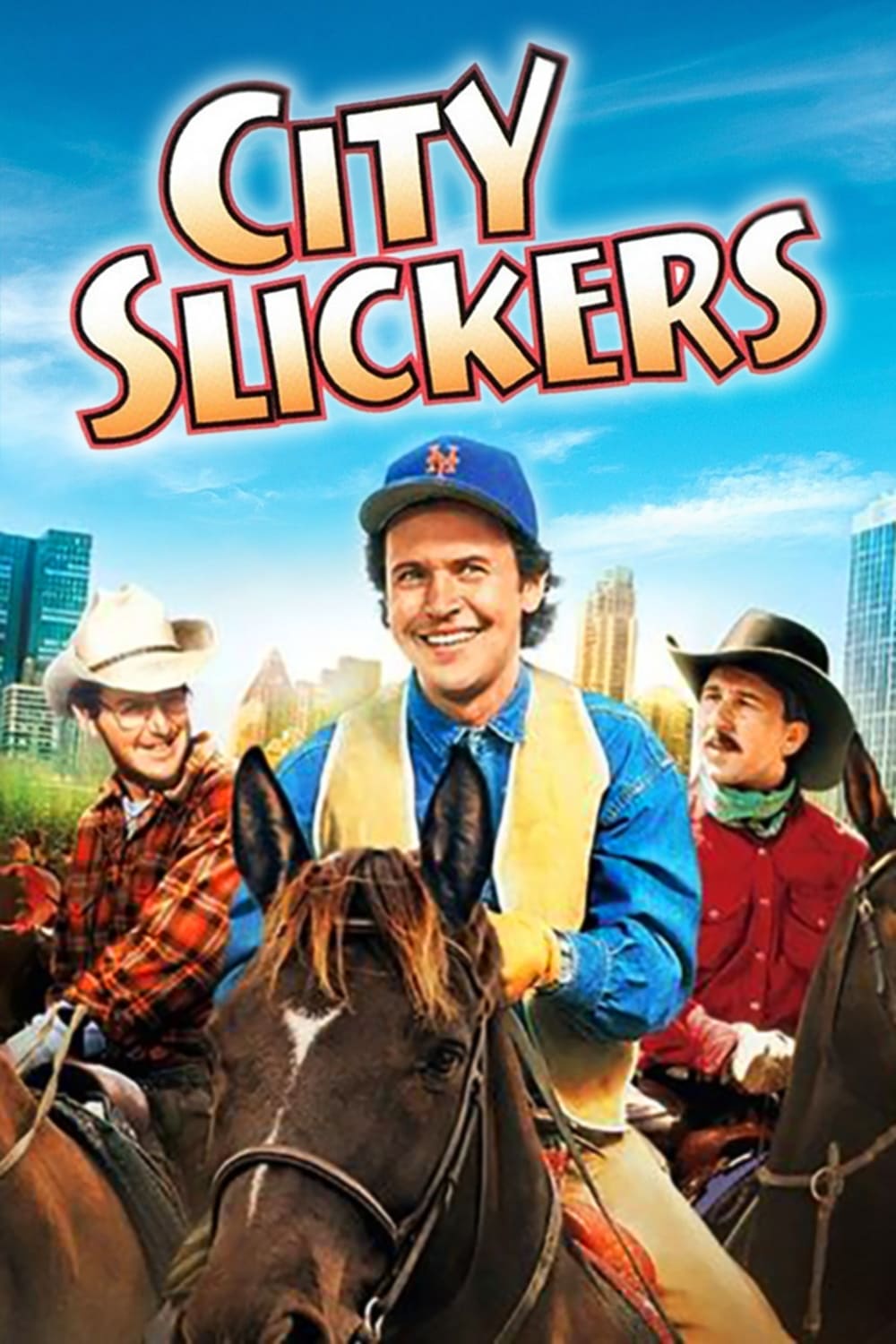
Mitch's Mets fandom is the number one nit: at seven in 1959 the Mets did not exist, and nobody that overwhelmed by the Yankees would switch; the explanation offered is a Mets donation to Comic Relief, plus Mandel and Ganz being Mets fans.
Nobody flips out like this at 39; it should be about 46, when mortality kicks in, which draws 'I beg to differ.'
Helen Slater's character carrying on alone after her friend cancels is doubted, countered that it is more believable in 1991 without cell phones.
Bruno Kirby's character being married to a 25-year-old lingerie model while running a sporting goods store is called absurd, after a nod to his alpha look.
Helen Slater's character choosing Phil, about to be economically destitute after sleeping with a 20-year-old, is troubling.
Curly was not buried nearly deep enough.
A favorite: everyone cheers the ranch owner's refund after one guide dropped dead and the other two tried to kill them.
The Mets hat still can't be gotten over.
The centrality of baseball, like arguing Clemente versus Aaron, is called wild and antiquated, but also something enjoyed about the movie; today they would argue NBA player empowerment and Kyrie.
A skipped nit: Helen Slater's character and Phil never interact before leaving together; she is probably reckless. — Bill Simmons
Cattle vacations get a yes, but another reply says it depends on whether Westworld counts as a cattle vacation, which is called a good call.
Shooting the running of the bulls in Pamplona for one scene is called a real Hollywood flex, with a joke about a missed Rossellini movie. — Bill Simmons
Asked which guy from Ace's crew gets it, the picker zags to Bruno Kirby's dad, Bruce Kirby, 'the Quiddichello's guy' (as transcribed); he then hedges with 'either him or' a shout-out to Marshall Bell, who plays Gordy's dad and 'Quado' (as transcribed) in Total Recall, so Bell stays out of the result. — Chris Ryan
The reaction is 'He gets it', without a clear referent, and someone did not realize the actor was Quaid. — Bill Simmons
The 1977 car ride, grape spitting, diner order, Sheldon discussion, days-of-the-week underwear, and last-page habit are nominated as an opening cluster. — Bill Simmons
The 1982 airplane scene is nominated for the airport rule, white-man’s overbite, and debate over post-sex affection. — Bill Simmons
The Temple of Dendur “pecan pie” conversation is nominated for its photography, playfulness, and submerged romantic tension; one participant selects it.
The failed double date and the cab aftermath are nominated. — Bill Simmons
The Sharper Image “Surrey with the Fringe on Top” scene is nominated.
Harry’s “wagon-wheel coffee table” breakup rant is nominated and becomes one participant’s final choice.
The split-screen calls after Harry and Sally sleep together are nominated, with the difficult 61-take production story included. — Bill Simmons
The New Year’s Eve ending is admitted despite reservations discussed later.
The Katz’s Delicatessen fake-orgasm scene is recognized as iconic but rejected as overlong and less rewatchable.
The first diner scene receives one final preference for setting the film’s tone through a dense run of jokes.