‹ All people

Film credit

Nora Ephron

Stats

Episodes featuring their films
2
Movies in this archive
2

Rewatchables episodes featuring Nora Ephron’s films

You've Got Mail

1998 film

Juliet Litman · Amanda Dobbins

Aired August 31, 2017

Displaying all 2 episodes

Mentioned in discussions

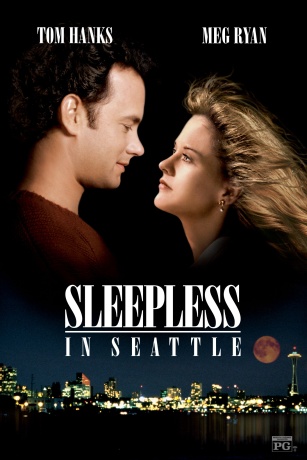
Sleepless in Seattle

Apex Mountain

Seattle; Meg Ryan; Nora Ephron (director); Rosie O’Donnell (film career); houseboats
In the discussion (11)
Approx. transcript time · 01:32:20Read transcript
  • Hanks is judged one year short of his Apex, with Forrest Gump the choice and this film helping establish it. — Bill Simmons
  • Seattle in 1993 receives an affirmative Apex choice for its cultural prominence. — Bill Simmons
  • Ryan receives unanimous affirmative Apex support, cementing her bankability and first-choice status. — Bill Simmons
  • Ephron receives a qualified affirmative Apex choice as a director, with When Harry Met Sally the breakthrough and this film enabling subsequent work. — Bill Simmons
  • Radio-advice shows are rejected as an Apex choice. — Bill Simmons
  • Brooks Robinson is debated between baseball achievements and this film's cultural recognition; no clear final Apex selection emerges. — Bill Simmons
  • O'Donnell receives an affirmative film-career Apex; her talk show is an alternative broader career peak, with the movie career seen as enabling it. — Bill Simmons
  • The Empire State Building is rejected as a specific film Apex because its enduring existence is the achievement.
  • Tiramisu is rejected as an Apex choice, with a food-category joke offered instead. — Amanda Dobbins
  • Houseboats receive qualified affirmative Apex support because this is the houseboat people immediately picture.
  • Characters named Clarice are rejected as an Apex choice despite a current run of the name.
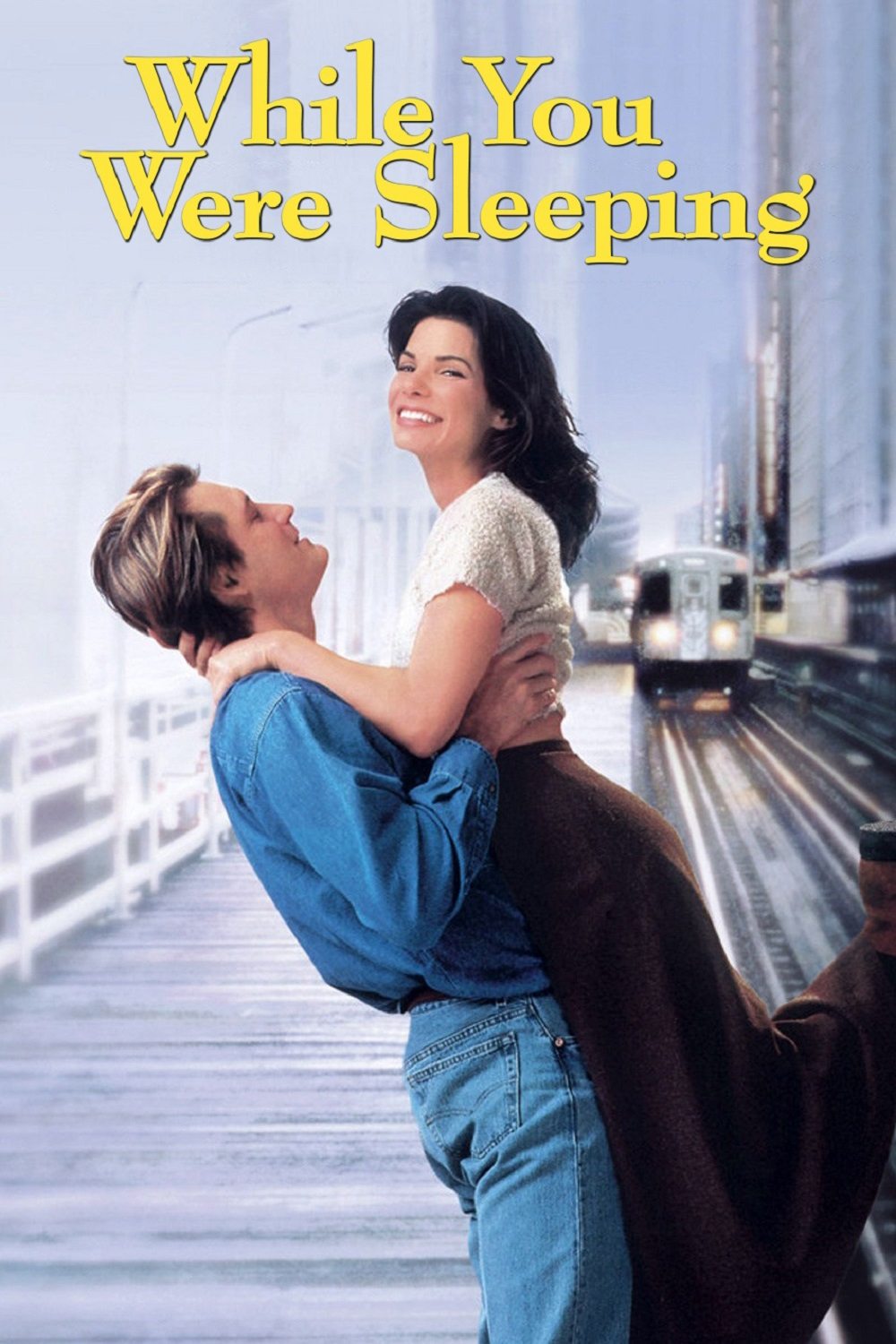
While You Were Sleeping

Probably Unanswerable Questions

Why we don't learn more about Lucy's mom; whether it is a Christmas movie; whether it has the most crimes of any rom-com

In the discussion (3)
Approx. transcript time · 01:22:14Read transcript
  • Why don't we learn more about Lucy's mom? The voiceover intro efficiently establishes her loss; more parent material would shift focus from her loneliness. — Amanda Dobbins
  • It is not a Christmas movie: the climactic event needs to be at Christmas, and this one peaks too soon. — Amanda Dobbins
  • Is this the most crimes ever committed in a rom-com? Nothing in the Nora Ephron or Nancy Myers (as transcribed) canons compares; How to Lose a Guy in 10 Days has bribery and betting, but this still takes the cake. — Amanda Dobbins
In the discussion (5)
Approx. transcript time · 01:26:52Read transcript
  • One participant chooses Billy Crystal for the final speech and the comic material that makes the film distinct. — Juliet Litman
  • Another leans Crystal because no other actor could sell the part, while resisting separating him from Meg Ryan. — Bill Simmons
  • One participant explicitly chooses Nora Ephron for establishing her later run and the modern rom-com form. — Bill Simmons
  • A second explicit choice moves to Ephron because the script could support other compatible lead pairs.
  • The discussion wavers back toward Crystal; one view is that the movie does not work without this particular pairing, so the chemistry is the real winner. — Amanda Dobbins
Podcast choices
Speaker not identified
Billy Crystal
Speaker not identified
Nora Ephron
Speaker not identified
Nora Ephron
Speaker not identified
Billy Crystal
When Harry Met Sally...

What’s Aged the Best?

Nora Ephron’s script, the 96-minute structure, friends-to-lovers premise, soundtrack, sexual candor, supporting friendships, old-movie references, and memorable micro-phrases

In the discussion (11)
Approx. transcript time · 00:36:31Read transcript
  • The screenplay and Ephron’s voice remain clean, influential, and highly readable. — Bill Simmons
  • The 96-minute runtime wastes no scene and avoids modern padding, contrived villains, and overloaded will-they/won’t-they plotting. — Bill Simmons
  • Friends realizing mutual love remains a powerful movie and real-life template. — Bill Simmons
  • Harry Connick Jr.’s classic-song soundtrack avoids the dating effect of period pop choices. — Bill Simmons
  • New York restaurants, Sally’s changing hair before the perm, her intricate ordering, and the Knicks drought jokes remain vivid. — Bill Simmons
  • Carrie Fisher’s “Joe’s available,” Jimmy Breslin, and the warning about sleeping with a friend remain sharply observed. — Bill Simmons
  • The movie’s frank treatment of sex, different expectations, and Harry’s absolutist friendship theory remains productive and mostly nonoffensive. — Bill Simmons
  • Nora Ephron is treated as irreplaceable and New York in autumn as permanently beautiful. — Bill Simmons
  • References to Casablanca and older romantic comedies teach viewers to rewatch and argue about movies. — Bill Simmons
  • The fake-orgasm scene helped make discussion of women’s sexual experience more open, and “he’s never going to leave her” remains practical relationship advice. — Amanda Dobbins
  • The Pictionary arrows and phrases such as “baby fish mouth” show how small jokes became durable shared language. — Bill Simmons
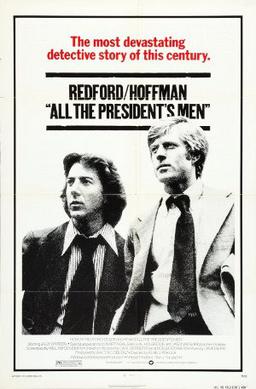
All the President’s Men

Half-Assed Internet Research

Screenplay dispute, invented Florida scene, Robards background presence, overlapping lines, and Redford handedness

In the discussion (7)
Approx. transcript time · 00:59:13Read transcript
  • Goldman reported that Bernstein and Nora Ephron secretly drafted an alternate screenplay that elevated Bernstein and contained inaccuracies
  • The Florida office sequence is described as the only wholly invented scene retained from that draft — Bill Simmons
  • William Goldman skipped his Butch Cassidy Oscar ceremony for a Knicks game
  • Jason Robards reportedly stayed in Bradlee’s office on non-shooting days so his character remained visible in the newsroom background — Bill Simmons
  • Redford and Hoffman reportedly memorized each other’s dialogue to overlap naturally — Bill Simmons
  • Left-handed Redford performs close-up writing and dialing right-handed — Sean Fennessey
  • Redford and Hoffman split billing, with Redford leading marketing and Hoffman leading the film credits — Bill Simmons
My Best Friend's Wedding

Most Rewatchable Scene

The karaoke scene; the 'Say a Little Prayer' lunch

In the discussion (6)
Approx. transcript time · 00:31:24Read transcript
  • The host running the category leaves the choice to the other two and lists candidates: the karaoke scene, Rupert Everett singing 'Say a Little Prayer' (a spouse's favorite four minutes of the movie), the 'choose me, marry me' speech, which is both crazy and heartfelt and which the hosts connect to Grey's Anatomy, Notting Hill and 90210's Kelly Taylor 'I choose me', the bathroom fight at Comiskey Park, and the ending with giant cell phones that somehow had service everywhere in 1997.
  • One more nominee is the boat scene, where she and Dermot Mulroney almost talk about their feelings, then dance while he sings 'The Way You Look Tonight'.
  • The karaoke scene is the pick because it shows the whole range of emotions for everyone involved, and Cam really brings it. — Juliet Litman
  • The 'Say a Little Prayer' lunch is the pick: iconic, a laugh every single time, especially the cutaway to the lobster restaurant where people in lobster mitts wave their hands; it also highlights how 90s rom-coms outside Nora Ephron's used a chirping ensemble like a musical. — Amanda Dobbins
  • Another host's personal favorite is the bathroom fight: the best acting of Cameron Diaz, thirty women in the women's bathroom rolling with the punches and getting mad at Julia Roberts, two famous actresses at the peak of their powers in a showdown; its climax, the 'and a food critic' jab, is parked for what's aged the worst.
  • The recap splits the two deciders between the karaoke scene and the lunch singing scene, both singing scenes; the helium kids appear at the Sunday brunch before the wedding and are high comedy.
You've Got Mail

Unintentional Comedy Award

The repeated houseboats and swaggering book-mogul family

In the discussion (4)
Approx. transcript time · 00:45:26Read transcript
  • The movie's deliberate humor initially leaves the panel unable to identify unintentional comedy, even in Greg Kinnear's performance. — Juliet Litman
  • The father's wife leaving him for the nanny is praised as an intentional joke and explicitly excluded from the award. — Juliet Litman
  • The inexplicable recurrence of houseboats in a Tom Hanks–Nora Ephron movie becomes the clearest unintentional-comedy choice. — Amanda Dobbins
  • Three book executives behaving like supervillain moguls with matching boats are also treated as ridiculous. — Amanda Dobbins
You've Got Mail

Apex Mountain

Meg Ryan: yes for one participant; disputed

In the discussion (6)
Approx. transcript time · 00:42:01Read transcript
  • Tom Hanks is denied the apex here, although his 1990s streak and the effortlessness of this performance are treated as extraordinary. — Amanda Dobbins
  • Nora Ephron is also denied a film apex because When Harry Met Sally had greater impact, even though You've Got Mail is one participant's personal peak and most-quoted Ephron film. — Amanda Dobbins
  • Heartburn receives a side case as an underrated Ephron film with funny performances. — Amanda Dobbins
  • One participant declares this Meg Ryan's apex because of the drop in her later filmography and how inseparable her performance is from the movie. — Juliet Litman
  • The other participant gives Meg Ryan's apex to When Harry Met Sally, favoring its diner-ordering performance as less cutesy and more honest. — Amanda Dobbins
  • Carrie Fisher’s performance in When Harry Met Sally is raised as a final apex-side observation. — Juliet Litman
You've Got Mail

What’s Aged the Worst?

The haircut, appearance-first dating logic, fading earnest rom-com style, dated Internet behavior, and changed Observer politics receive criticism.

In the discussion (8)
Approx. transcript time · 00:23:49Read transcript
  • Meg Ryan's short haircut is called extremely tied to its moment, though the other participant defends how it looks on her. — Amanda Dobbins
  • The Cafe Lalo setup centers on whether Kathleen is attractive enough for Joe to enter, which the panel says feels superficial and would be written differently now. — Juliet Litman
  • The panel fears a 2017 version would be extremely weepy instead of funny and sentimental, a combination they struggle to find in newer films. — Amanda Dobbins
  • The characters' casual bookish life is described as pre-hipster and unusually earnest rather than ironic. — Juliet Litman
  • The characters' relationship with the Internet is called silly and dated, although it also inspires nostalgia. — Juliet Litman
  • Frank's job at the Observer now reads differently because the paper's ownership no longer matches the liberal independent-bookstore milieu portrayed in the movie. — Juliet Litman
  • Kathleen’s clogs are defended as comfortable and newly fashionable, a counterpoint within the aged-worst discussion. — Juliet Litman
  • A Nora Ephron oral history says the styling brief sought a serious bookstore owner who would not look dowdy. — Juliet Litman
Displaying all 11 discussions

Films in the archive