
Film credit
Nick Nolte
Also referred to as Nick Dolty, Nicole Nolte, Nolte, Dick Nolte, Nick Dalton
Stats
- Episodes featuring their films
- 7
- Movies in this archive
- 7
Rewatchables episodes featuring Nick Nolte’s films
Mentioned in discussions


Casting What-Ifs
The studio resisted Nick Nolte, Kurt Angle plays Koba, and several supporting roles drew on real combat-sports figures.
This discussion recalls a choice from an earlier episode.
In the discussion (3)
- The filmmakers held firm on Nolte after the studio resisted casting him. — Bill Simmons
- Koba's name is identified as a Stalin nickname and the Russian-villain choice is discussed. — Bill Simmons
- Brian Callen based his commentator on Joe Rogan and Frank Grillo based his trainer on Greg Jackson. — Bill Simmons

What’s Aged the Best?
Hardy’s range, the Sparta concept, fight photography, the casino confrontation, Nolte, and Jennifer Morrison
In the discussion (8)
- Hardy is praised for moving between unusual roles rather than repeating one star persona. — Ryen Russillo
- The MMA scenes remain believable because geography, distance, and brief in-cage shots preserve the feeling of watching a real event. — Bill Simmons
- The sixteen-fighter Sparta structure is praised as a stronger version of an older tough-man-tournament premise. — Bill Simmons
- The casino confrontation and its payoff in the hotel relapse remain the strongest dramatic material. — Ryen Russillo
- Nolte’s lived experience with alcohol is connected to the force of the hotel performance. — Ryen Russillo
- Jennifer Morrison is praised for playing a spouse who becomes supportive rather than remaining a stock obstacle. — Bill Simmons
- Nolte’s long career, relapses, and comebacks give the role additional weight. — Bill Simmons
- Tommy entering without music and leaving immediately after wins is praised as a durable signature. — Ryen Russillo
Casting What-Ifs
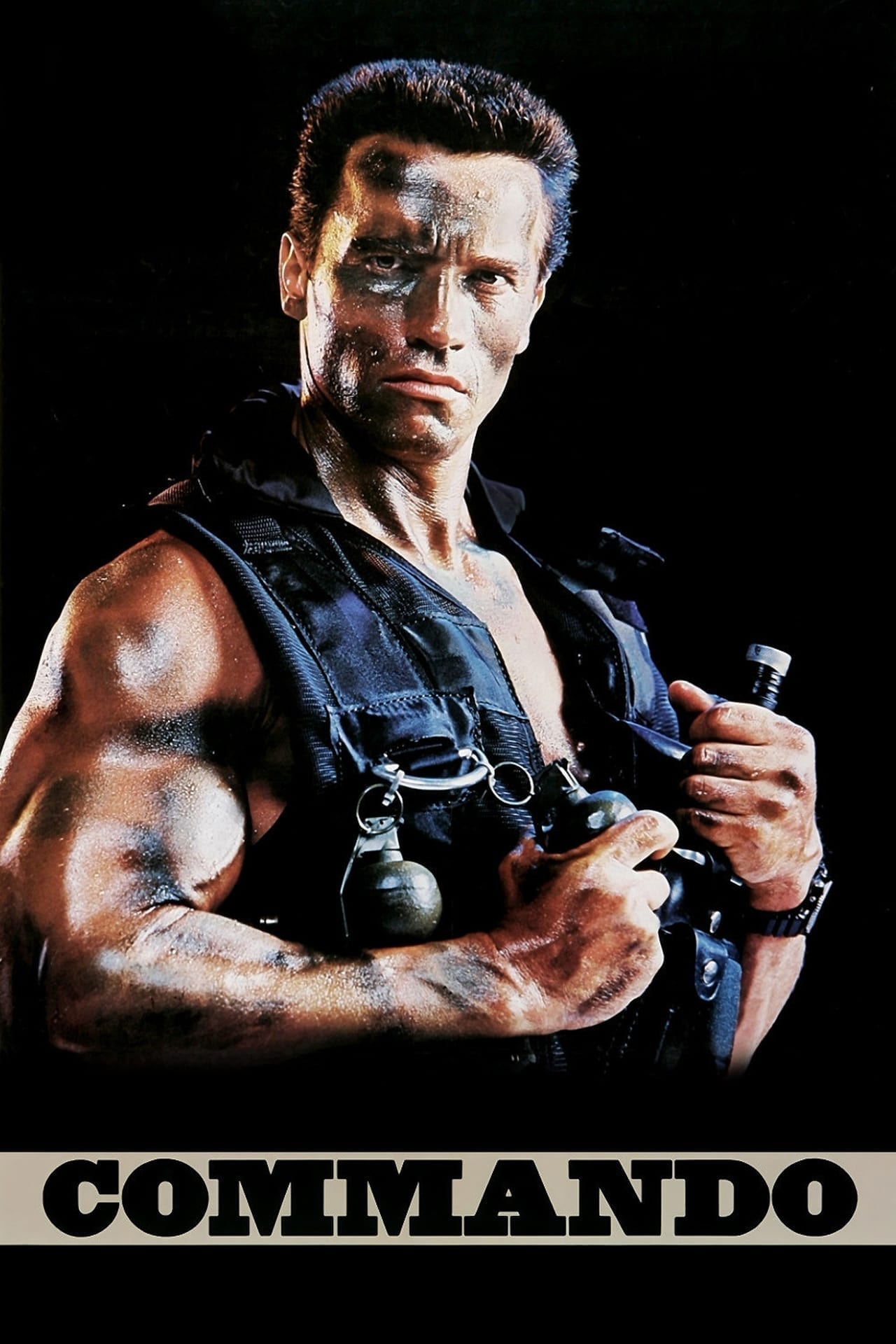
Gene Simmons; Nick Nolte; Wings Hauser as Bennett; Raul Julia as Arius; John McTiernan directing
In the discussion (4)
- Gene Simmons and Nick Nolte were in the mix before Arnold got the movie. — Bill Simmons
- Bennett was supposed to be played by Wings Hauser ('Wingshouser' in the transcript), who was fired on the first day and replaced by Vernon Wells. — Bill Simmons
- The director wanted Raul Julia as Arias, which would have made sense, but they went with Dan Hedaya. — Bill Simmons
- John McTiernan ('John McTurne' in the transcript) was offered the chance to direct, turned it down and went on to direct Predator. — Bill Simmons

Casting What-Ifs
The studio preferred Charles Bronson or Tommy Lee Jones, then approached Nick Nolte and Jeff Bridges; Warren Oates was first set for Brain.
This discussion recalls a choice from an earlier episode.
In the discussion (6)
- The financing studio preferred Charles Bronson or Tommy Lee Jones for Snake. — Bill Simmons
- Carpenter rejected Bronson as too old and feared losing control to a more experienced star. — Bill Simmons
- Nick Nolte and Jeff Bridges were approached but were not interested. — Bill Simmons
- Nolte is considered insufficiently funny, while Tommy Lee Jones is the only proposed alternative with partial plausibility.
- Warren Oates was originally set to play Brain, withdrew while unwell, and recommended Harry Dean Stanton. — Bill Simmons
- The performer whose name is transcribed as Season Hubbly was married to Kurt Russell, which is offered as the reason she joined the cast. — Bill Simmons

Casting What-Ifs
Walter Hill directing; Keanu Reeves as Chris; Michael Madsen as Michael; Don Johnson as Michael; Ted Levine as Waingro; Voight declining Nate; the Thief star as Nate
In the discussion (10)
- The hosts say Mann shopped the script to Walter Hill in the 1980s and Hill turned it down; a Hill-Mann bank movie would have been huge news, perhaps starring Nick Nolte and Don Johnson. — Bill Simmons
- The hosts say Keanu Reeves was originally set to play Chris and lost the part when Kilmer fit it around Batman Forever; one host would totally go for Keanu. — Bill Simmons
- The hosts say Michael Madsen was originally cast as Michael and replaced by Sizemore, and Don Johnson was considered for Michael and as a backup for De Niro and Pacino. — Bill Simmons
- After rewatching every Michael scene with Don Johnson in mind, one host says no; the other thinks he could have worked, better as Nate. — Bill Simmons
- William Petersen allegedly turned down Michael, which one host doubts. — Chris Ryan
- The hosts say Ted Levine was offered Waingro and turned it down to avoid typecasting after Buffalo Bill; one host can't fathom it, the other thinks he would like that movie more. — Bill Simmons
- The hosts say Voight initially turned down Nate, saying others could do it better, until Mann insisted. — Bill Simmons
- An internet claim that the actress later in Mann's Miami Vice refused Justine unless the script was translated into Mandarin is called half-fast and fishy. — Bill Simmons
- The Thief star lamented on a 1998 Thief DVD commentary with Mann that he had no role in Heat; the hosts say he should have played Nate. — Bill Simmons
- Offered the Thief star as Nate plus Keanu as Chris, one host would rather keep Kilmer, whose unpredictable performance he loves. — Bill Simmons
Probably Unanswerable Questions
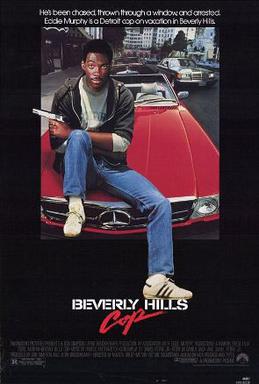
Was Beverly Hills Cop 2 better than Beverly Hills Cop? Was Axel Foley gay?
In the discussion (17)
- Whether Cop 2 is better: it is a better story and a flat-out good, more fun movie with good music, the Taggart and Rosewood thing and Brigitte Nilsson (as transcribed), with Eddie still great; the fondness for Cop 1 comes from everything it meant for the Eddie arc.
- Was Axel Foley gay gets a yes, but the answer first returns to the period reviews, which were also upset about how the movie made white people look.
- Pauline Kale (as transcribed) did not believe in Eddie Murphy's stardom and found it offensive because he used it as a joke on how dumb white people could be made to look by a smart black person, a sort of pro-minstrel argument against an anti-minstrel work; LA Times letters in 1985 characterized Murphy's swagger with a racial slur and worried that black confidence would replace white comedians.
- One host as a kid felt the opposite, that it was the greatest thing that ever happened; Kale was about 65, not a racist, but had an interesting take on how black audiences responded to The French Connection, and old guard critics felt that way, so the rewatch was done aware that people were nervous Eddie was someone white people should fear.
- To one host it is a movie about a gay black man in the Detroit police whose former best friend, probably lover or hookup buddy, gets killed, sending him on a mission; not having sex with a woman does not make you gay, but a near two-hour movie whose protagonist on the verge of major stardom never gets a moment with the girl is striking, even allowing that Eddie arrived two weeks before filming and nothing was rewritten.
- Evidence: Jenny looks completely enamored, goes to the big three-room suite and immediately lies on the bed batting her eyelashes, and the only thing on Axel's mind is ordering room service for Taggart and Rosewood.
- The Mikey scenes are weird to watch: at the bar they look like they are about to make out, they exchange 'I love you', and when Axel gets home after the chewing-out by Inspector Todd to find Mikey broken in with the fridge open he is elated; the counter is that a friend out of prison eating a mayo sandwich in your kitchen would get 'get out of my house, you felon'.
- Gay characters are sprinkled throughout; it is an unintended consequence of a movie made with a ton of cocaine by the seat of its pants; at the strip joint he only tells Rosewood to give the dancer a dollar and does not partake, and his pretending is for plot rather than character; the movie is all pairs of men with emotional energy who could be on the verge of kissing, so subtext becomes text; 'is Axel gay' is a long-running Reddit conspiracy theory; James Russo brings a wild method energy to a two-minute part, a reckless guy out of prison who almost cries seeing his friend, which feels very real.
- Eddie is drawn into Russo rather than watching a method performance, they are on the same page; the original ending reportedly had Eddie back in his Detroit apartment opening the closet to find Mikey's shirt and sniffing it, prompting the joke that Martin Brest was robbed of an Oscar; the movie probably intended none of it.
- Intent does not matter because those things are in the movie we got; one host noticed it independently and wrote about it in a 2010 mailbag because the Jenny Summers scene jumped out, and may have inspired the theory; no other 80s action or genre movie lacks some nod to the hero's romantic life.
- Even in 48 Hours Nick Nolte's girlfriend calls to complain and Eddie gets laid by Olivia Brown, his primary obsession in that film; Eilbacher is a beautiful blonde, not a character actress like Joan Cusack, whose function in any other movie of the period, see Stripes, is to give a straight hero somewhere to put his sexuality; perhaps it was a black-white thing, since the sex scene was cut from The Golden Child and they were not ready for Eddie to do that in a mainstream movie.
- The conspiracy theory is compared to early Will Smith, who had Vivica A. Fox to get back to but few romantic leads for someone in his position, and did not help himself by skipping the kiss in Six Degrees of Separation, after which he always has a girlfriend, wife or dead spouse; the wish is that movies would acknowledge gay people exist and have sex lives instead of flicking at it.
- Damon Wayans giving him the fruit plate with the banana for the tailpipe is text, not subtext, and Eddie turns around on his way out to say thank you, perfectly comfortable with the man; the movie's own setup is the you-killed-my-lover revenge premise of other action movies, taken as a vacation; one host watched it for 26 years without noticing until the other wrote about it.
- The passion for Jenny Summers is the giveaway, how could a man not kiss her; the wish for one line where she hits on him and he insinuates he does not do that anymore is answered with 'that makes it worse'; it makes her character more interesting and hornier, and Eddie's complicated history with homophobia in his comedy makes the whole thing more frictive.
- A tangent on Eddie's homophobia turns into a bit about one host's bullies now being gay married with three kids: bully someone and your sexuality will come for you.
- During the scene discussion, 'before he dies, they're doing it' was raised about Axel and Mikey and saved for later.
- During what aged best, Jenny is said to be a love interest for neither man, though she really tried with Eddie, and the subject is parked until later.

What’s Aged the Worst?
The first 19 minutes; obvious stunt doubles; Victor Maitland's reaction to Mikey's death; the homophobia (nominated, then partly defended); Taggart punching Axel; Maitland's useless bodyguards; the Rolling Stone and Michael Jackson name-drop
In the discussion (8)
- The first 19 minutes could zip by faster; 1984 was not the peak of masking stunt work, so a guy gets punched and a different man flies through the window, Magnum PI level stunts: the man thrown through the buffet table is not Jonathan Banks, the truck driver has a mullet while the man who climbs out has a bald spot, Victor's tumble down the steps and Eddie through the plate glass are doubles; tumbling action has gone out of style and now reads as farce.
- Victor Maitland's reaction to Mikey's death is so bad that Stephen Burkoff (as transcribed) should have spent weeks in character; he has been in a Bond movie and is a good 80s guy; 80s villains were almost always played by sexy men, even Jonathan Banks, the future Mike Ermantrout (as transcribed), has an attractive energy.
- The whole movie is pairs of men, five different pairs with no female interruption, like Don Johnson and Philip Michael Thomas driving and looking at each other; it only jokes about that once at the club, is not homophobic, and is not afraid of what it means to have two men in close proximity.
- Homophobia is proposed for what aged worst, but one host finds it less homophobic than memory suggested: you simply see gay people be gay, Damon Wayans plays an effeminate man, and the one not-great moment is Eddie using a made-up disease, Herbie simplex 10 (as transcribed), as a weapon on the maitre d'; the defense is that the characters he invents are bits to get him into the next room, like the loudmouth journalist at the Beverly Palms; Eddie's early-80s homophobia is remembered from the stand-up specials and a little of 48 Hours, not this.
- Taggart punching Axel is pretty bad given what has been seen of the LA police, though Taggart then comes out, apologizes and offers to let charges be pressed; Maitland's bodyguards aged badly because all of them were terrible, and the strategy is dissected: five guys come in, four huge ones carry Axel through the building and the fifth just walks in front, so they can throw him through the window as evidence of a public disturbance.
- No white person thrown through that window ends up charged with public disturbance and in a police department; Axel never resists arrest because he is a cop from Detroit and a black man who knows what cops do, and he knows Todd will eventually vouch for him; the movie star's entitlement that the plot will give him something to do sits beside the reality of a black person in police presence, and there is a character logic in revealing less to learn how these officers act.
- When 48 Hours was a rewatchable the fight between Eddie and Nick Nolte looked like Nolte would kill him, so two years later the formula seems tweaked so Axel is never roughed up beyond a punch in the stomach, the window and being knocked out in the opening.
- Getting into the Beverly Palm by name-dropping Rolling Stone and a Michael Jackson profile is offered for aged worst; a follow-up, explicitly not offered as aged worst, is how magazines substitute for mobile phones: Rosewood reading Time about red meat, Victor Maitland flipping through a magazine in Jenny's office, and Jonathan Banks reading National Geographic, which is just how people passed time in 1984.

Apex Mountain
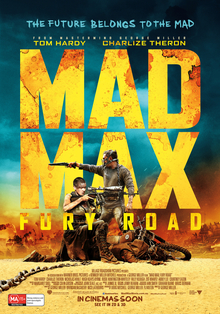
The Doof Warrior (iOTA); George Miller (one host, vs. The Road Warrior); Charlize Theron (1 yes, 2 no)
In the discussion (6)
- George Miller is weighed first, with a joke that Happy Feet was easily better and Babe and Babe 2 called excellent; The Road Warrior is named his best film, the one that laid the carpet for him to become a Spielbergian director who could do action and drama, and Lorenzo's Oil, about Susan Sarandon and Nick Nolte trying to cure their child and drawn from Miller's experience as a doctor, a fine tearjerker; because he never worked at the volume needed to stay in the mix, one host answers no for this film and names Road Warrior as Miller's apex.
- Tom Hardy is called really complicated: Inception, with the Ames (as transcribed) character, is rated higher than Fury Road, Dunkirk and The Revenant come up, and Warrior is picked as the best he has ever been as a performer if not in fame, Tommy Conlon being a better version of Max in a largely silent physical performance.
- Charlize is put to the table: two voices say no, then one says yes, placing this over the Oscar win for Monster, the Jason Reitman collaborations and A Million Ways to Die in the West; her shaved head meant she wore a wig in the Seth MacFarlane western comedy.
- The dissent on Charlize is that Monster is her Apex Mountain, so her yes does not carry the table.
- For Miller, a second host answers yes, this is Apex Mountain, even while agreeing The Road Warrior is the better film in story, characters and pacing: as an achievement it is almost unparalleled, a movie where you feel the physics in a near-fully-CG era, made from non-Marvel IP after all the struggles to get it made, a top-five action film that, like The Fugitive, grabs you and cannot be switched off once it starts; this yes stands against the earlier Road Warrior answer and is not resolved.
- The Doof Warrior is easily at Apex Mountain, agreed with several 'easily's.

Casting What-Ifs
Bruce Willis was chosen after an extraordinary list of stars; Sam Neill was considered for Hans Gruber, while Tom Berenger and Don Johnson are the panel’s plausible McClane alternatives.
In the discussion (6)
- Stallone, Harrison Ford, Robert De Niro, Charles Bronson, Nick Nolte, Mel Gibson, Richard Gere, Don Johnson, Burt Reynolds, and Richard Dean Anderson are reported as McClane possibilities. — Chris Ryan
- Because the source novel followed an earlier Roderick Thorp book adapted with Frank Sinatra, Sinatra reportedly held a contractual right of refusal.
- Tom Berenger and Don Johnson are proposed as alternatives who could have worked, though the released film would have been less iconic.
- Nick Nolte is rejected as physically and tonally wrong for the required action.
- Sam Neill is reported as considered for Hans Gruber, but Alan Rickman is treated as impossible to replace after seeing the performance. — Chris Ryan
- The panel wonders whether Chris Rock or a Wayans brother was considered for Argyle and asks what the final Argyle shortlist looked like; the transcript does not resolve it. — Bill Simmons

In the discussion (1)
- With Eddie Murphy, Nick Nolte and Walter Hill as the candidates, Eddie Murphy is answered immediately and agreed with; it is not even a question.
Podcast choices
- Speaker not identified
- Eddie Murphy
- Speaker not identified
- Eddie Murphy

Probably Unanswerable Questions
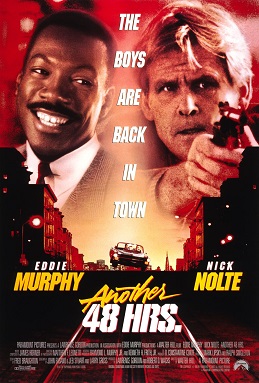
Is Jack Cates a terrible cop or an awful cop? Why is Jack Cates still lovable? Is Kehoe ruined by Another 48 Hours? Who won the Jack and Reggie fist fight?
In the discussion (6)
- Terrible cop or awful cop: he cannot drive, cannot keep a partner, is racist, is a terrible boyfriend with no respect for the maitre d' profession, got two cops killed with his gun, makes springing a random crazy person his plan, thinks a Zagnut bar is a meal for a furloughed prisoner, and loses the bus; Eddie may have eaten surf and turf during his missing thirteen hours, which is why he is broke at Roman's; terrible cop is the answer.
- Why one host still loves Jack Cates, the irascible racist with a heart of gold, has no answer; the archetype of the grizzled, unlucky-in-love, smoking, drinking, beaten-down cop like Sonny Crockett works every time, and Mindhunter should have cast that type instead of the miscast Jonathan Groff.
- Is Kehoe ruined because he is the villain of Another 48 Hours; one host finds the sequel entertaining despite a heavier Eddie Murphy; Nolte told the A.V. Club that his idea for the sequel was a far more racist story in which Cates had become a full-blown alcoholic in a fleabag motel and Reggie came to get him out and took control, which Eddie rejected; they then did it for the money.
- The sequel was easy and they overthought it, keeping Reggie and Jack antagonistic when they should be friends; it should have been five years later with Reggie a cop, or both private investigators, as partners still busting each other, either solving a case or facing Gans's brother, the only smart part of the real sequel, which could have run to six films; Metro with Michael Rapport (as transcribed) is essentially 48 Hours 3.
- A defense of Another 48 Hours as one of the last bastions of action comedy, though bloated with bikers, meth and shootouts; Fletch Lives, Rocky V and Another 48 Hours all arrived within eighteen months in a dark period, explained by the theory that Hollywood's cocaine years from 1977 to 1986 ended with Len Bias's death and left five years of horrible movies.
- Who won the Nolte and Eddie fight: Eddie was winning before the cops showed up, but Cates comes on strong and lands the last six or eight punches after starting dirty; one scores it 10-9 Reggie 'because I believe in justice', a punch count has it almost even, and the other scores it 10-9 Murphy but expects Nolte to wear him down in the next round.

Unintentional Comedy Award
Nolte's look into the camera after Reggie falls asleep in the car; Reggie sleeping in the open-top car on a cold San Francisco night after the fight, fed only a Zagnut; Jack's apology
In the discussion (2)
- There is not a lot of unintentional comedy because the intentional comedy succeeds; the one moment comes after Jack and Reggie beat each other up and the bathroom confrontation where Reggie finally talks: they wait for the car in the parking garage, Reggie beds down in the back seat asking Jack for a bedtime story and gets a profane refusal; an aside notes Frank McRae once played defensive tackle for the Bears.
- The camera then stays on Nolte, who takes a hit from his flask, looks around and stares into the lens before the cut, probably just drunk; the other host's picks are the idea that Eddie Murphy could sleep in an open-top sedan on a thirty-degree San Francisco night after a fight with Nolte having eaten only a Zagnut, and Jack's apology exchange, hilarious because Eddie accepts it.
Films in the archive
48 Hrs.
1982



Another 48 Hrs.
1990
Blue Chips
1994
Cape Fear
1991

North Dallas Forty
1979

Tropic Thunder
2008
Warrior
2011