
Film credit
Harrison Ford
Also referred to as Ford
Stats
- Episodes featuring their films
- 9
- Movies in this archive
- 13
Rewatchables episodes featuring Harrison Ford’s films



Star Wars: A New Hope
1977 film
Bill Simmons · Chris Ryan · Sean Fennessey · Van Lathan
Aired May 6, 2025
Star Wars: A New Hope
1977 film
Bill Simmons · Chris Ryan · Sean Fennessey · Van Lathan
Aired May 6, 2025
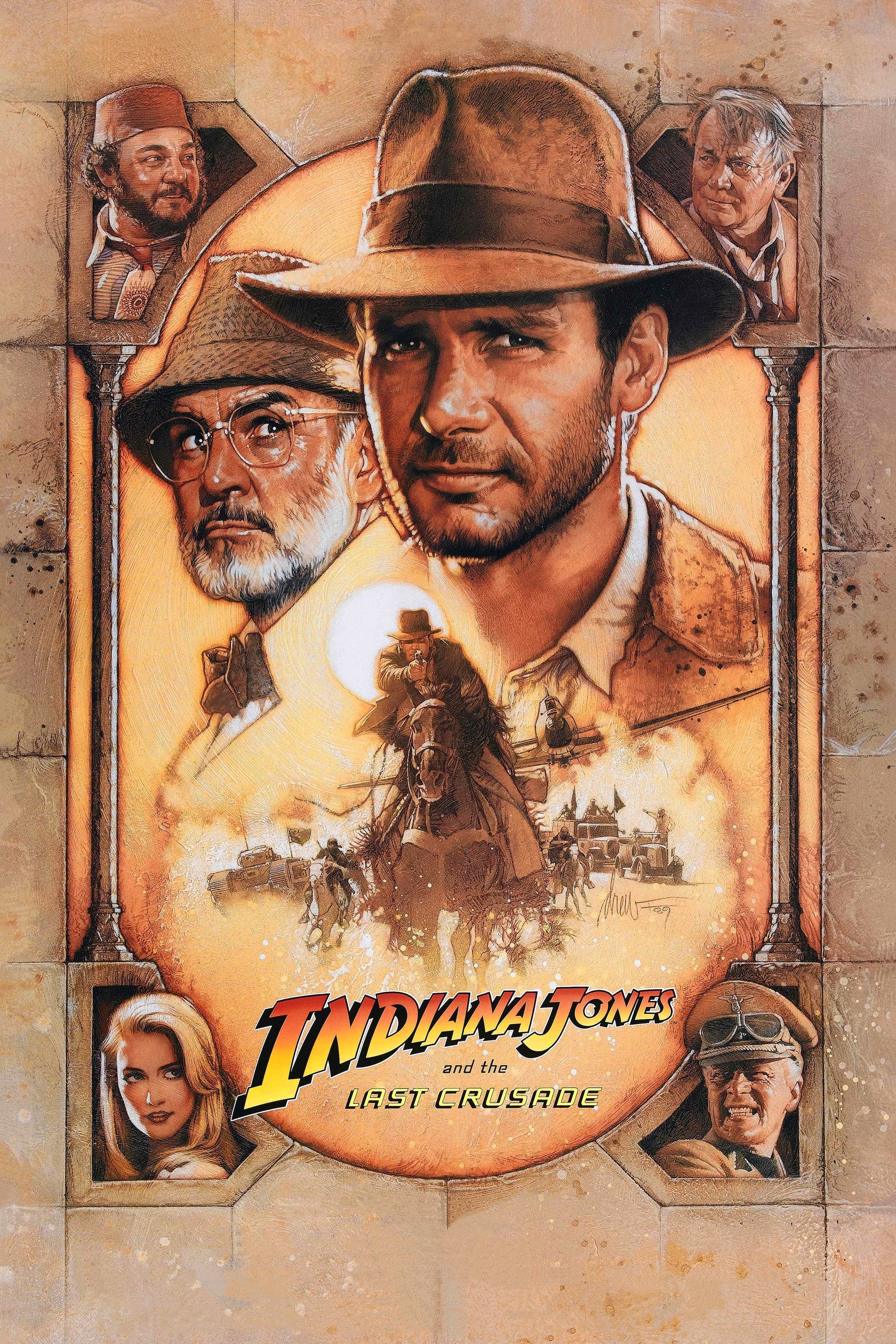
Indiana Jones and the Last Crusade
1989 film
Bill Simmons · Chris Ryan · Sean Fennessey
Aired June 20, 2023

Mentioned in discussions


Casting What-Ifs
Debra Winger was cast as Jane and dropped out when she became pregnant; Sigourney Weaver, Judy Davis, Elizabeth McGovern, Christine Lottie (as transcribed) and Elizabeth Perkins were also considered
In the discussion (3)
- Also considered for the Holly Hunter part were Sigourney Weaver, Judy Davis, Elizabeth McGovern, whom one host always kind of liked, Christine Lottie (as transcribed) and Elizabeth Perkins; Lottie would have been good.
- Debra Winger was cast and got pregnant, forcing the production to remove her and scramble for replacements; one host doubts the movie works with Winger because he had too much history with her from too many 80s movies, whereas Holly Hunter was unknown to him, tiny, seemingly crazy and passionate, unlike any actress he had seen; Harrison Ford could be seen in the William Hurt role, and Luke Wilson is floated as a joke.
- Brooks's search for a female heroine brought him to Debra Winger, who probably wishes she had waited nine months, since she would have been nominated again and the hosts would be talking about the Winger decade after Urban Cowboy, An Officer and a Gentleman and Terms of Endearment; Winger and William Hurt are two sides of the same coin, huge 80s stars a moderately interested 2019 moviegoer would struggle to place.

Casting What-Ifs
Ford is rejected as an alternative; other Crow casting histories and counterfactuals follow.
In the discussion (4)
- The hosts report that Harrison Ford declined the lead and are glad, feeling he would be too old. They also report the lead actor declined Wolverine to avoid repeating Gladiator. — Bill Simmons
- An IMDb biography is cited for an almost-Collateral role lost through a doomed project’s scheduling; the hosts joke about changed personal timelines. — Bill Simmons
- He reportedly turned down the Matrix because he could not get past page42 and did not find the world interesting; this remains a reported story. — Bill Simmons
- The actor is imagined in the Alec Baldwin part of The Departed, though possibly too big a star. — Bill Simmons
Probably Unanswerable Questions
Who is the 2019 Craig Kilborn? Could the Luke Wilson part have been cast better?
In the discussion (5)
- Who is the 2019 Craig Kilbourne (as transcribed), the stunt-cast non-actor who would play the two-scene boyfriend Mark: a YouTube guy like Logan Paul is too young, so a sports broadcaster is sought, with Joe Buck, Gus Johnson, Jim Nance (as transcribed), Mark Jackson, Jeff Van Gundy and Trevor Noah floated before Jalen Rose is settled on, though he would never do it.
- Could they have improved the Luke Wilson spot: definitely not Harrison Ford; Owen Wilson as the star is offered, and one host thinks Luke was born on third base here and others would have been wanted more, while another thinks the role requires only being smart and a little spaced out.
- A favorite thing about the film is that in some scenes a character looks brutally hungover because the actor is, such as Vince Vaughn paying for breakfast in the diner looking like his night just ended and Luke Wilson's circles under his eyes; the 'Godfather' greetings in front of a nonplussed Ellen Pompeo are a good Fight Club joke.
- Luke Wilson could be improved upon but would not be changed by one host, who loves 'Denver, the sunshine state, gorgeous'; the Harrison Ford take is called one of the worst ever heard on a podcast, and the hosts promise not to raise it on every episode.
- Earlier, the fuller Luke Wilson conversation was deferred to this category.

In the discussion (8)
- Craig Kilburn (as transcribed) is a no: not this, not SportsCenter where one host thought he was God, but his first season of The Daily Show; he probably regards this as his apex because he had the CBS late-night show and this part, which is more than a cameo, and the hosts like him and have had him on their podcasts.
- Will Ferrell is a no: his apex has to come from his movie career, Anchorman, since his SNL apex was 2000 with Strategery as Bush.
- Vince Vaughn is a yes for one host, not only his best but the revival that leads to Dodgeball and Wedding Crashers and gets him out from under The Cell; another goes Wedding Crashers a year later, when it was no longer a fluke, he was dating Jennifer Aniston and on the cover of Us Weekly, one of the biggest stars in the world for a year and a half.
- Luke Wilson is a yes: this is his mainstream run with Legally Blonde 2 and Charlie's Angels, when he got the lead white-guy roles, and in a different era he would be in the Harrison Ford zone, which the others call blasphemous and a wild take; he is a comedy actor like Charles Grodin, not an action lead.
- The Luke Wilson conversation: one host does not think he is very good, lucked into the right movies, benefited from his creative brother Owen and Wes Anderson, and keeps replicating the doe-eyed Bottle Rocket regular guy in Charlie's Angels, Legally Blonde and this; others love his persona now as a golf, bourbon and Cowboys sportsman you could meet on a semi-private course on a Thursday with a Tecate.
- The defense of the take: they fucked up by not waiting to make Star Wars until Luke Wilson was around to play Han Solo, and had he stayed in game shape there was an action-movie path for him. — Chris Ryan
- Elisha Cuthbert draws a no, 24 season 1, against the argument that 24 began around 2001 and this came a couple of years in, about as good as it got; whether Girl Next Door is her best performance is asked, and she is incredible on Happy Endings.
- Patrick Crenshaw (as transcribed) is probably at his apex here, going out high.

In the discussion (13)
- Kurt Russell first, with the reminder that the question is the highest point of his career, not the favorite: one case is The Thing in 1982, after Escape from New York and with Silkwood, Swing Shift and Big Trouble in Little China coming; a no is cast because Escape from New York was only later a cult hit, raising whether apex is judged at the time or on reflection.
- Reading about Tombstone makes it sound like Russell was able to finance the movie coming off Backdraft, a relatively big hit he starred in, likened to LeBron in the 2018 Finals; a controversial case is made for Tango and Cash, when after the well-liked Tequila Sunrise with Michelle Pfeiffer a hit with Stallone, an absolutely ridiculous movie only those two could pull off, left him looking like an A plus list star.
- Tango and Cash was not a huge hit, costing $55 million and making $66 million, though $55 million in 1988 is like $160 million today, and it is not that good; the counter is that it opened up Backdraft and his ability to finance Tombstone; the actual answer may be that there was no apex at all, a range of rolling hills, which is what is cool about his career.
- Russell was nominated for Best Supporting Actor for Silkwood, which is why his Apex Mountain is around The Thing in 1982 or 1983, when Escape from New York was becoming a cult movie. — Sean Fennessey
- Whether Russell was ever Oscar-nominated is disputed, Miracle floated and rejected, until the Silkwood nomination is recalled; the host who forgot it concedes, a 180 the others tease.
- Russell could have had a different career as a serious dramatic actor rather than leaning into the masculine hero; he and Harrison Ford are cut from the same cloth, smart throwbacks to Paul Newman charisma, but Ford got two franchises while Russell alternates three good films and three bad; he is also just a good-looking dude, at his most handsome here, a man who should be on a poster.
- Val Kilmer: a no, with Top Gun imagined as his apex, since coming out of it people saw him neck and neck with the star, though another calls that the star's movie and goes Heat, where as De Niro's wingman in the biggest mid-90s movie he is the next wave; his pre-Batman run is traced through True Romance, Tombstone, The Real McCoy, Thunderheart and The Doors.
- 1987 right after Top Gun is floated, when Willow was hopefully going to be his Han Solo and did not work out; one host's personal apex for him is The Doors, where he was out of control, and a Doors rewatchable is wanted, though JFK would have to come first among the Oliver Stone movies.
- Jason Priestley is a thousand-percent yes: 90210 was never bigger, he is in a movie with Kurt Russell and Val Kilmer and has a couple of heat-check scenes, the steepest mountain of all time, very high with a precipitous drop on either side; a caution that a later show (transcribed 'Natuna') was big for three and a half years does not change the view that this literally was his Apex Mountain and his first dabbling in movies.
- Dana Delaney's apex has to be China Beach, which was probably already gone by this point, so she is not a yes; nobody else is proposed except George Cosmatos as ghost director, already covered, with the joke of a Ringer video secretly directed by someone else.
- The late Bill Paxton: this is not a Mount Rushmore Paxton performance next to Aliens, Near Dark, One False Move, Weird Science, True Lies and Twister, though it may be his sweetest spot while figuring out how to be Bill Paxton; in Aliens Sigourney Weaver is the hero but Paxton and Biehn would in any other world have been the stars, and One False Move is incredible though arguably Billy Bob's movie too.
- Twister was Hollywood's first concerted effort to make Paxton a major star, marketed with Helen Hunt and Philip Seymour Hoffman as people who were going to be stars rather than actual stars; the shift from needing a movie star to needing a tornado, meteor or alien invasion is traced to Speed, where Keanu was the guy and Sandra Bullock turned out to be one of the biggest stars of the next twenty years.
- Paxton is one of the all-time great number two or three guys: here he sets picks and makes a couple of corner threes, telling Wyatt he is the one, spits a lot, works the scorer's-table handshakes at the start, and gets the 'hey' when Doc responds to Wyatt's description of his new wife with 'pure as the driven snow'.


In the discussion (5)
- The choices offered are Linklater, McConaughey or Martha Washington, who took a big win; Don Dawson is floated and dismissed, since within the story Wooderson won, the way Chevy Chase won Fletch with his name atop the poster and Harrison Ford won Indiana Jones.
- The case for Linklater is that this launched a 25-year career and made him a two-track filmmaker rather than just an experimental director emerging from the indie scene.
- The case against McConaughey is that his career cratered in the early 2000s into bad Wooderson-impersonation rom-coms, as one host's 2001 movie-quotes column had jabbed, before the McConaissance.
- Linklater is one of the nine most important directors since 1990; this is the first Linklater Rewatchables, and the Before films have been discussed, imagined as the hosts and their wives crying through the five-hour trilogy.
- Linklater is the answer: every film he makes is interesting even when not his best, he has had a great career, and this is a masterpiece that Tarantino has had in his ten best films; alongside Pulp Fiction it emerges from that era as the standalone masterpiece and is the definition of a rewatchable.
Podcast choices
- Speaker not identified
- Richard Linklater

Casting What-Ifs
Bruce Willis was chosen after an extraordinary list of stars; Sam Neill was considered for Hans Gruber, while Tom Berenger and Don Johnson are the panel’s plausible McClane alternatives.
In the discussion (6)
- Stallone, Harrison Ford, Robert De Niro, Charles Bronson, Nick Nolte, Mel Gibson, Richard Gere, Don Johnson, Burt Reynolds, and Richard Dean Anderson are reported as McClane possibilities. — Chris Ryan
- Because the source novel followed an earlier Roderick Thorp book adapted with Frank Sinatra, Sinatra reportedly held a contractual right of refusal.
- Tom Berenger and Don Johnson are proposed as alternatives who could have worked, though the released film would have been less iconic.
- Nick Nolte is rejected as physically and tonally wrong for the required action.
- Sam Neill is reported as considered for Hans Gruber, but Alan Rickman is treated as impossible to replace after seeing the performance. — Chris Ryan
- The panel wonders whether Chris Rock or a Wayans brother was considered for Argyle and asks what the final Argyle shortlist looked like; the transcript does not resolve it. — Bill Simmons

Casting What-Ifs
Paramount lined up Harrison Ford as Jack Walsh and Chevy Chase as the Duke; Chase had a conflict and Ford dropped out; De Niro came aboard only after being turned down for Big; Albert Brooks turned down the Duke; Paramount wanted Cher, then Robin Williams, as the Duke; Brest insisted on Grodin and Paramount sold the film to Universal; Ron Perlman, Dennis Hopper, Harvey Keitel, Ray Liotta and Alec Baldwin were considered for Serrano
In the discussion (8)
- Called a pantheon casting what-if: Paramount obtained the script and lined up Harrison Ford as Jack Walsh and Chevy Chase as the Duke around 1986-87, post-Fletch, which would have been a pretty good backup movie, although Ford, basically in his Blade Runner outfit, might be too handsome and has rarely been heard cursing that much; Chase had a conflict with Funny Farm and another film, and Ford dropped out.
- De Niro opted in only after being turned down for Big; Albert Brooks was then offered the Duke and turned it down, which would also have been incredible, since Brooks and Grodin could have swapped parts for fifteen years and Brooks probably wins head to head.
- Paramount then decided Cher should play the Duke, which is unimaginable, during a brief three-year peak of Cher as a top-tier actress; the research came from a piece written five years earlier, with a shout-out to Alan Seppinwall (as transcribed) as one of the few listeners.
- Paramount pushed for Robin Williams, who wanted to audition, the same year as Good Morning Vietnam; Brest refused and wanted Charles Grodin, so Paramount sold the rights to Universal with Grodin and De Niro attached, and Universal had a major success.
- Better or worse with 1988 Robin Williams: a sliding-doors note that doing it before or after Good Morning Vietnam might have affected Dead Poets Society; one view is that Williams would have done bits throughout and turned it into a comedy, while Grodin's measured, deadpan complaining plays perfectly off De Niro; the counter is a mellow Garp or Dead Poets Williams could have done it, and the endless takes might have driven him to become Robin Williams anyway.
- Williams is judged the better actor but Grodin played it better; Williams only grew into his body by Good Will Hunting and was still slight in the eighties, so nobody but Grodin can be pictured in the part, with Grodin the safer pick though Williams playing it correctly would have been great; a crude aside recalls an anatomical revelation from the HBO Williams documentary.
- The only other what-if is Jimmy Serrano, played by the late Dennis Farina: Ron Perlman, Dennis Hopper, Harvey Keitel, Ray Liotta and Alec Baldwin were all considered; late-eighties Baldwin would have been interesting, Liotta a little too young, and nobody could be better than Farina.
- Earlier aside: De Niro wanted the lead in Big to show a lighter side, the studio said no and went to Tom Hanks, who was nominated, while De Niro settled for Midnight Run and was not; which was the better career choice is left open, but De Niro as Josh Baskin, a thirteen-year-old at the piano with Robert Loggia, would have been creepy, so the studio made the right move.

Casting What-Ifs
Harrison Ford and William Hurt were possibilities for Alan Grant, while Jim Carrey reportedly auditioned for Ian Malcolm.
In the discussion (5)
- Ford reportedly declined Grant and later felt he had made the right choice. — Sean Fennessey
- Hurt was also reportedly offered Grant; an initial response says either actor could have worked without much change.
- Carrey reportedly auditioned for Malcolm, which would make a different movie.
- A later objection finds Hurt too internal and intellectual for Grant’s evolving caretaker and action role. — Sean Fennessey
- A separate objection says Ford’s stardom would distract from the dinosaurs, while Neill can recede and gradually become a leading man.


Unintentional Comedy Award
Harrison Ford's beard; hair-dye scene; pre-CGI one-armed man; Katsulas's first interrogation; cops not recognizing Kimble
In the discussion (5)
- Harrison Ford's beard makes one participant laugh.
- The scene of Kimble vigorously dyeing his hair and the face on the product box stays with one participant. — Andy Greenwald
- The pre-CGI one-armed man is kind of funny: the arm is visibly pinned in, and he always wears an overcoat.
- Katsulas's first interrogation by Tommy Lee Jones plays like a 1970s movie, compared to a '70s eating guy' sketch. — Andy Greenwald
- Possibly a nitpick: despite constant media coverage, no cop recognizes Kimble or considers he shaved his beard; a cop asks the disguised fugitive if he has seen the man and gets the reply 'I see him every day in the mirror', earning 'dumbest cop ever.'
In the discussion (8)
- After Transporter 3 is mentioned, Apex Mountain starts with Krabbé: this was his apex, absolutely, since no other movie of his comes to mind.
- Harrison Ford: obviously not. — Andy Greenwald
- Sela Ward: no; Once and Again is raised as her breakout. — Andy Greenwald
- Tommy Lee Jones: unquestionably yes, with No Country for Old Men the only counterargument.
- There is no argument for Harrison Ford here; his apex is the first Raiders, coming amid the Star Wars trilogy.
- The one-armed man, Andreas Katsulas: definitely.
- This is not Joe Pantoliano's apex; candidates raised include The Sopranos, Guido the Killer Pimp, The Matrix, Bad Boys, Eddie and the Cruisers, Running Scared and Risky Business.
- A case is made that The Fugitive was the apex of Pantoliano being likable and welcome, when people recognized him and were excited he was there. — Andy Greenwald
Half-Assed Internet Research
Development history; Ford ligament injury; Dillsboro wreck site; crash and dam costs; unscripted parade chase; Richard Jordan replaced; improvised donut line; Pantoliano and Ward lobbying; love-interest rewrites
In the discussion (11)
- The script took five years, with nine screenwriters and more than 25 drafts, and Tommy Lee Jones ad-libbed his lines anyway. — Bill Simmons
- Ford damaged leg ligaments filming the woods scenes and delayed surgery so his character would limp, prompting a riff that Ford is unbreakable.
- The wrecked train and bus remain a tourist attraction in Dillsboro, North Carolina, leading to jokes that it is the home of Tate Frasier (as transcribed). — Bill Simmons
- The crash cost $1 million to film and the dam scene cost twice as much, $2 million. — Bill Simmons
- The St. Patrick's Day parade chase was not scripted; Andrew Davis, a Chicago director, followed Ford and Jones with a Steadicam without permits, and parade-goers were genuinely reacting to Ford. — Bill Simmons
- Richard Jordan, originally cast as Dr. Nichols, fell ill with a brain tumor and died three weeks after release; Ford refilmed his first scene with the replacement, whose beard looked slightly different. — Bill Simmons
- Tommy Lee Jones improvised 'think me up a cup of coffee and a chocolate donut with some of those little sprinkles on top.' — Bill Simmons
- Joey Pants lobbied for Cosmo Renfro to survive in case of a sequel, and was in the sequel; Sela Ward reportedly lobbied for her character to be in a coma instead of dying. — Bill Simmons
- Sela Ward is thought to have deserved a bigger career.
- Julianne Moore's part was reportedly meant to be a love interest, and Jane Lynch's researcher possibly too; deleted scenes may exist on a later release.
- Two Cosmos in 1993: Cosmo Renfro and Cosmo Kramer. — Bill Simmons

