
Film credit
Ray Liotta
Also referred to as Liotta, Leota
Stats
- Episodes featuring their films
- 3
- Movies in this archive
- 3
Rewatchables episodes featuring Ray Liotta’s films

Mentioned in discussions
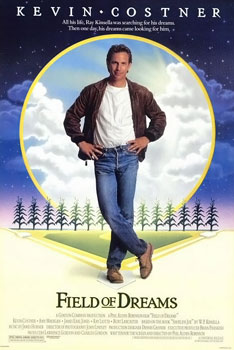

What’s Aged the Best?
James Horner's score; Shoeless Joe's 'I would have played for nothing'; late-80s Fenway Park; the Kinsella house; Ray's chemistry with the White Sox ghosts; Gabby Hoffman as Karen; the Terrence Mann character; the Annie and Ray relationship; the van scenes; Busfield walking across the field; Costner's hair and jeans; the disgruntled writer as plot point; the themes of hope and purpose
In the discussion (16)
- James Horner's score, unequivocally, arguably who won the movie: stolen over and over by sporting events, documentaries and trailers across thirty years, it plays five seconds and you need to excuse yourself; heard in surround sound for the first time it feels like a stadium; it has to double and triple the emotional climax in the last twenty minutes, like Shawshank's iconic score.
- Shoeless Joe's I would have played for nothing, against today's spoiled players like Bryce Harper getting cash and checks.
- Late-80s Fenway Park, a personal thing: the caterer, two dogs and two beers for seven bucks, few movies filmed there, the Morgan Magic 88 team with Ellis Burks and Mike Greenwell before the A's kicked their ass.
- The Kinsella house is a top seven or eight movie house, still standing as it was, worth a fortune if moved to LA; the White Sox ghosts busting Ray's balls during the call to dinner show his chemistry with them, and it would be amazing if he plowed the field and told the cheaters to go back to hell.
- Gabby Hoffman as the daughter is all-time adorable, in a cutest-daughters final with the Remember the Titans girl, with Macaulay Culkin's bee movie ruled out as a non-sports film; a host's own daughter at six was their favorite human ever and their own field of dreams would be going back to that age; Karen's precociousness is winning.
- Terrence Mann is James Baldwin meets J.D. Salinger; the book used Salinger and the film changed it for fear of a lawsuit; the recited bio, voice of the 60s, marched with MLK, cover of Newsweek, coined make love not war; asked whether we ever had a writer like this, the answer is no, though Baldwin and Norman Mailer were around back then doing that kind of writing; the whole movie could have been Costner and James Earl Jones in the van.
- The Annie and Ray relationship: a great, supportive, believable marriage with real history, down to her sleeping in one of his old t-shirts.
- The son of a bitch died before I could take it back scene is gut-wrenching, Joe Jackson's a criminal being the meanest thing you could say to your dad; the van exchange about the falling out and it's not my fault you wouldn't play catch with your father; all their scenes are high level, high PER.
- Busfield walking across the field and interrupting without knowing the ghosts are there, the pitch just missing him and the batter swinging through, timed with no visible special effects.
- Costner's hair and everything about him, worth bottling; the tightness of the jeans, which they don't make like that anymore.
- Disgruntled writer as plot point has aged well: the recluse found at a pivot point between influencing everyone and being influenced, the aura pulsating over every conversation about him, a stand-in for baseball and tradition in American life; more broadly the themes of the movie.
- The retort that the themes could equally have aged the worst is greeted as a holy shit take and parked for the next category, with a promise to explain why fathers and sons aren't as interesting as you think.
- Asked for a pick, the answer is Annie and Ray, first misspoken as Amy and Ray. — Chris Ryan
- Another pick is the blend of magic realism with hope and purpose as a driving force in a life, which Bill is expected to try to dissuade.
- Late 80s Fenway Park, a selfish pick for just one person. — Bill Simmons
- The show missed its chance to get a Ray Liotta walking off the field yelling Karen.

Most Rewatchable Scene
Ray meeting Terrence Mann in Boston; Moonlight Graham crossing the line to save Karen; the James Earl Jones speech
In the discussion (17)
- First nominee: Ray meets Shoeless Joe, is this heaven, no it's Iowa; a quick Liotta imitation; this was a year before Goodfellas, when he was a critic's darling after Something Wild; he still has never seen the movie and thought the script was dumb.
- Liotta plays Joe Jackson like a sensitive, dew-eyed guy from 1989 rather than a period Black Sox type, which is perfect because he seems like a ghost who doesn't know he is one; a Chantix commercial with him in the cornfield and a second-half-of-Goodfellas Henry Hill emerging from the corn are joked about.
- Second nominee: Ray goes to Cambridge in his Volkswagen van and meets Terrence Mann; the finger-or-gun exchange is played, the door slamming is really funny, and Mann flips fast once Ray brings up John Kinsella (transcribed 'John Consala'); great suspenders and belt.
- The two hosts who have spent time in Boston are asked whether there really are that many Jewish people there, since the street looks like half of Brooklyn with Hebrew letters on windows; the Boston exteriors were apparently filmed in Dubuque with after-the-fact wide shots, though they obviously shot at Fenway.
- Third nominee: after Fenway, Mann pretends he didn't see the scoreboard, drops Ray off, then is standing in the street; the Moonlight Graham, you saw it exchange is recited, New York Giants 1922, one game, never batted, Chisholm, Minnesota; that part is amazing.
- Fourth nominee: the nighttime scrimmage with Archie, the first time Frank Whaley walks out, ghosts playing at 9:30 with Amy Madigan turning the lights on, the most baseball in the movie, a four-minute sequence.
- A host doubts they could hit fly balls to a ghost who showed up in the backyard; the counter is that Ray had been prepping, taking BP every day; the one caveat is that Costner wears Timberlands the entire movie rather than Chucks or running shoes.
- The James Earl Jones speech and the actual ending round out six nominees; the Beulah and Annie scene is rejected as padding rewatchable stats; Moonlight's sacrifice, Karen falling and being saved, is counted as its own scene separate from the catch with dad.
- The opening catch-up montage is really good where it goes wrong in so many movies, and a secretly great choice is that the voice comes in the first scene with no thirty-minute build-up of farm life; Amy Madigan is quirky enough to buy it, unlike one host's wife, and she asks whether it's acid.
- Ray meeting Moonlight for the first time and walking back to his office is poetry, resonant though removed from the climax; the rack focus to The Godfather on the marquee; the magic realism works seamlessly and the story is about life rather than baseball or fantasy.
- Burt Lancaster's last movie, and the part was supposed to be, or at least offered to, Jimmy Stewart, blurted early and rebuked for stepping on half-assed internet research. — Chris Ryan
- Ray simply accepting that it's 1972 is not ridiculous at all, which is why it is more a fantasy movie than a baseball movie.
- One pick is when Ray goes to Boston: great chemistry, the reclusive countercultural icon surrounded by tapes and books who wants to be left alone, the locks on his doors; the last thirty minutes can only be watched once a decade, like dialing it up on YouTube to cry it out.
- Seeing Terrence Mann for the first time has become a favorite, a well-written, well-acted five minutes, with a wish for four hours of deleted van small talk; the 1989-era library research for the old interview mentioning Ebbets Field is loved, as is Mann's heartbreak at not remembering and the you're from the 60s line.
- Another pick is Moonlight crossing the line to save Karen and Ray's oh my God, you can't go back, the first thing that comes to mind about the movie, more than the catch; it is the emotional gut punch where every theme and tension, hope, purpose, sacrifice, is realized in one second.
- A sneaky good scene is picking up Frank Whaley hitchhiking, the I need good karma line and his day-job baseball towns, looking like he's in Stand By Me; a host promises to ruin that scene later.
- A further pick is when he sees Terrence Mann for the first time, and then really the pick is the James Earl Jones speech, with all the ghosts stopping to watch; baseball's a part of us, Ray.


Casting What-Ifs
Earlier versions involved Clint Eastwood, Beyoncé, Christian Bale, Leonardo DiCaprio, Will Smith, Tom Cruise, Ray Liotta, and several alternate Ally-father choices.
In the discussion (7)
- Cooper reportedly had to show Warner Brothers an iPhone duet with Lady Gaga to win approval for her casting. — Bill Simmons
- A 2011 version paired Beyoncé with Clint Eastwood before her pregnancy interrupted development. — Bill Simmons
- Christian Bale, Leonardo DiCaprio, Will Smith, and Tom Cruise were approached during development.
- A brief 2015 configuration paired Cooper and Beyoncé.
- The panel doubts Beyoncé’s acting based on earlier films while acknowledging her stature as a pop star. — Sean Fennessey
- Ray Leota was reportedly considered for Jackson’s manager before that role disappeared. — Bill Simmons
- Andrew Dice Clay was selected over Robert De Niro, John Torturo, and John Travolta for Gaga’s character’s father, though the panel questions how literal that account is.

Casting What-Ifs
Paramount lined up Harrison Ford as Jack Walsh and Chevy Chase as the Duke; Chase had a conflict and Ford dropped out; De Niro came aboard only after being turned down for Big; Albert Brooks turned down the Duke; Paramount wanted Cher, then Robin Williams, as the Duke; Brest insisted on Grodin and Paramount sold the film to Universal; Ron Perlman, Dennis Hopper, Harvey Keitel, Ray Liotta and Alec Baldwin were considered for Serrano
In the discussion (8)
- Called a pantheon casting what-if: Paramount obtained the script and lined up Harrison Ford as Jack Walsh and Chevy Chase as the Duke around 1986-87, post-Fletch, which would have been a pretty good backup movie, although Ford, basically in his Blade Runner outfit, might be too handsome and has rarely been heard cursing that much; Chase had a conflict with Funny Farm and another film, and Ford dropped out.
- De Niro opted in only after being turned down for Big; Albert Brooks was then offered the Duke and turned it down, which would also have been incredible, since Brooks and Grodin could have swapped parts for fifteen years and Brooks probably wins head to head.
- Paramount then decided Cher should play the Duke, which is unimaginable, during a brief three-year peak of Cher as a top-tier actress; the research came from a piece written five years earlier, with a shout-out to Alan Seppinwall (as transcribed) as one of the few listeners.
- Paramount pushed for Robin Williams, who wanted to audition, the same year as Good Morning Vietnam; Brest refused and wanted Charles Grodin, so Paramount sold the rights to Universal with Grodin and De Niro attached, and Universal had a major success.
- Better or worse with 1988 Robin Williams: a sliding-doors note that doing it before or after Good Morning Vietnam might have affected Dead Poets Society; one view is that Williams would have done bits throughout and turned it into a comedy, while Grodin's measured, deadpan complaining plays perfectly off De Niro; the counter is a mellow Garp or Dead Poets Williams could have done it, and the endless takes might have driven him to become Robin Williams anyway.
- Williams is judged the better actor but Grodin played it better; Williams only grew into his body by Good Will Hunting and was still slight in the eighties, so nobody but Grodin can be pictured in the part, with Grodin the safer pick though Williams playing it correctly would have been great; a crude aside recalls an anatomical revelation from the HBO Williams documentary.
- The only other what-if is Jimmy Serrano, played by the late Dennis Farina: Ron Perlman, Dennis Hopper, Harvey Keitel, Ray Liotta and Alec Baldwin were all considered; late-eighties Baldwin would have been interesting, Liotta a little too young, and nobody could be better than Farina.
- Earlier aside: De Niro wanted the lead in Big to show a lighter side, the studio said no and went to Tom Hanks, who was nominated, while De Niro settled for Midnight Run and was not; which was the better career choice is left open, but De Niro as Josh Baskin, a thirteen-year-old at the piano with Robert Loggia, would have been creepy, so the studio made the right move.

Casting What-Ifs
Reported or imagined alternatives: Brad Pitt, Ray Liotta, Denis Leary, Pacino, De Niro, Gibson, and RZA; uncertain Nicholson improvisation stories
In the discussion (8)
- Brad Pitt was reportedly set for the Damon part, dropped out, and produced instead. — Bill Simmons
- Ray Leota was reportedly set for Dignam but could not do it. — Bill Simmons
- Denis Leary was the next reported Dignam possibility and also could not do it. — Bill Simmons
- Al Pacino was the first reported Costello choice and is debated as an alternate. — Bill Simmons
- Robert De Niro reportedly declined Queenan to make The Good Shepherd. — Bill Simmons
- Mel Gibson reportedly could not play the Alec Baldwin part because he was filming Apocalypto. — Bill Simmons
- RZA was reportedly offered the Anthony Anderson role. — Bill Simmons
- Nicholson’s proposed prostitute scene and retained dildo improvisation are presented with explicit uncertainty. — Bill Simmons


