
Stats
- Episodes featuring their films
- 3
- Movies in this archive
- 3
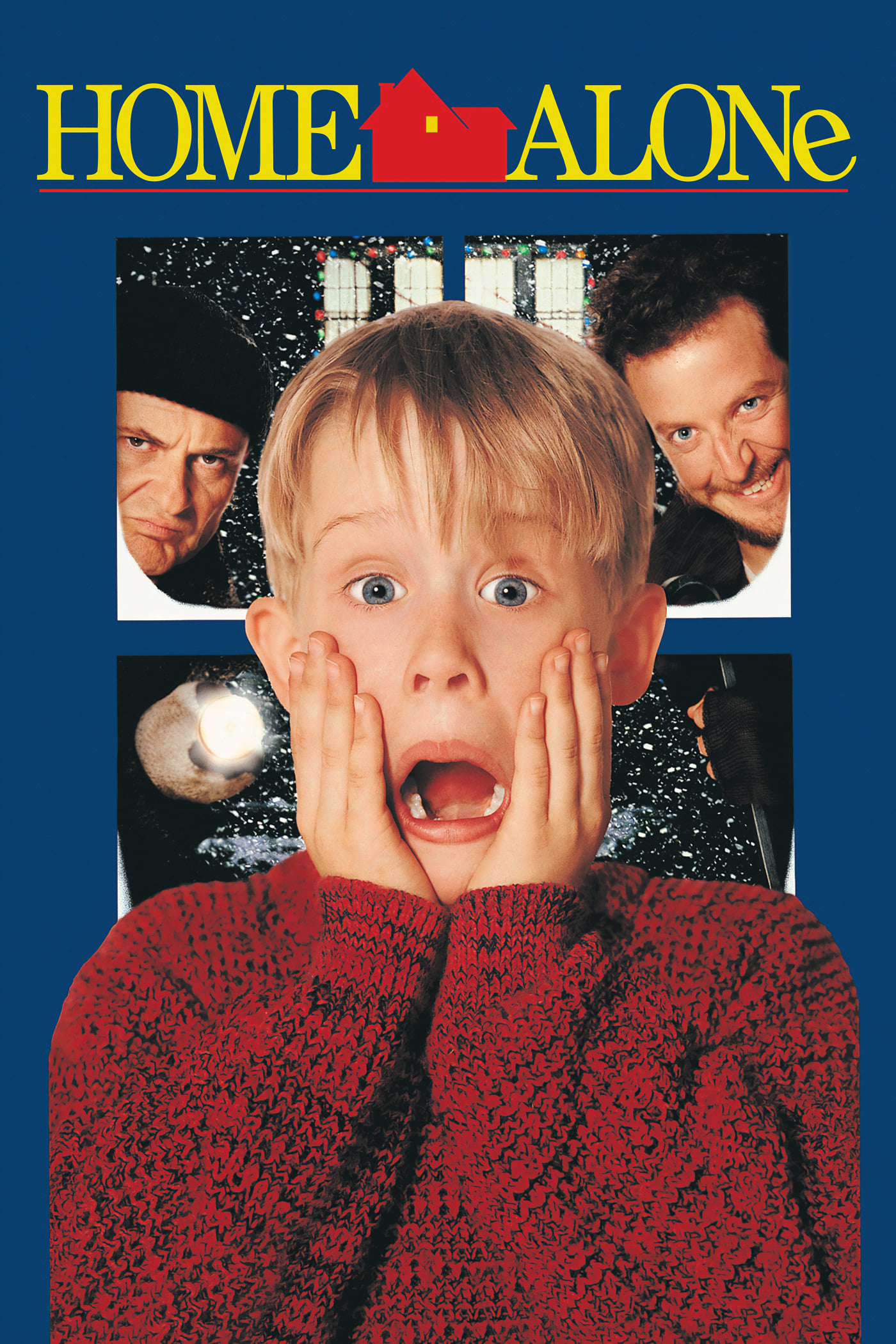
Rewatchables episodes featuring Macaulay Culkin’s films
Mentioned in discussions


What’s Aged the Best?
Macaulay Culkin breaking from his sweetheart image, both child performances, practical stunt work, the untouched dead-child bedroom, unsupervised childhood danger, and high-end direction
In the discussion (7)
- Casting the Home Alone star as a murderous child is praised as an effective break from his public image. — Sean Fennessey
- Culkin can appear sweet or eerily malevolent, making the role credible. — Sean Fennessey
- Elijah Wood preserves some doubt that grief may be making Mark unstable.
- Practical cliff work, wide shots, and physical stunt staging give the film tangible danger.
- The untouched dead-child bedroom functions as a recurring wound that the story can reopen. — Bill Simmons
- The abandoned-building vandalism and freedom to roam recall unsupervised childhood play. — Chris Ryan
- Henry playing taps for the dead dog and adjusting his weapon after missing a cat sharpen his characterization.

In the discussion (7)
- Ebert is described as hating the film with unusual intensity and questioning what Macaulay Culkin’s parents were thinking. — Bill Simmons
- The panel argues that Ebert often let moral revulsion toward slashers, juvenile comedy, and mean-spirited films outweigh craft. — Sean Fennessey
- The episode states that Ebert awarded one-half star, described as unprecedented across roughly 440 covered movies. — Bill Simmons
- Siskel is kept distinct: his objections focus on plot logic around Mr. Highway and the absent investigation. — Sean Fennessey
- Ebert asks who would want to see the film and calls it creepy and unpleasant because very young children enact horrible behavior. — Bill Simmons
- Ebert proposes the alternate title Henry: Portrait of a Future Serial Killer. — Bill Simmons
- Ebert calls the cliff climax unconvincing, contrived, meretricious, and manipulative; the panel rejects the severity of that judgment. — Bill Simmons

Who Won the Movie?
Macaulay Culkin for performance; Kit Culkin as the shadow producer
In the discussion (2)
- Macaulay Culkin wins for a singular outlier performance in his short filmography.
- Kit Culkin is proposed for forcing Macaulay and Quinn into the project and helping produce a hit. — Sean Fennessey
Podcast choices
- Speaker not identified
- Macaulay Culkin
- Speaker not identified
- Kit Culkin
- Speaker not identified
- Macaulay Culkin
- Speaker not identified
- Macaulay Culkin
- Speaker not identified
- Kit Culkin
- Speaker not identified
- Macaulay Culkin
- Speaker not identified
- Kit Culkin
- Speaker not identified
- Macaulay Culkin
- Speaker not identified
- Kit Culkin
- Speaker not identified
- Macaulay Culkin
- Speaker not identified
- Kit Culkin
- Speaker not identified
- Macaulay Culkin
- Speaker not identified
- Kit Culkin
- Sean Fennessey
- Kit Culkin

In the discussion (1)
- Culkin is the immediate one-Oscar answer. — Bill Simmons

The Stephen A. Smith Hottest Take Award
Takes argue this is Macaulay Culkin’s greatest performance, both child stars should already have had supporting Oscars, and Susan should save her own son; another take says Henry could have become an NHL pest.
In the discussion (4)
- Culkin’s Henry is argued to be a harder and greater performance than Kevin McCallister. — Bill Simmons
- Culkin is hypothetically awarded for My Girl over Jack Palance, and Wood for Radio Flyer over Gene Hackman.
- Susan choosing blood over truth and saving Henry is defended as the parental choice.
- More engaged parents could have directed Henry’s skating and aggression into hockey. — Chris Ryan

Apex Mountain
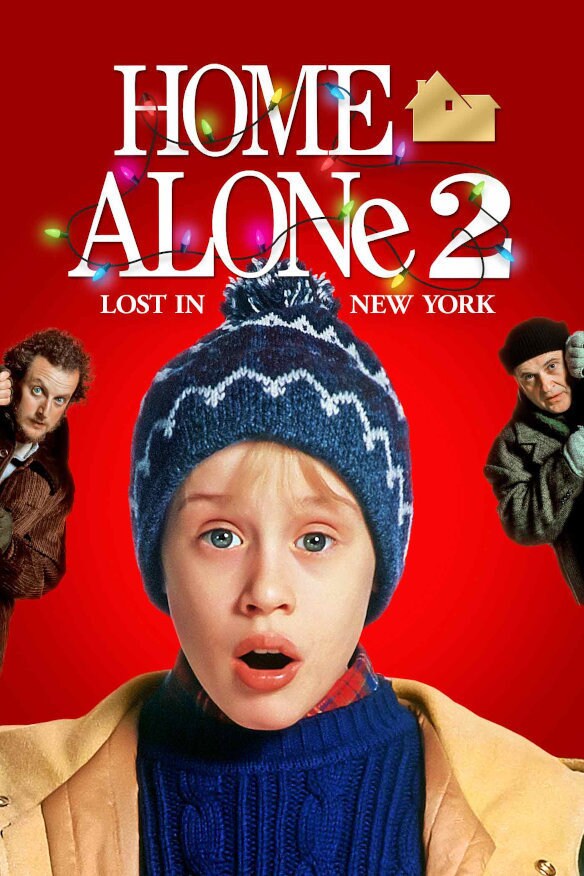
Macaulay Culkin; pigeon ladies; benevolent Christmas homeless characters; New York holiday setting; Plaza pop-culture status; kerosene ropes; Daniel Stern; Joe Pesci’s1992 run
In the discussion (10)
- Culkin receives agreement at the peak of consecutive hits before the later decline. — Bill Simmons
- Pigeon ladies and benevolent homeless Christmas characters receive affirmative answers. — Kyle Brandt
- New York as a holiday setting receives support, with Miracle on34thStreet acknowledged as a competing classic. — Kyle Brandt
- O’Hara’s later Schitt’s Creek and Guest films complicate her peak; Heard’s identification as the Home Alone father gives this period a tentative case alongside other roles. — Bill Simmons
- The Plaza receives agreement specifically for popular-culture prominence rather than historical importance; lost children are compared with Taken without a firm final choice. — Kyle Brandt
- Kerosene-soaked ropes and Stern receive clear affirmative answers; Pesci’s diverse1992 run after Goodfellas also receives support. — Bill Simmons
- Fricker’s period around So I Married an Axe Murderer is initially proposed, then her My Left Foot Oscar is named as the actual peak; the toy store’s peak is the piano scene in Big. — Bill Simmons
- Kevin’s pizza makes a movie-pizza shortlist, alongside Back to the FutureII, Wayne’s World and Iron Man; Loverboy is the explicit favorite, so this pizza is not the apex. — Kyle Brandt
- Along Came Polly and the first Home Alone join the pizza discussion; a thin New York slice looks better on screen than messy Chicago deep dish. — Kyle Brandt
- The fake-movie comparison includes the Home Alone gangster films, Logjammin’, Boogie Nights’ Angels Live in My Town, Simple Jack, Stab and South Park’s Terrance and Phillip film; Cleaver and a Forgetting Sarah Marshall television parody are added without a definitive apex answer. — Kyle Brandt
In the discussion (4)
- Macaulay Culkin is the choice and is called unanimous. — Chris Ryan
- An argument could be made that the movie is another classic from Hughes. — Chris Ryan
- Stern and Pesci's physical comedy and their stunt guys earn a shout-out, but Culkin is in almost every frame. — Chris Ryan
- The close restates that Culkin won the movie. — Chris Ryan
Podcast choices
In the discussion (6)
- Home Alone is Culkin's Apex Mountain; Party Monster is rejected, and My Girl is a really good movie that people do not associate with him the same way. — Mina Kimes
- The Black or White video with Michael Jackson, a network-TV event before My Girl, is offered as a case that the run continued. — Sean Fennessey
- Home Alone is a top-10 Christmas movie but probably not the Apex Mountain for Christmas movies; A Christmas Story is favored, with Miracle on 34th Street, Elf and Bad Santa mentioned.
- A joke Apex Mountain for making international flights: Winnetka is about 30 minutes from O'Hare and they leave with 45 minutes to spare. — Chris Ryan
- The final call is Culkin with the caveat that his run continued. — Chris Ryan
- Pesci was skipped for Apex Mountain, though there is a case given Home Alone and Goodfellas that year and his leading-man turn after. — Sean Fennessey
What’s Aged the Best?
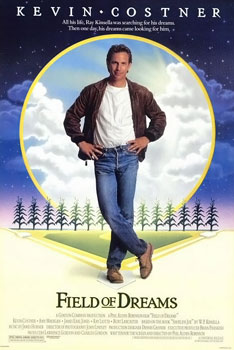
James Horner's score; Shoeless Joe's 'I would have played for nothing'; late-80s Fenway Park; the Kinsella house; Ray's chemistry with the White Sox ghosts; Gabby Hoffman as Karen; the Terrence Mann character; the Annie and Ray relationship; the van scenes; Busfield walking across the field; Costner's hair and jeans; the disgruntled writer as plot point; the themes of hope and purpose
In the discussion (16)
- James Horner's score, unequivocally, arguably who won the movie: stolen over and over by sporting events, documentaries and trailers across thirty years, it plays five seconds and you need to excuse yourself; heard in surround sound for the first time it feels like a stadium; it has to double and triple the emotional climax in the last twenty minutes, like Shawshank's iconic score.
- Shoeless Joe's I would have played for nothing, against today's spoiled players like Bryce Harper getting cash and checks.
- Late-80s Fenway Park, a personal thing: the caterer, two dogs and two beers for seven bucks, few movies filmed there, the Morgan Magic 88 team with Ellis Burks and Mike Greenwell before the A's kicked their ass.
- The Kinsella house is a top seven or eight movie house, still standing as it was, worth a fortune if moved to LA; the White Sox ghosts busting Ray's balls during the call to dinner show his chemistry with them, and it would be amazing if he plowed the field and told the cheaters to go back to hell.
- Gabby Hoffman as the daughter is all-time adorable, in a cutest-daughters final with the Remember the Titans girl, with Macaulay Culkin's bee movie ruled out as a non-sports film; a host's own daughter at six was their favorite human ever and their own field of dreams would be going back to that age; Karen's precociousness is winning.
- Terrence Mann is James Baldwin meets J.D. Salinger; the book used Salinger and the film changed it for fear of a lawsuit; the recited bio, voice of the 60s, marched with MLK, cover of Newsweek, coined make love not war; asked whether we ever had a writer like this, the answer is no, though Baldwin and Norman Mailer were around back then doing that kind of writing; the whole movie could have been Costner and James Earl Jones in the van.
- The Annie and Ray relationship: a great, supportive, believable marriage with real history, down to her sleeping in one of his old t-shirts.
- The son of a bitch died before I could take it back scene is gut-wrenching, Joe Jackson's a criminal being the meanest thing you could say to your dad; the van exchange about the falling out and it's not my fault you wouldn't play catch with your father; all their scenes are high level, high PER.
- Busfield walking across the field and interrupting without knowing the ghosts are there, the pitch just missing him and the batter swinging through, timed with no visible special effects.
- Costner's hair and everything about him, worth bottling; the tightness of the jeans, which they don't make like that anymore.
- Disgruntled writer as plot point has aged well: the recluse found at a pivot point between influencing everyone and being influenced, the aura pulsating over every conversation about him, a stand-in for baseball and tradition in American life; more broadly the themes of the movie.
- The retort that the themes could equally have aged the worst is greeted as a holy shit take and parked for the next category, with a promise to explain why fathers and sons aren't as interesting as you think.
- Asked for a pick, the answer is Annie and Ray, first misspoken as Amy and Ray. — Chris Ryan
- Another pick is the blend of magic realism with hope and purpose as a driving force in a life, which Bill is expected to try to dissuade.
- Late 80s Fenway Park, a selfish pick for just one person. — Bill Simmons
- The show missed its chance to get a Ray Liotta walking off the field yelling Karen.


