
Film credit
Ray Liotta
Also referred to as Liotta, Leota
Stats
- Episodes featuring their films
- 3
- Movies in this archive
- 3
Rewatchables episodes featuring Ray Liotta’s films
Mentioned in discussions

In the discussion (13)
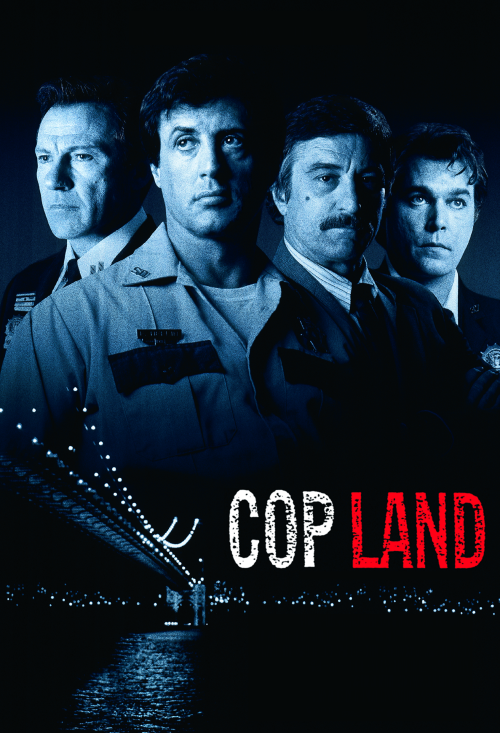
- The lost era of ambitious indie ensembles working for scale is fondly remembered. — Bill Simmons
- De Niro and Stallone sharing scenes felt monumental before De Niro’s later commercial comedies; Jackie Brown and Wag the Dog enhance his 1997 run.
- Firing beside Freddy’s good ear is an effective escalation of cruelty, compared with targeting a wrestling injury or McClane’s bare feet.
- Mid-1990s New Jersey clothes and atmosphere are enjoyed. — Chris Ryan
- Falco smoking is an especially enthusiastic attraction choice. — Chris Ryan
- Falco and Liotta’s convincing smoking and intimacy are singled out, with the cast’s general familiarity with cigarettes praised. — Chris Ryan
- Freddy’s Carlton cigarettes and Lethal Weapon pinball establish character economically: he wants to be a supercop.
- The portrayal of a closed white-cop community has disturbing contemporary resonance; reportedly cut racism scenes and the bridge exchange about saving Black children deepen the critique, though it is not nuanced.
- Mangold's sustained career is an aged-best choice. — Bill Simmons
- Young muscular Berg and the returning fashion of Randone's shoes and motorcycle are enjoyed. — Bill Simmons
- The rare, well-chosen Springsteen uses and restraint with needle drops keep the score effective.
- Six future Sopranos performers are listed: Falco, Ventimiglia, Patrick, Sciorra, Sirico and Nascarella. — Bill Simmons
- The satellite town and bar feel authentic to childhood experience of cop bars: welcoming to children yet increasingly boisterous and intimidating.

Casting What-Ifs
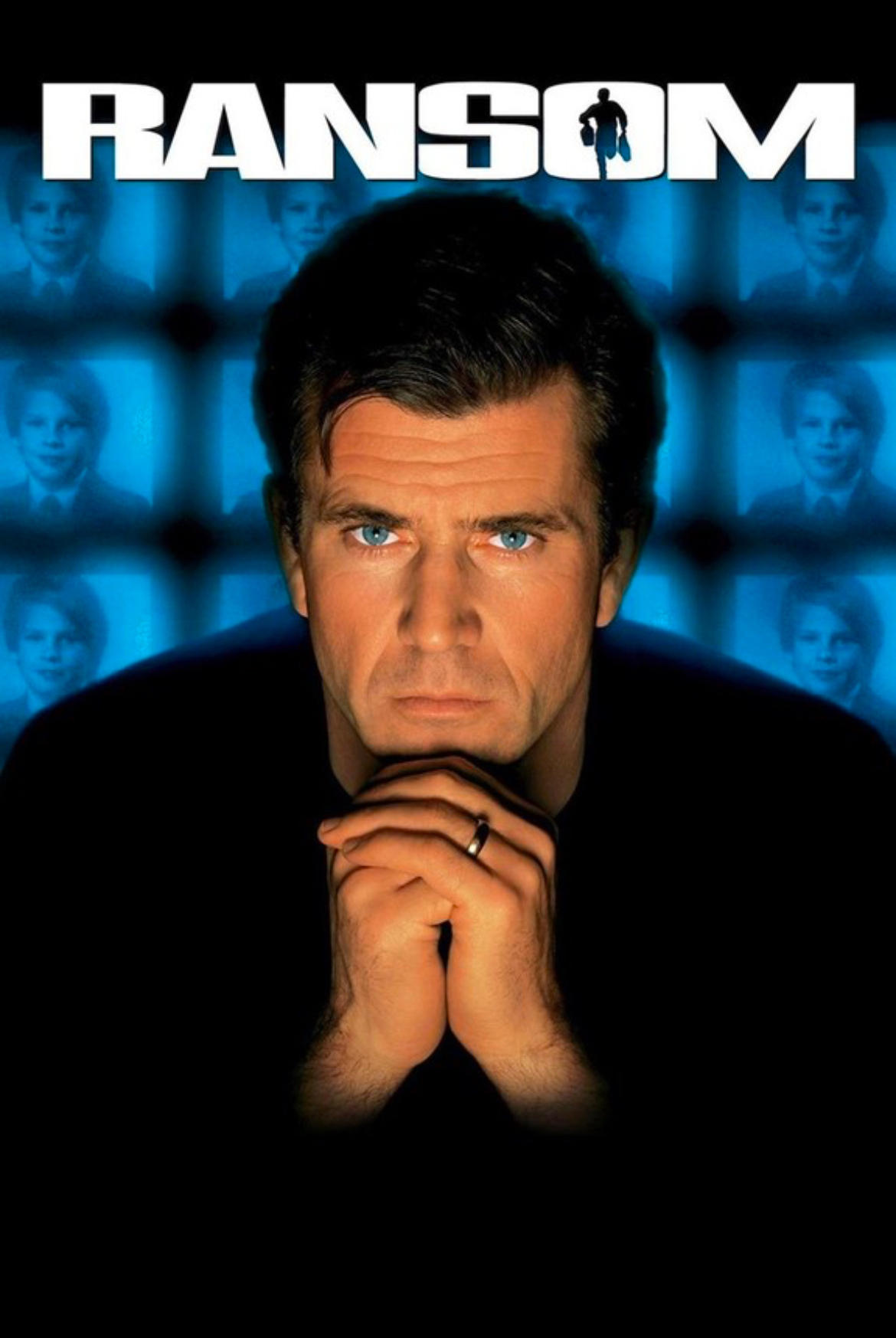
Alec Baldwin and Ray Liotta for Jimmy Shaker
In the discussion (4)
- Ron Howard turned down directing The Chamber, a movie that did not totally work, to direct this. — Bill Simmons
- The first choice for Jimmy Shaker was Alec Baldwin, who turned it down because of how the child was endangered; Ray Leota also passed over how kids are treated in the script, and Sinise was the third choice. — Bill Simmons
- Baldwin once said his movie career felt like a failure without a huge hit he drove; he fumbled Jack Ryan and should have made seven of those movies. — Van Lathan
- Malice with Nicole Kidman is recommended for Baldwin's performance; the movie is called bad but rewatchable for a terrible Boston accent. — Bill Simmons

Casting What-Ifs
Brad Pitt as Sullivan; Al Pacino as Costello; Ray Liotta or Denis Leary as Dignam; Mel Gibson as Ellerby; Robert De Niro as Queenan
In the discussion (10)
- The casting what-ifs are called probably the best for any movie they have done, a whole alternate Departed. — Bill Simmons
- Pitt bought the producing rights, planned to play the Damon part, then decided he might be too old and went to do Babel. — Bill Simmons
- Debate over Pitt: good instincts about roles and a great producer, but miscast himself in Meet Joe Black and The Devil's Own; Damon was the better choice.
- Scorsese wanted Al Pacino for Costello; Pacino turned it down and Nicholson was the second choice. — Bill Simmons
- Ray Leota was the original choice for Dignam but declined over other commitments, his 2006 films including Comeback Season, Local Color and Even Money. — Bill Simmons
- Dennis Leary was the second choice for Dignam but had to make season three of "rest of me" (as transcribed); he would have been great, though Walberg is perfect. — Bill Simmons
- Ellerby was offered to Mel Gibson, who was starting Apocalypto; Queenan was supposed to be De Niro, who made The Good Shepherd; the Anthony Anderson role was meant for "the Rizza" (transcript form, unresolved), who was too old or had conflicts. — Bill Simmons
- Leo was in The Good Shepherd but dropped out to play Billy Costigan, and Damon then took The Good Shepherd role; The Good Shepherd is called an unexamined movie with a dynamite cast.
- The alternate cast (Leo, Pitt, Pacino, Leota, De Niro, Mel Gibson and the Riza) is called pretty loaded and preferred by one participant; Pacino would lose Costello's lumbering physicality but gain CR doing Pacino.
- Would-you-rathers: Walberg over Ray Leota, Baldwin over Mel Gibson 100 out of 100 times, and De Niro over Sheen since he can underplay.

In the discussion (3)
- Three audible choices explicitly select Martin Scorsese.
- Pesci, De Niro, and Liotta are discussed as plausible alternatives if the film were not itself one of the great American movies.
- The panel asks whether losing Best Director for Goodfellas helped build the later campaign to recognize Scorsese. — Sean Fennessey
Podcast choices
- Speaker not identified
- Martin Scorsese
- Speaker not identified
- Martin Scorsese
- Speaker not identified
- Martin Scorsese

Probably Unanswerable Questions
Liotta, Bracco, bodies, cocaine acting, and Jimmy’s plan for Karen
In the discussion (5)
- Why did Ray Liotta’s career not produce more roles at this level?
- Why did Lorraine Bracco’s movie career not become larger?
- Did the smell of Billy Batts’s corpse ever leave Henry’s trunk?
- How much of Liotta’s cocaine performance was method or physical technique?
- Was Jimmy truly planning to kill Karen? — Chris Ryan
Picking Nits
Age mismatches, Sonny confronting Tommy publicly, absent strip clubs, prison meals, a mannequin-like assault victim, post-wedding housing, Billy Batts’s party, Lufthansa associates who fail to flee, Karen locating Henry, and payphones
In the discussion (10)
- Liotta and Pesci are judged much too old for the early ages they portray. — Bill Simmons
- Sonny discussing the restaurant bill in front of Tommy’s friends is questioned. — Bill Simmons
- The absence of an obligatory strip-club scene is questioned.
- The elaborate prison meals are questioned but accepted as fun.
- The pistol-whipping victim stands like a mannequin. — Bill Simmons
- Henry and Karen living with her mother after receiving substantial wedding cash is questioned, then defended as living off-grid. — Bill Simmons
- Billy Batts’s sparsely attended party and friends leaving him with a rival crew are questioned; Jimmy may have kept him there and drunk.
- Lufthansa associates fail to flee despite participating in Jimmy’s other murders. — Bill Simmons
- How Karen knows Henry is at Morrie’s shop after Bruce assaults her is questioned.
- Mobsters repeatedly using the same supposedly untraceable payphone is questioned.

Apex Mountain
Martin Scorsese, gangster movies, the 1990 Scorsese–De Palma rivalry, the Copacabana sequence, gangster names, razor-bladed garlic, the Lufthansa heist, Joe Pesci’s 1989–95 run, pistol-whipping, mobster wigs, prison tomato sauce, Ray Liotta, Lorraine Bracco, “fucko,” and Pittsburgh drug dealers
In the discussion (17)
- Scorsese is selected at his artistic apex, with The Departed raised as a later juice-based alternative.
- Goodfellas is called a capstone for gangster movies before the form moved to television.
- The Scorsese–De Palma rivalry is placed at its apex around November 1990. — Sean Fennessey
- The Goodfellas Copacabana sequence is favored over Barry Manilow’s song for the name “Copacabana.” — Bill Simmons
- Movie-gangster names are called an unquestionable apex. — Bill Simmons
- De Niro’s apex is debated between his late-1970s/early-1980s run and 1990-era juice. — Bill Simmons
- Razor-blading garlic is called a one-of-one apex.
- Goodfellas is treated as the apex for the Lufthansa heist.
- Joe Pesci is placed in an apex run spanning Lethal Weapon 2 through Casino.
- “It is what it is” from The Irishman is favored among mob murder-code justifications. — Bill Simmons
- The film is selected as an apex for pistol-whipping on film.
- Mobster wigs and prison tomato sauce receive affirmative apex rulings. — Bill Simmons
- Ray Liotta and Lorraine Bracco receive affirmative apex rulings. — Bill Simmons
- Paul Sorvino’s apex remains unresolved against his long career. — Bill Simmons
- Henny Youngman is rejected, while the word “fucko” receives an affirmative apex ruling.
- Cutty Sark is discussed as a once-prominent drink rarely seen now. — Chris Ryan
- Pittsburgh drug dealers receive a final joking apex nomination.
Half-Assed Internet Research
The Scorsese–Pileggi call, Henry Hill payment, a pistol-whip accident, filmmakers’ relationships, Imperioli’s injury, the painting, Oscar-winning killer roles, the closing shot, music planning, made-man rules, ratings edits, and profanity
In the discussion (13)
- Scorsese and Nicholas Pileggi’s reciprocal “waiting for this” phone-call lines are recounted. — Bill Simmons
- Henry Hill was reportedly paid $480,000. — Bill Simmons
- The actor pistol-whipped by Henry describes Liotta maintaining rage between takes and accidentally getting too close. — Bill Simmons
- Scorsese dating Illeana Douglas and Lorraine Bracco’s marriage to Harvey Keitel are discussed. — Bill Simmons
- Michael Imperioli broke glass in his hand, and hospital staff initially thought it was a gunshot wound. — Bill Simmons
- Scorsese predicted Imperioli would tell the injury story on Jay Leno, which he later did. — Bill Simmons
- Tommy’s mother’s painting was reportedly based on a 1977 National Geographic image. — Bill Simmons
- Five actors said to have won Oscars for portraying real-life killers are counted. — Bill Simmons
- Pesci shooting at the camera is connected to The Great Train Robbery and Henry always looking over his shoulder. — Bill Simmons
- The music editor said Scorsese planned songs years before shooting and included them in the script. — Chris Ryan
- A 2000 change to made-man ancestry rules is described. — Bill Simmons
- Scorsese reportedly removed ten frames of blood to secure an R rating. — Bill Simmons
- The movie is reported to contain 321 uses or derivatives of “fuck.” — Sean Fennessey

The Ruffalo / Hanna / Rubinek / Partridge Overacting Award
Liotta’s flushed-cocaine reaction
In the discussion (3)
- Liotta’s funny-guy laugh is raised but ruled ineligible. — Bill Simmons
- Morrie is nominated. — Chris Ryan
- Liotta’s reaction when Karen says she flushed the cocaine is favored.
In the discussion (6)
- De Niro was offered Jimmy or Tommy, chose Jimmy, and his commitment secured financing. — Bill Simmons
- John Malkovich and William Petersen are discussed as reported Jimmy alternatives. — Bill Simmons
- Liotta’s Something Wild work helped establish him for Henry, and he reportedly turned down Harvey Dent in Batman. — Bill Simmons
- Sean Penn is discussed as a possible Henry. — Bill Simmons
- Paul Sorvino reportedly considered leaving until he saw a frightening expression in the mirror and found Paulie. — Bill Simmons
- Tom Cruise and Madonna are discussed as reported alternate star casting, though the panel questions how real the offers were. — Bill Simmons
Picking Nits
Annie is impossibly understanding; the movie needs a sex scene; Ray Liotta bats righty as the lefty Shoeless Joe; the Fenway scoreboard reads 10:30 in the third inning; no black players before 1947; the two-acre field at $2,200 an acre; professional lights beside splintery bleachers; Mark vanishes for a glass of water; Mark isn't thrown off the property; Ray doesn't recognize his father in the scrimmage; Dwyer Brown's catching; Annie wouldn't wait when Karen falls; Karen could be carried onto the field; Archie already existed off the field; the cornfield's ground rules; only one book-burner is opposed; Shoeless Joe's no-errors defense
In the discussion (19)
- Notes on Amy Madigan are held for nitpicks; the first written down is whether anyone's wife has ever been this understanding in the history of mankind: she objects to Boston but not to mowing the cornfield; only the people who marry serial killers in prison compare; it's the 60s.
- The movie needs a sex scene to understand what fuels Annie's blind devotion; Terrence Mann's response to Ray is you're seeing a whole team of psychiatrists, while Annie's is follow your bliss, moving and aspirational but also ridiculous, probably an extension of the hippie ethos.
- Annie's Fenway big green wall vision is when she really buys in, versus her initial don't go, we're underwater doubt; by the Christmas montage of Ray staring at the field in a snowstorm every relative would want him in a mental hospital; and once Joe Jackson shows up, why not replant the corn instead of hosting a 162-game season.
- Ray Liotta batted righty while Shoeless Joe was a lefty, everybody's biggest nitpick for thirty years and indefensible since they could have flipped the shot and cheated the background; come on, Phil Alden-Robertson (as transcribed), bad job.
- The Fenway scoreboard reads 10:30 p.m. in the third inning with no rain delay, obviously shot after a game; it has bothered one host for thirty years.
- The movie gives second chances to Ray and his dad, Moonlight Graham (joked as Grom, the gelato), Terrence Mann, Shoeless Joe and the Black Sox, yet ignores every black player before 1947; instead of the cheating White Sox, Satchel Paige, Cool Papa Bell or Josh Gibson, and Terrence Mann would surely have raised it in the van; Robinson called it his greatest regret; it is the biggest flaw in the movie.
- Mark's do you know how much this land is worth is undercut by Ray's $2,200 an acre: a baseball field is about two acres, so he isn't losing much on a farm of hundreds of acres; the counter is that he built and maintains a triple-A field with expensive electricity.
- Why have the lights at all, where does a regular person get professional lighting, and why is the construction so perfect and precise while the bleachers are splintery unvarnished planks with smashed-in nails that aren't safe for a child; the lights do give an ethereal vibe and the film addresses how lights changed the game.
- Busfield's Mark finally sees the ghosts after Karen is saved, Annie sends him inside for water, and he is never seen again; the counter is that interrupting the reunion with we can charge $20 a car would be in character; the opposite nitpick is that he should be kicked off the premises for nearly killing the child.
- The editing is shady when Mark grabs and shakes Karen, and a parent would fight anyone who touched their six-year-old; Ray never recognizes his dad during the scrimmage despite catcher's gear and three hours in the stands.
- Dwyer Brown's childlike catching has an explanation from research: the catch had to be shot in a ten-minute magic hour with an 85-year-old rock-hard catcher's mitt he feared dropping, so apologies to him, though his throwing wasn't loved; it wasn't as bad as the kid at the end of The Natural.
- Karen falling off the bleachers eating the hot dog has holes: Annie would run to call the paramedics and no mom on the planet stops because her husband has an idea, since a mother whose child is hurt becomes superhuman.
- Why not carry Karen five feet onto the field so Moonlight needn't cross; the counter is that young Moonlight hasn't been through medical school, answered that he is a timeless ghost who has lived his life and knows the grand design; Ray doesn't yet know Graham can't cross back.
- Archie already existed outside the field as a hitchhiker, and the implication that Terrence Mann will come back with a long-form piece on heaven raises why Moonlight can't return; none of them can come off the field; Archie is on a different timeline and had to be brought there; he left the field and became a drummer for the Doors.
- One host is devastated the other doesn't like a scene seen 700 times; the fair questions raise whether you need to understand the rules of the magic to like the movie; it's magic and faith, believing what you can't see, so you opt in, which is why Mark seeing the ghosts at the end is disliked, since he never opened himself up.
- Smaller nits: the park's ground rules, what a ground-rule double in the cornfield is, an outfielder vanishing into heaven shagging a fly, where all the baseballs go, Janet's void; if Terrence Mann could walk into the corn, why wouldn't Ray try; maybe the spirits have to bring you, and it's about what you are pursuing.
- The town hall over salacious literature is moral panic, but only the one woman is actually opposed and nobody in the room supports her; the counter is that it's about how hysterical people get together; that scene could be aged-best because it's what the internet is like now.
- A sequel vision: Mark comes back out after his cold drink and lectures the ghosts about walks, shifts and swing planes, disparages Shoeless Joe for not getting on base, and brings his friend Bill James with notes.
- Shoeless Joe's no-errors stat is cited as proof he didn't throw the series, but outfielders rarely commit errors in one series and it would have to be an obvious overthrow; the Rothstein gambling contingent, Boardwalk Empire; the segment ends with Mark asked how his glass of water is.
Half-Assed Internet Research
Original title Shoeless Joe, book working title Dreamfield, changed after test audiences; the voice's identity unknown, rumored Ed Harris; Damon and Affleck as Fenway extras; filming sped up for Costner's Revenge; the corn outgrew Costner; the Lansing and Ameskamp farms, 65,000 annual visitors, sold in 2011 for about $5.4 million; 1,500 volunteers' headlights in the final shot; Moonlight Graham's real game was June 1905; the line-drive reaction was genuine; James Earl Jones hates baseball; deleted scenes; George W. Bush's favorite film; AFI quote number 39; W.P. Kinsella bored on set; Ray Kinsella named for Salinger characters; Don Buford and USC coaches as advisers
In the discussion (6)
- Behind on time, the research is zipped through: the original title was Shoeless Joe, the book's working title Dreamfield, and test audiences thought Shoeless Joe was about a homeless person; nobody knows who the voice was, the rumor is Ed Harris, one host is in the Liotta camp, but Liotta hasn't even seen the movie.
- Matt Damon and Ben Affleck were legendarily extras at Fenway; filming began in 88 and was sped up because Costner had to shoot Revenge; the corn grew taller than Costner so they put boxes out for him to stand on.
- Scenes were shot on Don Lansing's property and the baseball scenes on neighbor Al Amiskamp (as transcribed), who replanted corn while Lansing kept the field as a tourist destination without charging admission, only souvenirs; 65,000 visitors a year by the 20th anniversary; sold in 2011 for a believed $5.4 million, so Don Lansing's checkbook won.
- The final shot used 1,500 volunteers flashing high beams; the real Moonlight Graham played one game in June 1905, not 1922; Shoeless Joe and Ty Cobb really were friends; the line drive knocking over the bag of balls was real and unplanned, Costner's reaction genuine and in character; James Earl Jones hates baseball yet did this and The Sandlot; deleted scenes include Ray's hearing test, buying equipment, getting lost on the way to Fenway, and watching batting practice with Terrence.
- George W. Bush named it his favorite film; if you build it, he will come was voted the number 39 movie quote by AFI; W.P. Kinsella was on set a lot and found it incredibly boring, though his daughter had a romance with Ray Liotta.
- Ray Kinsella is not named for the author but for two Salinger characters, Richard Kinsella in Catcher in the Rye and a Ray Kinsella in a 1941 story; Don Buford, the Oriole and father of Damon, coached the actors, and USC coaches were brought in to advise.


