
Stats
- Episodes featuring their films
- 7
- Movies in this archive
- 8
Rewatchables episodes featuring Will Smith’s films
Mentioned in discussions


Apex Mountain
Sharon Stone as Catherine Tramell; Roxy
In the discussion (6)
- Sharon Stone is the apexiest Apex Mountain performance; Catherine Tramell is at the top. — Bill Simmons
- A joke asks whether the bad cunnilingus is Apex Mountain for being captured on film. — Bill Simmons
- Pre-Silicon Valley San Francisco seems innocent, before real estate skyrocketed. — Bill Simmons
- Roxy is offered as another Apex Mountain. — Mallory Rubin
- The deep V-neck sweater is the inverse, Apex Valley, worn from the nightclub to the beach to work.
- Whether it is Apex Mountain for rear scrotal hang shots is asked, with Will Smith in Wild Wild West as a comparison. — Mallory Rubin


Recasting Couch
Lisa Bonet in a larger role
In the discussion (3)
- One proposal replaces Jason Robards with Lisa Bonet to give the opening and its consequences different weight. — Bill Simmons
- Another proposal makes Lisa Bonet the pursued lead, gives Will Smith her smaller role, and recasts the spouse.
- The panel argues that Jason Lee, Hackman, Voight, Jack Black, and others could trade several roles while remaining entertaining, but ultimately approves the released casting. — Sean Fennessey

In the discussion (3)
- Every moment of Tom Sizemore’s single scene is treated as the decisive overacting performance. — Bill Simmons
- Will Smith abruptly escalating the Philip Baker Hall interrogation is a candidate and is judged ineffective. — Bill Simmons
- Barry Pepper’s evil sprinting expression is acknowledged as another candidate. — Bill Simmons
Casting What-Ifs
Tom Cruise, Mel Gibson, and George Clooney were considered for Clayton; Sean Connery was the backup for Brill, prompting a role-swap discussion with The Rock.
In the discussion (5)
- Tom Cruise reportedly signed on before leaving for Eyes Wide Shut. — Bill Simmons
- Mel Gibson and George Clooney are reported as considered for Clayton. — Bill Simmons
- Will Smith is reported to have chosen the film partly to work with Gene Hackman and to have taken less money. — Bill Simmons
- Sean Connery is reported as the backup choice for Brill. — Bill Simmons
- The panel considers swapping Hackman and Connery between Enemy of the State and The Rock, but prefers the released casting. — Bill Simmons

In the discussion (8)
- Lisa Bonet’s screen presence, beauty, and chemistry with Will Smith are the emphatic leading answer.
- Jason Lee’s late-1990s run and sarcastic screen persona are praised.
- Barry Pepper’s ability to look menacing while sprinting is singled out. — Bill Simmons
- The exceptional supporting cast and the foresight of casting then-young performers are nominated, with the cast ranked second by one participant.
- Brill’s practical surveillance-avoidance tricks are praised. — Bill Simmons
- Tony Scott’s disorienting chase editing is argued to put the viewer in Clayton’s position.
- Washington, D.C. and the surrounding region are praised as an action-thriller setting.
- The premise that government technology can invade ordinary life is offered as the most consequential answer. — Sean Fennessey


In the discussion (4)
- Answer: 'Fuck yeah'; one host announces he is ready for Heat to be remade as a 10-episode streaming series with Michael Mann executive producing and new actors. — Bill Simmons
- Casting in a late-40s to mid-50s bracket: Brad Pitt with dyed black hair as McCauley, and Leo as Vincent ('Pretty good'). — Chris Ryan
- Denzel as Neil is probably too old; worst cases are Will Smith as Neil or going too young with two current young stars. — Chris Ryan
- Ruffalo has residual L.A. cop energy from Collateral but may not be big enough; Downey as Neil is floated, and an older, beaten-down Brad Pitt would be watchable. — Bill Simmons
Probably Unanswerable Questions
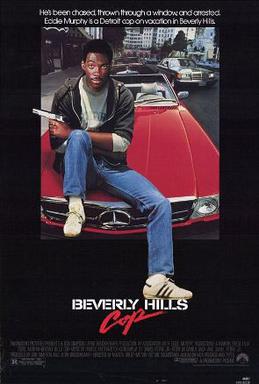
Was Beverly Hills Cop 2 better than Beverly Hills Cop? Was Axel Foley gay?
In the discussion (17)
- Whether Cop 2 is better: it is a better story and a flat-out good, more fun movie with good music, the Taggart and Rosewood thing and Brigitte Nilsson (as transcribed), with Eddie still great; the fondness for Cop 1 comes from everything it meant for the Eddie arc.
- Was Axel Foley gay gets a yes, but the answer first returns to the period reviews, which were also upset about how the movie made white people look.
- Pauline Kale (as transcribed) did not believe in Eddie Murphy's stardom and found it offensive because he used it as a joke on how dumb white people could be made to look by a smart black person, a sort of pro-minstrel argument against an anti-minstrel work; LA Times letters in 1985 characterized Murphy's swagger with a racial slur and worried that black confidence would replace white comedians.
- One host as a kid felt the opposite, that it was the greatest thing that ever happened; Kale was about 65, not a racist, but had an interesting take on how black audiences responded to The French Connection, and old guard critics felt that way, so the rewatch was done aware that people were nervous Eddie was someone white people should fear.
- To one host it is a movie about a gay black man in the Detroit police whose former best friend, probably lover or hookup buddy, gets killed, sending him on a mission; not having sex with a woman does not make you gay, but a near two-hour movie whose protagonist on the verge of major stardom never gets a moment with the girl is striking, even allowing that Eddie arrived two weeks before filming and nothing was rewritten.
- Evidence: Jenny looks completely enamored, goes to the big three-room suite and immediately lies on the bed batting her eyelashes, and the only thing on Axel's mind is ordering room service for Taggart and Rosewood.
- The Mikey scenes are weird to watch: at the bar they look like they are about to make out, they exchange 'I love you', and when Axel gets home after the chewing-out by Inspector Todd to find Mikey broken in with the fridge open he is elated; the counter is that a friend out of prison eating a mayo sandwich in your kitchen would get 'get out of my house, you felon'.
- Gay characters are sprinkled throughout; it is an unintended consequence of a movie made with a ton of cocaine by the seat of its pants; at the strip joint he only tells Rosewood to give the dancer a dollar and does not partake, and his pretending is for plot rather than character; the movie is all pairs of men with emotional energy who could be on the verge of kissing, so subtext becomes text; 'is Axel gay' is a long-running Reddit conspiracy theory; James Russo brings a wild method energy to a two-minute part, a reckless guy out of prison who almost cries seeing his friend, which feels very real.
- Eddie is drawn into Russo rather than watching a method performance, they are on the same page; the original ending reportedly had Eddie back in his Detroit apartment opening the closet to find Mikey's shirt and sniffing it, prompting the joke that Martin Brest was robbed of an Oscar; the movie probably intended none of it.
- Intent does not matter because those things are in the movie we got; one host noticed it independently and wrote about it in a 2010 mailbag because the Jenny Summers scene jumped out, and may have inspired the theory; no other 80s action or genre movie lacks some nod to the hero's romantic life.
- Even in 48 Hours Nick Nolte's girlfriend calls to complain and Eddie gets laid by Olivia Brown, his primary obsession in that film; Eilbacher is a beautiful blonde, not a character actress like Joan Cusack, whose function in any other movie of the period, see Stripes, is to give a straight hero somewhere to put his sexuality; perhaps it was a black-white thing, since the sex scene was cut from The Golden Child and they were not ready for Eddie to do that in a mainstream movie.
- The conspiracy theory is compared to early Will Smith, who had Vivica A. Fox to get back to but few romantic leads for someone in his position, and did not help himself by skipping the kiss in Six Degrees of Separation, after which he always has a girlfriend, wife or dead spouse; the wish is that movies would acknowledge gay people exist and have sex lives instead of flicking at it.
- Damon Wayans giving him the fruit plate with the banana for the tailpipe is text, not subtext, and Eddie turns around on his way out to say thank you, perfectly comfortable with the man; the movie's own setup is the you-killed-my-lover revenge premise of other action movies, taken as a vacation; one host watched it for 26 years without noticing until the other wrote about it.
- The passion for Jenny Summers is the giveaway, how could a man not kiss her; the wish for one line where she hits on him and he insinuates he does not do that anymore is answered with 'that makes it worse'; it makes her character more interesting and hornier, and Eddie's complicated history with homophobia in his comedy makes the whole thing more frictive.
- A tangent on Eddie's homophobia turns into a bit about one host's bullies now being gay married with three kids: bully someone and your sexuality will come for you.
- During the scene discussion, 'before he dies, they're doing it' was raised about Axel and Mikey and saved for later.
- During what aged best, Jenny is said to be a love interest for neither man, though she really tried with Eddie, and the subject is parked until later.

Casting What-Ifs
Earlier versions involved Clint Eastwood, Beyoncé, Christian Bale, Leonardo DiCaprio, Will Smith, Tom Cruise, Ray Liotta, and several alternate Ally-father choices.
In the discussion (7)
- Cooper reportedly had to show Warner Brothers an iPhone duet with Lady Gaga to win approval for her casting. — Bill Simmons
- A 2011 version paired Beyoncé with Clint Eastwood before her pregnancy interrupted development. — Bill Simmons
- Christian Bale, Leonardo DiCaprio, Will Smith, and Tom Cruise were approached during development.
- A brief 2015 configuration paired Cooper and Beyoncé.
- The panel doubts Beyoncé’s acting based on earlier films while acknowledging her stature as a pop star. — Sean Fennessey
- Ray Leota was reportedly considered for Jackson’s manager before that role disappeared. — Bill Simmons
- Andrew Dice Clay was selected over Robert De Niro, John Torturo, and John Travolta for Gaga’s character’s father, though the panel questions how literal that account is.
In the discussion (14)
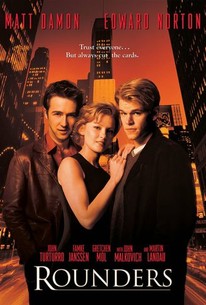
- The first line, 'if you can't spot the sucker in your first half hour at the table then you are the sucker', may not be the greatest opening line in movie history but is one of the most memorable; the hosts want to see that list, which must exist on the internet, and float it as a vacation column.
- There is Billions DNA in the film: watching Rounders is like watching Tracy McGrady on the Raptors, and the pop culture throwaways such as Buckner going into Shea became signatures of Billions, which also brought in Malkovich in season three.
- The face Mike McD makes after losing the 30K is one of the best acting moments of Damon's career: the face everyone makes when destroyed in poker or blackjack, the life sinking out of your body; the sports-fan equivalent is the Marco Bellinelli corner three or the Case Keenum pass.
- Having a big hand cracked while deluded with euphoria is called the most crushing unimportant thing that can happen in life; all the throwaway poker lines have aged beautifully and one host understands the lingo partly because of this movie.
- Damon and Norton at fun points in their careers: Norton arrives with Primal Fiction (as transcribed), American History X, one of the most interesting performances of the last 25 years, then Rounders and Fight Club; 25th Hour mixes that guy with Worm; also Everyone Says I Love You, a terrible Woody Allen musical, and The People vs. Larry Flint, which has not aged well.
- The Larry Flint writers, Larry Krasuski and Scott Alexander (as transcribed), also wrote the OJ Ryan Murphy show and Ed Wood and set the template for the clever, controversial biopic, like Man in the Moon, a style that now lives on TV in 13-episode runs.
- The late-nineties talent cluster: in a fantasy draft Leo, Damon and Norton are the top three or in the top five, with Brad Pitt, Affleck gravitating to popcorn movies, feeder films like School Ties and Dazed and Confused, and Vince Vaughn; weirdly no black actors went to the stratosphere, Halle Berry aside.
- Clooney, Matthew Perry twenty years ago, Wahlberg after Boogie Nights, Will Smith and Jim Carrey round out one of the best clusters, all 35 and under, compared with the Godfather generation around Brando; these people get credit as movie stars rather than actors, in the era when the Entertainment Weekly cover mattered and Carrey got $20 million a movie.
- Norton took a left turn after the mid-nineties string: directing Keeping the Faith, which Juliette Littman likes, The Score with De Niro, Death to Smoochie, then 25th Hour, probably his best of the 2000s, and The Illusionist; he never had the Pacino or Gene Hackman career one host wanted, though he may still.
- Worm is a character unique to Norton, out of the John Cazale 1970s: the lovable scumbag you root for without knowing why, with a little Fredo in him.
- The movie looks surprisingly cool and undated for 1998 and is a good New York movie that still looks like the New York the hosts remember; the Chesterfield is based on a club called the Mayfair, and one host once played in a private room like it, the film's room being a slightly nicer red leather version of his, with that seedy but exciting feeling.
- Russians as villains has aged the best: in 1998 the Cold War had ended eight years earlier and Russia was in free fall, but twenty years on Roman, Maurice, Teddy KGB and the underground network are far more believable villains.
- Forgotten from aged best: Teddy KGB's accent, ridiculous in 1998 and loved in 2018 largely from familiarity; in the theater it was the movie's biggest flaw, a completely unnatural choice in a natural film, but twenty years later it works, is distinct, fun to imitate and almost a parody of bad Russian accents.
- The ending of Mike McD heading to Vegas and the World Series of Poker makes far more sense now, since within five years that became the dream of basically everyone who played; it could have been aged best too.

Casting What-Ifs
Tobey Maguire trained for the Hawke role but Fuqua was never sold on him; Davis Guggenheim was set to direct Sam Jackson and Matt Damon; Eminem and Christian Bale turned down Jake Hoyt; Mickey Rourke was Fuqua's first choice for Roger; Bruce Willis turned down Alonzo; Gary Sinise and Tom Sizemore were attached
In the discussion (5)
- Woven through the ZipRecruiter read: casting Tobey Maguire in the Ethan Hawke role would have been disastrous; Maguire spent two months on undercover narcotics runs, lost weight and got in crazy shape, but Anton Fuqua (as transcribed) was never 100% sold; he would have crushed Smiley in the poker scene holding pocket rockets.
- Davis Guggenheim was set to direct with Sam Jackson and Matt Damon as the stars; that movie wins no Oscar, and Jackson would have been almost a parody of Denzel, red meat and meta where Denzel feels real and cinematic, though one host would have watched it and thinks it could have worked.
- Eminem and Christian Bale allegedly turned down Jake Hoyt; Eminem is really good in 8 Mile and very funny in Funny People, and his career would differ if he had gone Will Smith and left music, but he could not have played this role, and it is hard to imagine him punked for 90 minutes or fighting Denzel, since he is pretty skinny.
- Mickey Rourke was Fuqua's first choice for Roger but the studio turned it down; Bruce Willis allegedly turned down Alonzo, which had the potential to be awful; Gary Sinise and Tom Sizemore were attached, with Sizemore basically making Training Day on his own, driving around L.A. with PCP.
- Earlier, Will Smith in Training Day is imagined as just weird; nobody else could have played Alonzo, and the what-ifs are promised for later.

Biggest Oscar Travesty
Ethan Hawke losing Best Supporting Actor to Jim Broadbent in Iris
In the discussion (10)
- The new category is introduced as something these podcasts have circled before; it is expected to be really funny for a Roadhouse episode, with a case that Ben Gazzara was robbed in 1989 and for the Jeff Healy Band (as transcribed) for Best Original Song.
- 2001 was a dark Oscars: A Beautiful Mind won Best Picture over Gosford Park, In the Bedroom, Lord of the Rings and Moulin Rouge with no Training Day, and Ron Howard won Best Director over Ridley Scott for Black Hawk Down, Robert Altman for Gosford Park, Peter Jackson and David Lynch for Mulholland Drive, with no Antoine Fuqua.
- Several of those nominees are liked, In the Bedroom a lot and Gosford Park pretty good, but Fuqua and Training Day should have been nominated; Lord of the Rings was a tough hang that soaked up nominations for years in a way Star Wars never could, even though one host would take Star Wars a hundred times.
- Early validation from a nomination might have set Fuqua on a different course, since the movies he made after this resemble Training Day; Denzel's Best Actor win over Russell Crowe, Sean Penn in I Am Sam, Will Smith in Ali and Tom Wilkinson in In the Bedroom is fine, and Halle Berry won for Monsters Ball (as transcribed).
- Best Supporting Actor is the travesty that keeps one host up at night: the field was Ethan Hawke, Ben Kingsley in Sexy Beast, Ian McKellen in Lord of the Rings, Jon Voight in Ali for about three minutes, and Jim Broadbent in Iris, and Broadbent won.
- As in Rain Man, where Tom Cruise is the best person in the movie but Dustin Hoffman won, the performer who blows everyone away obscures how good the other one was; Hawke had to avoid being blown away by Denzel, be on PCP for half an hour and be believable in the fight scenes, which is likened to Chris Paul playing on a hamstring.
- Nobody here would pick Kingsley in Sexy Beast over Hawke, though he is good in it; two-hander movies like Butch and Sundance, The Sting, The Color of Money and Rain Man raise the question of how filmmakers present the straight man, and Redford is seen as more important than Hoffman in All the President's Men.
- Hawke is in more scenes and the movie starts in his house, so he could be argued as the lead with Denzel supporting, but really both were best actors, and doing it otherwise is like making Geena Davis supporting in Thelma and Louise.
- Later, on the phone, the Hawke loss to Jim Broadbent is called terrible and one of the few times an actor was right there with Denzel, alongside Viola in Fences, Morgan Freeman in Glory and Hanks in Philadelphia; he should have gotten that award.
- Earlier, the hosts note Denzel had only a supporting Oscar before this, having been passed over for Malcolm X, He Got Game, The Hurricane and Remember the Titans.
Casting What-Ifs
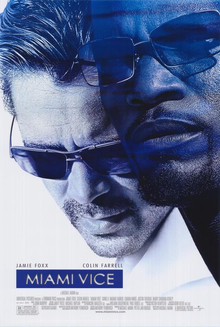
Colin Farrell as Crockett
In the discussion (9)
- The reported chance for Edward James Almost to reprise Castillo was declined, disappointing the hosts; the transcribed spelling remains unresolved. — Bill Simmons
- Jan Hammer reportedly declined a request for a different score. — Bill Simmons
- The idea that the requested score was death metal is a joke and speculation. — Bill Simmons
- Will Smith, Denzel Washington and Samuel Jackson are reported Tubbs alternatives; the list is doubted, with Smith considered more plausible. — Bill Simmons
- Tom Cruise, Brad Pitt and Matthew McConaughey are reported Crockett alternatives; Cruise and McConaughey are strongly doubted. — Bill Simmons
- Farrell remains preferable to Pitt and other stars; the performance is admired despite its perceived lack of conventional charisma. — Chris Ryan
- The perceived strain in Farrell performance is compared to Martin Sheen in the Apocalypse Now making-of documentary. — Chris Ryan
- The troubled, drinking television Crockett is seen as a fit for Farrell portrayal. — Chris Ryan
- Farrell is described as looking worse and barely getting through the last third before the shootout; this is a subjective impression. — Bill Simmons
Films in the archive

Ali
2001


Bad Boys
1995
Enemy of the State
1998

Focus
2015

Hitch
2005
I Am Legend
2007
Independence Day
1996

Men in Black
1997